Physioneal 35 glucose 2.27% p/v / 22.7 mg/ml solution for peritoneal dialysis
Spain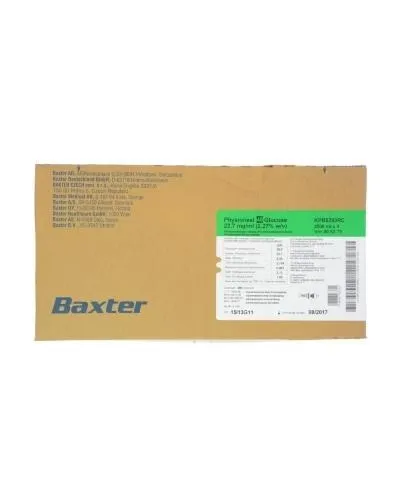
Table of Contents
Package leaflet: Information for the user
Introduction
Package leaflet: information for the user
PHYSIONEAL 35 Glucose 1.36% p/v / 13.6 mg/ml, Solution for peritoneal dialysis
PHYSIONEAL 35 Glucose 2.27% p/v / 22.7 mg/ml, Solution for peritoneal dialysis
PHYSIONEAL 35 Glucose 3.86% p/v / 38.6 mg/ml, Solution for peritoneal dialysis
Read the entire leaflet carefully before you start using this medicine, because it contains important information for you.
- Keep this leaflet. You may need to read it again.
- If you have any questions, ask your doctor.
- If you experience any adverse reactions, consult your doctor, even if they are not listed in this leaflet. See section 4.
Leaflet contents:
- What PHYSIONEAL 35 is and what it is used for
- What you need to know before using PHYSIONEAL 35
- How to use PHYSIONEAL 35
- Possible side effects
- How to store PHYSIONEAL 35
- Contents of the pack and other information
1. What PHYSIONEAL 35 is and what it is used for
PHYSIONEAL 35 is a solution for peritoneal dialysis. It removes water and waste products from the blood. It also corrects abnormal levels of the various components in the blood. PHYSIONEAL 35 contains different glucose concentrations (1.36%, 2.27%, or 3.86%). The higher the glucose concentration in the solution, the greater the amount of water removed from the blood.
PHYSIONEAL 35 may be prescribed for you if you have:
- temporary or permanent kidney failure
- severe fluid retention
- severe disturbances in blood acidity or alkalinity (pH) and electrolyte levels
- certain types of drug intoxication for which no other available treatments exist.
PHYSIONEAL 35 solution has an acidity (pH) similar to that of blood. For this reason, it may be particularly beneficial if you experience discomfort or pain during administration of other, more acidic, peritoneal dialysis solutions.
2. What you need to know before using PHYSIONEAL 35
Your doctor must supervise the administration of this product if it is the first time you are using it.
Do not use PHYSIONEAL 35
- if you are allergic to the active substances or to any of the other components of this medicine (listed in section 6).
- if you have a surgically uncorrectable problem affecting your abdominal wall or cavity, or an uncorrectable disorder that increases the risk of abdominal infections
- if you have documented loss of peritoneal function due to severe peritoneal scarring.
Warnings and precautions
Talk to your doctor before starting to use PHYSIONEAL 35.
Take special care:
-
If you suffer from serious conditions affecting the integrity of the abdominal wall or cavity. For example, in case of hernia, chronic infection, or inflammatory disease affecting the intestines.
-
If you have an aortic graft.
-
If you have severe difficulty breathing.
-
If you experience abdominal pain, elevated body temperature, or notice that the dialysate fluid is cloudy or contains particles. This may be a sign of peritonitis (inflamed peritoneum) or infection. You must contact your medical team urgently. Record the batch number of the peritoneal dialysis solution bags you are using and bring it along with the drained fluid bag to your medical team. The medical team will decide whether treatment should be interrupted or corrective treatment initiated. For example, if you have an infection, your doctor may perform several tests to determine which antibiotic is most appropriate for you. Your doctor may give you an antibiotic effective against a wide range of different bacteria until the specific infection is identified. This type of antibiotic is known as a broad-spectrum antibiotic.
-
If you have high levels of lactate in your blood. You are at increased risk of lactic acidosis if:
-
you have severely low blood pressure
-
you have a blood infection
-
you have acute renal failure
-
you have a congenital metabolic disorder
-
you are taking metformin (a medicine used to treat diabetes)
-
you are taking medicines to treat HIV, especially a class of medicines called NRTIs.
-
If you have diabetes and use this solution, the dose of your medications used to regulate blood sugar levels (e.g., insulin) should be reviewed regularly. In particular, your diabetes medication doses should be adjusted when starting or changing peritoneal dialysis treatment.
-
If you are under 18 years of age. Your doctor will assess the risk versus benefit of using this product.
-
You, likely together with your doctor, will keep a record of your fluid balance and body weight. Your doctor will monitor your blood parameters at regular intervals, particularly electrolytes (e.g., bicarbonate, potassium, magnesium, calcium, and phosphate), parathyroid hormone, and lipid levels.
-
If you have high levels of bicarbonate in your blood.
-
Do not use more solution than prescribed by your doctor. Symptoms of overdose include abdominal distension, stomach heaviness, and difficulty breathing.
-
Your doctor will check your potassium levels regularly. If levels drop significantly, you may be given potassium chloride to compensate.
-
Improper sequence during priming or clamping may lead to air infusion into the peritoneal cavity, which may cause abdominal pain and/or peritonitis.
-
If you administer unmixed solution, you must immediately drain (empty) the solution and use a new, properly mixed bag.
-
Due to a disorder called encapsulating peritoneal sclerosis (EPS), a known but rare complication of peritoneal dialysis therapy, you, likely together with your doctor, should be aware of this possible complication. EPS may cause:
-
abdominal inflammation (belly)
-
intestinal thickening, which may be associated with abdominal pain, abdominal distension, or vomiting. EPS can be fatal.
Children
If you are under 18 years of age, your doctor will evaluate the benefit-risk ratio of using this product.
Use of PHYSIONEAL 35 with other medicines
-
Inform your doctor if you are using or have recently used any other medicines, including those obtained without a prescription.
-
If you are taking other medicines, your doctor may need to increase your dosage, as peritoneal dialysis treatment increases the elimination of certain medicines.
-
Be cautious if you are taking heart medications called cardiac glycosides (e.g., digoxin), as you may:
-
require potassium and calcium supplements
-
develop disturbances in heart rhythm (arrhythmia).
-
Your doctor will closely monitor you during treatment, especially your potassium levels.
Pregnancy and breastfeeding
If you are pregnant or breastfeeding, think you might be pregnant, or plan to become pregnant, consult your doctor before using this medicine. Use of Physioneal during pregnancy or breastfeeding is not recommended unless advised by your doctor.
Driving and use of machines
This treatment may cause weakness, blurred vision, or dizziness. Do not drive or operate machinery if affected.
3. How to use PHYSIONEAL 35
PHYSIONEAL 35 must be administered into your peritoneal cavity. This cavity is located in the abdomen (belly), between the skin and the peritoneum. The peritoneum is the membrane that surrounds internal organs such as the intestines or liver.
Do not use by intravenous route.
Follow exactly the administration instructions for this medicine provided by your peritoneal dialysis medical team. If in doubt, consult them again.
If the bag is damaged, it must be discarded.
Dosage and frequency
Your doctor will determine the appropriate glucose concentration and the number of bags you should use each day.
Use in children and adolescents
If you are under 18 years of age, your doctor will carefully evaluate the prescription of this medicine.
If you interrupt treatment with PHYSIONEAL 35
Do not stop peritoneal dialysis without your doctor's approval. Interrupting treatment may have harmful consequences for your life.
Method of administration
Before use,
-
Warm the bag to 37 °C. Use the heating plate specifically designed for this purpose. Never immerse the bag in water to warm it. Do not ever use a microwave oven to heat the bag.
-
You must use an aseptic technique throughout the administration of the solution, as you have been taught.
-
Before performing an exchange, make sure to wash your hands and the area where you will perform the exchange.
-
Before opening the overpouch, check that it is the correct solution, the expiration date, and the quantity (volume). Lift the bag to check for leaks (excess liquid in the overpouch). Do not use the bag if you find it has leaked.
-
After removing the overpouch, check for signs of leakage by firmly pressing the bag. Check that the breakable seal separating the two chambers is intact. If the seal is broken, discard the bag. Do not use the bag if any leakage is detected.
-
Check that the solution is clear and transparent. Do not use the bag if the solution is cloudy or contains particles.
-
Before starting the exchange, ensure that all connections are secure.
-
Carefully mix the two chambers by breaking the breakable seal located between them. Wait until the upper chamber has completely emptied into the lower chamber. Then carefully mix the solution by pressing with both hands on the walls of the lower chamber.
- Consult your doctor if you have any questions or doubts about this product or its use.
- Use each bag only once. Discard any unused solution.
- The solution must be administered within 24 hours after mixing.
After use, check that the drained fluid is not cloudy.
Compatibility with other medicines
Your doctor may prescribe other injectable medicines to be added directly to the PHYSIONEAL 35 bag. In this case, add the medicine through the medication addition site located in the small chamber, before breaking the breakable seal between the two chambers. Use the product immediately after adding the medicine. Consult your doctor if you are unsure.
If you use more PHYSIONEAL 35 bags than you should within 24 hours
If you are administered an excessive dose of PHYSIONEAL 35, you may experience:
- abdominal distension
- stomach heaviness and/or
- difficulty breathing.
Contact your doctor immediately. They will advise you on what to do.
If you have any other questions about the use of this product, ask your doctor.
4. Possible adverse effects
Like all medicines, this medicine may cause adverse effects, although not everybody gets them.
If you experience any of the following conditions, contact your doctor or your peritoneal dialysis unit immediately:
- Hypertension (blood pressure above normal levels),
- Swelling of the ankles or legs, puffy eyes, difficulty breathing or chest pain (hypervolemia),
- Abdominal pain,
- Chills (flu-like symptoms), fever,
- Inflamed peritoneum (peritonitis).
All of these are serious adverse effects. You may require urgent medical attention.
If you notice any adverse effect, inform your doctor or your peritoneal dialysis unit. This includes any adverse effect even if it is not listed in this leaflet.
Common (may affect up to 1 in 10 people):
-
Changes in your blood parameters:
- increase in calcium levels (hypercalcemia)
- decrease in potassium levels (hypokalemia), which may cause muscle weakness, muscle cramps or irregular heartbeat.
- Weakness, fatigue
- Fluid retention (edema)
- Weight gain
Uncommon (may affect up to 1 in 100 people):
-
Decreased fluid removal during dialysis.
-
Fainting, dizziness or headache.
-
Cloudy solution drained from the peritoneum, stomach pain.
-
Peritoneal bleeding, pus, swelling or pain around the catheter exit site, and catheter blockage.
-
Nausea, loss of appetite, indigestion, flatulence (gas), thirst and dry mouth.
-
Abdominal distension or swelling, shoulder pain, abdominal wall hernia (bulge in the groin).
-
Changes in your blood parameters:
- lactic acidosis
- increased carbon dioxide levels
- increased blood sugar levels (hyperglycemia)
- increased white blood cell count (eosinophilia)
- Difficulty sleeping
- Low blood pressure (hypotension)
- Cough
- Muscle or bone pain
- Facial or throat swelling
- Skin rash
Other adverse effects related to the peritoneal dialysis procedure:
- Infection around the catheter exit site, catheter blockage
Reporting of adverse effects
If you experience any type of adverse effect, consult your doctor, pharmacist or nurse, even if they are possible adverse effects not listed in this leaflet. You may also report them directly via the Spanish Pharmacovigilance System for Human Medicinal Products: https://www.notificaram.es. By reporting adverse effects, you can help provide more information on the safety of this medicine.
5. Storage of PHYSIONEAL 35
-
- Keep this medicine out of the sight and reach of children.
- Store in the original packaging.
- For pack sizes of 2.0 L and 2.5 L bags: Do not store below 4°C.
- For pack sizes of 1.5 L bags: Store between 4°C and 30°C.
- Do not use this medicine after the expiry date stated on the outer packaging and on the bag following the abbreviation EXP and the symbol ?. The expiry date refers to the last day of the month indicated.
Dispose of PHYSIONEAL 35 as instructed.
Medicines must not be disposed of via wastewater or household waste. Ask your pharmacist how to dispose of medicines and packaging you no longer need. This will help protect the environment.
6. Contents of the pack and other information
This leaflet does not contain all the information about this medicine. If you have any doubts or are unsure about something, ask your doctor.
Composition of PHYSIONEAL 35
The mixed peritoneal dialysis solution contains the following active substances:
1.36% | 2.27% | 3.86% | |
Monohydrate glucose (g/l) | 15.0 | 25.0 | 42.5 |
equivalent to anhydrous glucose (g/l) | 13.6 | 22.7 | 38.6 |
Sodium chloride (g/l) | 5.67 | ||
Calcium chloride dihydrate (g/l) | 0.257 | ||
Magnesium chloride hexahydrate (g/l) | 0.051 | ||
Sodium bicarbonate (g/l) | 2.10 | ||
Sodium S-lactate solution (g/l) | 1.12 |
The other components are: water for injections and carbon dioxide.
The composition in mmol/l of the mixed solution is:
1.36% | 2.27% | 3.86% | |
Anhydrous glucose (mmol/l) | 75.5 | 126 | 214 |
Sodium (mmol/l) | 132 | ||
Calcium (mmol/l) | 1.75 | ||
Magnesium (mmol/l) | 0.25 | ||
Chloride (mmol/l) | 101 | ||
Bicarbonate (mmol/l) | 25 | ||
Lactate (mmol/l) | 10 |
Appearance of the product and contents of the container
PHYSIONEAL 35 is a colorless, clear, sterile solution for peritoneal dialysis.
PHYSIONEAL 35 is packaged in a dual-chamber PVC bag. The two chambers are separated by a permanent seal. You must only administer PHYSIONEAL 35 when the solutions in both chambers are completely mixed.
Each bag is enclosed in an overpouch and supplied in a cardboard box.
Volume | Number of units per box | Product presentation | Types of connectors |
1.51 | 5 / 6 | Single bag (DPA) | luer |
1.51 | 5 / 6 | Double bag (DPCA) | luer |
2.01 | 4 / 5 | Single bag (DPA) | luer |
2.01 | 4 / 5 | Double bag (DPCA) | luer |
2.51 | 4 / 5 | Single bag (DPA) | luer |
2.51 | 4 / 5 | Double bag (DPCA) | luer |
Some pack sizes may not be marketed.
Marketing Authorization Holder
Vantive Health, S.L.
Polígono Industrial Sector 14
C/Pouet de Camilo 2
46394 Ribarroja del Turia (Valencia) Spain
Manufacturer Vantive Manufacturing Limited Moneen Road Castlebar County Mayo – Ireland |
Ó
Bieffe Medital SpA
Via Nuova Provinciale
23034 Grossotto
Italy
Date of revision of this leaflet: August 2017
Detailed and up-to-date information on this medicinal product is available on the website of the Spanish Agency for Medicines and Medical Devices (AEMPS) http://www.aemps.gob.es/
Vantive and Physioneal are registered trademarks of Vantive Health LLC or its affiliates