Pheburane 350 mg/ml oral solution
SpainTable of Contents
Patient Information Leaflet
Introduction
Patient Information Leaflet
PHEBURANE 350 mg/mL oral solution
sodium phenylbutyrate
Read the entire leaflet carefully before you start taking this medicine, as it contains important information for you.
- Keep this leaflet as you may need to read it again.
- If you have any questions, ask your doctor or pharmacist.
- This medicine has been prescribed for you only, and you should not give it to others, even if they have the same symptoms as you, since it may harm them.
- If you experience any adverse effects, consult your doctor or pharmacist, even if they are effects not listed in this leaflet. See section 4.
Contents of this leaflet
- What PHEBURANE oral solution is and what it is used for
- What you need to know before taking PHEBURANE
- How to take PHEBURANE
- Possible adverse effects
- How to store PHEBURANE
- Contents of the pack and other information
1. What PHEBURANE is and what it is used for
PHEBURANE contains the active substance sodium phenylbutyrate, which is used to treat patients with urea cycle disorders. These rare disorders are caused by a deficiency of certain liver enzymes required to eliminate residual nitrogen in the form of ammonia.
Nitrogen is a basic component of proteins, which are an essential part of the food we consume. As the body breaks down proteins after eating, nitrogen waste accumulates in the form of ammonia because the body cannot eliminate it. Ammonia is especially toxic to the brain and, in severe cases, can lead to decreased levels of consciousness and coma.
PHEBURANE helps the body eliminate residual nitrogen by reducing the amount of ammonia in your body. However, while taking PHEBURANE oral solution, you must follow a low-protein diet specifically designed for you by a physician and a dietitian. You must strictly adhere to this diet.
2. What you need to know before taking PHEBURANE
Do not take PHEBURANE:
- if you are allergic to sodium phenylbutyrate or any of the other ingredients of this medicine (listed in section 6).
- if you are pregnant.
- if you are breastfeeding.
Warnings and precautions
Talk to your doctor or pharmacist before taking PHEBURANE if you:
- have congestive heart failure (a type of heart disease in which the heart cannot pump enough blood to the body) or reduced kidney function.
- have reduced liver or kidney function, as PHEBURANE oral solution is eliminated through the kidneys and liver.
PHEBURANE will not prevent the occurrence of acute high levels of ammonia in the blood, a condition that is usually a medical emergency. If this happens, you may experience symptoms such as feeling unwell (nausea), discomfort (vomiting), confusion, and you must seek urgent medical help.
If you require laboratory tests, it is important to remind your doctor that you are taking PHEBURANE oral solution, as sodium phenylbutyrate may interfere with certain laboratory test results (such as blood electrolytes or proteins, or liver function tests).
If you have any doubts, consult your doctor or pharmacist.
Other medicines and PHEBURANE
Inform your doctor or pharmacist if you are taking, have recently taken, or might need to take any other medicines.
It is particularly important that you inform your doctor if you are taking medicines containing:
- valproate (an antiepileptic medicine);
- haloperidol (used in certain psychotic disorders);
- corticosteroids (medicines used to relieve inflamed areas of the body);
- probenecid (for the treatment of hyperuricemia, high levels of uric acid in the blood associated with gout).
These medicines may alter the effect of PHEBURANE, and you may need to have blood tests more frequently. If you are unsure whether your medicines contain these substances, consult your doctor or pharmacist.
Pregnancy and breastfeeding
Do not take PHEBURANE if you are pregnant, as this medicine may harm the unborn baby.
If you are a woman of childbearing potential, you must use reliable contraceptive methods during treatment with PHEBURANE. Speak with your doctor for further details.
Do not use PHEBURANE if you are breastfeeding, as this medicine may pass into breast milk and could harm your baby.
Driving and use of machines
It is unlikely that PHEBURANE oral solution will affect your ability to drive or operate machinery.
PHEBURANE oral solution contains sodium
This medicine contains 124 mg (5.4 mmol) of sodium (the main component of common or table salt) in each dose of g of sodium phenylbutyrate. This corresponds to 6.2% of the maximum daily dietary intake of sodium recommended for an adult.
The maximum daily dose of this medicine contains 2.5 g of sodium, which is equivalent to 125% of the maximum daily dietary intake of sodium recommended in an adult's diet.
Consult your doctor or pharmacist if you need 3 or more grams daily for a prolonged period, especially if you have been advised to follow a low-salt (sodium) diet.
PHEBURANE oral solution contains aspartame
This medicine contains 5.7 mg of aspartame per dose of g of sodium phenylbutyrate. Aspartame is a source of phenylalanine. It may be harmful to you if you have phenylketonuria (PKU), a rare genetic disorder in which phenylalanine accumulates because the body cannot eliminate it properly.
Blackcurrant flavouring contains propylene glycol
This medicine contains 26.55 mg of propylene glycol per drop.
If your baby is less than 4 weeks old, talk to your doctor or pharmacist before giving this medicine, especially if the baby is receiving other medicines containing propylene glycol or alcohol.
3. How to take PHEBURANE oral solution
Always take this medicine exactly as your doctor has instructed you. Consult your doctor or pharmacist if you are unsure.
Dosage
The daily dose of PHEBURANE oral solution will be based on your body weight or body surface area and will be adjusted according to your tolerance for protein and your diet. You will need to have regular blood tests to determine the correct daily dose. Your doctor will tell you how much liquid to take.
Method of administration
PHEBURANE oral solution should be taken with meals.
To measure a dose of PHEBURANE oral solution, use only the dosing syringe supplied with PHEBURANE oral solution. Do not use other devices/spoons/syringes to administer a dose. The syringe is graduated from 0.5 g to 3 g in 0.25 g increments. The graduations on the dosing syringe indicate grams of sodium phenylbutyrate. Follow the instructions below to administer PHEBURANE oral solution:
Oral administration
- Open the PHEBURANE oral solution bottle by pushing the cap down and turning it to the left.
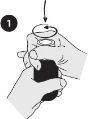
- Remove the dosing syringe with CE marking and the bottle adapter from the pouch.
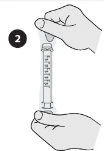
- Place (push) the adapter onto the neck of the bottle while the syringe is inserted into the adapter.
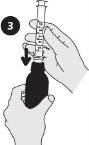
- Invert the bottle.
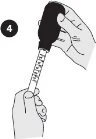
- Draw from the bottle the required amount of PHEBURANE oral solution (equivalent to the number of grams of sodium phenylbutyrate prescribed by your doctor) using the dosing syringe.
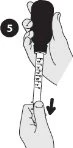
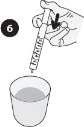
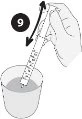
- Remove the dosing syringe containing PHEBURANE oral solution from the adapter and pour the amount of PHEBURANE oral solution from the syringe into a glass containing at least 20 ml of water.
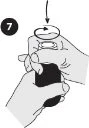
- Close the PHEBURANE oral solution bottle without removing the adapter inserted in the neck of the bottle.
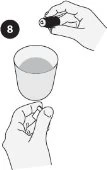
- Add one drop of your preferred flavoring (blackcurrant or lemon-mint) to the contents of the glass of water; gently shake and drink (if one drop of flavoring does not provide the desired flavor intensity, you may use 2 drops).
- Wash the syringe only with cold to lukewarm water after each administration.
PHEBURANE oral solution should be taken with a special low-protein diet.
You should take PHEBURANE oral solution with each meal or feeding. In young children, this may be 4 to 6 times a day.
PHEBURANE oral solution can also be administered via nasogastric or gastrostomy tubes. PHEBURANE oral solution can be administered through tubes with a diameter of 2 mm (7–8 French) or larger. Use the supplied oral syringe to measure your dose and follow the instructions below:
Preparation for administration via nasogastric or gastrostomy tube
- Follow steps 1 to 5 of the Method of administration for oral use;
- PHEBURANE oral solution is ready to use and does not need to be diluted;
- When administering through a nasogastric/gastrostomy tube, flavoring should not be added;
- Insert the tip of the syringe filled with medication into the end of the nasogastric/gastrostomy tube;
- Use the plunger of the dosing syringe to administer the prescribed dose of PHEBURANE oral solution through the nasogastric/gastrostomy tube;
- The tube should be flushed once with the appropriate volume of lukewarm water and allowed to drain after administration. In adults, 20 ml of lukewarm water should be used. In children weighing less than 20 kg and neonates, 3 ml of water should be used.
You will need to take this medicine and follow a specific diet for the rest of your life.
If you take more PHEBURANE oral solution than you should
Patients who have taken very high doses of phenylbutyrate have experienced the following:
- drowsiness, fatigue, dizziness, and confusion (less frequently);
- headache;
- taste disturbances (alterations in taste);
- decreased hearing;
- disorientation;
- memory problems;
- worsening of existing neurological conditions.
If you experience any of these symptoms, contact your doctor or the nearest hospital emergency service immediately to receive appropriate treatment.
If you forget to take PHEBURANE oral solution
Take the missed dose as soon as possible with the next meal. Ensure that at least 3 hours pass between doses. Do not take a double dose to make up for the missed dose.
If you have any further questions about the use of this medicine, consult your doctor or pharmacist.
4. Possible adverse effects
Like all medicines, this medicine can cause adverse effects, although not necessarily in all individuals.
If persistent vomiting occurs, you should contact your doctor immediately.
Very common adverse effects (may affect more than 1 in 10 people)
- Irregular menstrual periods and cessation of menstrual periods in women of childbearing age.
If you are sexually active and your menstruation stops completely, do not assume this is due to PHEBURANE oral solution. If this occurs, speak with your doctor, as absence of menstruation may be due to pregnancy (see section “Pregnancy and breastfeeding” above) or menopause.
Common adverse effects (may affect more than 1 in 100 people)
- Changes in blood cell counts (red blood cells, white blood cells, and platelets), changes in blood bicarbonate levels, decreased appetite, depression, irritability, headache, fainting, fluid retention (swelling), changes in taste (taste disturbances), stomach pain, vomiting, nausea, constipation, abnormal skin odor, rash, abnormal kidney function, weight gain, changes in laboratory test values.
Uncommon adverse effects (may affect more than 1 in 1,000 people)
- Deficiency of red blood cells due to bone marrow insufficiency, bruising, irregular heart rhythm, rectal bleeding, stomach inflammation, stomach ulcer, inflammation of the pancreas.
Reporting of adverse effects
If you experience any side effects, consult your doctor or pharmacist. This includes any possible side effect not mentioned in this leaflet. You can also report side effects directly through the national reporting system listed in Appendix V. By reporting side effects, you can help provide more information on the safety of this medicine.
5. Storage of PHEBURANE oral solution
Keep this medicine out of the sight and reach of children.
Do not use PHEBURANE oral solution after the expiry date stated on the packaging and on the label of the bottle after EXP. The expiry date refers to the last day of that month.
After first opening the bottle of PHEBURANE oral solution, the medicine should be used within 4 weeks. The bottle must be discarded even if it is not empty.
After first opening the flavouring bottle, it should be used within 4 weeks.
The bottle must be discarded even if it is not empty.
This medicine does not require any special storage conditions.
Do not dispose of any medicine via wastewater or household waste. Ask your pharmacist how to dispose of medicines you no longer use. These measures will help protect the environment.
6. Contents of the pack and other information
Composition of PHEBURANE oral solution
- The active substance is sodium phenylbutyrate. Each mL of liquid contains 350 mg of sodium phenylbutyrate.
- The other ingredients are: purified water, aspartame (E951), sucralose (E955), glycerol (E422), hydroxyethylcellulose (E1525) (See section 2 “PHEBURANE oral solution contains aspartame”).
Flavor coatings:
- Blackcurrant-flavored coating composed of blackcurrant and mint, containing propylene glycol (E1520).
- Lemon-mint flavored coating composed of lemon and mint flavoring.
Appearance of PHEBURANE oral solution and contents of the pack
PHEBURANE oral solution is a clear liquid, ranging from colourless to pale yellow.
Each pack contains:
- One amber glass bottle containing 100 mL of oral solution, closed with a child-resistant plastic cap;
- One dosing syringe with a range of 0.5 g to 3 g, marked in 0.25 g increments, to measure the dose of sodium phenylbutyrate in grams;
- A bottle adapter;
- One amber glass bottle containing 3 mL of lemon-mint flavored coating;
- One amber-coloured glass bottle containing 3 mL of blackcurrant-flavored coating.
Marketing Authorisation Holder and Manufacturer
Eurocept International BV
Trapgans 5
1244 RL Ankeveen
The Netherlands
For any information about this medicinal product, please contact the local representative of the Marketing Authorisation Holder:
Belgium/Belgium/Belgium (Belgium) Lucane Pharma (Eurocept International BV) Tel.: +31 35 528 39 57 | Lithuania (Lithuania) FrostPharma AB Tel: +46 824 36 60 |
(Bulgaria) Lucane Pharma (Eurocept International BV) Tel.: +31 35 528 39 57 | Luxembourg/Luxembourg (Luxembourg) Lucane Pharma (Eurocept International BV) Tel.: +31 35 528 39 57 |
Czech Republic (Czechia) Lucane Pharma (Eurocept International BV) Tel.: +31 35 528 39 57 | Hungary (Hungary) Lucane Pharma (Eurocept International BV) Tel.: +31 35 528 39 57 |
Denmark (Denmark) FrostPharma AB Tel: +46 824 36 60 | Malta Lucane Pharma (Eurocept International BV) Tel.: +31 35 528 39 57 |
Germany (Germany) Lucane Pharma (Eurocept International BV) Tel.: +31 35 528 39 57 | Netherlands (Netherlands) Lucane Pharma (Eurocept International BV) Tel.: +31 35 528 39 57 |
Estonia (Estonia) FrostPharma AB Tel: +46 824 36 60 | Norway (Norway) FrostPharma AB Tel: +46 824 36 60 |
Greece (Greece) Lucane Pharma (Eurocept International BV) Tel.: +31 35 528 39 57 | Austria (Austria) Lucane Pharma (Eurocept International BV) Tel.: +31 35 528 39 57 |
Spain Lucane Pharma (Eurocept International BV) Tel.: +31 35 528 39 57 | Poland (Poland) Lucane Pharma (Eurocept International BV) Tel.: +31 35 528 39 57 |
France (France) Lucane Pharma Tel.: +33 153 868 750 | Portugal Lucane Pharma (Eurocept International BV) Tel.: +31 35 528 39 57 |
Croatia (Croatia) Lucane Pharma (Eurocept International BV) Tel.: +31 35 528 39 57 | Romania (Romania) Lucane Pharma (Eurocept International BV) Tel.: +31 35 528 39 57 |
Ireland (Ireland) Lucane Pharma (Eurocept International BV) Tel.: +31 35 528 39 57 | Slovenia (Slovenia) Lucane Pharma (Eurocept International BV) Tel.: +31 35 528 39 57 |
Iceland (Iceland) FrostPharma AB Tel: +46 824 36 60 | Slovakia (Slovakia) Lucane Pharma (Eurocept International BV) Tel.: +31 35 528 39 57 |
Italy Lucane Pharma (Eurocept International BV) Tel.: +31 35 528 39 57 | Finland/Finland (Finland) FrostPharma AB Tel: +46 824 36 60 |
Cyprus (Cyprus) Lucane Pharma (Eurocept International BV) Tel.: +31 35 528 39 57 | Sweden (Sweden) FrostPharma AB Tel: +46 824 36 60 |
Latvia (Latvia) FrostPharma AB Tel: +46 824 36 60 |
Date of the most recent review of this leaflet
Detailed information on this medicine is available on the website of the European Medicines Agency: http://www.ema.europa.eu/.
There are also links to other websites on rare diseases and orphan medicinal products.