Perindopril Tecnigen 8 mg tablets EFG
Spain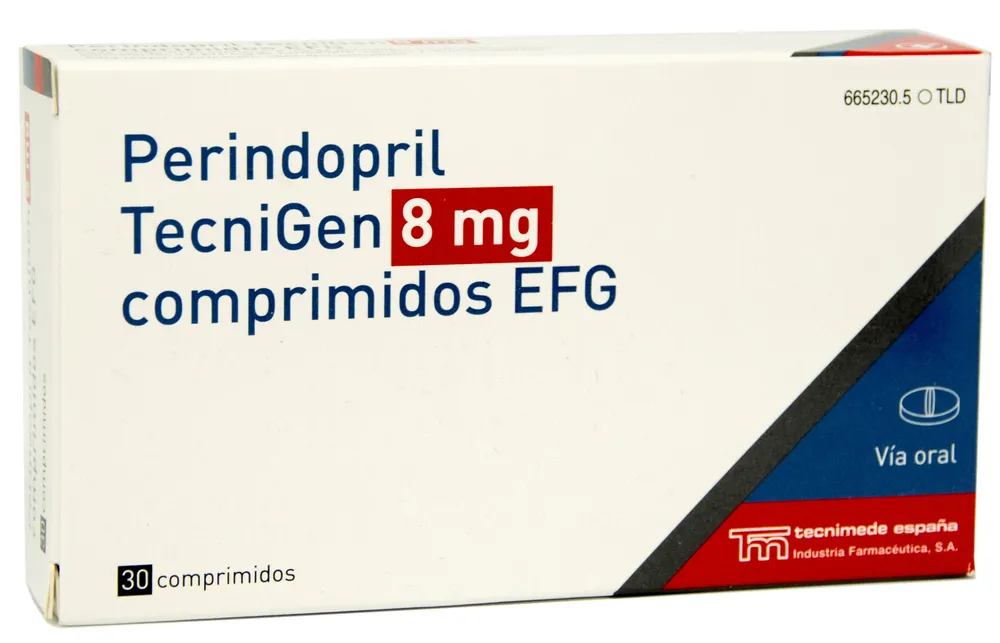
Table of Contents
- Package leaflet: Information for the user
- Introduction
- 1. What Perindopril TecniGen is and what it is used for
- 2. What you need to know before taking Perindopril TecniGen
- 3. How to take Perindopril TecniGen
- 4. Possible adverse effects
- 5. Storage of Perindopril TecniGen
- 6. Contents of the pack and other information
Package leaflet: Information for the user
Introduction
Package leaflet: information for the user
Perindopril TecniGen 8 mg tablets EFG
Perindopril
Read all of this leaflet carefully before you start taking this medicine because it contains important information for you.
- Keep this leaflet. You may need to read it again.
- If you have any further questions, ask your doctor, pharmacist or nurse.
- This medicine has been prescribed for you only and must not be given to other people, even if they have the same symptoms as you. It may harm them.
- If you get any side effects, talk to your doctor, pharmacist or nurse, even if they are side effects not listed in this leaflet. See section 4.
Contents of the leaflet:
- What Perindopril TecniGen is and what it is used for
- What you need to know before taking Perindopril TecniGen
- How to take Perindopril TecniGen
- Possible side effects
- How to store Perindopril TecniGen
- Contents of the pack and other information
1. What Perindopril TecniGen is and what it is used for
Perindopril TecniGen is an angiotensin-converting enzyme (ACE) inhibitor. It works by widening blood vessels, allowing your heart to pump blood through them more easily.
Perindopril TecniGen is used to:
- treat high blood pressure (hypertension),
- reduce the risk of heart events, such as heart attacks, in patients with stable coronary disease (a condition in which blood supply to the heart is reduced or blocked) who have already had a heart attack and/or undergone a procedure to improve blood supply to the heart by widening the blood vessels leading to it.
2. What you need to know before taking Perindopril TecniGen
Do not take Perindopril TecniGen:
- if you are allergic to the active substance or to any other ACE inhibitor, or to any of the other ingredients of this medicine listed in section 6.
- if you are more than 3 months pregnant. (ACE inhibitors should also be avoided during the first trimester of pregnancy; see pregnancy section)
- if you have previously experienced symptoms such as wheezing, swelling of the face, tongue or throat, severe itching or serious skin rashes while taking an ACE inhibitor, or if you or a family member has ever had these symptoms under any circumstances (a condition called angioedema).
- if you have diabetes or renal impairment and are being treated with a blood pressure-lowering medicine containing aliskiren.
Warnings and precautions:
Talk to your doctor, pharmacist, or nurse before taking Perindopril TecniGen:
-
if you have aortic stenosis (narrowing of the main blood vessel leaving the heart) or hypertrophic cardiomyopathy (a heart muscle disorder) or renal artery stenosis (narrowing of the artery supplying blood to the kidneys),
-
if you have any other heart problems,
-
if you have liver problems,
-
if you have kidney failure or are on dialysis,
-
if you suffer from a collagen vascular disease (connective tissue disorder) such as systemic lupus erythematosus or scleroderma,
-
if you have diabetes,
-
if you are on a salt-free diet or use salt substitutes containing potassium,
-
if you are about to undergo anaesthesia and/or major surgery,
-
if you are scheduled for LDL apheresis (a procedure to remove cholesterol from your blood using a machine),
-
if you are due to receive desensitisation treatment to reduce allergic reactions to bee or wasp stings,
-
if you have recently had diarrhoea or vomiting, or are dehydrated,
-
if your doctor has informed you that you have an intolerance to certain sugars,
-
inform your doctor if you are pregnant (or suspect you might be). Perindopril is not recommended during early pregnancy, and must not be taken after the third month of pregnancy, as it may cause serious harm to your baby from that stage onward (see pregnancy section).
-
if you are taking any of the following medicines used to treat high blood pressure (hypertension):
-
an angiotensin II receptor antagonist (ARA) (also known as "sartans" – e.g. valsartan, telmisartan, irbesartan), especially if you have kidney problems related to diabetes.
-
aliskiren
Your doctor may monitor your kidney function, blood pressure, and blood electrolyte levels (e.g. potassium) at regular intervals.
See also information under the heading “Do not take Perindopril TecniGen”.
Perindopril TecniGen is not recommended for use in children and adolescents.
If you are taking any of the following medicines, the risk of angioedema increases:
- racecadotril (used to treat diarrhoea)
- sirolimus, everolimus, temsirolimus, and other medicines belonging to the class called mTOR inhibitors (used to prevent organ transplant rejection)
Taking Perindopril TecniGen with other medicines
Tell your doctor or pharmacist if you are taking, have recently taken, or might need to take any other medicines.
Treatment with Perindopril TecniGen may be affected by other medicines. Your doctor may need to adjust your dose and/or take other precautions. These include:
- other medicines for high blood pressure, including angiotensin II receptor antagonists (ARA) or aliskiren. (See also information under the headings “Do not take Perindopril TecniGen” and “Warnings and precautions”), or diuretics (medicines that increase urine production by the kidneys),
- potassium-sparing diuretics (spironolactone, triamterene, amiloride), potassium supplements, or salt substitutes containing potassium,
- lithium for mania or depression,
- non-steroidal anti-inflammatory drugs (e.g. ibuprofen) for pain relief, or high doses of acetylsalicylic acid,
- medicines used to treat diabetes (such as insulin or metformin),
- medicines used to treat mental disorders such as depression, anxiety, schizophrenia, etc. (e.g. tricyclic antidepressants, antipsychotics),
- immunosuppressants (medicines that reduce the body's immune response) used to treat autoimmune disorders or after organ transplantation (e.g. cyclosporine),
- allopurinol (for the treatment of gout),
- procainamide (for irregular heartbeats),
- vasodilators including nitrates (medicines that cause blood vessels to widen),
- heparin (medicines used to thin the blood),
- medicines used to treat low blood pressure, shock, or asthma (e.g. ephedrine, noradrenaline, or adrenaline).
- medicines frequently used to treat diarrhoea (racecadotril) or to prevent organ transplant rejection (sirolimus, everolimus, temsirolimus, and other mTOR inhibitors). See section “Warnings and precautions”
Taking Perindopril TecniGen with food, drinks and alcohol
It is preferable to take Perindopril TecniGen before a meal.
Pregnancy, breastfeeding and fertility
If you are pregnant or breastfeeding, think you may be pregnant, or are planning to become pregnant, consult your doctor or pharmacist before using this medicine.
Pregnancy
Inform your doctor if you are pregnant (or suspect you might be). Your doctor will usually advise you to stop taking perindopril before becoming pregnant or as soon as you know you are pregnant, and will recommend an alternative medicine. Perindopril is not recommended during early pregnancy, and must not be used from the third month of pregnancy onward, as it may cause serious harm to your baby from that stage.
Breastfeeding
Inform your doctor if you are breastfeeding or planning to breastfeed. Perindopril is not recommended during breastfeeding. Your doctor will choose an alternative treatment if you wish to breastfeed, especially if your baby is a newborn or premature.
Driving and using machines
Perindopril does not affect alertness. However, due to a drop in blood pressure, some patients may experience reactions such as dizziness or weakness. If this occurs, your ability to drive or operate machinery may be impaired.
Perindopril TecniGen contains lactose
If your doctor has diagnosed you with an intolerance to certain sugars, consult him before taking this medicine.
3. How to take Perindopril TecniGen
Follow exactly the instructions given by your doctor or pharmacist for taking this medicine. If in doubt, consult your doctor or pharmacist again. Swallow the tablet with a glass of water, preferably at the same time each day, in the morning before breakfast. Your doctor will decide the correct dose for you.
The usual doses are as follows:
High blood pressure: The usual initial and maintenance dose is 4 mg once daily. If necessary, after one month of treatment, your doctor may increase the dose to 8 mg once daily. The maximum recommended dose for high blood pressure is 8 mg per day.
If you are 65 years of age or older, the usual initial dose is generally 2 mg per day. If necessary, after one month of treatment, your doctor may increase the dose to 4 mg per day, and if needed, up to 8 mg per day.
Stable coronary heart disease: The usual initial dose is generally 4 mg per day. If necessary, after two weeks of treatment, your doctor may increase the dose to 8 mg per day, which is the maximum recommended dose for this indication.
If you are 65 years of age or older, the usual initial dose is generally 2 mg per day. If necessary, after one week of treatment, your doctor may increase the dose to 5 mg per day, and if needed, one week later, it may be increased up to 8 mg per day.
If you take more Perindopril TecniGen than you should
If you have taken more Perindopril TecniGen tablets than you should, contact your doctor immediately or call the Toxicology Information Service at telephone number 91-562 04 20.
The most common symptom in case of overdose is low blood pressure, possibly causing dizziness or fainting. If this occurs, lying down with your legs raised may help.
If you forget to take Perindopril TecniGen
It is important to take this medicine every day, as continuous treatment is more effective. However, if you forget to take a dose of Perindopril TecniGen, take the next dose at the usual time. Do not take a double dose to make up for a missed dose.
If you stop taking Perindopril TecniGen
Since treatment with Perindopril TecniGen is usually lifelong, you must speak with your doctor before stopping this medicine.
If you have any further questions about the use of this product, ask your doctor, pharmacist, or nurse.
4. Possible adverse effects
Like all medicines, this medicine may cause adverse effects, although not everyone experiences them.
If you experience any of the following, stop taking this medicine immediately and inform your doctor straight away:
- swelling of the face, lips, mouth, tongue or throat, difficulty breathing,
- severe dizziness or fainting,
- abnormally fast or irregular heartbeat.
In decreasing order of frequency, these adverse effects may include:
- Common (occur in less than 1 in 10 people but more than 1 in 100 people): headache, dizziness, vertigo, tingling sensations, visual disturbances, tinnitus (ringing in the ears), mild dizziness due to low blood pressure, cough, breathing difficulty, gastrointestinal disorders (nausea, vomiting, abdominal pain, altered taste, dyspepsia or indigestion, diarrhea, constipation), allergic reactions (such as skin rash, itching), muscle cramps, feeling of fatigue,
- Uncommon (occur in less than 1 in 100 people but more than 1 in 1,000 people): mood changes, sleep disorders, bronchospasm (chest tightness, wheezing and breathing difficulty), dry mouth, angioedema (symptoms such as wheezing, swelling of the face, tongue or throat, intense itching or severe skin rashes), kidney problems, impotence, sweating, depression,
- Rare (may affect up to 1 in 1,000 people): worsening of psoriasis, reduced or absent urine output, facial flushing, acute renal failure.
Concentrated urine, feeling unwell (nausea) or feeling sick (vomiting), muscle cramps, confusion and seizures. These symptoms may be due to a condition called SIADH (syndrome of inappropriate antidiuretic hormone secretion).
- Very rare (occur in less than 1 in 10,000 people): confusion, cardiovascular disorders (irregular heartbeat, angina, heart attack and stroke), eosinophilic pneumonia (a rare type of pneumonia), rhinitis (nasal congestion or runny nose), erythema multiforme, blood, pancreas or liver disorders.
- Frequency not known (cannot be estimated from available data): change in color, numbness and pain in fingers or toes (Raynaud's disease).
- In diabetic patients, hypoglycaemia (very low blood sugar levels) may occur.
- Vasculitis (inflammation of blood vessels) has been reported.
Reporting of adverse effects
If you experience any adverse effect, talk to your doctor, pharmacist or nurse, even if it is a possible adverse effect not listed in this leaflet. You can also report them directly via the Spanish Pharmacovigilance System for Human Medicinal Products. Website: www.notificaRAM.es.
By reporting adverse effects, you can help provide more information on the safety of this medicine.
5. Storage of Perindopril TecniGen
Keep this medicine out of the sight and reach of children.
Do not use Perindopril TecniGen after the expiry date stated on the carton and on the container after EXP. The expiry date refers to the last day of the month indicated.
Keep the container tightly closed to protect it from moisture.
Medicines must not be disposed of via wastewater or household waste. Dispose of unused medicines and their packaging at the SIGRE Point at your pharmacy. If you have any doubts, ask your pharmacist how to dispose of medicines and packaging that you no longer need. This will help protect the environment.
6. Contents of the pack and other information
Composition of Perindopril TecniGen:
The active substance is perindopril. Each tablet contains 8 mg of perindopril tert-butylamine salt, equivalent to 6.676 mg of perindopril.
The other components (excipients) are:
Monohydrate lactose (lactose), microcrystalline cellulose, anhydrous colloidal silica and magnesium stearate.
Appearance of the product and contents of the pack
Perindopril TecniGen 8 mg tablets EFG are presented as white, round tablets, with a score on one side.
Each pack contains 30 tablets in PA-ALU-PVC/ALU blisters.
Marketing Authorization Holder and Manufacturer
Marketing Authorization Holder:
TECNIMEDE ESPAÑA INDUSTRIA FARMACEUTICA, S.A.
Avda. de Bruselas, 13, 3º D.Edificio América. Polígono Arroyo de la Vega,
28108 Alcobendas, Spain
Manufacturer:
ATLANTIC PHARMA PRODUÇOES FARMACEUTICAS, S.A.
Rua da Tapada Grande 2
Abrunheira, 2710 - 089 Sintra – Portugal
or
MEDINFAR MANUFACTURING, S.A.
Parque Industrial Armando Martins Tavares
Rua Outeiro Da Armada, nº 5.
Condeixa-a-Nova, 3150-194. Portugal
Date of the most recent revision of this leaflet: January 2019
Detailed and up-to-date information on this medicine is available on the website of the Spanish Agency of Medicines and Medical Devices (AEMPS) http://www.aemps.gob.es/