Pentasa 1 g prolonged-release tablets
Spain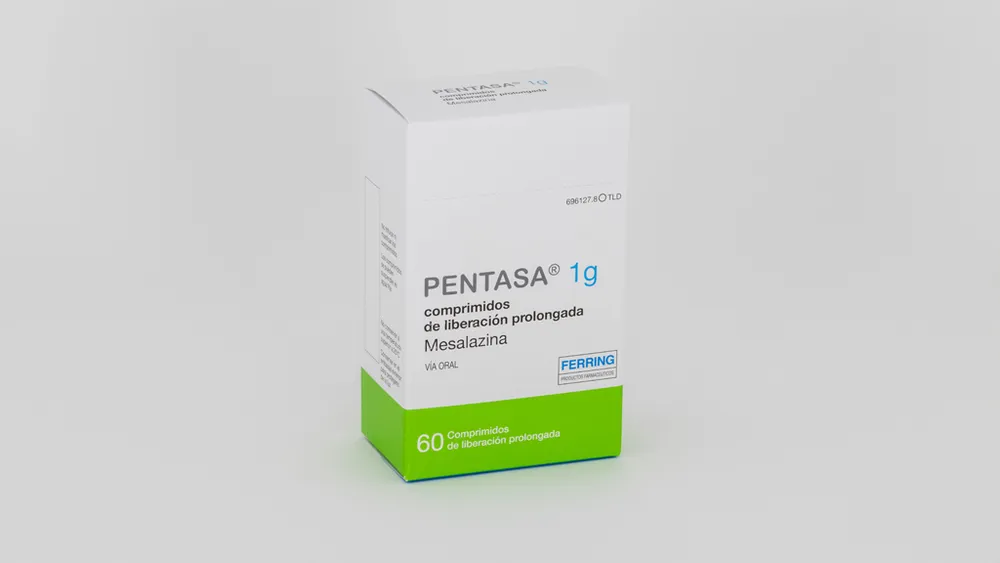
Table of Contents
Patient Information Leaflet
Introduction
Patient Information Leaflet
PENTASA 1 gram prolonged-release tablets
Mesalazine
Read the entire leaflet carefully before you start taking this medicine, as it contains important information for you.
- Keep this leaflet, as you may need to read it again.
- If you have any questions, consult your doctor or pharmacist.
- This medicine has been prescribed for you only and must not be given to other people, even if they have the same symptoms as you, since it could harm them.
- If you experience any adverse effects, consult your doctor or pharmacist, even if they are effects not listed in this leaflet. See section 4.0
Contents of this leaflet
- What Pentasa tablets are and what they are used for
- What you need to know before taking Pentasa tablets
- How to take Pentasa tablets
- Possible side effects
- How to store Pentasa tablets
- Contents of the pack and other information
1. What Pentasa tablets are and what they are used for
Pentasa tablets are indicated to help keep you free from new flare-ups of ulcerative colitis.
Ulcerative colitis is an inflammatory bowel disease in which the lining of the intestine is inflamed and develops numerous tiny breaks on its surface (ulcers) that may bleed.
Pentasa contains the active substance mesalazine, which belongs to a group of medicines called intestinal anti-inflammatory agents that help reduce inflammation and painful symptoms.
2. What you need to know before taking Pentasa tablets
Do not take Pentasa tablets:
-
if you are allergic to the active substance or to any of the other ingredients of this medicine (listed in section 6).
-
if you are allergic to salicylates, for example aspirin.
-
if you have severe kidney and/or liver problems.
Warnings and precautions
Talk to your doctor or pharmacist before taking this medicine:
-
if you are allergic to sulfasalazine (risk of allergy to salicylates)
-
if you currently have or have previously had impaired liver or kidney function
-
if you have a disease that may make you prone to bleeding
-
if you are taking a treatment that may affect kidney function, for example non-steroidal anti-inflammatory drugs (NSAIDs) such as aspirin
-
if you have respiratory problems, particularly asthma
-
treatment must be stopped immediately if you experience cramps, abdominal pain, fever, severe headache, or rash.
-
Kidney stones may occur with the use of mesalazine. Symptoms include pain in the sides of the abdomen and blood in the urine. Make sure you drink an adequate amount of fluids during treatment with mesalazine.
-
if you have ever experienced a severe skin rash, skin peeling, blisters, or mouth sores after using mesalazine
Mesalazine may cause discoloration of urine to red-brown after contact with sodium hypochlorite bleach in the toilet water. This is a chemical reaction between mesalazine and bleach and is harmless.
Take special care with mesalazine:
Severe skin reactions such as drug reaction with eosinophilia and systemic symptoms (DRESS), Stevens-Johnson syndrome (SJS), and toxic epidermal necrolysis (TEN) have been observed with mesalazine treatment. Stop taking mesalazine and seek immediate medical attention if you notice any of the symptoms related to these serious skin reactions described in section 4.
If you experience severe or recurrent headache, vision disturbances, or ringing or buzzing in the ears, contact your doctor immediately.
While being treated with this medicine, your doctor will usually perform blood and urine tests to monitor your kidney function, especially at the beginning of treatment.
Use in patients over 65 years of age:
Should be used with caution in patients over 65 years of age and only in those with normal kidney function.
Children and adolescents:
There is limited data on the use of this medicine in children (6–18 years). Dosage will be determined by the doctor.
Taking Pentasa tablets with other medicines:
Tell your doctor or pharmacist if you are taking, have recently taken, or might need to take any other medicines.
This is especially important if you are taking any of the following medicines:
-
azathioprine (used after organ transplants or to treat autoimmune diseases)
-
6-mercaptopurine or thioguanine (chemotherapeutic agents used to treat leukemia)
-
certain medicines that inhibit blood clotting (medicines for thrombosis or blood thinners).
Pregnancy, breastfeeding, and fertility
If you are pregnant or breastfeeding, think you may be pregnant, or plan to become pregnant, consult your doctor or pharmacist before using this medicine.
Experience with the use of mesalazine during pregnancy and breastfeeding is limited.
Blood disorders have been observed in newborns of mothers treated with this medicine. Newborns may develop allergic reactions during breastfeeding, for example diarrhea. If the newborn develops diarrhea, breastfeeding should be discontinued.
Fertility:
Animal data on mesalazine show that it has no effect on male or female fertility.
Driving and using machines:
Treatment with Pentasa tablets does not appear to affect the ability to drive and/or operate machinery.
3. How to take Pentasa tablets
Follow exactly the instructions for use of this medicine given by your doctor or pharmacist. If you are unsure, consult your doctor or pharmacist.
The recommended dose is:
Adults:
To help you remain free from further flare-ups of colitis, your doctor will usually prescribe 2 grams of mesalazine per day, administered as 2 tablets once daily.
Use in children and adolescents (aged 6 years and older):
For children and adolescents, the dose will be calculated by your doctor according to body weight. The recommended dose in children and adolescents with a body weight of up to 40 kg will be half the usual recommended adult dose; for children and adolescents with a body weight above 40 kg, the dose will be the same as the usual recommended adult dose.
You must take the tablets whole orally (by mouth). For easier administration, the tablets may be suspended in water or orange juice, shaken, and immediately ingested.
If you think that the effect of this medicine is too strong or too weak, inform your doctor.
If you take more Pentasa tablets than you should
Cases of overdose in humans have not been reported, but if an overdose is suspected, you should immediately consult your doctor or pharmacist.
In case of overdose or accidental ingestion, consult your doctor, pharmacist immediately, or call the Toxicology Information Service at telephone number 91-562 04 20, indicating the medicine and the amount taken.
If you forget to take Pentasa tablets
Do not take a double dose to make up for forgotten doses.
If you stop taking Pentasa tablets
Your doctor will advise you on the duration of your treatment with Pentasa tablets. Do not stop treatment earlier, even if you feel better, as symptoms may reappear if treatment is ended too soon. Strictly follow the treatment as directed by your doctor during the established maintenance period.
If you have any further questions about the use of this medicine, ask your doctor or pharmacist.
4. Possible adverse effects
Like all medicines, Pentasa tablets can cause adverse effects, although not everyone will experience them.
Serious adverse effects:
Very few cases of severe allergic reactions (including severe skin erosions that may affect the skin as the body's protective barrier) have been reported. The allergic reaction could lead to swelling of the face and neck and/or difficulty breathing or swallowing (angioedema). If this occurs, contact your doctor or emergency services immediately.
Inform your doctor immediately if you experience severe or recurrent headache, changes in vision, or ringing or buzzing in the ears. These may be symptoms of increased pressure within the skull (idiopathic intracranial hypertension).
Stop taking mesalazine and seek immediate medical help if you develop any of the following symptoms:
- non-elevated reddish patches, or circular or coin-shaped patches on the chest, often with central blisters, skin peeling, mouth, throat, nose, genital or eye ulcers, widespread rash, fever and swollen lymph nodes. These severe skin rashes are often preceded by fever or flu-like symptoms.
The following common adverse effects affect between 1 and 10 out of every 100 treated patients:
- headache
- diarrhoea
- nausea
- abdominal pain
- vomiting
- skin rash
- flatulence (gas)
The following rare adverse effects, affecting between 1 and 10 out of every 10,000 treated patients:
- inflammation of certain areas of the heart (myocarditis and pericarditis), which may cause difficulty breathing, chest pain or palpitations (fast or irregular heartbeat)
- inflammation of the pancreas (including symptoms of back and/or stomach pain) and increased amylase
- dizziness
- increased sensitivity of the skin to sunlight and ultraviolet light (photosensitivity)
The following very rare adverse effects, affecting fewer than 1 in 10,000 treated patients:
- eosinophilia (as part of an allergic reaction) and blood disorders such as reduction in red blood cells (anaemia), white blood cells (leucopenia), or platelets (thrombocytopenia), which may increase the likelihood of infections or bleeding
- liver disorders (hepatitis), characterised by symptoms including jaundice (yellowing of the skin and/or eyes) and/or pale stools
- kidney disorders (symptoms include blood in the urine, oedema (swelling due to fluid retention, which may cause ankle swelling) and increased blood pressure (nephritis))
- peripheral neuropathy (a condition affecting the nerves in the hands and feet, including symptoms of tingling and numbness)
- allergic and fibrotic pulmonary reactions (symptoms include cough, difficulty breathing, bronchospasm, bloody and/or excessive sputum)
- hair loss (this is reversible)
- muscle or joint pain
- inflammation that may affect various parts of the body such as joints, skin, kidneys, heart, etc. (symptoms include painful joints, fatigue, fever, abnormal or unexplained bleeding (e.g. nosebleeds), bruising, purplish skin discolouration, spots under the skin (including severe skin erosions and severe burning that may affect the skin as the body's protective barrier))
- low sperm concentration in semen (oligospermia) (this is reversible)
- severe diarrhoea and abdominal pain due to an allergic reaction to this medicine in the intestine
- allergic reactions and fever may occasionally occur
Frequency not known (cannot be estimated from available data)
- kidney stones and associated renal pain (see also section 2)
- change in urine colour
- If you experience severe or recurrent headache, changes in vision, or ringing or buzzing in the ears. These may be symptoms of increased pressure within the skull (idiopathic intracranial hypertension).
Some of these adverse reactions may also be attributable to the underlying disease itself.
Reporting of adverse effects:
If you experience any adverse effect, talk to your doctor or pharmacist, even if it is a possible adverse effect not listed in this leaflet. You can also report them directly via the Spanish Pharmacovigilance System for Human Medicines: http;//www.notificaram.es. By reporting adverse effects, you can help provide more information on the safety of this medicine.
5. Storage of Pentasa Tablets
Keep this medicine out of the sight and reach of children.
Do not use this medicine after the expiry date stated on the pack, following “EXP”. The expiry date refers to the last day of the month indicated.
Do not store above 25°C. Keep in the original container to protect from light.
Medicines should not be disposed of via wastewater or household waste. Dispose of unused medicines and their containers at a pharmacy’s SIGRE point. If you are in doubt, ask your pharmacist how to properly dispose of unused medicines and their packaging. This will help protect the environment.
6. Contents of the pack and other information
Composition of Pentasa tablets
- The active substance is mesalazine. Each tablet contains 1 gram of mesalazine.
- The other components are: povidone, ethylcellulose, magnesium stearate, talc, microcrystalline cellulose.
Appearance of the product and contents of the pack
Pentasa tablets are presented as greyish-white to pale brown, oval, mottled tablets, marked on both sides with: PENTASA.
They are supplied in double-aluminum blisters containing a total of 60 tablets.
Marketing Authorization Holder and Manufacturer
Marketing Authorization Holder:
Ferring S.A.U
C/ del Arquitecto Sánchez Arcas nº3, 1º
28040 Madrid
Spain
Manufacturer:
FERRING GmbH
Wittland 11
24109 Kiel, Germany
Date of the most recent revision of this leaflet: January 2025
Detailed and up-to-date information on this medicinal product is available on the website of the Spanish Agency for Medicines and Health Products (AEMPS) http://www.aemps.gob.es/