Pemetrexed Accord 25 mg/ml concentrate for solution for infusion
Spain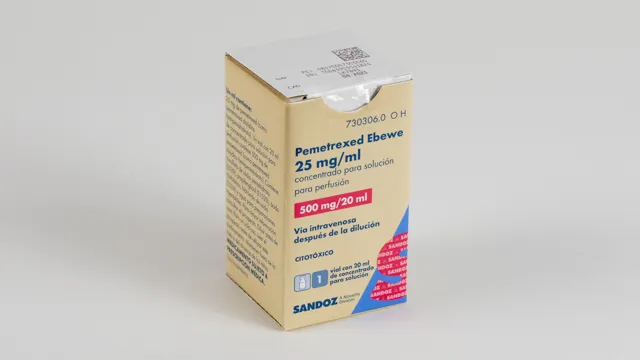
Table of Contents
- Package leaflet: Information for the user
- Introduction
- 1. What Pemetrexed Accord is and what it is used for
- 2. What you need to know before using Pemetrexed Accord
- 3. How to use Pemetrexed Accord
- 4. Possible adverse effects
- 5. Pemetrexed Accord Storage
- 6. Contents of the container and other information
Package leaflet: Information for the user
Introduction
Package leaflet: Information for the user
Pemetrexed Accord 25 mg/ml concentrate for solution for infusion
pemetrexed
Read the entire leaflet carefully before you start using this medicine, because it contains important information for you.
- Keep this leaflet, as you may need to read it again.
- If you have any questions, ask your doctor, pharmacist or nurse.
- This medicine has been prescribed for you only and must not be given to other people, even if they have the same symptoms, as it may harm them.
- If you experience any adverse reactions, consult your doctor, pharmacist or nurse, even if they are adverse reactions not listed in this leaflet. See section 4.
Leaflet contents
- What Pemetrexed Accord is and what it is used for
- What you need to know before using Pemetrexed Accord
- How to use Pemetrexed Accord
- Possible side effects
- How to store Pemetrexed Accord
- Contents of the pack and other information
1. What Pemetrexed Accord is and what it is used for
Pemetrexed Accord is a medicine used to treat cancer.
Pemetrexed Accord may be given together with cisplatin, another anticancer medicine, as treatment for malignant pleural mesothelioma, a form of cancer affecting the lining of the lung, in patients who have not previously received chemotherapy.
Pemetrexed Accord may also be given together with cisplatin as initial treatment for patients with advanced-stage lung cancer.
Pemetrexed Accord may be prescribed to you if you have advanced-stage lung cancer and your disease has responded to treatment or remained stable after initial chemotherapy.
Pemetrexed Accord may also be given for the treatment of patients with advanced-stage lung cancer whose disease has progressed after having received prior initial chemotherapy treatment.
2. What you need to know before using Pemetrexed Accord
Do not use Pemetrexed Accord:
- if you are allergic (hypersensitive) to pemetrexed or to any of the other ingredients of Pemetrexed Accord (listed in section 6).
- if you are breastfeeding, you must interrupt breastfeeding during treatment with Pemetrexed Accord.
- if you have recently received or are about to receive the yellow fever vaccine.
Warnings and precautions
Talk to your doctor, pharmacist, or hospital nurse before you are given Pemetrexed Accord.
If you have had or currently have kidney problems, tell your doctor or hospital pharmacist, as you may not be able to receive Pemetrexed Accord.
Before each infusion, you will need to provide blood samples to assess whether your kidney and liver function are adequate and to evaluate whether you have enough blood cells to receive Pemetrexed Accord. Your doctor may decide to adjust your dose or delay treatment depending on your general condition and whether your blood cell count is too low. If you are also receiving cisplatin, your doctor will ensure that you are properly hydrated and will receive appropriate treatment before and after receiving cisplatin to prevent vomiting.
If you have received or are going to receive radiotherapy, please consult your doctor, as there may be an early or late interaction between radiation and Pemetrexed Accord.
If you have been recently vaccinated, please consult your doctor, as this may potentially cause a negative reaction with Pemetrexed Accord.
If you have heart disease or a history of heart disease, please consult your doctor.
If you have fluid accumulation around the lung, your doctor may decide to drain the fluid before administering Pemetrexed Accord.
Children and adolescents
This medicine should not be given to children and adolescents, as there is no experience with this medicine in children and adolescents under 18 years of age.
Use of Pemetrexed Accord with other medicines
Inform your doctor if you are taking pain or anti-inflammatory (swelling) medicines, such as medicines known as “non-steroidal anti-inflammatory drugs” (NSAIDs), including those obtained without a prescription (such as ibuprofen). There are many types of NSAIDs with different durations of action. Based on the date of your Pemetrexed Accord infusion and/or your kidney function status, your doctor will advise you which medicines you can take and when you can take them. If you are unsure, consult your doctor or pharmacist to determine whether any medicine you are taking is an NSAID.
Inform your doctor or hospital pharmacist if you are taking or have recently taken any other medicines, including those obtained without a prescription.
Pregnancy
If you are pregnant, think you may be pregnant, or are planning to have a baby, ask your doctor or pharmacist before taking this medicine. Pemetrexed Accord should be avoided during pregnancy. Your doctor will inform you of the possible risks of taking Pemetrexed Accord during pregnancy. Women must use effective contraception during treatment with Pemetrexed Accord and for 6 months after receiving the last dose.
Breastfeeding
If you are breastfeeding, inform your doctor.
Breastfeeding must be interrupted during treatment with Pemetrexed Accord.
Fertility
Male patients are advised not to father a child during and for 3 months after treatment with Pemetrexed Accord, and therefore must use effective contraception during and for 3 months after treatment with Pemetrexed Accord. If you wish to father a child during treatment or within 3 months after treatment, seek advice from your doctor or pharmacist. Pemetrexed Accord may affect your ability to have children. Speak with your doctor for advice on sperm preservation before starting treatment.
Driving and use of machines
Pemetrexed Accord may cause tiredness. Be cautious when driving or operating machinery.
Pemetrexed Accord contains sodium
The maximum daily dose of this medicine contains 304 mg of sodium (a component of table salt). This corresponds to 15.2% of the maximum daily sodium intake recommended for an adult.
Consult your pharmacist or doctor if you need to take Pemetrexed Accord for a prolonged period, especially if you have been advised to follow a low-salt diet.
3. How to use Pemetrexed Accord
Always use this medicine exactly as your doctor or pharmacist has told you. Consult your doctor or pharmacist if you are unsure.
The recommended dose of Pemetrexed Accord is 500 milligrams per square meter of your body surface area. Your height and weight will be measured to calculate your body surface area. Your doctor will use this surface area to determine the correct dose for you. This dose may be adjusted or treatment may be delayed depending on your blood cell counts and your overall condition.
Pemetrexed Accord will always be administered to you as an intravenous infusion (drip) into one of your veins. The infusion will last at least 10 minutes.
When using Pemetrexed Accord in combination with cisplatin:
The hospital doctor or pharmacist will calculate your required dose based on your height and weight. Cisplatin is also administered by intravenous infusion and is given approximately 30 minutes after the Pemetrexed Accord infusion has finished. The cisplatin infusion lasts about two hours.
You will normally receive your infusion once every three weeks.
Additional medication:
Corticosteroids: Your doctor will prescribe steroid tablets (equivalent to 4 milligrams of dexamethasone twice daily) that you must take the day before, the day of, and the day after your Pemetrexed Accord treatment. Your doctor prescribes this medication to reduce the frequency and severity of skin reactions you may experience during your cancer treatment.
Vitamin supplement: Your doctor will prescribe oral folic acid (vitamin) or a multivitamin containing folic acid (350 to 1,000 micrograms), which you must take once daily while receiving Pemetrexed Accord. You should take at least five doses during the seven days prior to your first dose of Pemetrexed Accord. You should continue taking folic acid for 21 days after your last dose of Pemetrexed Accord. Additionally, you will receive an injection of vitamin B12 (1,000 micrograms) during the week before your first Pemetrexed Accord administration, and then approximately every 9 weeks (corresponding to 3 treatment cycles of Pemetrexed Accord). Vitamin B12 and folic acid are given to reduce potential toxic effects of your cancer treatment.
If you have any further questions about the use of this product, ask your doctor or pharmacist.
4. Possible adverse effects
Like all medicines, this medicine can cause adverse effects, although not everyone experiences them.
You must inform your doctor immediately if you notice any of the following symptoms:
- Fever or infection (frequent or very frequent, respectively): if you have a temperature of 38°C or higher, sweating, or other signs of infection (as you may have fewer white blood cells than normal, which is very common). Infections (sepsis) can be severe and may cause death.
- If you begin to experience chest pain (frequent) or your heartbeat becomes faster (uncommon).
- If you have pain, redness, swelling, or sores in the mouth (very common).
- Allergic reaction: if you develop a rash (very common), burning sensation or itching (frequent), or fever (frequent). Skin reactions may rarely be severe and may cause death. Contact your doctor if you develop severe rash, itching, or blistering (Stevens-Johnson syndrome or toxic epidermal necrolysis).
- If you feel tired or dizzy, are short of breath, or appear pale (due to lower than normal hemoglobin levels, which is very common).
- If you experience bleeding from the gums, nose, or mouth, or any bleeding that does not stop, red or pink urine, or unexpected bruising (due to lower than normal platelet count, which is common).
- If you suddenly experience difficulty breathing, severe chest pain, or cough up blood (uncommon) (this may indicate a blood clot in the lung veins).
Other adverse effects with Pemetrexed Accord may include:
Very common (may affect more than 1 in 10 people)
Infection
Pharyngitis (sore throat)
Low neutrophil granulocyte count (a type of white blood cell)
Low white blood cell count
Low hemoglobin levels
Pain, redness, swelling, or sores in the mouth
Loss of appetite
Vomiting
Diarrhea
Nausea
Skin rash
Scaly skin
Blood test abnormalities showing reduced kidney function
Asthenia (tiredness)
Common (may affect up to 1 in 10 people)
Blood infection
Fever with low neutrophil granulocyte count (a type of white blood cell)
Low platelet count
Allergic reaction
Loss of body fluids
Changes in taste sensation
Motor nerve damage that may cause muscle weakness and atrophy (wasting, mainly in arms and legs)
Sensory nerve damage that may cause loss of sensation, burning pain, and unsteady gait
Dizziness
Inflammation or swelling of the conjunctiva (the membrane lining the eyelids and covering the white part of the eye)
Dry eyes
Watery eyes
Dryness of the conjunctiva (the inner membrane of the eyelids and covering the white part of the eye) and cornea (the transparent layer in front of the iris and pupil)
Swelling of the eyelids
Eye disorder with dryness, tearing, irritation, and/or pain
Heart failure (a condition affecting the heart muscle's ability to pump)
Irregular heartbeat
Indigestion
Constipation
Abdominal pain
Liver: increased levels of chemicals in the blood produced by the liver
Increased skin pigmentation
Itchy skin
Rash on the body where each lesion resembles a target (bull's-eye)
Hair loss
Hives
Kidney failure
Reduced kidney function
Fever
Pain
Excess fluid in body tissues causing swelling
Chest pain
Inflammation and ulceration of the mucous membranes lining the digestive tract internally
Uncommon (may affect up to 1 in 100 people)
Reduction in the number of red blood cells, white blood cells, and platelets
Ischemia or lack of blood supply
Ischemia due to blockage of a cerebral artery
Intracranial bleeding
Angina (chest pain caused by reduced blood flow to the heart)
Infarction
Narrowing or blockage of the coronary arteries
Increased heart rate
Poor blood distribution to the extremities
Blockage in one of the pulmonary arteries in the lungs
Inflammation and scarring of the lung mucosa causing breathing problems
Passing bright red blood from the anus
Bleeding in the gastrointestinal tract
Intestinal perforation
Inflammation of the esophageal mucosa
Inflammation of the mucosa of the large intestine, which may be accompanied by intestinal or rectal bleeding (observed only in combination with cisplatin)
Inflammation, edema, erythema, and erosion of the esophageal mucosal surface caused by radiotherapy
Lung inflammation caused by radiotherapy
Rare (may affect up to 1 in 1,000 people)
Destruction of red blood cells
Anaphylactic shock (severe allergic reaction)
Inflammatory liver disease
Redness of the skin
Skin rash developing in a previously irradiated area
Very rare (may affect up to 1 in 10,000 people)
Skin and soft tissue infections
Stevens-Johnson syndrome (a type of severe skin and mucous membrane reaction that can be fatal)
Toxic epidermal necrolysis (a type of severe skin reaction that can be fatal)
Autoimmune disorder causing skin rashes and blisters on the legs, arms, and abdomen
Skin inflammation characterized by the presence of fluid-filled blisters
Skin fragility, blistering, erosions, and scarring of the skin
Redness, pain, and swelling mainly in the lower limbs
Inflammation of the skin and underlying fat (pseudocellulitis)
Skin inflammation (dermatitis)
Skin becomes inflamed, itchy, red, cracked, and rough
Intensely itchy spots
Frequency not known: frequency cannot be estimated from available data
A type of diabetes resulting mainly from kidney disease
Kidney disorder involving death of tubular epithelial cells that form the renal tubules
You may experience some of these symptoms and/or conditions. You should inform your doctor as soon as you begin to experience any of these adverse effects.
If you are concerned about any adverse effect, consult your doctor.
Reporting of adverse effects
If you experience any adverse effect, talk to your doctor, pharmacist, or nurse, even if it is a side effect not listed in this leaflet. You can also report them directly through the national reporting system listed in Annex V. By reporting adverse effects, you can help provide more information on the safety of this medicine.
5. Pemetrexed Accord Storage
Keep this medicine out of the sight and reach of children.
Do not use this medicine after the expiry date stated on the label and container following EXP.
Store below 25°C.
Infusion solution: the medicine should be used immediately. When prepared as directed, the chemical and physical in-use stability of the infusion solution is 72 hours at room temperature.
Do not use this medicine if you notice any visible signs of deterioration.
This medicine is for single use only. Medicines should not be disposed of via wastewater or household waste. Ask your pharmacist how to dispose of medicines and containers you no longer need. This will help protect the environment.
6. Contents of the container and other information
Composition of Pemetrexed Accord
The active substance is pemetrexed. One ml of concentrate contains pemetrexed disodium hemipentahydrate equivalent to 25 mg of pemetrexed.
A 4 ml vial of concentrate contains pemetrexed disodium hemipentahydrate equivalent to 100 mg of pemetrexed.
A 20 ml vial of concentrate contains pemetrexed disodium hemipentahydrate equivalent to 500 mg of pemetrexed.
A 34 ml vial of concentrate contains pemetrexed disodium hemipentahydrate equivalent to 850 mg of pemetrexed.
A 40 ml vial of concentrate contains pemetrexed disodium hemipentahydrate equivalent to 1000 mg of pemetrexed.
The other components are citric acid, L-methionine, monothioglycerol, sodium hydroxide, concentrated hydrochloric acid and water for injections (see section 2 “Pemetrexed Accord contains sodium”).
Appearance of Pemetrexed Accord and contents of the container
Pemetrexed Accord is a concentrate for solution for infusion in a glass vial. It is a clear, colourless to pale yellow solution.
Each pack of Pemetrexed Accord contains one vial of 4 ml, 20 ml, 34 ml or 40 ml of concentrate.
Marketing Authorisation Holder
Accord Healthcare S.L.U.
World Trade Center, Moll de Barcelona, s/n,
Edifici Est 6th floor,
08039 Barcelona,
Spain
Manufacturer:
Accord Healthcare Polska Sp.z o.o.,
ul. Lutomierska 50, 95-200 Pabianice, Poland
LABORATORI FUNDACIÓ DAU
C/ C, 12-14 Pol. Ind. Zona Franca, Barcelona, 08040, Spain
Date of the most recent revision of this leaflet:
Other sources of information
Detailed information on this medicine is available on the European Medicines Agency website: http://www.ema.europa.eu/ and on the website of the Spanish Agency of Medicines and Health Products (AEMPS) http://www.aemps.gob.es/
This information is intended only for physicians or healthcare professionals:
Instructions for use, handling and disposal
-
Use aseptic techniques when diluting pemetrexed for administration by intravenous infusion.
-
Calculate the required dose and number of Pemetrexed Accord vials needed. Each vial contains an excess of pemetrexed to facilitate administration of the required nominal amount.
-
The appropriate volume of pemetrexed solution should be diluted to 100 ml with 0.9% (9 mg/ml) sodium chloride injection solution without preservatives and administered as an intravenous infusion over 10 minutes.
-
The pemetrexed infusion solution prepared as described above is compatible with polyvinyl chloride and polyolefin infusion bags and systems. Pemetrexed is incompatible with diluents containing calcium, including lactated Ringer's injection and Ringer's injection.
-
Parenteral medicines should be visually inspected before administration to ensure there are no particles or discoloration. If particles are observed, the medicine should not be administered.
-
Pemetrexed solutions are for single use only. Unused medicine and waste material should be disposed of according to local requirements.
Storage
Chemical and physical in-use stability of pemetrexed infusion solutions has been demonstrated to be 72 hours at a temperature of 20°C to 25°C.
From a microbiological standpoint, the product should be used immediately. If not used immediately, storage times and conditions prior to use are the responsibility of the user and normally should not exceed 24 hours at 2°C to 8°C, unless dilution has taken place under controlled and validated aseptic conditions.
Precautions for preparation and administration
As with any other potentially toxic cytotoxic agent, special care should be taken in handling and preparing pemetrexed infusion solutions. The use of gloves is recommended. If pemetrexed solutions come into contact with the skin, wash the affected area immediately and thoroughly with soap and water. If pemetrexed solutions come into contact with mucous membranes, rinse thoroughly with water. Pemetrexed is not a vesicant. There is no specific antidote for pemetrexed extravasation. There have been reports of pemetrexed extravasation, which were not considered serious by the investigator. Extravasation should be managed according to standard clinical practice for non-vesicant drugs.