Parlodel 2.5 mg tablets
Spain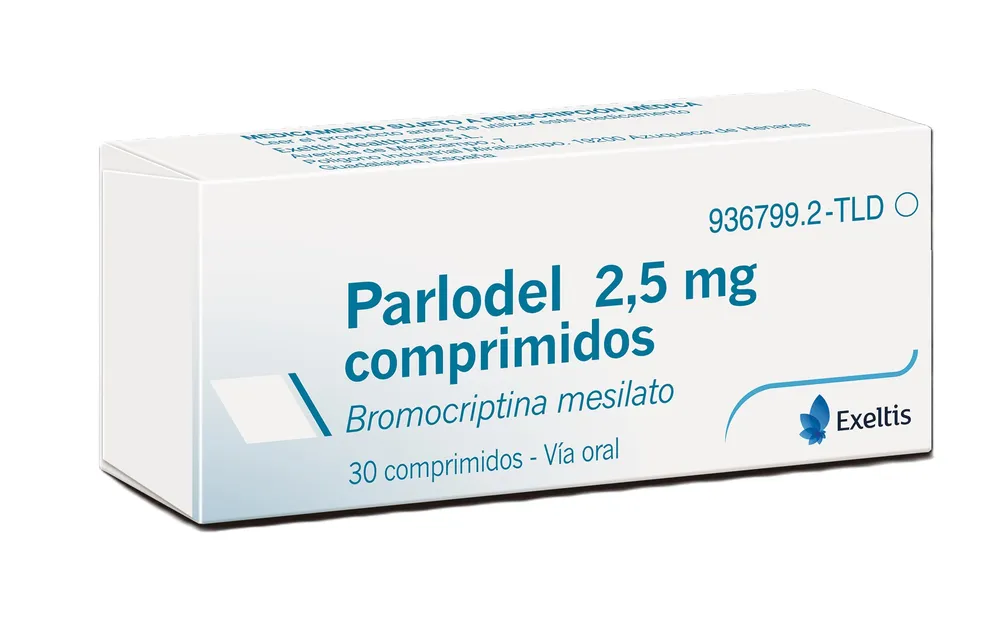
Table of Contents
- Package leaflet: Information for the user
- Introduction
- 1. What is Parlodel 2.5 mg tablets and what is it used for?
- 2. What you need to know before taking Parlodel 2.5 mg tablets
- 3. How to take Parlodel 2.5 mg tablets
- 4. Possible adverse effects
- 5. Storage of Parlodel 2.5 mg tablets
- 6. Contents of the container and additional information
- **Composition of Parlodel 2.5 mg tablets**
- **Marketing Authorization Holder**
- **Manufacturer:**
Package leaflet: Information for the user
Introduction
Package leaflet: information for the user
PARLODEL 2.5 mg tablets
Bromocriptine mesilate
Read the entire leaflet carefully before you start taking this medicine, because it contains important information for you.
- Keep this leaflet, as you may need to read it again.
- If you have any questions, ask your doctor or pharmacist.
- This medicine has been prescribed for you only and must not be given to other people, even if they have the same symptoms as you, since it could harm them.
- If you experience any adverse effects, consult your doctor or pharmacist, even if they are adverse effects not listed in this leaflet. See section 4.
Leaflet contents:
- What PARLODEL 2.5 mg tablets are and what they are used for.
- What you need to know before taking PARLODEL 2.5 mg tablets.
- How to take PARLODEL 2.5 mg tablets.
- Possible side effects.
- How to store PARLODEL 2.5 mg tablets.
- Contents of the pack and other information
1. What is Parlodel 2.5 mg tablets and what is it used for?
Parlodel contains bromocriptine, which belongs to a group of medicines known as ergot alkaloids. Parlodel reduces the release of prolactin (a hormone produced by the pituitary gland in the brain). After childbirth or abortion, it is normal for prolactin levels to rise in women, leading to milk production for breastfeeding.
Parlodel 2.5 mg tablets is used in the following cases:
- To suppress milk production for breastfeeding, only for medical reasons, and when you and your doctor have decided it is necessary.
Bromocriptine should not be used routinely to suppress milk production. It should also not be used to relieve symptoms such as breast pain and breast fullness after childbirth, if these can be adequately managed by non-medical means (such as firm breast support, ice application...) and/or the use of analgesics.
- When menstrual periods are irregular or absent, and this is due to excessively high levels of prolactin.
- Infertility in women, polycystic ovary syndrome, or anovulatory cycles associated with elevated prolactin levels.
- Impaired function of the sex glands in men (reduced sperm production, loss of libido, impotence) caused by very high levels of prolactin.
- In patients with non-malignant tumours that secrete prolactin (prolactinomas).
- In conditions where the body produces excessive amounts of growth hormone (acromegaly).
- As an adjunctive treatment for Parkinson's disease.
2. What you need to know before taking Parlodel 2.5 mg tablets
Do not take Parlodel 2.5 mg tablets:
- If you are allergic (hypersensitive) to bromocriptine or to any of the other ingredients of Parlodel 2.5 mg tablets (listed in section 6).
- If you are allergic to other medicines containing ergot alkaloids.
- If you have high blood pressure.
- If you have ever had blood pressure problems during or after pregnancy, such as eclampsia, pre-eclampsia, pregnancy-induced or postpartum high blood pressure.
- If you have or have ever had heart disease or another serious blood vessel disorder.
- If you have or have ever had a severe mental illness.
- If you are going to be treated with Parlodel for a prolonged period and you currently have or have previously had fibrotic reactions (scar tissue) affecting the heart.
Warnings and precautions
Talk to your doctor or pharmacist before starting to take Parlodel 2.5 mg tablets.
If you have recently given birth, you may be at increased risk of certain conditions. These are very rare but may include high blood pressure, heart attack, seizures, stroke, or mental problems. Therefore, your doctor will need to monitor your blood pressure regularly during the first few days of treatment. Immediately inform your doctor if you experience high blood pressure, chest pain, or unusually severe or persistent headache (with or without vision problems).
Inform your doctor if you:
- Experience excessive daytime sleepiness and fall asleep suddenly.
- Have black stools or stomach ulcers.
- Have an intolerance to certain sugars, for example, lactose (see section: Important information about some of the ingredients of Parlodel 2.5 mg tablets).
- Have or have previously had fibrotic reactions (scar tissue) affecting the heart, lungs, or abdomen.
If you are to be treated with Parlodel for a prolonged period, your doctor will assess the condition of your heart, lungs, and kidneys before starting treatment. Your doctor will also perform an echocardiogram (a test using ultrasound waves to examine the heart) before treatment begins. During treatment, your doctor will carefully monitor for any signs that could be related to a fibrotic reaction. If necessary, an echocardiogram will be repeated. If a fibrotic reaction occurs, treatment must be discontinued.
- Inform your doctor if you or your family/caregiver notice that you are developing impulses or urges to behave in an unusual way, or if you cannot resist the impulse or temptation to carry out certain activities that may be harmful to you or others. These behaviors are known as impulse control disorders and may include gambling addiction, excessive eating or spending, abnormally increased sexual drive, or increased sexual thoughts and sensations. Your doctor may need to adjust or discontinue your treatment.
- Your doctor will advise you on how to proceed if dose adjustment or discontinuation is needed, as this must be done gradually to avoid Neuroleptic Malignant Syndrome and/or withdrawal syndrome.
Immediately inform your doctor if you:
- Fall asleep suddenly.
- Have interrupted breathing or difficulty breathing.
- Have severe chest pain.
- Have lower back pain, swollen legs, or pain when urinating.
- After childbirth or abortion: if you experience severe, progressive, or persistent headaches and/or vision problems (e.g., blurred vision).
- Are being treated for a prolactinoma and suddenly develop nasal discharge.
Taking Parlodel with other medicines
Inform your doctor or pharmacist if you are taking, have recently taken, or might need to take any other medicines.
It is especially important that your doctor knows if you are taking any of the following medicines:
- Macrolide antibiotics, such as erythromycin, josamycin (used to treat infections).
- Octreotide (a medicine used to treat growth disorders and severe diarrhea).
- Protease inhibitors such as ritonavir, nelfinavir, indinavir, delavirdine (used in the treatment of HIV/AIDS).
- Medicines such as itraconazole, voriconazole (used for fungal infections).
- So-called dopaminergic antagonists (such as phenothiazines, butyrophenones, thioxanthenes, metoclopramide, and domperidone), used, for example, to treat psychiatric disorders and vomiting, as they reduce the effect of Parlodel.
The use of Parlodel is not recommended in women who, after childbirth or abortion, use medicines that constrict blood vessels, including those containing ergot alkaloids such as ergotamine.
Taking Parlodel 2.5 mg with food and drinks
Always take Parlodel with food.
Avoid consuming alcohol during treatment with Parlodel. Alcohol may increase the risk of adverse effects.
Use in children
There is no available information on the use of Parlodel in children.
Use in elderly
No special precautions are required in this population, although it is recommended to start with the lowest dose.
Pregnancy and breastfeeding
Pregnancy
If you are pregnant or breastfeeding, think you may be pregnant, or are planning to become pregnant, consult your doctor or pharmacist before using this medicine. Your doctor will inform you about the potential risks of taking Parlodel during pregnancy.
Breastfeeding
Do not take Parlodel if you are breastfeeding.
Driving and using machines
Parlodel may cause drowsiness and sudden episodes of falling asleep. Therefore, you should not drive or operate machinery until these episodes have resolved.
In addition, Parlodel may lower your blood pressure, causing dizziness. Therefore, you should exercise particular caution when driving or operating machinery.
Important information about some of the ingredients of Parlodel 2.5 mg tablets
This medicine contains lactose. If your doctor has informed you that you have an intolerance to certain sugars, consult with them before taking this medicine.
This medicine contains less than 1 mmol of sodium (23 mg) per tablet; this is essentially “sodium-free”.
3. How to take Parlodel 2.5 mg tablets
Follow exactly the instructions for administering Parlodel given by your doctor. If in doubt, consult your doctor or pharmacist again.
Oral use.
Parlodel 2.5 mg tablets may be split into two equal doses. Remember to take Parlodel with food.
The recommended dose is:
Start treatment with half a tablet (1.25 mg) on day one, taken with breakfast and with dinner, followed by one tablet twice daily for 14 days. Your doctor may then adjust your dose according to your response, or switch you to Parlodel 5 mg capsules. Continue your treatment for the duration indicated by your doctor.
If you take more Parlodel 2.5 mg tablets than you should
If you have accidentally taken more Parlodel than you should, inform your doctor immediately. You may require medical attention. In cases of overdose or accidental ingestion, contact the Toxicology Information Service at telephone number 91 562 04 20.
If you forget to take Parlodel 2.5 mg tablets
Take the missed dose as soon as possible, unless there are less than 4 hours remaining before your next dose. In this case, take the next dose at the scheduled time. Do not take a double dose to make up for missed doses.
If you stop taking Parlodel 2.5 mg tablets
Do not stop your treatment unless instructed by your doctor. Suddenly stopping Parlodel may cause adverse effects, including a rare reaction called Neuroleptic Malignant Syndrome, whose symptoms include muscle rigidity, agitation, very high fever, rapid heartbeat, and sudden changes in blood pressure.
If you have any further questions about the use of this medicine, ask your doctor or pharmacist.
4. Possible adverse effects
Like all medicines, this medicine may cause adverse effects, although not everyone experiences them.
Some adverse effects may be serious. If you experience any of the following, inform your doctor immediately:
- Stomach burning, repeated stomach pain, or black stools.
- Falling asleep suddenly.
- Unexplained shortness of breath and difficulty breathing.
- Severe chest pain.
- Lower back pain, swollen legs, and pain when urinating.
- Severe, progressive, or persistent headaches and vision problems (such as blurred vision).
- Symptoms such as muscle stiffness, agitation, very high fever, very rapid heartbeat, and sudden changes in blood pressure.
Other adverse effects. If any of the following affect you severely, inform your doctor:
- Common (may affect up to 1 in 10 patients): headache, numbness, dizziness, nasal congestion, constipation, and vomiting.
- Uncommon (may affect up to 1 in 100 patients): skin allergic reactions, hair loss, confusion, psychomotor agitation, hallucinations (seeing, hearing, smelling, or feeling things that do not exist), dry mouth, dyskinesias (difficulty performing voluntary movements), fatigue, low blood pressure—especially when standing up, which may occasionally cause fainting—and leg cramps.
- Rare (may affect up to 1 in 1,000 patients): diarrhea, stomach or abdominal pain, swelling of arms and legs, fast or slow heartbeat, irregular heartbeat, shortness of breath or difficulty breathing, psychotic/psychiatric disorders, sleep disturbances (insomnia), drowsiness, tingling or numbness in hands and feet, ringing in the ears.
- Very rare (may affect up to 1 in 10,000 patients): excessive daytime sleepiness, pale fingers on hands and feet when exposed to cold. Heart valve disorders and related disorders, e.g., inflammation (pericarditis) or fluid leakage into the pericardium (pericardial effusion).
One or more of the following symptoms may be early signs: difficulty breathing, shortness of breath, chest or back pain, and swollen legs. If you experience any of these symptoms, inform your doctor immediately.
In women after childbirth or abortion, rare cases of hypertension, myocardial infarction, seizures, stroke, or psychiatric disorders have been reported. However, the causal relationship between these adverse effects and Parlodel is uncertain.
-
You may also experience the following side effects:
-
Inability to resist the impulse to carry out an action that may be harmful, which may include:
- An intense urge to gamble excessively, despite serious personal or family consequences;
- Altered or increased sexual interest and behavior significantly affecting you or others, for example, increased sexual drive;
- Compulsive, uncontrollable shopping or spending;
- Binge eating (consuming large amounts of food in a short period of time) or compulsive eating (eating an amount of food larger than normal and more than needed to satisfy hunger).
-
Withdrawal syndrome in cases of dose reduction or discontinuation, which may include the following symptoms: apathy, anxiety, depression, fatigue, sweating, pain, etc. If you experience any of these symptoms, inform your doctor immediately.
Inform your doctor if you experience any of these behaviors; they can help you develop ways to manage or reduce the symptoms.
Reporting of adverse effects
If you experience any type of adverse effect, consult your doctor or pharmacist, even if it is a possible adverse effect not listed in this leaflet. You can also report them directly via the Spanish Pharmacovigilance System for Human Medicines: https://www.notificaRAM.es. By reporting adverse effects, you can help provide more information on the safety of this medicine.
5. Storage of Parlodel 2.5 mg tablets
Keep out of sight and reach of children.
Do not use Parlodel 2.5 mg after the expiry date stated on the packaging after “CAD” or “EXP”. The expiry date refers to the last day of the month indicated.
Store below 25 °C, in the original packaging.
Do not use Parlodel if the packaging is damaged or there are signs of tampering.
Medicines should not be disposed of via wastewater or household waste. Dispose of unused medicines and their containers at the SIGRE collection point at your pharmacy. If in doubt, ask your pharmacist how to dispose of medicines and containers you no longer need. This will help protect the environment.
6. Contents of the container and additional information
Composition of Parlodel 2.5 mg tablets
- The active substance is bromocriptine mesylate. Each tablet contains 2.87 mg of bromocriptine mesylate, equivalent to 2.5 mg of bromocriptine base.
- The other tablet components are: malic acid, anhydrous colloidal silica, disodium edetate, magnesium stearate, maize starch, lactose.
Appearance of the product and contents of the pack
Each pack of Parlodel 2.5 mg contains 30 scored tablets.
Other presentations
Parlodel 5 mg capsules: pack containing 50 capsules.
Marketing Authorization Holder
Exeltis Healthcare, S.L.
Pol. Ind. Miralcampo, Avda. de Miralcampo, 7, 19200
Azuqueca de Henares,
Guadalajara, Spain
Manufacturer:
Madaus GmbH
51101 Cologne
Germany
Date of the most recent review of this package leaflet: May 2020
Detailed and up-to-date information about this medicinal product is available on the website of the Spanish Agency for Medicines and Health Products (AEMPS) http://www.aemps.gob.es/