Paracetamol Tecnigen 1 g tablets EFG
Spain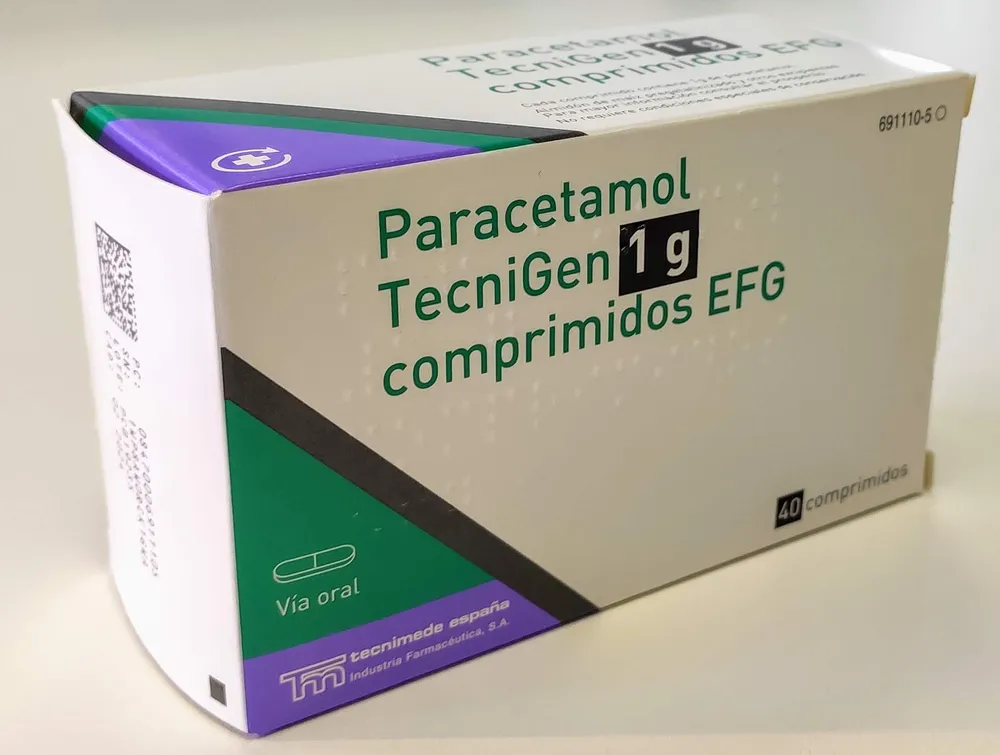
Table of Contents
- Patient Information Leaflet
- Introduction
- 1. What Paracetamol TecniGen is and what it is used for
- 2. What you need to know before taking Paracetamol Tecnigen 1 g tablets
- 3. How to Take Paracetamol TecniGen 1 g Tablets
- 4. Possible adverse effects
- 5. Storage of Paracetamol Tecnigen 1 g Tablets
- 6. Contents of the pack and other information
Patient Information Leaflet
Introduction
Patient Information Leaflet
Paracetamol Tecnigen 1 g tablets EFG
Paracetamol
Read the entire patient information leaflet carefully before you start taking this medicine, as it contains important information for you.
|
Package leaflet contents
- What Paracetamol Tecnigen 1 g tablets are and what they are used for
- What you need to know before taking Paracetamol Tecnigen 1 g tablets
- How to take Paracetamol Tecnigen 1 g tablets
- Possible side effects
- Storage of Paracetamol Tecnigen 1 g tablets
- Contents of the pack and other information
1. What Paracetamol TecniGen is and what it is used for
Paracetamol TecniGen 1 g tablets belong to a group of medicines called analgesics and antipyretics.
Paracetamol TecniGen 1 g tablets are indicated for the symptomatic treatment of moderate-intensity pain from any cause, such as: postoperative and postpartum pain, rheumatic pain (osteoarthritis and rheumatoid arthritis), lumbago, torticollis, sciatica, neuralgia, back pain, muscle pain, menstrual pain, headache, and dental pain. It is also indicated for febrile conditions and for the discomfort associated with colds and flu.
Paracetamol 1 g is suitable for adults and adolescents aged 16 years and older (weighing at least 50 kg).
2. What you need to know before taking Paracetamol Tecnigen 1 g tablets
Do not take Paracetamol Tecnigen 1 g tablets
- If you are allergic to paracetamol, propacetamol, or any of the other ingredients of this medicine (listed in section 6).
Warnings and precautions
- if you have a chronic alcohol-related condition,
- if you have impaired liver function (liver inflammation, Gilbert's syndrome),
- if you have severe renal impairment,
- if you suffer from dehydration and chronic malnutrition,
- if you have asthma and are sensitive to aspirin,
- if you have glucose-6-phosphate dehydrogenase enzyme deficiency (enzymatic deficiency),
- if you have hemolytic anemia (abnormal destruction of red blood cells).
During treatment with Paracetamol Tecnigen, inform your doctor immediately:
If you have serious conditions such as severe renal impairment or sepsis (when bacteria and their toxins circulate in the blood, causing organ damage), or if you suffer from malnutrition, chronic alcoholism, or are also taking flucloxacillin (an antibiotic). A serious condition called metabolic acidosis (an abnormality in blood and body fluids) has been reported in patients in these situations when paracetamol is used at regular doses over a prolonged period or when paracetamol is taken together with flucloxacillin. Symptoms of metabolic acidosis may include: severe breathing difficulty with deep and rapid breathing, drowsiness, feeling unwell (nausea), and vomiting.
Do not take paracetamol unless prescribed by your doctor if you have had problems with alcohol or liver damage. In these patients, the dose should be reduced (see section 3. "How to take Paracetamol Tecnigen").
If you are simultaneously taking other medicines containing paracetamol, do not take Paracetamol Tecnigen without first consulting your doctor or pharmacist.
Never take more Paracetamol Tecnigen than recommended. Higher doses do not increase pain relief and may cause severe liver damage (see section 3. "How to take Paracetamol Tecnigen").
Long-term treatment, high doses, or misuse of painkillers may lead to headaches that should not be treated with higher doses of this medicine.
In general, regular use of painkillers, particularly combinations of different pain-relieving substances, may lead to permanent kidney damage with risk of kidney failure (analgesic nephropathy).
Sudden discontinuation after long-term treatment, high doses, or misuse of painkillers may lead to headaches, fatigue, muscle pain, restlessness, and symptoms of the autonomic nervous system. These withdrawal symptoms disappear within a few days. Until then, further use of painkillers should be avoided and restarting treatment should not occur without medical advice.
Consult your doctor or pharmacist before starting to take Paracetamol Tecnigen 1 g tablets.
Taking Paracetamol Tecnigen with other medicines:
Inform your doctor or pharmacist if you are taking, have recently taken, or might need to take any other medicines.
Medicines that may affect the effect of paracetamol include:
- probenecid (a medicine used to treat gout)
- medicines that may cause possible liver damage, for example phenobarbital (medicines to help sleep), phenytoin, carbamazepine, primidone (medicines used to treat epilepsy), and rifampicin (medicines used to treat tuberculosis): Concurrent use of these medicines with paracetamol may cause liver damage.
- isoniazid (a medicine used to treat tuberculosis) and salicylamide (a pain medicine) may lead to higher concentrations of paracetamol in your body.
- metoclopramide and domperidone (medicines used to treat nausea): These may increase the absorption and onset of action of paracetamol.
- medicines that slow stomach emptying: These may delay the absorption and onset of action of paracetamol.
- cholestyramine (a medicine to reduce elevated serum lipid levels): This may reduce the absorption and onset of action of paracetamol. Therefore, cholestyramine should not be taken within one hour after administration of paracetamol.
- blood-thinning medicines (oral anticoagulants, particularly warfarin): Repeated use of paracetamol for more than one week increases the tendency to bleed. Therefore, long-term administration of paracetamol should only occur under medical supervision. Occasional use of paracetamol does not have significant effects on bleeding tendency.
Medicines that may be affected by paracetamol:
-
lamotrigine (a medicine for epilepsy) may have its effect reduced when taken together with paracetamol.
-
Concurrent use of paracetamol and AZT (zidovudine, a medicine used to treat HIV infections) increases the risk of liver damage and increases the risk of reduced white blood cells (neutropenia). This may affect the immune system and increase the risk of infections. Therefore, paracetamol should only be used concurrently with zidovudine under medical advice.
-
flucloxacillin (antibiotic), due to a serious risk of blood and fluid abnormalities (called metabolic acidosis) that require urgent treatment (see section 2).
Effects of paracetamol on laboratory tests
Taking paracetamol may affect uric acid tests using phosphotungstic acid and glucose analyses.
Taking Paracetamol Tecnigen 1 g tablets with food and drinks
The use of paracetamol in patients who regularly consume alcohol (three or more alcoholic drinks per day—beer, wine, spirits, etc.) may cause liver damage.
The tablets may be taken with or without food.
Pregnancy and breastfeeding
If you are pregnant or breastfeeding, think you may be pregnant, or plan to become pregnant, consult your doctor or pharmacist before using this medicine.
No effects on newborns are known.
If necessary, paracetamol may be used during pregnancy. However, consult your doctor before using paracetamol for prolonged periods if you are pregnant.
Paracetamol passes into breast milk in small amounts. As no adverse effects on infants are known, paracetamol may be used during breastfeeding. However, consult your doctor before using paracetamol for prolonged periods if you are breastfeeding.
Driving and using machines
No effects affecting the ability to drive or operate machinery have been reported.
3. How to Take Paracetamol TecniGen 1 g Tablets
Follow exactly the instructions for use of this medicine provided by your doctor or pharmacist. If in doubt, consult your doctor or pharmacist again.
The dose of paracetamol depends on body weight and age; the usual dose is 10 to 15 mg of paracetamol per kg of body weight as a single dose, up to a maximum of 60 mg/kg body weight, not exceeding 3 tablets (equivalent to 3000 mg of paracetamol).
There should be an interval of at least 6 hours between doses, meaning a maximum of 4 doses per day. Be careful not to exceed the maximum daily dose.
If pain persists for more than 5 days, or fever lasts more than 3 days, or if symptoms worsen or new symptoms appear, you should stop treatment and consult a doctor.
Body weight and age | Single dose | Maximum daily dose (24 hours) |
Over 50 kg: Adolescents over 16 years of age and adults | ½-1 tablet (equivalent to 500-1000 mg of paracetamol) | 3 tablets (equivalent to 3000 mg of paracetamol) |
Method of administration
The tablets should be taken without chewing, with a sufficient amount of liquid.
Special patient groups
Patients with renal impairment
In patients with renal impairment, the dose should be reduced.
In patients with renal or hepatic impairment, the dose should be reduced or the dosing interval prolonged. Consult your physician or pharmacist.
Patients with chronic alcoholism or hepatic impairment
Being a chronic consumer of alcohol or having hepatic impairment may lower the toxicity threshold of paracetamol.
In these patients, the dose should be reduced or the dosing interval prolonged. Consult your physician or pharmacist.
Elderly patients
No dose adjustment is required in elderly patients.
Use in children and adolescents
This medicine should not be used in children and adolescents under 16 years of age weighing less than 50 kg, as the dose is not suitable for this patient group. Other formulations and doses are available for this group of patients.
If you think that the effect of this medicine is too strong or too weak, please consult your physician or pharmacist.
If you take more Paracetamol Tecnigen 1 g tablets than you should
The total daily dose of paracetamol must not exceed 60 mg/kg/day and must not exceed 3000 mg (equivalent to 3 tablets).
The consequences of overdose can be serious and, in rare cases, may even lead to death.
If you take more paracetamol than recommended, seek immediate medical attention as soon as possible, even if you feel well. There is a risk of delayed liver damage. To prevent potential liver damage, it is important that an antidote be administered by a physician as soon as possible.
In case of overdose or accidental ingestion, contact your physician or pharmacist immediately or call the Toxicology Information Service at telephone number: 91 562 04 20, indicating the medicine and the amount ingested.
If you forget to take Paracetamol Tecnigen 1 g tablets
Do not take a double dose to make up for the forgotten dose.
If you forget to take your scheduled dose, take it as soon as you remember. However, if the time for the next dose is approaching, skip the missed dose and take the next dose at the usual time.
If you have any further questions about the use of this medicine, ask your physician or pharmacist.
4. Possible adverse effects
Like all medicines, Paracetamol Tecnigen 1 g tablets can cause adverse effects, although not everyone experiences them.
You must stop taking paracetamol and see your doctor immediately if you experience symptoms of angioedema, such as:
- swelling of the face, tongue or pharynx
- difficulty swallowing
- urticaria and difficulty breathing
Rare (affects between 1 and 10 out of 10,000 patients):
- hypersensitivity reactions, such as skin rash or urticaria
- in sensitive patients, narrowing of the airways with respiratory failure and asthma-like symptoms (analgesic-induced asthma)
- blood formation disorders, coagulation disorders
- abdominal pain, bleeding, diarrhoea, nausea, vomiting, dizziness, fever, sweating, sedation
- tremor, headache, abnormal vision
- depression, confusion, hallucinations
- overdose and poisoning
- abnormal liver function, kidney failure, jaundice, slight increase in certain liver enzymes (serum transaminases)
Very rare (affects less than 1 out of 10,000 patients):
- hepatotoxicity (liver damage caused by chemical substances)
- hypersensitivity reactions requiring discontinuation of treatment (severe immediate allergic reaction)
- reduced platelet count, decreased levels of certain white blood cells, abnormal destruction of red blood cells (haemolytic anaemia)
- decreased blood sugar levels
- cloudy urine and kidney abnormalities
- Very rare cases of serious skin reactions have been reported
Unknown (frequency cannot be estimated from available data):
- epidermal necrolysis (a skin disorder that may be life-threatening), erythema multiforme (allergic reaction or skin infection), Stevens-Johnson syndrome (a potentially serious and life-threatening skin disorder)
- inflammation of the kidneys (interstitial nephritis) after prolonged use at high doses
- cases of angioedema and anaphylactic shock have been reported. In case of anaphylactic shock, call a doctor immediately
- a serious disease that may cause blood to become more acidic (called metabolic acidosis) in patients with severe illness taking paracetamol (see section 2)
Paracetamol may cause a reduction in the number of white blood cells, which may decrease resistance to infections. If you develop an infection with symptoms such as fever and a serious deterioration in your general condition, or fever with signs of local infection such as sore throat/pharynx/mouth irritation or urinary problems, you should see a doctor immediately. A blood test will be necessary to check for a possible decrease in white blood cells (agranulocytosis). It is important that you inform your doctor about your medication.
If you experience any adverse effects, consult your doctor or pharmacist, even if they are adverse effects not listed in this leaflet.
5. Storage of Paracetamol Tecnigen 1 g Tablets
This medicine does not require any special storage conditions.
Keep this medicine out of the sight and reach of children.
Do not use this medicine after the expiry date stated on the packaging after EXP. The expiry date refers to the last day of the month indicated.
“Medicines should not be disposed of via wastewater or household waste. Dispose of containers and unused medicines at the SIGRE Point in your pharmacy. If you are in doubt, please ask your pharmacist how to dispose of containers and medicines you no longer need. This way, you will help protect the environment.”
6. Contents of the pack and other information
Composition of Paracetamol Tecnigen 1 g tablets
-
The active substance is paracetamol. Each tablet contains 1000 mg (= 1 g) of paracetamol.
-
The other components are: pregelatinized corn starch (gluten-free), stearic acid, povidone, crospovidone, microcrystalline cellulose and vegetable-source magnesium stearate.
Appearance of the product and contents of the pack
Paracetamol Tecnigen 1 g tablets are presented as tablets for oral administration, in packs of 20 and 40 tablets.
The tablets are scored, allowing them to be split in half to facilitate swallowing.
Marketing Authorization Holder and Manufacturer
Marketing Authorization Holder
Tecnimede España Industria Farmacéutica, S.A.
Avda. Bruselas, 13
28108 Alcobendas (Madrid)
Manufacturer:
SAG Manufacturing SLU
Crta N-I, Km 36
28750 San Agustin de Guadalix, Madrid
Spain
Date of the most recent review of this leaflet: January 2025
“Detailed and up-to-date information on this medicine is available on the website of the Spanish Agency of Medicines and Health Products (AEMPS) http://www.aemps.gob.es/”