Pantoprazole Viatris 20 mg gastro-resistant tablets EFG
Spain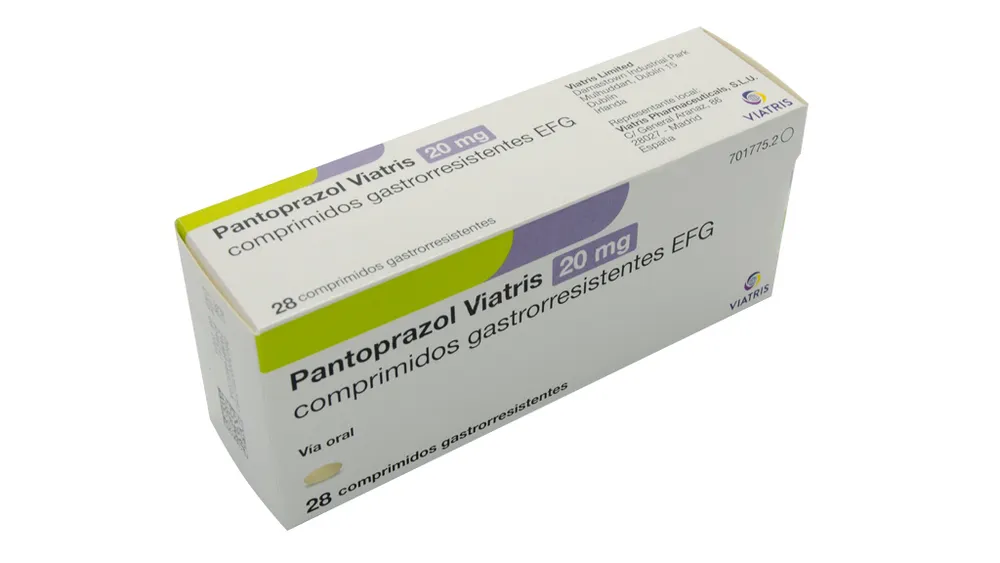
Table of Contents
- Package leaflet: Information for the user
- Introduction
- 1. What is Pantoprazol Viatris and what is it used for
- 2. What you need to know before taking Pantoprazol Viatris
- 3. How to take Pantoprazol Viatris
- 4. Possible adverse effects
- 5. Storage of Pantoprazole Viatris
- 6. Contents of the pack and other information
Package leaflet: Information for the user
Introduction
Package leaflet: Information for the patient
Pantoprazole Viatris 20 mg gastro-resistant tablets EFG
Read all of this leaflet carefully before you start taking this medicine, because it contains important information for you.
- Keep this leaflet, as you may need to read it again.
- If you have any questions, ask your doctor or pharmacist.
- This medicine has been prescribed for you only and must not be given to other people, even if they have the same symptoms as you. It could harm them.
- If you experience any adverse effects, consult your doctor or pharmacist, even if they are adverse effects not listed in this leaflet. See section 4.
Contents of the leaflet
- What Pantoprazole Viatris is and what it is used for
- What you need to know before taking Pantoprazole Viatris
- How to take Pantoprazole Viatris
- Possible side effects
- How to store Pantoprazole Viatris
- Contents of the pack and other information
1. What is Pantoprazol Viatris and what is it used for
Pantoprazole is a selective "proton pump inhibitor" that reduces acid secretion in the stomach. It is used to treat conditions related to acid secretion in the stomach and intestine.
Pantoprazole may be used:
Adults and adolescents aged 12 years and older:
- Treatment of symptoms (e.g., heartburn, acid regurgitation, painful swallowing) associated with gastroesophageal reflux disease caused by reflux of stomach acid.
- Long-term treatment and prevention of relapses of reflux esophagitis (inflammation of the esophagus accompanied by regurgitation of stomach acid).
Adults:
- Prevention of gastroduodenal ulcers induced by non-steroidal anti-inflammatory drugs (NSAIDs, e.g., ibuprofen), in at-risk patients who require ongoing NSAID therapy.
2. What you need to know before taking Pantoprazol Viatris
Do not take Pantoprazol Viatris:
- If you are allergic to pantoprazole or to any of the other ingredients of this medicine (listed in section 6).
- If you are allergic to medicines containing other proton pump inhibitors.
Warnings and precautions:
Consult your doctor or pharmacist before starting to take Pantoprazol Viatris:
-
If you have severe liver disease. Please inform your doctor if you have ever had liver problems in the past. Your doctor will monitor your liver enzymes more frequently, especially if you are taking pantoprazole as long-term treatment. If liver enzymes increase, treatment should be stopped.
-
If you need to take NSAIDs continuously and are receiving pantoprazole, as you have an increased risk of developing stomach and intestinal complications. Any increase in risk will be assessed according to your personal risk factors, such as your age (65 years or older), history of gastric or duodenal ulcers, or gastrointestinal bleeding.
-
If you have vitamin B12 deficiency or risk factors for such deficiency and are receiving long-term pantoprazole treatment. As with all agents that reduce acid, pantoprazole may lead to decreased absorption of vitamin B12. Consult your doctor if you experience any of the following symptoms, which could indicate vitamin B12 deficiency:
-
Extreme tiredness or lack of energy
-
Tingling
-
Tongue pain or red tongue, mouth ulcers
-
Muscle weakness
-
Vision disturbances
-
Memory problems, confusion, depression
-
If you are taking atazanavir (for treatment of HIV infection) at the same time as pantoprazole, consult your doctor for advice.
-
Taking a proton pump inhibitor such as pantoprazole, especially for more than one year, may slightly increase your risk of fractures of the hip, wrist, or spine. Inform your doctor if you have osteoporosis (reduced bone density) or have been told you are at risk of osteopor游戏副本
3. How to take Pantoprazol Viatris
Follow exactly the instructions given by your doctor for taking this medicine. If in doubt, consult your doctor or pharmacist again.
When and how should you take Pantoprazol Viatris?
Take the tablets 1 hour before a meal, without chewing or crushing them, swallowing them whole with a little water.
Unless otherwise directed by your doctor, the recommended dose is:
Adults and adolescents aged 12 years and older:
Treatment of symptoms (e.g., heartburn, acid regurgitation, pain when swallowing) associated with gastroesophageal reflux disease
The recommended dose is one tablet per day. Healing is usually achieved within 2–4 weeks—no later than 4 additional weeks. Your doctor will advise you on how long you should continue taking the medicine. After that, any recurrent symptoms may be managed by taking 1 tablet per day as needed.
Long-term treatment and prevention of relapses of reflux esophagitis
The recommended dose is one tablet per day. If the disease recurs, your doctor may double the dose; in these cases, you may take pantoprazole 40 mg tablets, one per day. Once healing is achieved, the dose may be reduced again to one 20 mg tablet per day.
Adults:
Prevention of gastroduodenal ulcers in at-risk patients requiring ongoing NSAID treatment
The recommended dose is one tablet per day.
Special patient groups:
-
If you have severe liver problems, you should not take more than one 20 mg tablet per day.
-
Children under 12 years: These tablets are not recommended for children under 12 years of age.
If you take more Pantoprazol Viatris than you should
Consult your doctor or pharmacist. Symptoms of overdose are not known.
In case of overdose or accidental ingestion, contact your doctor or pharmacist immediately, call the Toxicology Information Service at 91 562 04 20 (indicating the medicine and the amount ingested), or go to the nearest hospital. Bring the packaging and any remaining tablets with you.
If you forget to take Pantoprazol Viatris
Do not take a double dose to make up for forgotten doses. Take your next dose at the usual time.
If you stop taking Pantoprazol Viatris
Do not stop taking the tablets without first talking to your doctor or pharmacist.
If you have any further questions about the use of this medicine, ask your doctor or pharmacist.
4. Possible adverse effects
Like all medicines, this medicine can cause adverse effects, although not everyone experiences them.
If you experience any of the following adverse effects, stop taking these tablets and contact a doctor immediately or go to the nearest hospital emergency department:
Rare (may affect up to 1 in 1,000 people)
- Severe allergic reactions: swelling of the tongue and/or throat, difficulty swallowing, hives (rash), difficulty breathing, facial allergic swelling (angioedema/Quincke's edema), severe dizziness with very rapid heartbeat and excessive sweating.
- Reduction in the number of white and red blood cells and/or platelets, which may be seen in a blood test. You may notice more frequent infections, or you may bruise or bleed more than usual.
Frequency not known (cannot be estimated from available data)
- Serious skin diseases: you may notice one or more of the following symptoms – skin blisters and rapid deterioration in your general condition, erosion (including slight bleeding) of the eyes, nose, mouth/lips or genitals, skin sensitivity/irritation, particularly in areas of skin exposed to light/sun. You may also have joint pain or flu-like symptoms, fever, swollen glands (for example, in the armpit), and blood tests may show changes in certain white blood cells or liver enzymes.
- Slightly reddish, target-shaped or circular rashes on the trunk, often with blisters in the center, skin peeling, mouth, throat, nose, genital or eye ulcers. These severe rashes may be preceded by fever and flu-like symptoms (Stevens-Johnson syndrome, toxic epidermal necrolysis).
- Widespread rash, elevated body temperature, and swollen lymph nodes (DRESS syndrome or drug hypersensitivity syndrome).
Other serious illnesses: yellowing of the skin or whitening of the eyes (serious liver cell damage, jaundice), or fever, skin rash and swelling of the kidneys, sometimes with pain on urination and mild back pain (serious kidney inflammation that may worsen to kidney failure).
Other adverse effects are:
Common (may affect up to 1 in 10 people)
- Benign gastric polyps.
Uncommon (may affect up to 1 in 100 people)
- Headache; dizziness; diarrhoea; nausea, vomiting; bloating and flatulence; constipation; dry mouth; abdominal pain and discomfort; skin rash, exanthema, pruritus; itching; feeling of weakness, exhaustion or general malaise; sleep disorders; hip, wrist or spinal fracture.
Rare (may affect up to 1 in 1,000 people)
- Disturbance or complete loss of taste sensation, visual disturbances such as blurred vision; urticaria; joint pain; muscle pain; weight changes; increased body temperature; swelling of the limbs (peripheral oedema); depression; breast enlargement in men.
Frequency not known (cannot be estimated from available data)
- Hallucinations, confusion (especially in patients with a history of these symptoms); tingling sensation, numbness, pins and needles, burning sensation or anaesthesia, inflammation of the large intestine causing persistent watery diarrhoea.
Adverse effects identified through blood tests:
- Uncommon (may affect up to 1 in 100 people)
Elevated liver enzymes.
- Rare (may affect up to 1 in 1,000 people)
Increased bilirubin; increased blood triglycerides.
- Frequency not known (cannot be estimated from available data)
Decreased levels of sodium, magnesium, calcium or potassium in the blood (see section 2).
Reporting of adverse effects:
If you experience any type of adverse effect, talk to your doctor, pharmacist or nurse, even if it is a possible adverse effect not listed in this leaflet. You can also report them directly via the Spanish Pharmacovigilance System for Human Medicinal Products: https://www.notificaram.es. By reporting adverse effects, you can help provide more information on the safety of this medicine.
5. Storage of Pantoprazole Viatris
Keep this medicine out of the sight and reach of children.
Do not use this medicine after the expiry date stated on the packaging after EXP or CAD. The expiry date refers to the last day of the month indicated.
For blister packs: This medicine does not require special storage conditions.
For PVC/PE/PVdC blisters: Do not store above 25°C.
For HDPE bottles: Once opened, use within 100 days. Keep the container tightly closed to protect it from moisture.
Medicines must not be disposed of via wastewater or household waste. Dispose of empty containers and unused medicines at the SIGRE collection point at your pharmacy. If you are unsure, ask your pharmacist how to dispose of unused medicines and their containers. This will help protect the environment.
6. Contents of the pack and other information
Composition of Pantoprazol Viatris
The active substance is sodium pantoprazole sesquihydrate, equivalent to 20 mg of pantoprazole.
The other components are sodium carbonate, mannitol, crospovidone, povidone and calcium stearate. The coating contains methacrylic acid-acrylic acid copolymer (1:1), sodium lauryl sulfate, polysorbate 80, triethyl citrate, hypromellose, titanium dioxide, macrogol 400 and yellow iron oxide.
Appearance of the product and contents of the pack
Pantoprazol Viatris are yellowish-ochre, film-coated tablets, oval-shaped, approximately 4.3 mm x 8.4 mm, biconvex, with a blank surface on both sides. They are available in plastic bottles and blisters.
White HDPE bottle with screw cap containing 14, 28, 30, 50, 56, 60, 90, 98, 100 or 250 tablets. The bottle also contains a small plastic bag with silica gel or a sachet containing silica gel and activated carbon, to protect the tablets from moisture. The bag or sachet is not edible and must not be removed from the bottle.
Aluminum blister, with or without a desiccant layer, packed in cardboard boxes containing 7, 14, 14x1, 28, 28x1, 30, 56, 70, 70x1, 96 or 98 tablets.
PVC/PE/PVDC blister with aluminum foil seal, packed in cardboard boxes containing 7, 14, 14x1, 28, 28x1, 30, 56, 70, 70x1, 96 or 98 tablets.
Only certain pack sizes may be marketed.
Marketing Authorization Holder and Manufacturer
Marketing Authorization Holder
Viatris Limited
Damastown Industrial Park
Mulhuddart, Dublin 15
Dublin
Ireland
Manufacturers
Mcdermott Laboratories Ltd. T/A Gerard Laboratories
35/36 Baldoyle Industrial Estate
Grange Road, Dublin 13
Ireland
or
Mylan Hungary Kft
H-2900 Komarom
Mylan utca 1
Hungary
or
Mylan Germany GmbH
Zweigniederlassung Bad Homburg v. d. Höhe
Benzstrasse 1, 61352, Bad Homburg v. d. Höhe
Germany
or
Logiters, Logística Portugal, S.A.
Estrada dos Arneiros, 4
Azambuja, 2050-306
Portugal
For further information about this medicinal product, please contact the local representative of the Marketing Authorization Holder:
Viatris Pharmaceuticals, S.L.U.
C/ General Aranaz, 86
28027 - Madrid
Spain
This medicinal product is authorized in the European Economic Area member states under the following names:
| Country | Name of the medicinal product | |--------|-------------------------------| | Germany | Pantoprazol dura 20 mg magensaftresistente Tabletten | | Belgium | Pantoprazole Viatris 20 mg maagsapresistente tabletten | | Denmark | Pantoprazol Viatris enterotabletter 20 mg | | Slovakia | Pantomyl 20 mg | | Slovenia | PANSEMYL 20 mg gastrorezistentne tablete | | Spain | Pantoprazol Viatris 20 mg comprimidos gastrorresistentes EFG | | Finland | Pantoprazol Viatris 20 mg enterotabletti | | France | PANTOPRAZOLE VIATRIS 20 mg comprimé gastro-résistant | | Ireland | Pantoprazole Mylan 20 mg Gastro-resistant tablets | | Luxembourg | Pantoprazole Viatris 20 mg comprimé gastro-résistant | | Malta | Pantoprazole Mylan 20 mg Gastro-resistant tablets | | Netherlands | Pantoprazol Viatris 20 mg maagsapresistente tabletten | | Poland | Pamyl 20 mg tabletki dojelitowe | | Portugal | Pantoprazol Mylan 20 mg Comprimido gastrorresistente | | Sweden | Pantoprazol Viatris 20 mg enterotabletter |
Date of the most recent review of this leaflet: August 2024
Detailed information on this medicinal product is available on the website of the Spanish Agency of Medicines and Health Products (AEMPS): https://www.aemps.gob.es/