Pantoprazole Tarbis 40 mg powder for injection solution EFG
Spain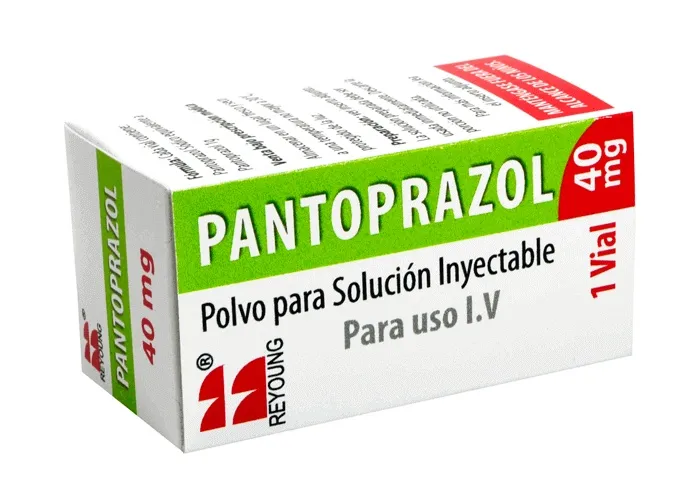
Table of Contents
- Package leaflet: Information for the user
- Introduction
- 1. What is Pantoprazol Tarbis and what is it used for?
- 2. What you need to know before using Pantoprazol Tarbis
- 3. How to use Pantoprazol Tarbis
- 4. Possible adverse effects
- 5. Storage of Pantoprazol Tarbis
- 6. Contents of the pack and other information
Package leaflet: Information for the user
Introduction
Package leaflet: information for the user
Pantoprazole Tarbis 40 mg powder for injection solution EFG
Read the entire leaflet carefully before you start taking this medicine, as it contains important information for you.
- Keep this leaflet, as you may need to read it again.
- If you have any questions, ask your doctor, pharmacist, or nurse.
- This medicine has been prescribed for you only and must not be given to other people, even if they have the same symptoms as you, since it may harm them.
- If you experience any adverse reactions, consult your doctor, pharmacist, or nurse, even if they are adverse reactions not listed in this leaflet. See section 4.
Leaflet contents
- What Pantoprazole Tarbis is and what it is used for
- What you need to know before using Pantoprazole Tarbis
- How to use Pantoprazole Tarbis
- Possible adverse effects
- How to store Pantoprazole Tarbis
- Contents of the pack and other information
1. What is Pantoprazol Tarbis and what is it used for?
Pantoprazol Tarbis contains the active substance pantoprazol. Pantoprazol Tarbis is a selective proton pump inhibitor, a medicine that reduces the amount of acid produced in your stomach. It is used for the treatment of acid-related disorders of the stomach and intestine.
This medicine is administered by intravenous injection and will only be given to you if your doctor considers that an injection of pantoprazol is currently more suitable for you than pantoprazol tablets. Tablets will replace the injections as soon as your doctor considers it appropriate.
Pantoprazol is used for the treatment in adults of:
- Gastroesophageal reflux esophagitis. This is inflammation of your esophagus (the tube connecting your throat to your stomach) accompanied by regurgitation of acid from the stomach.
- Stomach and duodenal ulcers
- Zollinger-Ellison syndrome and other conditions in which excessive acid is produced in the stomach.
2. What you need to know before using Pantoprazol Tarbis
Do not use Pantoprazol Tarbis
- If you are allergic to pantoprazole or to any of the other components of this medicine (listed in section 6)
- If you are allergic to medicines containing other proton pump inhibitors
Warnings and precautions
Talk to your doctor, pharmacist, or nurse before starting this medicine
- If you have severe liver problems. Inform your doctor if you have ever had liver problems. Your doctor will monitor your liver enzymes more frequently. If liver enzymes increase, treatment should be discontinued.
- Consult your doctor if you are taking HIV protease inhibitors such as atazanavir (for treatment of HIV infection) at the same time as pantoprazole.
- Taking a proton pump inhibitor such as pantoprazole, especially for more than one year, may increase the risk of fractures of the hip, wrist, or spine.
- Inform your doctor if you have osteoporosis (reduced bone density) or have been told you are at risk of osteoporosis (for example, if you are taking corticosteroids).
- If you take this medicine for more than three months, your blood magnesium levels may decrease. Low magnesium levels can cause fatigue, involuntary muscle contractions, disorientation, seizures, dizziness, and increased heart rate. If you experience any of these symptoms, contact your doctor immediately. Low magnesium levels may also lead to decreased potassium and calcium levels in the blood. Your doctor may decide to perform periodic blood tests to monitor magnesium levels.
- If you have ever had a skin reaction after treatment with a medicine similar to pantoprazole used to reduce stomach acidity.
- If you develop a skin rash, especially in areas of skin exposed to sunlight, consult your doctor as soon as possible, as it may be necessary to discontinue treatment with this medicine. Remember to mention any other symptoms you may notice, such as joint pain.
- Serious skin reactions have been reported with pantoprazole treatment, including Stevens-Johnson syndrome, toxic epidermal necrolysis, drug reaction with eosinophilia and systemic symptoms (DRESS), and erythema multiforme. Stop taking pantoprazole and contact your doctor immediately if you experience any symptoms related to serious skin reactions described in section 4.
- If you are scheduled to have a specific blood test (chromogranin A).
Contact your doctor immediately, before or after taking this medicine, if you notice any of the following symptoms, which may be signs of more serious conditions:
- Unintentional weight loss
- Vomiting, particularly if repeated
- Blood in vomit: this may appear as dark, coffee-ground-like material in your vomit
- Blood in your stools, which may appear black or tarry (melena)
- Difficulty swallowing, or pain when swallowing
- Pale appearance and feeling weak (anemia)
- Chest pain
- Stomach pain
- Severe or persistent diarrhea, as pantoprazole has been associated with a small increased risk of infectious diarrhea.
Your doctor will decide whether additional tests are needed to rule out malignant disease, as pantoprazole may relieve cancer symptoms and could delay diagnosis. If your symptoms persist despite treatment, further investigations will be carried out.
Children and adolescents
The use of this medicine is not recommended in children, as it has not been studied in individuals under 18 years of age.
Other medicines and Pantoprazol Tarbis
Inform your doctor or pharmacist if you are taking, have recently taken, or might need to take any other medicines, including those obtained without a prescription.
Pantoprazole may affect the effectiveness of other medicines. Inform your doctor if you are taking:
- Medicines such as ketoconazole, itraconazole, and posaconazole (used to treat fungal infections), as pantoprazole may reduce the effectiveness of these and other medicines.
- Warfarin and phenprocoumon, which affect blood clotting. You may require additional monitoring.
- Medicines used to treat HIV infection, such as atazanavir.
- Methotrexate (used to treat rheumatoid arthritis, psoriasis, and cancer). If you are taking methotrexate, your doctor may temporarily discontinue this medicine, as pantoprazole may increase methotrexate levels in the blood.
- Fluvoxamine (used to treat depression and other psychiatric disorders). If you are taking fluvoxamine, your doctor may reduce your dose.
- Rifampicin (used to treat infections)
- St. John’s wort (Hypericum perforatum) (used to treat mild depression)
Talk to your doctor before taking pantoprazole if you are scheduled to undergo a specific urine test (for THC, tetrahydrocannabinol).
Pregnancy, breastfeeding, and fertility
There are insufficient data on the use of pantoprazole in pregnant women. It has been reported that pantoprazole is excreted in human breast milk.
If you are pregnant or breastfeeding, think you may be pregnant, or are planning to become pregnant, consult your doctor or pharmacist before using this medicine.
You should only use this medicine if your doctor considers that the benefit to you outweighs the potential risk to the fetus or baby.
Driving and using machines
Pantoprazole has no effect or only a negligible effect on the ability to drive or operate machinery.
However, you should not drive or operate machinery if you experience adverse effects such as dizziness or blurred vision.
Important information about some of the components of Pantoprazol Tarbis
This medicine contains less than 23 mg of sodium (1 mmol) per vial; essentially, it is "sodium-free".
3. How to use Pantoprazol Tarbis
Your nurse or doctor will administer the daily dose as an intravenous injection over a period of 2–15 minutes.
The recommended dose is:
Adults
For the treatment of gastric ulcers, duodenal ulcers, and reflux esophagitis.
One vial (40 mg of pantoprazole) per day.
For long-term treatment of Zollinger-Ellison syndrome and other conditions associated with increased gastric acid secretion.
Two vials (80 mg of pantoprazole) per day.
Subsequently, your doctor may adjust your dose depending on the amount of gastric acid secreted. If more than two vials (80 mg) per day are prescribed, the injections will be given in equal doses. Your doctor may temporarily prescribe a dose of more than four vials (160 mg) per day. If rapid control of stomach acid levels is needed, an initial dose of 160 mg (four vials) should be sufficient to considerably reduce gastric acid production.
Patients with liver problems
If you have severe liver problems, the daily injection should be only 20 mg (half a vial).
Use in children and adolescents
The use of this injection is not recommended in children and adolescents under 18 years of age.
If you use more Pantoprazol Tarbis than you should
This medicine is carefully controlled by your nurse or doctor, so it is very unlikely that you will receive more than you should. There are no known symptoms of overdose.
If you have any further questions about the use of this medicine, ask your doctor, pharmacist, or nurse.
4. Possible adverse effects
Like all medicines, this medicine can cause adverse effects, although not everyone will experience them.
If you consider any of the adverse effects you experience to be severe, or if you notice any adverse effects not mentioned in this leaflet, please inform your doctor or pharmacist.
-
Severe allergic reactions (rare frequency – may affect up to 1 in 1,000 people): swelling of the tongue and/or throat, difficulty swallowing, skin rash (urticaria), difficulty breathing, allergic swelling of the face (Quincke's edema/angioedema), severe dizziness with very rapid heartbeat and excessive sweating.
-
Severe skin disorders (frequency not known; frequency cannot be estimated from available data): you may notice one or more of the following – skin blisters and rapid deterioration in general condition, erosion (including slight bleeding) of eyes, nose, mouth/lips or genitals, or skin sensitivity/rash, particularly in areas of skin exposed to light/sun. You may also experience joint pain or flu-like symptoms, fever, swollen glands (e.g., in the armpit), and blood tests may show changes in certain white blood cells or liver enzymes; circular or target-shaped slightly reddish spots on the trunk, often with blisters in the center, skin peeling, mouth, throat, nose, genital or eye ulcers. These severe rashes may be preceded by fever and flu-like symptoms (Stevens-Johnson syndrome, toxic epidermal necrolysis), generalized rash, high body temperature, and swollen lymph nodes (DRESS or drug hypersensitivity syndrome).
-
Other serious conditions (frequency not known): yellowing of the skin and whites of the eyes (severe liver cell damage, jaundice), or fever, skin rash, enlarged kidneys sometimes with pain when urinating and lower back pain (severe kidney inflammation), which may possibly lead to kidney failure.
Other adverse effects are:
- Common (may affect up to 1 in 10 patients)
Inflammation of the vein wall and blood clots (thrombophlebitis) at the injection site, benign stomach polyps.
- Uncommon (may affect up to 1 in 100 patients)
Headache; dizziness; diarrhoea; feeling of dizziness, vomiting; bloating and flatulence (gas); constipation; dry mouth; pain and discomfort in the abdomen; skin rash, exanthema, eruption; tingling; feeling of weakness, fatigue or general malaise; sleep disturbances; hip, wrist or spinal fractures.
- Rare (may affect up to 1 in 1,000 patients)
Disturbance or complete loss of taste; vision disorders such as blurred vision; urticaria; joint pain; muscle pain; weight changes; increased body temperature; high fever; swelling in the limbs (peripheral edema); allergic reactions; depression; breast enlargement in men.
- Very rare (may affect up to 1 in 10,000 patients)
Disorientation
- Frequency not known (cannot be estimated from available data)
Hallucination, confusion (particularly in patients with a history of these symptoms), sensation of tingling, pricking, numbness, burning or numbness, skin rash, possibly with joint pain, inflammation of the large intestine causing persistent watery diarrhoea.
Adverse effects identified through blood tests:
- Uncommon (may affect up to 1 in 100 patients)
Increased liver enzymes.
- Rare (may affect up to 1 in 1,000 patients)
Increased bilirubin; increased blood fat levels; sudden drop in granular white blood cells in circulation, associated with high fever.
- Very rare (may affect up to 1 in 10,000 patients)
Reduction in the number of platelets, which could lead to bleeding or more bruising than usual; reduction in the number of white blood cells, which could lead to more frequent infections; abnormal decrease in the balance between the number of red and white blood cells, as well as platelets.
- Frequency not known (cannot be estimated from available data)
Decreased levels of sodium, magnesium, calcium or potassium in blood (see section 2).
Reporting of adverse effects
If you experience any adverse effect, consult your doctor, pharmacist or nurse, even if it is a possible adverse effect not listed in this leaflet. You can also report them directly via the Spanish Pharmacovigilance System for Human Medicines: www.notificaRAM.es.
By reporting adverse effects, you help provide more information on the safety of this medicine.
5. Storage of Pantoprazol Tarbis
Keep this medicine out of the sight and reach of children.
Do not use this medicine after the expiry date stated on the packaging after EXP. The expiry date refers to the last day of the month indicated.
This medicine does not require any special storage temperature.
Store the vial in the outer packaging to protect it from light.
Use the reconstituted solution within 12 hours.
Use the reconstituted and diluted solution within 12 hours.
From a microbiological standpoint, the product should be used immediately. If not used immediately, the storage duration and conditions prior to use are the user's responsibility and normally should not exceed 12 hours at a temperature above 25°C.
Do not use Pantoprazol Tarbis 40 mg if you notice any change in its appearance (for example, if cloudiness or precipitates are observed).
Medicines must not be disposed of via wastewater or household waste. If you are unsure how to dispose of unused medicines or their packaging, ask your pharmacist. This will help protect the environment.
6. Contents of the pack and other information
Composition of Pantoprazol Tarbis
The active substance is pantoprazole. Each vial contains 40 mg of pantoprazole.
After reconstitution, 1 ml of injectable solution contains 4 mg of pantoprazole.
The other components are: disodium edetate and sodium hydroxide (E 524) (to adjust pH).
Appearance of the product and contents of the pack
Pantoprazol Tarbis is a white or almost white powder for injectable solution. It is presented in a clear glass vial (type I) of 10 ml, with a grey rubber stopper and aluminium seal, containing 40 mg of powder for injectable solution.
Pantoprazol Tarbis is available in packs of 1, 5, 10, 20 and 50 glass vials with powder for injectable solution, packed in cardboard boxes.
Only certain pack sizes may be marketed.
Marketing Authorization Holder
Tarbis Farma S.L.
Gran Vía Carlos III, 94
08028 Barcelona
Spain
Manufacturer
Pharmadox Healthcare Ltd.
KW20A Kordin Industrial Park
Paola, PLA 3000
Malta
Amarox Pharma B.V.
Rouboslaan 32
2252 TR Voorschoten
The Netherlands
This medicinal product is authorized in the European Economic Area member states under the following names:
Germany: Pantoprazol Amarox 40 mg Pulver zur Herstellung einer Injektionslösung
The Netherlands: Pantoprazol Amarox 40 mg poeder voor oplossing voor injectie
Spain: Pantoprazol Tarbis 40 mg powder for injectable solution EFG
Date of the most recent review of this leaflet: March 2026
Detailed and up-to-date information on this medicinal product is available on the website of the Spanish Agency of Medicines and Health Products (AEMPS) http://www.aemps.gob.es
This information is intended for healthcare professionals only:
The solution for immediate use is prepared by injecting 10 ml of sodium chloride 9 mg/ml (0.9%) solution into the vial containing the powder. This solution may be administered directly or diluted in 100 ml of sodium chloride 9 mg/ml (0.9%) solution for injection, 5% glucose solution for injection, or glucose 55 mg/ml (5%) solution for injection. Glass or plastic containers should be used for dilution.
Pantoprazol Tarbis must not be prepared or mixed with solvents other than those specified.
After reconstitution, the solution may be used within 12 hours; however, from a microbiological standpoint, the product should be used immediately. If not used immediately, storage time and conditions prior to use are the responsibility of the user and should normally not exceed 12 hours at 25°C.
The medicine should be administered intravenously over 2–15 minutes.
Any unused portion remaining in the vial or any vial showing visible changes in appearance (e.g., cloudiness or precipitation) should be discarded.