Paclitaxel Kabi 6 mg/ml concentrate for solution for infusion EFG
Spain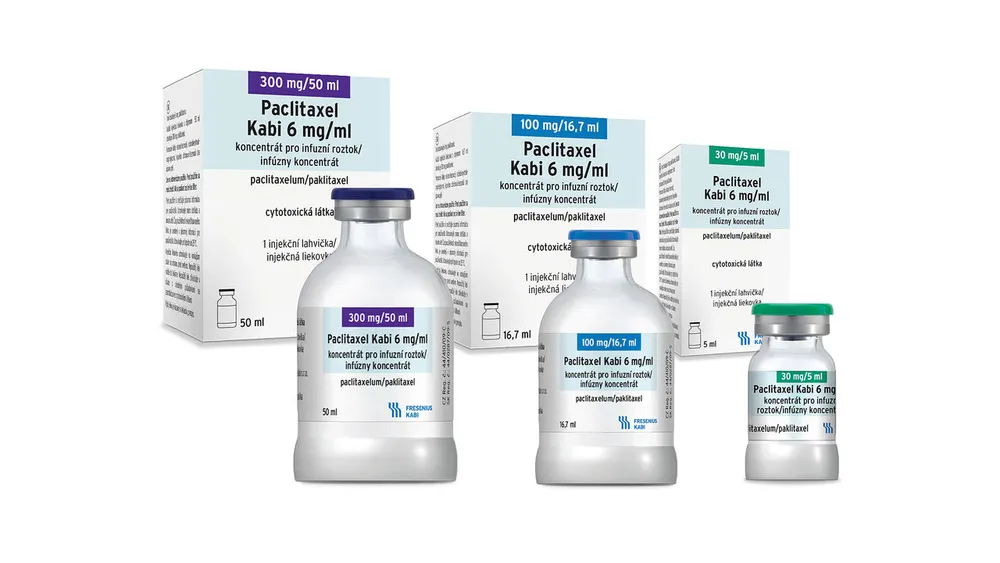
Table of Contents
- Package leaflet: Information for the user
- Introduction
- 1. What Paclitaxel Kabi is and what it is used for
- 2. What you need to know before starting Paclitaxel Kabi
- 3. How Paclitaxel Kabi is administered
- 4. Possible adverse effects
- 5. Storage of Paclitaxel Kabi
- 6. Contents of the pack and other information
Package leaflet: Information for the user
Introduction
Package leaflet: information for the user
Paclitaxel Kabi 6 mg/ml concentrate for solution for infusion EFG
The name of your medicine is ‘Paclitaxel Kabi 6 mg/ml concentrate for solution for infusion EFG’, but it will be referred to as ‘Paclitaxel Kabi’ throughout the rest of this leaflet.
Read the entire leaflet carefully before you start using this medicine, as it contains important information for you.
- Keep this leaflet, as you may need to read it again.
- If you have any questions, consult your doctor or nurse.
- If you experience any adverse reactions, consult your doctor or nurse, even if they are not listed in this leaflet. See section 4.
Contents of the leaflet:
- What Paclitaxel Kabi is and what it is used for
- What you need to know before using Paclitaxel Kabi
- How Paclitaxel Kabi is administered
- Possible side effects
- How to store Paclitaxel Kabi
- Contents of the pack and other information
1. What Paclitaxel Kabi is and what it is used for
Paclitaxel Kabi belongs to a group of anticancer medicines called taxanes. These agents inhibit the growth of cancer cells.
Paclitaxel Kabi is used to treat:
Ovarian cancer
- as first-line treatment (after initial surgery in combination with the platinum-based drug called cisplatin)
- after prior platinum-containing therapy has failed.
Breast cancer
- as first-line treatment for advanced or metastatic cancer (cancer that has spread to other parts of the body). Paclitaxel Kabi combines well with an anthracycline (e.g., doxorubicin) or with a medicine called trastuzumab (for patients for whom anthracyclines are not indicated or who have cancer cells expressing a protein on their surface called HER2; see the trastuzumab package leaflet).
- as additional therapy with anthracycline and cyclophosphamide (AC).
- as second-line treatment for patients who have not responded to anthracycline-based standard therapies or who cannot use such treatments.
Advanced non-small cell lung cancer
- in combination with cisplatin, when surgery, radiotherapy, or both are not indicated.
AIDS-related Kaposi's sarcoma
- after other treatments (e.g., liposomal anthracyclines) have failed.
2. What you need to know before starting Paclitaxel Kabi
Do not use Paclitaxel Kabi
-
if you are allergic to paclitaxel or to any of the other components of this medicine (listed in section 6), especially to polyoxyethylated castor oil (macrogol glycerol ricinoleate).
-
if you are breastfeeding
-
if you have very low levels of white blood cells (baseline neutrophil count < 1.5 x 10⁹/l or < 1.0 x 10⁹/l for patients with Kaposi's sarcoma; your doctor will inform you about this). Your doctor will take a blood sample to check this.
-
if you have a severe and uncontrolled infection (only in the case where Paclitaxel Kabi is used to treat Kaposi's sarcoma).
If any of the above apply to you, speak with your doctor before starting treatment with Paclitaxel Kabi.
Paclitaxel Kabi is not recommended for use in children and adolescents (under 18 years of age).
Warnings and precautions
Talk to your doctor before starting to use Paclitaxel Kabi.
Before starting treatment with Paclitaxel Kabi, you will be given other medicines to minimize the risk of allergic reactions.
-
if you experience allergic reactions (e.g., difficulty breathing, shortness of breath, chest tightness, low blood pressure, dizziness, lightheadedness, skin reactions such as rash or swelling).
- if you develop fever, severe chills, sore throat or mouth ulcers (signs of bone marrow suppression),
-
if you experience numbness, tingling, prickling sensations in the skin, sensitivity to touch, or weakness in arms and legs (signs of peripheral neuropathy); a dose reduction of Paclitaxel Kabi may be necessary
-
if you have severe liver problems; in this case, use of Paclitaxel Kabi is not recommended
-
if you have cardiac conduction disorders
-
if you develop severe or persistent diarrhoea with fever and stomach pain during treatment with Paclitaxel Kabi or immediately after its administration. You may have inflammation of the colon (pseudomembranous colitis).
-
if you have previously received radiation therapy to the chest (as this may increase the risk of pulmonary inflammation)
-
if you have mouth sores or redness (signs of mucositis) and are being treated for Kaposi's sarcoma. You may require a lower dose.
Due to the possibility of extravasation, careful monitoring of the infusion site is advised to detect any potential infiltration during administration of the medicine.
Inform your doctor immediately if any of these situations apply to you.
Paclitaxel Kabi must always be administered intravenously. Administration of Paclitaxel Kabi into the arteries may cause inflammation of the arteries, and you could experience pain, swelling, redness, and warmth.
Use of Paclitaxel Kabi with other medicines
Talk to your doctor if you are taking paclitaxel at the same time as:
- medicines to treat infections (i.e., antibiotics such as erythromycin, rifampicin, etc.; ask your doctor, nurse, or pharmacist if you are unsure whether the medicine you are taking is an antibiotic), including medicines to treat fungal infections (e.g., ketoconazole)
- medicines used to stabilize mood, sometimes called antidepressants (e.g., fluoxetine)
- medicines used to treat seizures (epilepsy) (e.g., carbamazepine, phenytoin)
- medicines used to lower lipid levels in the blood (e.g., gemfibrozil)
- medicines used for heartburn or stomach ulcers (e.g., cimetidine)
- medicines used to treat HIV or AIDS (e.g., ritonavir, saquinavir, indinavir, nelfinavir, efavirenz, nevirapine)
- a medicine called clopidogrel used to prevent blood clots.
The alcohol content in this medicine may alter the effects of other medicines. Inform your doctor or pharmacist if you are taking other medicines.
Pregnancy, breastfeeding and fertility
Pregnancy
Before receiving treatment with Paclitaxel, inform your doctor if you are pregnant or think you might be. If there is a possibility you could become pregnant, use a reliable and effective method of contraception during treatment. Paclitaxel should not be used during pregnancy unless clearly necessary. Men and women of reproductive age, and/or their partners, should use contraceptive methods for at least 6 months after completion of paclitaxel treatment. Male patients should seek information about sperm cryopreservation prior to paclitaxel treatment due to the risk of irreversible infertility.
Breastfeeding
If you are breastfeeding, inform your doctor. It is unknown whether paclitaxel is excreted in human milk. Because of the potential to cause harm to the nursing infant, breastfeeding should be discontinued if you are receiving Paclitaxel Kabi. Do not restart breastfeeding until your doctor advises it is safe to do so.
Driving and use of machines
There is no reason why you cannot drive between cycles of Paclitaxel Kabi, but you should remember that this medicine contains alcohol and it may be inadvisable to drive immediately after a treatment cycle due to possible effects on the central nervous system. As in all cases, you must not drive or operate machinery if you feel dizzy or lightheaded. Paclitaxel Kabi contains castor oil, which may cause severe allergic reactions. If you are allergic to castor oil, consult your doctor before receiving Paclitaxel Kabi.
The amount of alcohol in this medicine may affect your ability to drive or operate machinery. This is because it may affect your judgment and reaction speed.
Paclitaxel Kabi contains castor oil (macrogol glycerol ricinoleate) and alcohol.
Paclitaxel Kabi contains castor oil and may cause severe allergic reactions. If you are allergic to castor oil, consult your doctor before receiving Paclitaxel Kabi.
This medicine contains 393 mg of alcohol (ethanol) per 1 ml, equivalent to 39.3% p/v. The amount in 52.5 ml of this medicine is equivalent to 515.8 ml of beer or 206.3 ml of wine.
If you have epilepsy or liver problems, consult your doctor or pharmacist before taking this medicine.
If you are alcohol-dependent, consult your doctor or pharmacist before taking this medicine.
3. How Paclitaxel Kabi is administered
- To minimize the risk of allergic reactions, you will be given other medications before starting treatment with Paclitaxel Kabi. These medications may be administered as tablets, intravenous infusion, or both.
- Paclitaxel Kabi will be administered as a slow intravenous infusion into one of your veins through an in-line filter. It will be given to you by a healthcare professional who will prepare the infusion solution before administration. The dose you receive will also depend on the results of your blood tests. Depending on the type and severity of cancer, you will receive Paclitaxel Kabi alone or in combination with another antineoplastic agent.
- Paclitaxel Kabi must always be administered intravenously over a period of 3 to 24 hours. It is usually given every 2 or 3 weeks, unless your doctor prescribes a different dosing schedule. Your doctor will inform you of the number of treatment cycles with Paclitaxel Kabi that you need.
If you have any further questions about the use of this medicine, ask your doctor or pharmacist.
4. Possible adverse effects
Like all medicines, this medicine may cause adverse effects, although not everyone experiences them.
If you think you are having any sign of an allergic reaction, inform your doctor immediately. You may experience one or more of the following signs:
- Redness (rubor)
- Skin reactions
- Itching (pruritus)
- Chest tightness
- Shortness of breath or difficulty breathing
- Swelling
All of these may be signs of serious adverse effects.
Inform your doctor immediately if you experience:
- Fever, severe chills, sore throat, or mouth ulcers (signs of bone marrow suppression).
- Numbness or weakness in arms and legs (symptoms of peripheral neuropathy).
- Severe or persistent diarrhoea, with fever and stomach pain.
Very common adverse effects: may affect more than 1 in 10 people
-
Mild allergic reactions such as redness (rubor), rash (exanthema), itching (pruritus)
-
Infections: mainly upper respiratory tract infections, urinary tract infections
-
Sore throat or mouth ulcers, mouth sores, redness, diarrhoea, discomfort (nausea, vomiting)
-
Hair loss (most cases of hair loss occurred within one month after starting paclitaxel. When it occurs, it is usually marked hair loss (greater than 50%) in most patients)
-
Muscle pain, cramps, joint pain
-
Numbness, tingling, or weakness in arms and legs (all symptoms of peripheral neuropathy) *
-
*This may persist for more than 6 months after stopping paclitaxel treatment
-
Laboratory tests may show: decreased platelet count which may lead to bleeding or bruising more easily than normal, decreased white or red blood cells, low blood pressure
Common adverse effects: may affect up to 1 in 10 people
- Mild and transient changes in nails and skin, injection site reactions (localized inflammation, pain, and redness of the skin)
- Laboratory tests may show: slowed heart rate, severe elevation of liver enzymes (alkaline phosphatase and AST-SGOT)
Uncommon adverse effects: may affect up to 1 in 100 people
- Shock due to infections (known as "septic shock")
- Palpitations, cardiac dysfunction (AV block, cardiomyopathy), rapid heartbeat, heart attack, breathing difficulties
- Fatigue, sweating, fainting, significant allergic reactions, phlebitis (vein inflammation), swelling of the face, lips, mouth, tongue, or throat
- Back pain, chest pain, pain in hands and feet, chills, abdominal pain
- Laboratory tests may show: marked increase in bilirubin (jaundice), high blood pressure, and blood clots
Rare adverse effects: may affect up to 1 in 1,000 people
- Decrease in white blood cells, with fever and increased risk of infection (febrile neutropenia)
- Nerve damage causing muscle weakness in arms and legs (motor neuropathy)
- Heart failure
- Shortness of breath, narrowing and blockage of blood vessels in the lungs which may cause breathlessness (pulmonary embolism), inflammatory reaction in lung tissue with scarring and hardening (pulmonary fibrosis), lung inflammation (interstitial pneumonia), difficulty breathing, lung injury, and fluid around the lungs (pleural effusion)
- Bowel obstruction, intestinal perforation, inflammation of the colon (ischaemic colitis), inflammation of the pancreas (pancreatitis)
- Itching (pruritus), rashes (exanthema), skin redness (erythema)
- Blood infection (sepsis), inflammation of the peritoneum (peritonitis), pneumonia
- Fever (pyrexia), dehydration, weakness (asthenia), fluid accumulation in body tissues (oedema), malaise
- Severe and potentially life-threatening hypersensitivity reactions (anaphylactic reactions)
- Laboratory tests may show: increased blood creatinine, indicating kidney dysfunction
Very rare adverse effects: may affect up to 1 in 10,000 people
- Fast and irregular heart rate (atrial fibrillation, supraventricular tachycardia)
- Sudden disorder of blood-forming cells (acute myeloid leukaemia, myelodysplastic syndrome)
- Visual disturbances and/or optic nerve disorders (flickering scotoma)
- Hearing loss (ototoxicity), ringing in the ears (tinnitus), dizziness
- Cough
- Blood clot in a blood vessel of the abdomen and intestine (mesenteric thrombosis), inflammation of the colon, sometimes with severe persistent diarrhoea (pseudomembranous colitis, neutropenic colitis), fluid retention in the abdomen (ascites), inflammation of the oesophagus (oesophagitis), constipation
- Severe hypersensitivity reactions such as fever, skin redness, joint pain and/or eye inflammation (Stevens-Johnson syndrome), localized skin peeling (epidermal necrolysis), red rash with irregular red spots (exudative) (erythema multiforme), skin inflammation with blisters and peeling (exfoliative dermatitis), urticaria, onycholysis (patients undergoing treatment should use sun protection on hands and feet)
- Loss of appetite (anorexia)
- Severe and potentially life-threatening hypersensitivity reactions with shock (anaphylactic reactions)
- Liver function disorders (hepatic necrosis, hepatic encephalopathy [both with reported fatal outcomes])
- Confusion
- Grand mal seizures, disorder of brain nerves (autonomic neuropathy, affecting involuntary body functions, which may cause ileus and low blood pressure), seizures, brain disease (encephalopathy), dizziness, headache, coordination problems (ataxia)
Adverse effects with unknown frequency: frequency cannot be estimated from available data
- Rapid destruction of tumour cells (tumour lysis syndrome)
- Fluid accumulation in the eyes (macular oedema), flashes of light in the eyes (photopsia), small spots or particles floating in the visual field (vitreous floaters)
- Inflammation of veins (phlebitis)
- Thickening and hardening of the skin, blood vessels, and internal organs (scleroderma)
- "Butterfly-shaped rash" (systemic lupus erythematosus)
- Blood clotting disorders. Disseminated intravascular coagulation (DIC) has been reported. This is a serious condition causing increased bleeding, blood clots, or both.
- -Redness and swelling of the palms of the hands and soles of the feet which may lead to skin peeling
Reporting of adverse effects:
If you experience any adverse effect, talk to your doctor, even if it is a possible adverse effect not listed in this leaflet. You can also report them directly via the Spanish Pharmacovigilance System for Human Medicines: https://www.notificaram.es. By reporting adverse effects, you can help provide more information on the safety of this medicine.
5. Storage of Paclitaxel Kabi
Keep this medicine out of the sight and reach of children.
Do not store above 25°C.
Keep the vial in the outer packaging to protect it from light.
Do not use this medicine after the expiry date stated on the packaging after EXP. The expiry date refers to the last day of the month indicated.
Do not use this medicine if the solution appears cloudy or if an insoluble precipitate is observed.
Medicines must not be disposed of via wastewater or household waste. Ask your pharmacist how to dispose of medicines and packaging that you no longer need. This will help protect the environment.
6. Contents of the pack and other information
Composition of Paclitaxel Kabi
- The active substance is paclitaxel.
Each ml of concentrate for solution for infusion contains 6 mg of paclitaxel.
A 5 ml vial contains 30 mg of paclitaxel.
A 16.7 ml vial contains 100 mg of paclitaxel.
A 25 ml vial contains 150 mg of paclitaxel.
A 50 ml vial contains 300 mg of paclitaxel.
A 100 ml vial contains 600 mg of paclitaxel.
- The other components are anhydrous ethanol, macrogol glycerol ricinoleate and anhydrous citric acid (to adjust pH).
Appearance of the medicinal product and contents of the pack
Concentrate for solution for infusion.
Paclitaxel is a slightly yellowish, clear solution.
Paclitaxel is available in glass vials. The glass vials are closed with chlorobutyl or bromobutyl rubber stoppers with an aluminium seal and a removable plastic cap.
Pack sizes: packs containing 1 or 5 glass vials.
Only certain pack sizes may be marketed.
Marketing Authorization Holder
Fresenius Kabi España S.A.U.
C/ Marina 16-18
08005 Barcelona (Spain)
Manufacturer
Fresenius Kabi Deutschland GmbH
Pfingstweide 53
61169 Friedberg
Germany
Or
Corden Pharma Latina S.P.A.
Via del Murillo, KM 2.800
04013 – Sermoneta (LT) - Italy
This medicinal product is authorized in the European Economic Area (EEA) Member States under the following names:
Germany | Paclitaxel Kabi 6 mg/ml concentrate for solution for infusion |
Austria | Paclitaxel Kabi 6 mg/ml concentrate for solution for infusion |
Belgium | Paclitaxel Fresenius Kabi |
Bulgaria | Paclitaxel Kabi 6 mg/ml ?????????? ?? ?????????? ??????? |
Denmark | Paclitaxel Fresenius Kabi 6 mg/ml concentrate for infusion solution, solution |
Slovakia | Paclitaxel Kabi 6 mg/ml |
Slovenia | Paclitaxel Kabi 6 mg/ml concentrate for infusion solution |
Estonia | Paclitaxel Kabi 6 mg/ml concentrate for infusion solution |
Finland | Paclitaxel Fresenius Kabi 6 mg/ml concentrate for infusion, solution for preparation |
France | Paclitaxel Kabi 6 mg/ml solution to dilute for perfusion |
Hungary | Paclitaxel Kabi 6 mg/ml concentrate for solution for infusion |
Ireland | Paclitaxel 6 mg/ml concentrate for solution for infusion |
Italy | Paclitaxel Kabi 6 mg/ml concentrate for infusion solution |
Latvia | Paclitaxel Kabi 6 mg/ml concentrate for preparation of infusion solution |
Lithuania | Paclitaxel Kabi 6 mg/ml concentrate for infusion solution |
Luxembourg | Paclitaxel Kabi 6 mg/ml concentrate for solution for infusion |
Norway | Paclitaxel Fresenius Kabi 6 mg/ml concentrate for infusion solution |
Netherlands | Paclitaxel Fresenius Kabi |
Poland | Paclitaxel Kabi |
Portugal | Paclitaxel Kabi 6 mg/ml concentrate for perfusion solution |
United Kingdom | Paclitaxel 6 mg/ml concentrate for solution for infusion |
Czech Republic | Paclitaxel Kabi 6 mg/ml concentrate for preparation of infusion solution |
Romania | Paclitaxel Kabi 6 mg/ml concentrate for perfusion solution |
Sweden | Paclitaxel Fresenius Kabi 6 mg/ml concentrate for infusion solution, solution |
Date of last review of this package leaflet: March 2021
Detailed and up-to-date information on this medicine is available on the website of the Spanish Agency of Medicines and Health Products (AEMPS) http://www.aemps.gob.es/.
This information is intended solely for healthcare professionals:
Handling
As with all antineoplastic agents, paclitaxel must be handled with caution. Dilutions must be performed under aseptic conditions by experienced personnel in a designated area. Appropriate protective gloves must be worn. Precautions should be taken to avoid any contact with skin and mucous membranes. In case of skin contact, the affected area should be washed thoroughly with water and soap. Tingling, burning sensation, and redness have been reported following topical exposure. In case of contact with mucous membranes, they should be thoroughly rinsed with copious amounts of water. Following inhalation, dyspnea, chest pain, throat burning, and nausea have been reported.
If unopened vials are refrigerated, a precipitate may form which will redissolve with little or no agitation upon reaching room temperature. This does not affect the quality of the product. If the solution remains cloudy or an insoluble precipitate is observed, the vial must be discarded.
After multiple punctures with a needle and withdrawals of the product, vials maintain their microbial, chemical, and physical stability for up to 28 days at 25°C. Other storage times and conditions are the responsibility of the user.
“Chemo-Dispensing Pin™” or similar spiked devices must not be used, as they may cause collapse of the vial stopper, resulting in loss of sterility integrity.
Preparation for intravenous administration
Prior to infusion, Paclitaxel Kabi must be diluted using aseptic techniques in 5% glucose solution, 0.9% sodium chloride solution, 5% glucose in Ringer's solution, or 5% glucose/0.9% sodium chloride solution to a final concentration of 0.3 to 1.2 mg/mL.
Chemical and physical stability in use of the prepared infusion solution has been demonstrated at 25°C for 24 hours when diluted in 5% glucose solution, 0.9% sodium chloride solution, 5% glucose in Ringer's solution, or 5% glucose/0.9% sodium chloride solution.
From a microbiological standpoint, the product should be used immediately. If not used immediately, the times and conditions of storage prior to use are the responsibility of the user and, in general, should not exceed 24 hours at 2–8°C, unless dilution has been carried out under controlled and validated aseptic conditions.
After dilution, the solution is for single use only.
After preparation, these solutions may exhibit a slightly hazy appearance, which is attributed to the formulation vehicle and is not removed by filtration. Paclitaxel Kabi must be administered using an in-line filter with a microporous membrane ≤ 0.22 μm. No significant losses in potency have been observed during simulated administration of the solution through IV sets equipped with an in-line filter.
Isolated cases of precipitation during paclitaxel infusions have been reported, usually towards the end of the 24-hour infusion period. Although the cause of this precipitation has not been established, it is likely related to supersaturation of the diluted solution. To reduce the risk of precipitation, Paclitaxel Kabi should be administered as soon as possible after dilution, and excessive agitation, vibration, or shaking should be avoided. Infusion sets should be thoroughly rinsed before use. The appearance of the solution should be regularly checked during infusion, and if precipitation is observed, the infusion must be discontinued.
To minimize patient exposure to DEHP that may leach from bags, infusion sets, or other medical devices containing PVC plastic, diluted solutions of Paclitaxel Kabi should be stored in containers that are not made of PVC (e.g., glass, polypropylene) or in plastic bags (e.g., polypropylene, polyolefin) and administered using administration sets coated with polyethylene. The use of filter devices (e.g., IVEX-2®) incorporating a short PVC-plasticized inlet/outlet tube has not resulted in significant leaching of DEHP.
Instructions for protection during preparation of paclitaxel infusion solution
- A protective cabinet and protective gloves, as well as a laboratory coat, must be used. If a protective cabinet is not available, an appropriate face mask and safety goggles must be worn.
- The product must not be handled by pregnant women or women who may become pregnant.
- Opened containers, as well as injection vials, infusion bottles, cannulae, syringes, catheters, and tubing used, and any remaining cytotoxic substances must be considered hazardous waste and disposed of in accordance with local regulations for handling HAZARDOUS WASTE.
- In case of spillage, follow the instructions below: - Wear protective clothing. Broken glass must be collected and placed in a HAZARDOUS WASTE container. Contaminated surfaces must be thoroughly washed with copious amounts of cold water; subsequently, the washed surfaces must be thoroughly cleaned, and all cleaning materials used must be disposed of as HAZARDOUS WASTE.
- In case of contact of the paclitaxel concentrate for infusion solution with the skin, rinse the area immediately with copious amounts of running water, then wash with water and soap. In case of contact with mucous membranes, thoroughly rinse the affected area with water. If any discomfort occurs, consult a physician.
- In case of contact of the paclitaxel concentrate for infusion solution with the eyes, rinse thoroughly with copious amounts of cold water. Consult an ophthalmologist immediately.
Disposal
Disposal of unused medicine and of all materials that have come into contact with it must be carried out in accordance with local regulations.