Paclitaxel Hospira 6 mg/ml concentrate for solution for infusion EFG
Spain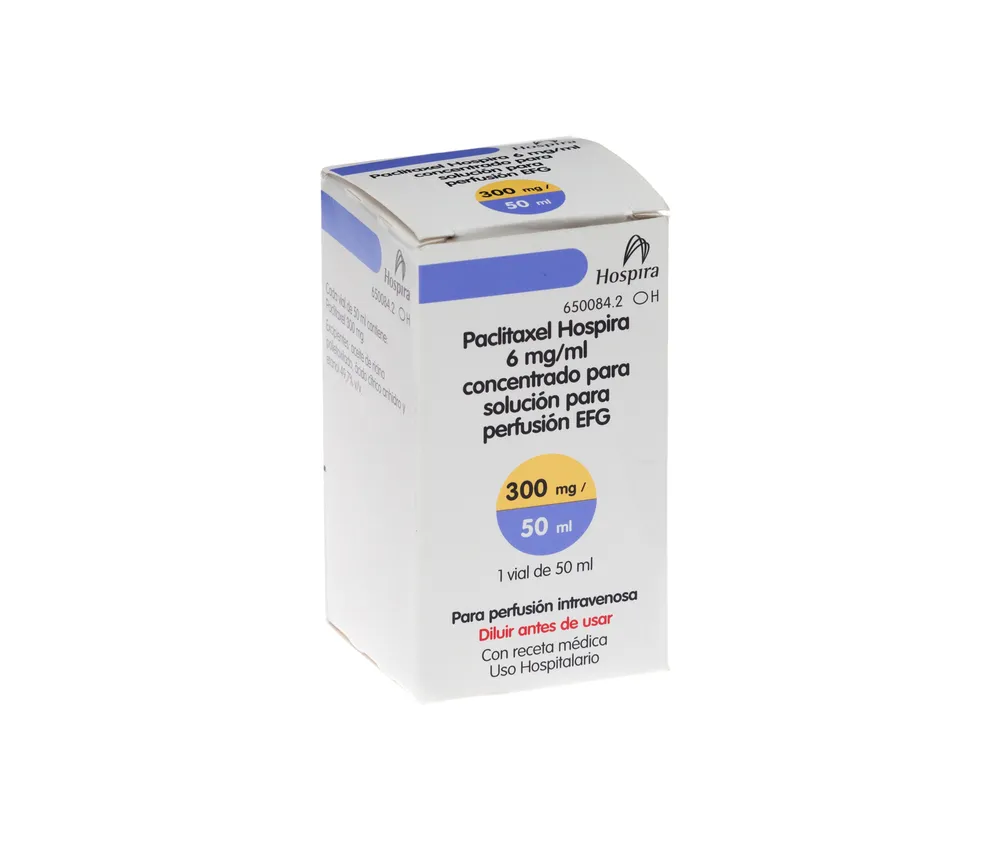
Table of Contents
- Patient Information Leaflet
- Introduction
- 1. What Paclitaxel Hospira is and what it is used for
- 2. What you need to know before starting to use Paclitaxel Hospira
- 1. What Paclitaxel Hospira is and what it is used for
- 2. What you need to know before using Paclitaxel Hospira
- **Pregnancy, breastfeeding and fertility**
- **Paclitaxel Hospira contains polyoxyethylated castor oil (macrogol glycerol ricinoleate) and ethanol.**
- 3. How to use Paclitaxel Hospira
- 4. Possible adverse effects
- 5. Storage of Paclitaxel Hospira
- 6. Package contents and other information
Patient Information Leaflet
Introduction
PACKAGE LEAFLET: INFORMATION FOR THE PATIENT
Paclitaxel Hospira 6 mg/ml concentrate for solution for infusion EFG
Read all of this leaflet carefully before you start using this medicine, because it contains important information for you.
|
Contents of the package leaflet:
1. What Paclitaxel Hospira is and what it is used for
Paclitaxel Hospira is a medicine containing the active substance paclitaxel. Paclitaxel belongs to a group of medicines called taxanes, which work by interfering with the way cancer cells divide and grow.
Paclitaxel Hospira is used in the treatment of various types of cancer, including:
- Breast cancer
- Non-small cell lung cancer
- Ovarian cancer
- Kaposi's sarcoma in patients with AIDS
The medicine is administered as an infusion (a drip into a vein) and should only be given under the supervision of a doctor experienced in the use of cancer medicines.
2. What you need to know before starting to use Paclitaxel Hospira
- How to use Paclitaxel Hospira
- Possible side effects
- Storage of Paclitaxel Hospira
- Package contents and additional information
1. What Paclitaxel Hospira is and what it is used for
Paclitaxel Hospira is a medicine that belongs to a group of compounds called taxanes, which are used for the treatment of cancer. These agents inhibit the growth of cancer cells.
Paclitaxel Hospira is used to treat:
-
Ovarian cancer
- as first-line treatment (after initial surgery in combination with a platinum-based drug called cisplatin).
- as second-line treatment after standard platinum-containing therapy has failed.
-
Breast cancer:
- as first treatment for advanced disease or disease spread to other parts of the body (metastatic disease), paclitaxel is combined with other breast cancer medicines.
- as additional (adjuvant) treatment after initial surgery followed by treatment with anthracycline and cyclophosphamide (AC).
- as second-line treatment in patients in whom standard anthracycline-based therapy has failed or who cannot use such treatments.
-
Advanced non-small cell lung cancer, in combination with cisplatin, when surgery and/or radiotherapy are not indicated.
-
Advanced AIDS-related Kaposi's sarcoma, after other treatments (e.g., liposomal anthracyclines) have failed.
2. What you need to know before using Paclitaxel Hospira
Laboratory tests (e.g., blood tests) must be performed to ensure that you can be treated with this medicine. Some patients may require heart tests.
Do not use Paclitaxel Hospira:
- If you are allergic to paclitaxel, or to polyoxyethylated castor oil (macrogol glycerol ricinoleate), or to any of the other ingredients of this medicine (listed in section 6)
- If you are pregnant or breastfeeding
- If your white blood cell or platelet count is very low (this will be checked with a blood test)
- If you have severe, uncontrolled infections in patients with Kaposi's sarcoma
Warnings and precautions
Talk to your doctor, pharmacist, or nurse before starting treatment with Paclitaxel Hospira.
-
If you experience a severe allergic reaction that may cause difficulty breathing, dizziness (due to low blood pressure), facial swelling, or rash. Some of these allergic reactions can be life-threatening
-
If you have heart problems or severe liver problems (if liver damage is severe, paclitaxel should not be given)
-
If your blood cell counts are abnormal
-
If you experience irregular heartbeat, dizziness, or fainting during treatment
-
If you experience tingling, burning, or numbness in your fingers and/or toes
-
If this product is given to you together with radiation therapy (radiotherapy) to the lungs (see 4. Possible side effects)
-
If diarrhea occurs during or shortly after treatment with this product, inflammation of the colon may be present
-
If you have Kaposi's sarcoma and develop a painful or inflamed mouth
-
If you experience visual disturbances*
-
In cases of alcoholism
-
Patients who develop visual impairment during paclitaxel treatment must immediately undergo a complete ophthalmological examination.
Children and adolescents
This product is not recommended for use in children under 18 years of age.
Use of Paclitaxel Hospira with other medicines
Talk to your doctor when taking paclitaxel at the same time as any of the following medicines:
- Medicines to treat infections (i.e., antibiotics such as erythromycin, rifampicin, trimethoprim, etc.; ask your doctor, nurse, or pharmacist if you are unsure whether the medicine you are taking is an antibiotic), including medicines to treat fungal infections (e.g., ketoconazole);
- Medicines used to stabilize mood, sometimes called antidepressants (e.g., fluoxetine);
- Medicines used to treat seizures (epilepsy) (e.g., carbamazepine, phenytoin);
- Medicines used to lower lipid levels in the blood (e.g., gemfibrozil);
- Medicines used for stomach burns or ulcers (e.g., cimetidine);
- Medicines used to treat HIV or AIDS (e.g., ritonavir, saquinavir, indinavir, nelfinavir, efavirenz, nevirapine);
- A medicine called clopidogrel, used to prevent blood clots;
- Medicines used to remove excess iron from the body (also known as iron overload) (e.g., deferasirox);
- Medicines or preparations containing St. John’s wort or Hypericum (Hypericum perforatum), a herbal remedy used for depression and anxiety.
Inform your doctor or pharmacist if you are taking, have recently taken, or might need to take any other medicines.
Use of Paclitaxel Hospira with food, drinks and alcohol
Paclitaxel is not affected by food or drink intake.
Pregnancy, breastfeeding and fertility
If you are pregnant or breastfeeding, think you may be pregnant or are planning to become pregnant, it is very important that you consult your doctor or pharmacist before using this medicine.
Pregnancy Paclitaxel concentrate for solution for infusion must not be administered if you are pregnant. This medicine can cause birth defects; therefore, you must not become pregnant during treatment with paclitaxel.
Breastfeeding
If you are breastfeeding, inform your doctor. Paclitaxel has been detected in human milk. Due to the potential risk of harm to the infant, you must not breastfeed during treatment with paclitaxel or for 2 weeks following the last dose.
Fertility
Paclitaxel may cause infertility, which may be irreversible. If you wish to have children after treatment with paclitaxel, you should discuss fertility preservation options with your doctor before starting treatment. Male patients are also advised to seek counseling regarding sperm preservation prior to treatment.
Contraceptive measures in men and women
If you are a woman of childbearing potential, you must use effective contraception during treatment and for 7 months after the last dose of paclitaxel. If you become pregnant during treatment or within 7 months after the last dose of paclitaxel, you must inform your doctor immediately.
If you are a man receiving treatment with paclitaxel, you must use an effective method of contraception during treatment and for at least 4 months after the last dose.
Driving and use of machines:
Paclitaxel has not been shown to affect the ability to drive or operate machinery. However, it should be noted that this medicine contains alcohol and may therefore reduce reaction capability; thus, caution is advised when driving or operating dangerous machinery.
The input is empty. Please provide text to translate.
Paclitaxel Hospira contains polyoxyethylated castor oil (macrogol glycerol ricinoleate) and ethanol.
This medicine may cause severe allergic reactions because it contains macrogol glycerol ricinoleate (polyoxyethylated castor oil).
This medicine contains 49.7% ethanol (alcohol), corresponding to 21 g per dose, equivalent to 740 ml of beer or 190 ml of wine. This medicine is harmful for individuals suffering from alcoholism.
The alcohol content should be taken into consideration in pregnant or breastfeeding women, children, and high-risk groups, such as patients with liver disease or epilepsy.
The amount of alcohol in this medicine may alter the effects of other medicines.
The amount of alcohol in this medicine may reduce the ability to drive or operate machinery.
3. How to use Paclitaxel Hospira
Follow exactly the administration instructions for this medicine given by your doctor or pharmacist. If in doubt, consult your doctor or pharmacist again.
Your doctor will determine the daily dose of paclitaxel based on body surface area, and dosing will be subject to changes your doctor considers appropriate.
If you receive more Paclitaxel Hospira than you should
If you think you have received more paclitaxel than you should, contact your doctor immediately or go to the nearest hospital.
In case of overdose or accidental ingestion, contact the Toxicology Information Service at telephone number 91 562 04 20.
There is no known antidote for paclitaxel overdose. The first complications expected from overdose are likely to be related to bone marrow suppression, as well as peripheral nerve disturbances and mucosal inflammation.
If you forget to use Paclitaxel Hospira
If a dose is missed, a double dose will not be administered to make up for the missed dose. Always follow your doctor's recommendations.
If you stop treatment with Paclitaxel Hospira
Your doctor will decide when to stop treatment with paclitaxel.
If you have any further questions about the use of this product, ask your doctor or pharmacist.
4. Possible adverse effects
Like all medicines, this medicine can cause adverse effects, although not everyone experiences them.
If you experience any of the following adverse effects, inform your doctor immediately, as they may be serious and require urgent medical attention or hospitalization.
Very common (may affect more than 1 in 10 people):
- Infection – usually of the urinary tract or upper respiratory tract. This may be associated with low blood cell counts resulting from receiving paclitaxel. This can sometimes be fatal
- Bone marrow suppression, which may lead to decreased blood cell counts and may result in infections, anemia, weakness, bruising, and bleeding
- Mild allergic reactions, including redness and skin rashes
- Tingling and prickling sensations in the hands and feet (peripheral neuropathy)*
- Low blood pressure, which may make you feel dizzy, especially when standing up
- Nausea and vomiting
- Mild diarrhea
- Hair loss
- Muscle or joint weakness, pain, discomfort, or loss of sensation in the limbs. These usually diminish or disappear several months after stopping paclitaxel treatment
- Mouth or tongue pain
- Hair loss (most cases of hair loss occurred within less than one month after starting paclitaxel. When it occurs, it is marked hair loss (greater than 50%) in most patients)
Common: may affect up to 1 in 10 people
- Slow heartbeat
- Mild temporary changes in nails and skin
- Reactions at the injection site such as local swelling, pain, redness, tissue hardening, tissue death of the skin, extravasation (leakage of the medicine outside the vein) resulting in cellulitis (painful inflammation and redness)
- Changes in liver function, increased liver enzymes (shown in blood tests)
Uncommon: may affect up to 1 in 100 people
- Severe allergic reactions causing low or high blood pressure, chest pain, difficulty breathing, rapid heartbeat (pulse), abdominal or limb pain, sweating, itching, and/or back pain. This can be fatal
- Severe chest pain possibly radiating to the jaw or arm, sweating, difficulty breathing, and nausea (heart attack)
- Pain in the center of the chest that may be caused by heart disease
- Pain or weakness in the heart muscle (degeneration of cardiac muscle)
- Irregular heartbeat
- Fainting
- High blood pressure (may cause headaches)
- Blood clots in veins (thrombosis) and vein inflammation associated with blood clot formation (thrombophlebitis) – this may present as pain and/or swelling in arms or legs or vein inflammation
- Yellowing of the whites of the eyes and skin
- Severe infections, such as sepsis (blood poisoning) with shock
- Chills
Rare: may affect up to 1 in 1,000 people
- Pneumonia
- Generalized infection (sepsis)
- Inflammation of the membrane (peritoneum) surrounding the stomach and intestines, whose symptoms include abdominal pain, constipation, vomiting, and fever
- Fever
- Fever due to a decrease in neutrophil count (febrile neutropenia)
- Severe allergic reaction (anaphylactic reaction): you may experience a sudden itchy rash (urticaria), swelling of the hands, feet, ankles, face, lips, mouth, or throat (which may cause difficulty swallowing or breathing), and may feel faint
- Dehydration
- Effect on nerves controlling muscles, resulting in muscle weakness in arms and legs (motor neuropathy)
- Heart problems that may cause shortness of breath or swelling of the ankles. Difficulty breathing, cough, coughing up blood, or chest or shoulder pain. Some of these effects may not occur immediately (pulmonary fibrosis)
- Abdominal pain caused by inflammation in the intestine, intestinal obstruction, or perforation of the intestinal wall
- Inflammation of the colon due to obstruction or constriction of blood vessels (ischemic colitis)
- Itching, skin rashes, redness
- Fluid accumulation throughout the body (edema)
- Loss of energy
- Inflammation of the pancreas (pancreatitis)
- Inflammation (edema)
- Malaise
- Increased blood creatinine levels
Very rare: may affect up to 1 in 10,000 people
- Severe diarrhea with blood in the stool (pseudomembranous colitis)
- Acute leukemia (blood cancer) or related condition (myelodysplastic syndrome)
- Potentially life-threatening allergic reaction (anaphylactic shock)
- Loss of appetite
- Confusion
- Muscle weakness, cramps, severe abdominal or intestinal pain (paralytic ileus), or dizziness upon standing (orthostatic hypotension), which may be caused by a nervous system disorder
- Seizures ("fits")
- Effect on the brain (encephalopathy)
- Balance problems
- Dizziness
- Headache
- Visual disturbances
- Hearing loss
- Ringing in the ears
- Vertigo
- Increased heart rate
- Persistent diarrhea
- Shock
- Cough
- Abdominal pain that may be caused by fluid accumulation in the abdomen (ascites), intestinal inflammation, or blood clot in intestinal blood vessels
- Constipation
- Heartburn, nausea, and/or vomiting that may be caused by inflammation of the throat (esophagitis)
- Liver damage, which may be severe (hepatic necrosis). This may affect brain function (hepatic encephalopathy). This can sometimes be fatal
- Generalized rash with blisters and peeling of the skin, particularly around the mouth, nose, eyes, and genitals (Stevens-Johnson syndrome), causing widespread skin peeling (more than 30% of body surface) (epidermal necrolysis)
- Rapid development of a rash followed by skin lesions on the soles of the feet and palms of the hands and mouth ulcers (erythema multiforme)
- Severe skin peeling (exfoliative dermatitis)
- Urticaria
- Loss of fingernails and toenails (protection of hands and feet is recommended when exposed to sunlight)
Frequency not known (cannot be estimated from available data)
- Difficulty breathing (bronchospasm)
- A condition called tumor lysis syndrome, which may cause high levels of sodium or potassium or low calcium levels in the blood
- Swelling at the back of the eye (macular edema)
- Visual disturbances such as seeing flashes of light (photopsia) or floaters
- Inflammation of veins
- Connective tissue disorders (scleroderma)
- An autoimmune disorder that may affect the skin, joints, kidneys, brain, and other organs (systemic lupus erythematosus)
- Disseminated intravascular coagulation (DIC) has been reported. This is a serious condition causing excessive bleeding, blood clots, or both
- Cases of wheezing have been reported, but frequency is unknown
- Redness and swelling of the palms of the hands and soles of the feet that may lead to skin peeling (hand-foot syndrome, palmar-plantar erythrodysesthesia)
*May persist for more than 6 months after discontinuation of paclitaxel treatment
Reporting of adverse effects
If you experience any adverse effect, consult your doctor or pharmacist, even if it is a possible adverse effect not listed in this leaflet. You may also report them directly via the Spanish Pharmacovigilance System for Human Medicines: https://www.notificaram.es. By reporting adverse effects, you can help provide more information on the safety of this medicine.
5. Storage of Paclitaxel Hospira
Keep this medicine out of the sight and reach of children.
Do not use this medicine after the expiry date stated on the label and the carton after EXP. The expiry date refers to the last day of the month indicated.
Do not store above 25°C. Store in the original container to protect from light.
Do not use if a cloudy solution or an insoluble precipitate is observed.
Medicines should not be disposed of via wastewater or household waste. Ask your pharmacist how to dispose of medicines and containers you no longer need. This will help protect the environment.
6. Package contents and other information
Composition of Paclitaxel Hospira
The active substance is paclitaxel. Each ml of concentrate contains 6 mg of paclitaxel.
The other components are polyoxyethylated castor oil (macrogol glycerol ricinoleate), anhydrous ethanol, and anhydrous citric acid.
Appearance of the medicinal product and contents of the container
Paclitaxel Hospira is a clear, colourless or slightly yellowish solution.
This medicine is a concentrate for solution (sterile concentrate). This means that the concentrated solution in the vial must be diluted before use. Once diluted, it is administered as a slow intravenous injection.
Paclitaxel Hospira is available in Type I glass vials: 30 mg/5 ml, 100 mg/16.7 ml, 150 mg/25 ml, or 300 mg/50 ml. Each package contains 1 vial.
Only certain pack sizes may be marketed.
Marketing Authorization Holder and Manufacturer
Marketing Authorization Holder
HOSPIRA INVICTA, S.A.
Avda. de Europa 20-B
Parque Empresarial La Moraleja
28108 Alcobendas (Madrid)
Spain
Manufacturer
Pfizer Service Company BV
Hermeslaan 11
1932 Zaventem
Belgium
For further information about this medicinal product, please contact the local representative of the Marketing Authorization Holder:
Pfizer, S.L.
Avda. de Europa, 20-B
Parque Empresarial La Moraleja
28108 Alcobendas (Madrid)
Spain
Date of the most recent review of this leaflet: February 2026
Detailed and up-to-date information on this medicinal product is available on the website of the Spanish Agency of Medicines and Health Products (AEMPS) http://www.aemps.gob.es
This information is intended for healthcare professionals only
In addition to the information included in section 3, practical information on the preparation and handling of the medicinal product is provided below.
Instructions for use, handling and disposal
Handling: As with all cytotoxic drugs, paclitaxel must be handled with care. Dilutions must be performed under aseptic conditions by trained personnel in a designated area. Protective gloves must be worn. Precautions should be taken to avoid any contact with skin and mucous membranes. Pregnant women should avoid contact with cytotoxic agents.
In case of skin contact, wash the affected area thoroughly with water and soap. Tingling, burning sensation, and redness have been reported following topical exposure. In case of contact with mucous membranes, they should be thoroughly rinsed with abundant water. Inhalation may cause dyspnea, chest pain, throat burning, and nausea.
If sealed vials are refrigerated, a precipitate may form which will dissolve upon gentle shaking when room temperature is reached. This does not affect the quality of the product. If the solution remains cloudy or an insoluble precipitate persists, the vial must be discarded.
Do not use "Chemo-Dispensing Pin" devices or similar, as they may cause elastomer collapse, resulting in loss of sterility integrity.
Preparation for IV administration: Prior to infusion, Paclitaxel Hospira must be diluted to a final concentration of 0.3 to 1.2 mg/ml using aseptic techniques. Dilution must be performed using:
- 0.9% sodium chloride solution (9 mg/ml),
- 5% dextrose solution (50 mg/ml),
- a mixture of 5% dextrose (50 mg/ml) and 0.9% sodium chloride solution (9 mg/ml), or
- Ringer's injection solution with 5% dextrose (50 mg/ml).
Once diluted, the prepared solution is for single use only.
For storage of prepared infusion solutions:
After opening the vial, before dilution:
Physical and chemical stability of prepared infusion solutions has been demonstrated for 28 days at 25°C, protected from light, following multiple needle insertions and withdrawals.
From a microbiological standpoint, once the container is opened, the concentrate for infusion solution remains stable for up to 28 days at temperatures below 25°C. It is the user's responsibility to ensure storage under other conditions.
After dilution:
Chemical and physical stability of prepared infusion solutions has been demonstrated for 72 hours at 25°C under normal lighting conditions. The diluted solution must not be frozen.
From a microbiological standpoint, the diluted solution should be used immediately. If not, storage conditions and duration prior to use are the responsibility of the user and should not exceed 24 hours at 2–8°C, unless reconstitution/dilution was performed under controlled and validated aseptic conditions.
The infusion solution, once prepared, should be inspected visually for particles and discoloration.
After preparation, these solutions may exhibit a slight turbidity due to the excipient in the formulation, which cannot be removed by filtration. Paclitaxel must be administered using an appropriate infusion set equipped with a microporous filter membrane with pores ≤ 0.22 μm. No relevant loss of potency has been observed during simulated administration through IV infusion sets equipped with in-line filters.
Isolated cases of precipitation during paclitaxel infusions have been reported, usually towards the end of the 24-hour infusion period. Although the cause of this precipitation has not been established, it is likely related to supersaturation of the diluted solution. To reduce the risk of precipitation, paclitaxel should be administered as soon as possible after dilution, and excessive agitation, vibration, or shaking should be avoided. Infusion sets must be thoroughly flushed before use. The solution should be regularly inspected during infusion, and if precipitation is observed, the infusion must be stopped.
To minimize patient exposure to DEHP, which may leach from PVC plastic in bags, infusion sets, or other medical devices, diluted paclitaxel solutions should be stored in non-PVC containers (glass, polypropylene) or plastic bags (polypropylene, polyolefin), and administered using polyethylene infusion sets. The use of filter models incorporating a short PVC inlet/outlet tubing (e.g., IVEX-2®) is not considered significant, as the amount of DEHP that may be released is not clinically relevant.
Disposal: All materials used in the preparation and administration of paclitaxel, or which may have come into contact with it, must comply with local regulations regarding the handling of cytotoxic products.