Paclitaxel Aurovitas 6 mg/ml concentrate for solution for infusion EFG
Spain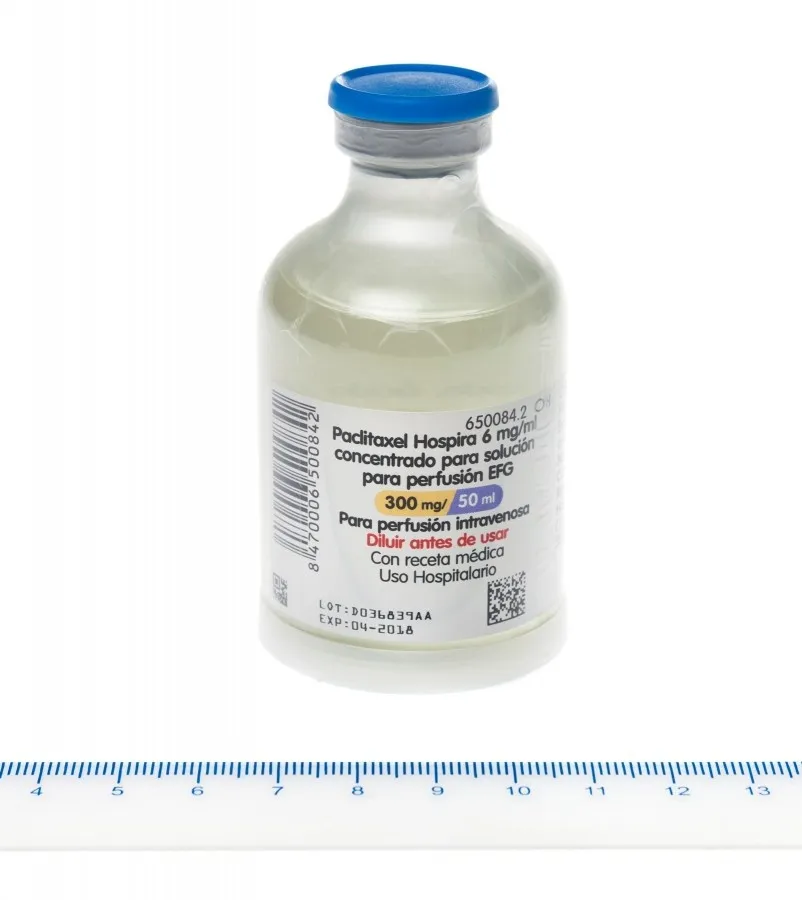
Table of Contents
- Package leaflet: Information for the user
- Introduction
- 1. What Paclitaxel Aurovitas is and what it is used for
- 2. What you need to know before using Paclitaxel Aurovitas
- 3. How to use Paclitaxel Aurovitas
- 4. Possible adverse effects
- 5. Storage of Paclitaxel Aurovitas
- 6. Package contents and other information
Package leaflet: Information for the user
Introduction
Package leaflet: information for the user
Paclitaxel Aurovitas 6 mg/ml concentrate for solution for infusion EFG
Read all of this leaflet carefully before you start using this medicine, because it contains important information for you.
- Keep this leaflet. You may need to read it again.
- If you have any questions, ask your doctor.
- If you get any side effects, talk to your doctor, even if it is not listed in this leaflet. See section 4.
Contents of the leaflet:
- What Paclitaxel Aurovitas is and what it is used for
- What you need to know before using Paclitaxel Aurovitas
- How to use Paclitaxel Aurovitas
- Possible side effects
- How to store Paclitaxel Aurovitas
- Contents of the pack and other information
Paclitaxel Aurovitas 6 mg/ml concentrate for solution for infusion EFG is administered only by a doctor or nurse. They can answer any questions you may have after reading this leaflet.
1. What Paclitaxel Aurovitas is and what it is used for
Paclitaxel belongs to a group of anticancer medicines called taxanes. These agents inhibit the growth of cancer cells.
Paclitaxel is used to treat:
Ovarian cancer
- as first-line treatment (after initial surgery in combination with the platinum-based medicine called cisplatin).
- after standard platinum-containing therapy has failed.
Breast cancer
- as first-line treatment for advanced or metastatic cancer (cancer that has spread to other parts of the body). Paclitaxel is combined with an anthracycline (e.g., doxorubicin) or with a medicine called trastuzumab (for patients for whom anthracyclines are not suitable or who have cancer cells expressing a protein on their surface called HER2; refer to the trastuzumab package leaflet).
- as additional treatment after initial surgery followed by treatment with an anthracycline and cyclophosphamide (AC).
- as second-line treatment for patients who have not responded to standard anthracycline-based therapies or who cannot use such treatments.
Advanced non-small cell lung cancer
- in combination with cisplatin, when surgery, radiotherapy, or both are not suitable.
AIDS-related Kaposi's sarcoma
- after other treatments (e.g., liposomal anthracyclines) have failed.
2. What you need to know before using Paclitaxel Aurovitas
Do not use Paclitaxel Aurovitas
- if you are allergic to paclitaxel or to any of the other ingredients of this medicine (listed in section 6), especially to macrogol glycerol ricinoleate.
- if you have very low levels of white blood cells in your blood. Your doctor will take a blood sample to check this.
- if you are breastfeeding.
- if you have a severe and uncontrolled infection and paclitaxel is to be used for the treatment of Kaposi's sarcoma.
If any of the above situations apply to you, speak with your doctor before starting treatment with paclitaxel.
Paclitaxel is not recommended for use in children and adolescents (under 18 years of age).
Warnings and precautions
Talk to your doctor before starting to use Paclitaxel Aurovitas.
Before starting treatment with paclitaxel, you will be given other medications to minimize the risk of allergic reactions.
- If you experience severe allergic reactions (for example, difficulty breathing, shortness of breath, chest tightness, low blood pressure, dizziness, lightheadedness, skin reactions such as rash or swelling).
- If you have fever, severe chills, sore throat, or mouth ulcers (signs of bone marrow suppression).
- If you experience numbness or weakness in your arms and legs (signs of peripheral neuropathy); a dose reduction of paclitaxel may be necessary.
- If you have severe liver problems; in this case, the use of paclitaxel is not recommended.
- If you have cardiac conduction disorders.
- If you develop severe or persistent diarrhoea with fever and stomach pain during treatment with paclitaxel or immediately after its administration. You may have inflammation of the colon (pseudomembranous colitis).
- If you have previously received radiotherapy to the chest (as it may increase the risk of lung inflammation).
- If you have mouth sores or redness (signs of mucositis) and are being treated for Kaposi's sarcoma. You may require a lower dose.
Contact your doctor immediately if any of these situations apply to you.
Paclitaxel must always be administered intravenously. Administering paclitaxel into the arteries may cause inflammation of the arteries, and you may experience pain, swelling, redness, and warmth.
Other medicines and Paclitaxel Aurovitas
Tell your doctor if you are taking, have recently taken, or might need to take any other medicines, including those obtained without a prescription. This is because paclitaxel or the other medicine may not work as well as expected, or you may be more likely to experience side effects.
An interaction means that different medicines can affect each other. Consult your doctor when taking paclitaxel at the same time as:
- medicines to treat infections (i.e., antibiotics such as erythromycin, rifampicin, etc.; ask your doctor, nurse, or pharmacist if you are unsure whether the medicine you are taking is an antibiotic).
- medicines used to stabilise your mood, sometimes called antidepressants (e.g., fluoxetine).
- medicines used to treat seizures (epilepsy) (e.g., carbamazepine, phenytoin).
- medicines used to lower lipid levels in the blood (e.g., gemfibrozil).
- medicines used for heartburn or stomach ulcers (e.g., cimetidine).
- medicines used to treat HIV or AIDS (e.g., ritonavir, saquinavir, indinavir, nelfinavir, efavirenz, nevirapine).
- a medicine called clopidogrel used to prevent blood clots.
- a medicine called rifampicin, an antibiotic used for tuberculosis. An increase in the paclitaxel dose may be necessary.
- vaccines: if you have recently been vaccinated, or are planning to be vaccinated, inform your doctor. Using paclitaxel together with certain vaccines may lead to serious complications.
- cisplatin (for cancer treatment): paclitaxel should be administered before cisplatin. Your kidney function may need to be monitored more frequently.
- doxorubicin (for cancer treatment): paclitaxel should be administered 24 hours after doxorubicin, to avoid high levels of doxorubicin in your body.
Pregnancy and breastfeeding
Inform your doctor if you are pregnant or think you might be pregnant before receiving paclitaxel treatment. If there is any possibility that you could become pregnant, use a reliable and effective method of contraception during treatment. Paclitaxel should not be used during pregnancy unless clearly necessary. Men and women of reproductive age, and/or their partners, should use contraceptive methods for at least 6 months after completion of paclitaxel treatment.
Male patients should seek information about sperm cryopreservation before starting paclitaxel treatment due to the risk of irreversible infertility.
If you are breastfeeding, inform your doctor. Discontinue breastfeeding if you are receiving paclitaxel. Do not resume breastfeeding until your doctor advises you to do so.
Driving and using machines
This medicine contains alcohol. Therefore, it may be unwise to drive immediately after a treatment cycle. In any case, do not drive if you feel dizzy or unsteady.
Paclitaxel Aurovitas contains alcohol and macrogol glycerol ricinoleate
This medicine contains approximately 50% v/v of ethanol, corresponding to nearly 20 g of ethanol per dose, equivalent to 500 ml of beer or a large glass (210 ml) of wine per dose.
The alcohol contained in this medicine may affect children. Possible effects include changes in behaviour and drowsiness. It may also affect your ability to concentrate and perform physical activities.
The amount of alcohol in this medicine may affect your ability to drive and operate machinery, as it may impair your judgment and reaction capacity.
If you have epilepsy or liver problems, consult your doctor or pharmacist before using this medicine.
The amount of alcohol in this medicine may alter the effect of other medicines. Consult your doctor or pharmacist if you are taking other medicines.
If you are pregnant or breastfeeding, consult your doctor or pharmacist before using this medicine.
If you have alcohol addiction, consult your doctor or pharmacist before using this medicine.
This medicine may cause severe allergic reactions because it contains macrogol glycerol ricinoleate.
3. How to use Paclitaxel Aurovitas
- To minimize the risk of allergic reactions, you will be given other medications before starting paclitaxel treatment. These medications may be administered as tablets, intravenous infusion, or both.
- Paclitaxel will be administered to you as a slow intravenous infusion into one of your veins, using an in-line filter. It will be given by a healthcare professional who will prepare the infusion solution before administration. The dose you receive will also depend on the results of your blood tests. Depending on the type and severity of cancer, you will receive paclitaxel either alone or in combination with another antineoplastic agent.
- Paclitaxel must always be administered intravenously over a period of 3 to 24 hours. It is usually given every 2 or 3 weeks, unless your doctor prescribes a different dosing schedule. Your doctor will inform you of the number of treatment cycles with paclitaxel that you need.
If you have any further questions about the use of this medicine, ask your doctor or pharmacist.
If you have been given more Paclitaxel Aurovitas than you should
There is no known antidote for paclitaxel overdose; therefore, treatment will be directed toward managing the symptoms.
In case of accidental ingestion, contact your doctor or pharmacist immediately or call the Toxicology Information Service at telephone number 91 562 04 20, stating the medication and the amount taken.
4. Possible adverse effects
Like all medicines, this medicine can cause adverse effects, although not everyone will experience them.
Immediately inform your doctor if you notice any sign of an allergic reaction. You may experience one or more of the following signs:
- Redness (rubefaction).
- Skin reactions.
- Itching (pruritus).
- Tightness in the chest.
- Shortness of breath or difficulty breathing.
- Swelling.
All of these may be signs of serious adverse effects.
Contact your doctor immediately if:
- You have fever, severe chills, sore throat, or mouth ulcers (signs of bone marrow suppression).
- You experience numbness or weakness in arms and legs (symptoms of peripheral neuropathy).
- You develop severe or persistent diarrhea, with fever and stomach pain.
Very common adverse effects (may affect more than 1 in 10 people)
- Mild allergic reactions, such as redness, skin rash, itching.
- Infections: mainly upper respiratory tract infections, urinary tract infections.
- Shortness of breath.
- Sore throat or mouth ulcers, mouth sores, redness, diarrhea, discomfort (nausea, vomiting).
- Hair loss (most cases of hair loss occurred within less than one month after starting paclitaxel. When it occurs, hair loss is marked (greater than 50%) in most patients).
- Muscle pain, cramps, joint pain.
- Fever, severe chills, headache, dizziness, fatigue, paleness, bleeding, increased tendency to bruise.
- Numbness, tingling, or weakness in arms and legs (all symptoms of peripheral neuropathy, which may persist for more than 6 months after stopping paclitaxel treatment).
- Blood tests may show: decreased platelets, decreased white or red blood cells, low blood pressure.
Common adverse effects (may affect up to 1 in 10 people)
- Mild and transient changes in nails and skin, injection site reactions (localized swelling, pain, and redness of the skin).
- Blood tests may show: slowed heart rate, severe elevation of liver enzymes (alkaline phosphatase and AST-SGOT).
Uncommon adverse effects (may affect up to 1 in 100 people)
- Shock due to infection (known as "septic shock").
- Palpitations, cardiac dysfunction (AV block), rapid heartbeat, heart attack, breathing problems.
- Fatigue, sweating, fainting, significant allergic reactions, inflammation of a vein caused by a blood clot (thrombophlebitis), swelling of the face, lips, mouth, tongue, or throat.
- Back pain, chest pain, pain in hands and feet, chills, abdominal pain.
- Blood tests may show: marked increase in bilirubin (jaundice), high blood pressure, and blood clots.
Rare adverse effects (may affect up to 1 in 1,000 people)
- Decrease in white blood cells, with fever and increased risk of infection (febrile neutropenia).
- Nerve involvement, with sensation of muscle weakness in arms and legs (motor neuropathy).
- Shortness of breath, pulmonary embolism, pulmonary fibrosis, interstitial pneumonia, dyspnea, pleural effusion.
- Intestinal obstruction, intestinal perforation, inflammation of the colon (ischemic colitis), inflammation of the pancreas (pancreatitis).
- Itching, skin rash, redness of the skin (erythema).
- Blood infection (septicemia), peritonitis.
- Fever, dehydration, asthenia, edema, malaise.
- Severe and potentially life-threatening hypersensitivity reactions (anaphylactic reactions).
- Blood tests may show: increased creatinine in blood, indicating kidney dysfunction.
Very rare adverse effects (may affect up to 1 in 10,000 people)
- Rapid and irregular heart rate (atrial fibrillation, supraventricular tachycardia).
- Sudden disorder in blood-forming cells (acute myeloid leukemia, myelodysplastic syndrome).
- Visual disturbances and/or optic nerve disorders (scintillating scotoma).
- Hearing loss (ototoxicity), ringing in the ears (tinnitus), vertigo.
- Cough.
- Blood clot in a blood vessel of the abdomen and intestine (mesenteric thrombosis), inflammation of the colon, sometimes with persistent severe diarrhea (pseudomembranous colitis, neutropenic colitis), fluid retention in the abdomen (ascites), esophagitis, constipation.
- Severe hypersensitivity reactions, such as fever, skin redness, joint pain and/or eye inflammation (Stevens-Johnson syndrome), localized skin exfoliation (epidermal necrolysis), red spots with irregular exudative lesions (erythema multiforme), skin inflammation with blisters and peeling (exfoliative dermatitis), urticaria, nail loss (patients undergoing treatment should use sun protection on hands and feet).
- Loss of appetite (anorexia).
- Severe and potentially life-threatening hypersensitivity reactions with shock (anaphylactic reactions).
- Liver function disorders (hepatic necrosis, hepatic encephalopathy [both with reported fatal cases]).
- Confusion.
Frequency not known (cannot be estimated from available data)
- Disseminated intravascular coagulation ("DIC") has been reported. This is a serious condition causing increased bleeding, blood clots, or both.
- Hardening/thickening of the skin (scleroderma).
- Metabolic complications after cancer treatment (tumor lysis syndrome).
- Eye disorders, such as thickened and swollen macula (macular edema), flashes in the eyes (photopsia), small floating spots or particles in the visual field (vitreous floaters).
- Inflammation of veins (phlebitis).
- Autoimmune disease with multiple symptoms such as red, scaly skin patches, joint pain, or fatigue (systemic lupus erythematosus).
Redness and swelling of the palms of the hands and soles of the feet, which may lead to skin peeling.
Reporting of adverse effects
If you experience any adverse effect, talk to your doctor or pharmacist, even if it is a possible adverse effect not listed in this leaflet. You can also report them directly via the Spanish Pharmacovigilance System for Human Medicines: www.notificaram.es. By reporting adverse effects, you can help provide more information on the safety of this medicine.
5. Storage of Paclitaxel Aurovitas
Keep this medicine out of the sight and reach of children.
Store the vial in the outer packaging to protect it from light.
Do not use this medicine after the expiry date stated on the carton, after EXP. The expiry date refers to the last day of the month indicated.
Medicines should not be disposed of via wastewater or household waste. Ask your pharmacist how to properly dispose of unused medicines and their packaging. This will help protect the environment.
6. Package contents and other information
Composition of Paclitaxel Aurovitas
- The active substance is paclitaxel.
- 1 ml of concentrate for solution for infusion contains 6 mg of paclitaxel.
- The other components are: citric acid, macrogol glyceride ricinoleate, and anhydrous ethanol.
Appearance of the product and contents of the container
Paclitaxel Aurovitas 6 mg/ml concentrate for solution for infusion is a clear, colourless or pale yellow, slightly viscous solution, supplied in glass vials.
Container sizes:
1 vial of 5 ml (30 mg/5 ml)
1 vial of 16.7 ml (100 mg/16.7 ml)
1 vial of 25 ml (150 mg/25 ml)
1 vial of 50 ml (300 mg/50 ml)
Only certain container sizes may be marketed.
Marketing Authorisation Holder and Manufacturer
Marketing Authorisation Holder
Eugia Pharma (Malta) Limited
Vault 14, Level 2, Valletta Waterfront
Floriana, FRN 1914
Malta
Manufacturer
APL Swift Services (Malta) Limited
HF26, Hal Far Industrial Estate, Hal Far
Birzebbugia, BBG 3000
Malta
Or
Generis Farmacêutica, S.A.
Rua João de Deus, no 19, Venda Nova
2700-487 Amadora
Portugal
Further information on this medicinal product is available upon request to the local representative of the Marketing Authorisation Holder:
Aurovitas Spain, S.A.U.
Avda. de Burgos, 16-D
28036 Madrid
Spain
This medicinal product is authorised in the Member States of the European Economic Area under the following names:
Germany: Paclitaxel Aurobindo 6 mg/ml Konzentrat zur Herstellung einer Infusionslösung
Belgium: Paclitaxel AB 6 mg/ml
Spain: Paclitaxel Aurovitas 6 mg/ml concentrate for solution for infusion EFG
France: Paclitaxel Arrow 6 mg/ml, solution à diluer pour perfusion
Netherlands: Paclitaxel Aurobindo 6 mg/ml, concentraat voor oplossing voor infusie
Italy: Paclitaxel Aurobindo
Portugal: Paclitaxel Aurovitas
Date of the most recent review of this leaflet: December 2020
Detailed information on this medicinal product is available on the website of the Spanish Agency of Medicines and Health Products (AEMPS) (http://www.aemps.gob.es/).
This information is intended for healthcare professionals only:
Instructions for use
CYTOSTATIC AGENT
Handling of Paclitaxel Aurovitas
As with all cytotoxic agents, Paclitaxel Aurovitas must be handled with caution. Dilutions must be prepared by experienced personnel under aseptic conditions and in a designated area. Precautions must be taken to avoid contact with skin and mucous membranes. Tingling, burning sensation, and redness have been reported following topical exposure. In case of inhalation, difficulty breathing (dyspnoea), chest pain, throat burning, and nausea have been reported.
Protective instructions for the preparation of Paclitaxel Aurovitas 6 mg/ml concentrate for solution for infusion:
- A safety cabinet, protective gloves, and protective gown must be used. If a safety cabinet is not available, protective goggles and a mask must be worn.
- Opened containers such as injection vials, infusion bottles, and cannulas, syringes, catheters, and tubing used, as well as cytotoxic waste, must be considered hazardous waste and must be disposed of in accordance with local regulations for handling HAZARDOUS WASTE.
- In case of spillage, follow these instructions:
- Protective clothing must be worn
- Broken glass must be collected and discarded into a HAZARDOUS WASTE container
- Contaminated surfaces must be thoroughly washed with large amounts of cold water
- Surfaces washed with water must be completely dried, and materials used must be disposed of as HAZARDOUS WASTE
- If paclitaxel comes into contact with the skin, rinse the affected area with copious amounts of running water, then wash with water and soap. In case of contact with mucous membranes, thoroughly rinse the area with water. If any discomfort occurs, contact a physician.
- If paclitaxel comes into contact with the eyes, thoroughly rinse with large amounts of cold water. Contact an ophthalmologist immediately.
Preparation of the infusion solution
Closed systems such as "Chemo-Dispensing Pin" devices or similar must not be used, as they may cause collapse of the vial's elastomeric stopper, resulting in loss of sterility integrity.
Preparation, storage, and administration must not be performed using equipment containing PVC (see section "Incompatibilities" below).
Before infusion, Paclitaxel Aurovitas 6 mg/ml concentrate for solution for infusion must be diluted using aseptic techniques. The following infusion solutions may be used for dilution: 0.9% sodium chloride infusion solution, 5% glucose infusion solution, a mixture of 5% glucose and 0.9% sodium chloride solution, or 5% glucose in Ringer's infusion solution, to a final concentration of 0.3 to 1.2 mg/ml.
Rare cases of precipitation during paclitaxel infusions have been reported, usually towards the end of the 24-hour infusion period. Although the cause of this precipitation has not been established, it is likely related to supersaturation of the diluted solution. To reduce the risk of precipitation, paclitaxel should be administered as soon as possible after dilution, and excessive agitation, vibration, or shaking should be avoided.
After preparation, these solutions may have a slightly cloudy appearance due to the excipient in the formulation, which is not removed by filtration. To reduce the risk of precipitation, diluted Paclitaxel Aurovitas infusion should be used as soon as possible after dilution.
Infusion technique
The Paclitaxel Aurovitas infusion solution must be administered as an intravenous infusion over 3 or 24 hours.
Paclitaxel Aurovitas must be administered through an in-line filter with a microporous membrane ≤ 0.22 μm. (No relevant loss of potency has been observed after simulated release of the solution through IV infusion sets equipped with an in-line filter.)
Infusion sets must be thoroughly flushed before use. The appearance of the solution should be regularly checked during infusion, and if precipitation is observed, the infusion must be stopped.
Stability and storage conditions
Store the vial in the original packaging to protect it from light. If stored in the refrigerator, a precipitate may form, which will redissolve upon gentle shaking or without shaking when room temperature is reached. This does not affect the quality of the product. If the solution remains cloudy or an insoluble precipitate is observed, the vial must be discarded. The expiry date is indicated on the carton and on the vial label. Do not use after this date.
After opening: from a microbiological standpoint, once the container is opened, the product should be stored for no more than 28 days at 25°C. It is the user's responsibility to store it under other conditions.
Diluted infusion solutions are chemically and physically stable for 7 days at 5°C and 25°C when diluted in 5% glucose solution or 5% glucose in Ringer's injectable solution, and for 14 days when diluted in 0.9% sodium chloride for injection. From a microbiological standpoint, the product should be used immediately. If not used immediately, the conditions and duration of in-use storage are the responsibility of the user and must not exceed 24 hours at 2–8°C, unless dilution is performed under validated and controlled aseptic conditions.
After dilution, the solution is for single use only.
Incompatibilities
To minimise patient exposure to DEHP (di-2-ethylhexyl phthalate), which may leach from plasticised PVC infusion bags, infusion sets, or other medical devices, diluted paclitaxel solutions should be stored in containers not containing PVC (glass, polypropylene), or in plastic bags (polypropylene, polyolefin), and administered using polyethylene administration sets. No significant DEHP release has been observed when using filter models incorporating a short plasticised PVC inlet/outlet tube (e.g., IVEX-2?).
This medicinal product must not be mixed with other medicinal products except those mentioned above in the section "Preparation of the infusion solution".
Disposal
All materials used in the preparation, administration, or that come into contact with paclitaxel must be disposed of in accordance with local regulations for handling cytotoxic compounds.