Oxycodone Sandoz 80 mg prolonged-release tablets EFG
Spain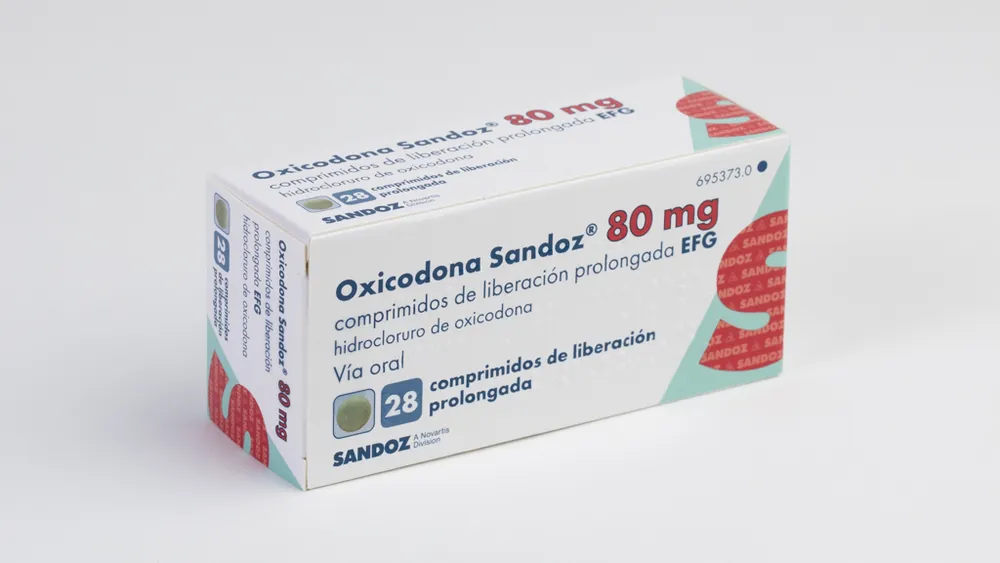
Table of Contents
- Package leaflet: Information for the user
- Introduction
- 1. What Oxicodona Sandoz is and what it is used for
- 2. What you need to know before starting to take Oxicodona Sandoz
- **Do not take Oxycodone Sandoz if:**
- **Warnings and precautions**
- **Other medicines and Oxicodone Sandoz**
- **Taking Oxicodona Sandoz with food, drinks, and alcohol**
- **Pregnancy and breastfeeding**
- **Driving and operating machinery**
- 3. How to take Oxicodone Sandoz
- **The recommended dose is:**
- **If you take more Oxicodona Sandoz than you should**
- **If you forget to take Oxicodona Sandoz**
- **If you interrupt treatment with Oxycodone Sandoz**
- 4. Possible adverse effects
- 5. Storage of OxyCODONE Sandoz
- 6. Contents of the pack and other information
- **Composition of Oxycode Sandoz 80 mg prolonged-release tablets:**
- **Appearance of Oxycontin Sandoz and contents of the pack**
- **Manufacturer**
- **This medicinal product is authorized in the European Economic Area member states and the United Kingdom (Northern Ireland) under the following names:**
Package leaflet: Information for the user
Introduction
Package leaflet: information for the patient
Oxicodone Sandoz 80 mg prolonged-release tablets EFG
oxycodone hydrochloride
Read the entire leaflet carefully before you start taking this medicine, because it contains important information for you.
- Keep this leaflet, as you may need to read it again.
- If you have any questions, consult your doctor or pharmacist.
- This medicine has been prescribed for you only and must not be given to other people, even if they have the same symptoms as you, since it could harm them.
- If you experience any adverse effects, consult your doctor or pharmacist, even if they are adverse effects not listed in this leaflet. See section 4.
Leaflet contents
- What Oxicodone Sandoz is and what it is used for
- What you need to know before taking Oxicodone Sandoz
- How to take Oxicodone Sandoz
- Possible side effects
- How to store Oxicodone Sandoz
- Contents of the pack and other information
1. What Oxicodona Sandoz is and what it is used for
Oxicodona Sandoz contains the active substance oxycodone hydrochloride, which is a strong opioid analgesic acting centrally.
Oxicodona Sandoz is used in adults and adolescents over 12 years of age to treat severe pain that can only be relieved by opioid analgesics.
2. What you need to know before starting to take Oxicodona Sandoz
Do not take Oxycodone Sandoz if:
-
you are allergic to oxycodone hydrochloride or to any of the other ingredients of this medicine (listed in section 6),
-
you have breathing problems, such as severe respiratory depression (respiratory depression), severe chronic obstructive pulmonary disease, or severe bronchial asthma. Symptoms may include difficulty breathing, cough, or slower or weaker breathing than expected,
- you have high levels of carbon dioxide in your blood,
- you have heart problems caused by long-term lung disease (cor pulmonale),
-
you have paralytic ileus (paralytic bowel obstruction). Symptoms may include your stomach emptying more slowly than normal (delayed gastric emptying) or severe abdominal pain.
Warnings and precautions
Consult your doctor or pharmacist before starting to take oxycodone if
-
you are elderly or debilitated,
-
you have severely impaired lung function,
-
you have liver or kidney problems,
-
you have a thyroid disorder with dryness, coldness, and swelling of the skin affecting the face and extremities (myxoedema),
-
you have impaired function of the thyroid gland,
-
you suffer from adrenal insufficiency, which may cause symptoms including weakness, weight loss, dizziness, and feeling or being unwell (Addison's disease),
-
you have an enlarged prostate causing difficulty urinating (in men), or have previously experienced withdrawal symptoms such as restlessness, anxiety, tremors, or sweating when stopping alcohol or drugs,
-
you or a family member have a history of alcohol, prescription medication, or illicit substance abuse or dependence ("addiction"),
-
you smoke,
-
you have ever had mood disorders (depression, anxiety, or a personality disorder), or have received psychiatric treatment for other mental illnesses,
-
you have a mental disorder due to intoxication, e.g., with alcohol (toxic psychosis),
-
you have inflammation of the pancreas, which may cause severe abdominal and back pain,
-
you have problems with your gallbladder or bile duct,
-
you have any obstructive or inflammatory bowel disease,
- you have a head injury, severe headache, or feel unwell, as this may indicate increased pressure in your brain,
- you have low blood pressure,
- you have low blood volume (hypovolemia), which may occur with severe bleeding, severe burns, excessive sweating, severe diarrhea, or vomiting,
-
you suffer from epilepsy or have a tendency to seizures,
-
you are taking monoamine oxidase inhibitors (MAO inhibitors) for the treatment of depression or Parkinson's disease, or if you have taken such medications within the past 2 weeks,
-
you are going to have surgery or have recently undergone abdominal surgery.
Inform your doctor if you have or have previously had any of the conditions listed above.
Contact your doctor if you experience severe upper abdominal pain that may extend to your back, nausea, vomiting, or fever, as these may be symptoms associated with inflammation of the pancreas (pancreatitis) or the biliary tract system.
Sleep-related breathing disorders
Oxycodone Sandoz may cause sleep-related breathing disorders such as sleep apnea (pauses in breathing during sleep) and sleep-related hypoxemia (low levels of oxygen in the blood). Symptoms may include pauses in breathing during sleep, nighttime awakenings due to difficulty breathing, difficulty maintaining sleep, or excessive daytime sleepiness. If you or someone else notices these symptoms, consult your doctor. Your doctor may consider reducing your dose.
Respiratory depression
The main danger of opioid overdose is slow and shallow breathing (respiratory depression). This occurs especially in debilitated and elderly patients and may also lead to decreased oxygen levels in the blood. This may result, for example, in fainting.
Chronic non-cancer pain
Opioids are not the first-line treatment for pain not related to cancer and are not recommended as sole therapy. In the management of chronic pain, other medications should be used alongside opioids. Your doctor must monitor you closely and make necessary dose adjustments while you are taking oxycodone to prevent addiction and abuse.
Oxycodone may cause dependence. When used over a long period, tolerance to its effects may develop, requiring increasingly higher doses to maintain pain control.
Chronic use of oxycodone may lead to physical dependence, with withdrawal symptoms occurring after abrupt discontinuation (see section 3, “If you stop taking Oxycodone Sandoz”). Withdrawal symptoms may include yawning, pupil dilation, abnormal or excessive tearing, runny nose, tremors or restlessness, increased sweating, anxiety, agitation, seizures, insomnia, and muscle pain. When oxycodone therapy is no longer needed, your doctor will gradually reduce your daily dose to prevent this from occurring.
Tolerance, dependence, and addiction
This medicine contains oxycodone, which is an opioid, and may cause dependence and/or addiction. |
This medicine contains oxycodone, which is an opioid medicine. Repeated use of opioid painkillers may cause the medicine to become less effective (you become accustomed to it, known as tolerance).
Repeated use of Oxicodona Sandoz may also lead to dependence, abuse, and addiction, which can result in a life-threatening overdose. The risk of these side effects may increase with higher doses and longer duration of use.
Dependence or addiction may make you feel that you no longer have control over how much medicine you need to take or how often you need to take it. You may feel that you need to keep taking the medicine, even when it no longer helps relieve your pain.
The risk of becoming dependent or addicted varies from person to person. You may have a higher risk of becoming dependent or addicted to Oxicodona Sandoz if:
- you or a family member has a history of alcohol, prescription medicine, or illicit substance abuse or dependence (“addiction”),
- you smoke,
- you have ever had problems with your mood (depression, anxiety, or a personality disorder) or have received treatment from a psychiatrist for other mental illnesses.
If you notice any of the following signs while taking Oxicodona Sandoz, it could be a sign that you have become dependent or addicted:
- you need to take the medicine for longer than recommended by your doctor,
- you need to take higher doses than recommended,
- you are using the medicine for reasons other than prescribed, for example, “to stay calm” or “to help you sleep”,
- you have made repeated unsuccessful attempts to stop or control your use of the medicine,
- you feel unwell when you stop taking the medicine and feel better once you take it again (“withdrawal symptoms”).
If you notice any of these signs, speak with your doctor to discuss the best treatment for you, including when it is appropriate to stop taking it and how to do so safely (see section 3, If you stop taking Oxicodona Sandoz).
Extended-release tablets should be administered with special caution in patients who have or have a history of drug and alcohol abuse.
Increased sensitivity to pain
An increased sensitivity to pain (hyperalgesia) may occur, which will not respond to further increases in oxycodone dose, especially at high doses. It may be necessary to reduce the oxycodone dose or switch to an alternative opioid.
In cases of abusive injection (intravenous injection), the excipients in the tablet may cause local tissue destruction (necrosis), changes in lung tissue (pulmonary granulomas), or other serious potentially fatal effects.
Like other opioids, oxycodone may affect the normal production of hormones in the body, such as cortisol or sex hormones, particularly if you are taking high doses over long periods of time.
You may see remnants of the tablet in your faeces. Do not be alarmed, as the active ingredient oxycodone hydrochloride has already been released while the tablet passed through your gastrointestinal system and has started to take effect in your body.
Athletes should be aware that this medicine may lead to a positive result in anti-doping tests.
The use of oxycodone as a doping agent may pose a health risk.
Other medicines and Oxicodone Sandoz
Inform your doctor or pharmacist if you are taking, have recently taken, or might need to take any other medicines.
Taking oxycodone together with certain medicines that affect brain function (see below) may increase the risk of respiratory depression (stopping breathing), especially in cases of overdose in elderly patients, and/or increase the sedative effect of oxycodone (you may feel very drowsy).
Concomitant use of oxycodone and medicines that may affect brain function (e.g. sedative medicines such as benzodiazepines or related medicines, see below) increases the risk of drowsiness, breathing difficulties (respiratory depression), coma, and may be potentially fatal. For this reason, concomitant use should only be considered when no other treatment options are available.
However, if your doctor prescribes oxycodone together with sedative medicines, your doctor should limit the dose and duration of concomitant treatment. Inform your doctor about all sedative medicines you are taking and strictly follow the doses recommended by your doctor. It may be helpful to inform friends or family members so they are aware of the signs and symptoms mentioned above. Contact your doctor if you experience such symptoms.
Medicines that affect brain function:
- other strong painkillers (opioids),
- sleeping pills and tranquilizers (sedative medicines such as benzodiazepines),
- medicines used to treat depression, such as paroxetine,
- medicines used to treat allergies, dizziness, or nausea (antihistamines or antiemetics),
- medicines used to treat psychiatric or mental disorders (antipsychotics),
- medicines used to treat epilepsy, pain, and anxiety, such as gabapentin and pregabalin,
- medicines used to treat Parkinson's disease.
The risk of experiencing side effects increases if antidepressants (such as citalopram, duloxetine, escitalopram, fluoxetine, fluvoxamine, paroxetine, sertraline, venlafaxine) are used. These medicines may interact with oxycodone and symptoms such as rhythmic and involuntary muscle contractions, including muscles controlling eye movements, agitation, excessive sweating, tremor, exaggerated reflexes, increased muscle tone, and body temperature above 38°C may occur. Contact your doctor if you experience these symptoms.
Other interactions may occur with:
- certain medicines that prevent blood clotting (known as coumarin anticoagulants, e.g., warfarin or phenprocoumon). Oxycodone may influence the effects of these,
- muscle relaxants,
- other strong painkillers,
- certain antibiotics (e.g., clarithromycin, erythromycin, or telithromycin),
- rifampicin for the treatment of tuberculosis,
- certain medicines used to treat fungal infections (e.g., ketoconazole, voriconazole, itraconazole, or posaconazole),
- certain medicines used to treat HIV infection (e.g., boceprevir, ritonavir, indinavir, nelfinavir, or saquinavir),
- cimetidine, a medicine used to treat heartburn,
- carbamazepine (a medicine used to treat spasms or seizures/convulsions and certain pain conditions),
- phenytoin, a medicine used to treat spasms,
- St. John's wort, a herbal remedy used to treat depression,
- quinidine (a medicine used to treat rapid heartbeats),
- monoamine oxidase inhibitors, or if you have taken this type of medicine within the last two weeks (see section 2 “Warnings and precautions”).
Taking Oxicodona Sandoz with food, drinks, and alcohol
Drinking alcohol during treatment with oxycodone may make you feel drowsy or increase the risk of serious adverse effects such as shallow breathing, risk of breathing stopping, and loss of consciousness. It is recommended not to drink alcohol while taking oxycodone.
Drinking grapefruit juice while taking oxycodone may increase the risk of adverse reactions. You should avoid drinking grapefruit juice during treatment with oxycodone.
Pregnancy and breastfeeding
If you are pregnant or breastfeeding, think you may be pregnant, or are planning to become pregnant, consult your doctor or pharmacist before using this medicine.
- Pregnancy
You should not take oxycodone during pregnancy. There is limited data on the use of Oxicodona Sandoz in pregnant women.
Oxycodone crosses the placenta and reaches the baby's bloodstream.
Prolonged use of oxycodone during pregnancy may cause withdrawal symptoms in the newborn. The use of oxycodone during labor may cause slow and shallow breathing (respiratory depression) in the newborn.
- Breastfeeding
You should not take Oxicodona Sandoz while breastfeeding, as the active substance oxycodone may pass into breast milk and cause drowsiness (sedation) or slow and shallow breathing (respiratory depression) in the infant.
Driving and operating machinery
Oxycodone may affect your ability to drive and operate machinery.
In patients stabilized on a specific dose, there may be no restrictions on driving; however, this decision will be made by the physician based on individual circumstances. Consult your doctor to determine when, or under what conditions, you may drive a vehicle.
Oxicodona Sandoz contains lactose
This medicine contains lactose. If your doctor has informed you of an intolerance to certain sugars, consult him before taking this medicine.
3. How to take Oxicodone Sandoz
Follow exactly the instructions given by your doctor for taking this medicine. If you are unsure, consult your doctor or pharmacist again.
Before starting treatment and periodically during treatment, your doctor will discuss with you what to expect from the use of Oxicodone Sandoz, when and for how long you should take it, when to contact your doctor, and when you should stop taking it (see also "If you stop treatment with Oxicodone Sandoz").
Other strengths of this medicine may be available for dose adjustment.
The recommended dose is:
Adults and adolescents (12 years of age and older)
The usual initial dose is 10 mg of oxycodone hydrochloride every 12 hours. Your doctor will determine the dose necessary to treat your pain.
Take the number of prolonged-release tablets prescribed by your doctor twice daily.
The subsequent determination of the daily dose, its division into individual doses, and any dose adjustments during ongoing treatment must be made by the physician managing the treatment, taking into account previous doses.
Patients who have previously taken opioids may start treatment with higher doses, depending on their prior experience.
Some patients receiving oxycodone prolonged-release tablets on a fixed schedule may require fast-acting analgesics as rescue medication to manage breakthrough pain. Oxycodone prolonged-release tablets are not indicated for the treatment of breakthrough pain.
For the treatment of non-cancer-related pain, a daily dose of 40 mg of oxycodone hydrochloride is generally sufficient, although higher doses may be required.
Patients with cancer-related pain usually require daily doses of 80 to 120 mg of oxycodone hydrochloride, which in some cases may be increased up to 400 mg.
During treatment, pain relief and other effects should be monitored regularly in order to achieve optimal pain management, promptly treat any adverse effects that may occur, and determine whether treatment should continue.
Children under 12 years of age
This medicine has not been studied in children under 12 years of age. Therefore, its safety has not been established, and its use is not recommended in children.
Patients with renal and/or hepatic impairment
Your doctor may prescribe a lower initial dose.
Other at-risk patients
Your doctor may prescribe a lower initial dose if you have low body weight or if you metabolize medications more slowly.
Method of administration
For oral use only.
Swallow the prolonged-release tablets whole with a sufficient amount of liquid (half a glass of water), with or without food, in the morning and in the evening at fixed times (e.g., 8 a.m. and 8 p.m.).
Prolonged-release tablets must not be divided, broken, crushed, or chewed, as this disrupts their prolonged-release properties and leads to rapid release of oxycodone. Administration of broken, chewed, or crushed tablets results in rapid release and absorption of a potentially lethal dose of the active ingredient, oxycodone (see section “If you take more Oxicodona Sandoz than you should”).
Oxycodone is intended for oral administration only. In cases of abusive injection (intravenous injection), excipients in the tablet may cause destruction (necrosis) of local tissues, changes in lung tissue (pulmonary granulomas), or other serious and potentially fatal effects.
If you take more Oxicodona Sandoz than you should
If you have taken more oxycodone than you should, contact your doctor or pharmacist immediately, or call the Toxicology Information Service at telephone number: 91 562 04 20, stating the medicine and the amount ingested.
Symptoms of overdose may include:
-
constriction of the pupils,
-
slower or weaker breathing (respiratory depression),
-
drowsiness progressing to loss of consciousness,
-
decreased muscle tone,
-
reduced pulse,
-
drop in blood pressure,
-
a brain disorder (known as toxic leukoencephalopathy).
In severe cases, loss of consciousness (coma), fluid accumulation in the lungs, and circulatory collapse that may be fatal can occur.
You should never expose yourself to situations requiring a high degree of concentration, such as driving.
If you forget to take Oxicodona Sandoz
If you use a lower dose of oxycodone than prescribed, or if you miss taking the tablets, pain relief will consequently be insufficient or stop completely.
If you forget to take a dose, please follow the instructions below:
- If there are 8 hours or more until your next scheduled dose: take the missed dose immediately and continue with your usual dosing schedule.
- If less than 8 hours remain until your next scheduled dose: take the missed dose and then wait another 8 hours before taking the next dose. Try to return to your usual dosing schedule.
Do not take more than one dose within an 8-hour period.
Do not take a double dose to make up for a missed dose.
If you interrupt treatment with Oxycodone Sandoz
Do not stop treatment without first consulting your doctor.
When a patient no longer needs oxycodone treatment, it may be advisable to gradually reduce the dose in order to prevent withdrawal symptoms (for example, yawning, pupil dilation of the eye, lacrimation, runny nose, tremors, sweating, anxiety, restlessness, seizures, difficulty sleeping, or muscle pain).
If you have any further questions about the use of this medicine, ask your doctor or pharmacist.
4. Possible adverse effects
Like all medicines, this medicine can cause adverse effects, although not everyone will experience them.
The most common side effects are nausea (especially at the beginning of therapy) and constipation. Constipation as a side effect can be counteracted with preventive measures (such as drinking plenty of fluids and a diet rich in fiber). If you experience nausea or vomiting, your doctor may prescribe you a medicine.
Adverse effects or important signs you should be aware of and what to do if you are affected:
Stop taking oxycodone and consult your doctor or go immediately to your nearest emergency center if you experience any of the following symptoms:
- sudden wheezing, difficulty breathing, swelling of the eyelids, face or lips, rash or itching, especially if widespread over the body. These may be signs of serious allergic reactions.
- slower or weaker breathing (respiratory depression). This is the most serious adverse effect with an overdose of strong painkillers such as oxycodone and occurs mainly in elderly and weak patients.
- low blood pressure (you may feel dizzy or faint),
- reduced pupil size, bronchial muscle spasms (causing difficulty breathing), reduced ability to cough when needed.
Possible adverse effects
Very common (may affect more than 1 in 10 people):
- drowsiness, somnolence, dizziness, headache,
- constipation, feeling unwell (nausea), vomiting,
- itching of the skin.
Common (may affect up to 1 in 10 people):
- anxiety, depression, reduced activity, restlessness, increased activity, nervousness, difficulty sleeping, unusual thoughts, confusion, tremors,
- lack of energy, feeling weak, tiredness,
- difficulty breathing, wheezing,
- dry mouth, hiccups, indigestion, stomach pain, diarrhea,
- decreased appetite up to complete loss of appetite,
- rash, increased sweating,
- pain when urinating, increased frequency of urination.
Uncommon (may affect up to 1 in 100 people):
- a condition in which you breathe more slowly and weakly than expected (respiratory depression),
- allergic reactions,
- lack of water in the body (dehydration),
- restlessness, emotional lability, feeling of euphoria,
- hallucinations, altered perception of reality,
- visual disturbances, reduced pupil size,
- hearing problems, sensation of dizziness or "spinning" (vertigo),
- altered taste,
- increased muscle tone, involuntary muscle contractions, epileptic seizures (fits),
- tingling or numbness, decreased sensitivity to pain or touch,
- disturbances in coordination or balance,
- memory loss, difficulty concentrating, speech disorders,
- fainting,
- rapid pulse, palpitations (in the context of withdrawal syndrome),
- widening of blood vessels causing low blood pressure,
- cough, voice changes,
- mouth ulcers, gum inflammation,
- flatulence, difficulty swallowing, burping,
- intestinal obstruction (ileus),
- decreased sex drive, impotence, low levels of sex hormones in the blood called hypogonadism (seen in blood tests),
- injuries due to accidents,
- general feeling of discomfort, pain (e.g. chest pain),
- swelling of hands, ankles or feet (edema),
- migraine,
- drug tolerance,
- dry skin,
- thirst,
- problems urinating,
- chills,
- physical dependence, including withdrawal symptoms (see section 3 "If you stop taking Oxicodona Sandoz"),
- increased liver enzymes (seen in blood tests).
Rare (may affect up to 1 in 1,000 people):
- low blood pressure, dizziness, fainting, caused by a sudden drop in blood pressure upon standing,
- bleeding gums, increased appetite, tarry and dark stools, dental problems,
- blisters on the skin and mucous membranes (herpes or oral ulcers), hives (urticaria),
- changes in body weight (increase or decrease).
Frequency not known (cannot be estimated from available data):
- absence of menstrual bleeding,
- severe allergic reactions causing difficulty breathing or dizziness,
- aggression,
- increased sensitivity to pain (hyperalgesia),
- dental caries,
- biliary colic (causing stomach pain), biliary congestion,
- withdrawal syndrome in newborns,
- becoming addicted to or dependent on these tablets,
- spasms of smooth muscles,
- suppression of the cough reflex,
- sleep apnea (interruption of breathing during sleep),
- a problem affecting a valve in the intestine, which may cause severe upper abdominal pain (Oddi sphincter dysfunction).
Reporting of adverse effects
If you experience any type of adverse effect, talk to your doctor or pharmacist, even if it is a possible adverse effect not listed in this leaflet. You can also report them directly via the Spanish Pharmacovigilance System for Human Medicines: https://www.notificaram.es. By reporting adverse effects, you can help provide more information on the safety of this medicine.
5. Storage of OxyCODONE Sandoz
Keep this medicine out of sight and reach of children. Store this medicine in a safe, closed place where others cannot access it. It may cause serious harm or be fatal to individuals for whom it has not been prescribed.
Do not use this medicine after the expiry date stated on the blister pack, bottle, and outer packaging following "CAD/EXP". The expiry date refers to the last day of the month indicated.
No special storage conditions are required.
Bottles: Expiry after first opening:
6 months.
Medicines must not be disposed of via wastewater or household waste. Dispose of unused medicines and their containers at the SIGRE Point at your pharmacy. If you have any doubts, ask your pharmacist how to properly dispose of medicines and containers you no longer need. This will help protect the environment.
6. Contents of the pack and other information
Composition of Oxycode Sandoz 80 mg prolonged-release tablets:
- The active substance is oxycodone hydrochloride.
Each prolonged-release tablet contains 80 mg of oxycodone hydrochloride, equivalent to 71.7 mg of oxycodone.
- The other components are:
Tablet core: hydrogenated castor oil, copovidone, polyglyceryl behenate, lactose monohydrate, magnesium stearate, corn starch, colloidal anhydrous silica, medium-chain triglycerides.
Tablet coating: microcrystalline cellulose, hypromellose, stearic acid, titanium dioxide (E171), iron oxide black (E172), indigo carmine aluminum lake (E132), and quinoline yellow aluminum lake (E104).
Appearance of Oxycontin Sandoz and contents of the pack
Prolonged-release tablets, green, round, biconvex, film-coated tablets with a diameter of 9.8 - 10.4 mm.
The prolonged-release tablets are packed in child-resistant blisters or in bottles closed with a child-resistant Twist-off cap, with or without a desiccant cap containing silica gel as desiccant.
Pack sizes:
Blister packs: 10, 20, 28, 30, 40, 50, 56, 60, 100, and 112 prolonged-release tablets.
Bottles: 50 and 100 prolonged-release tablets.
Only certain pack sizes may be marketed.
Marketing Authorization Holder
Sandoz Farmacéutica, S.A.
Parque Norte Business Center
Roble Building
C/ Serrano Galvache, 56
28033 Madrid
Spain
Manufacturer
Lek Pharmaceuticals d.d.
Verovskova 57,
1526 Ljubljana
Slovenia
or
Salutas Pharma GmbH
Otto-von-Guericke-Allee 1
39179 Barleben
Germany
or
Lek Pharmaceuticals d.d.
Trimlini 2D
9220 Lendava,
Slovenia
This medicinal product is authorized in the European Economic Area member states and the United Kingdom (Northern Ireland) under the following names:
Germany: Oxycodonhydrochlorid - 1 A Pharma 80 mg Retardtabletten
Belgium: Oxycodon Sandoz 80 mg tabletten met verlengde afgifte
Denmark: Oxycodone Depot Sandoz
Netherlands: Oxycodon HCl Sandoz retard 80mg, tabletten met verlengde afgifte
Sweden: Oxycodone Depot 1A Farma 80 mg depottabletter
Slovenia: Codilek 80 mg tablete s podaljšanim sproščanjem
Slovakia: Contiroxil 80 mg tablety s predĺženým uvolňovaním
United Kingdom
Northern Ireland: Carexil 80 Prolonged release tablets
Date of most recent review of this package leaflet: April 2025.
Detailed information on this medicinal product is available on the website of the Spanish Agency for Medicines and Health Products (AEMPS) http://www.aemps.gob.es/.