Oxcarbazepine Cinfa 300 mg film-coated tablets EFG
Spain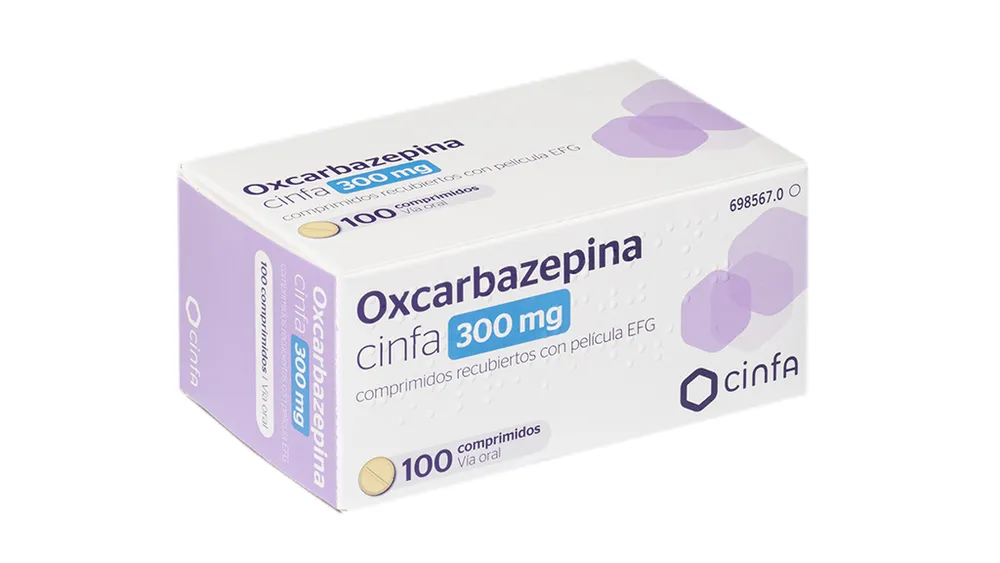
Table of Contents
- Package leaflet: Information for the user
- Introduction
- 1. What oxcarbazepine cinfa is and what it is used for
- 2. What you need to know before taking oxcarbazepine cinfa
- 3. How to take oxcarbazepine cinfa
- 4. Possible adverse effects
- 5. Storage of oxcarbazepine cinfa
- 6. Contents of the pack and other information
Package leaflet: Information for the user
Introduction
Package leaflet: information for the user
oxcarbazepine cinfa 300 mg film-coated tablets EFG
Read this entire leaflet carefully before you start taking this medicine, because it contains important information for you.
- Keep this leaflet; you may need to read it again.
- If you have any questions, ask your doctor or pharmacist.
- This medicine has been prescribed for you only; do not give it to others, even if they have the same symptoms as you, because it could harm them.
- If you experience any adverse effects, consult your doctor or pharmacist, even if they are effects not listed in this leaflet. See section 4.
Leaflet contents
- What oxcarbazepine cinfa is and what it is used for
- What you need to know before taking oxcarbazepine cinfa
- How to take oxcarbazepine cinfa
- Possible adverse effects
- How to store oxcarbazepine cinfa
- Contents of the pack and other information
1. What oxcarbazepine cinfa is and what it is used for
What oxcarbazepine cinfa is
The active substance in oxcarbazepine cinfa is oxcarbazepine.
Oxcarbazepine belongs to a group of medicines called anticonvulsants or antiepileptics.
What oxcarbazepine cinfa is used for
Medicines such as oxcarbazepine are the standard treatment for epilepsy.
Epilepsy is a disorder of the brain that causes people to have recurrent seizures and convulsions. Seizures occur due to a temporary disturbance in the brain's electrical activity. Normally, brain cells coordinate body movements by sending signals through nerves to muscles in an orderly manner. In epilepsy, brain cells send excessive signals in a disorganized way. The result may be uncoordinated muscle activity known as an epileptic seizure.
Oxcarbazepine is used to treat partial seizures with or without secondary generalization to tonic-clonic seizures. Partial seizures involve a limited area of the brain but may spread throughout the brain and lead to generalized tonic-clonic seizures. There are two types of partial seizures: simple and complex. In simple partial seizures, the patient remains conscious, whereas in complex partial seizures, consciousness is impaired.
Oxcarbazepine works by keeping overactive ("hyperexcitable") nerve cells in the brain under control, thereby suppressing or reducing the frequency of such seizures.
Oxcarbazepine may be used alone or in combination with other antiepileptic medicines. Your doctor will usually try to find the medicine that works best for you or your child. However, in severe forms of epilepsy, treatment with two or more medicines may be needed to control seizures. Oxcarbazepine is indicated for use in adults and in children aged 6 years and older.
If you have any questions about how oxcarbazepine works or why this medicine has been prescribed for you, please consult your doctor.
2. What you need to know before taking oxcarbazepine cinfa
Carefully follow all instructions given by your doctor, even if they differ from the general information provided in this leaflet.
Monitoring during treatment with oxcarbazepine
Before and during treatment with oxcarbazepine, your doctor may perform blood tests to determine your dose. Your doctor will tell you when to have these tests done.
Do not take oxcarbazepine cinfa
- if you are allergic to oxcarbazepine or to any of the other ingredients of this medicine (listed in section 6), or if you are allergic to eslicarbazepine.
If you are allergic, inform your doctor before taking oxcarbazepine. If you think you may be allergic, consult your doctor.
Warnings and precautions
Talk to your doctor or pharmacist before starting to take oxcarbazepine cinfa
- if you have ever had an unusual allergic reaction (rash or any other type of allergy) to carbamazepine or any other medicine. If you are allergic to carbamazepine, there is a 1 in 4 chance (25%) that you will also be allergic to oxcarbazepine.
- if you have kidney disease.
- if you have severe liver disease.
- if you are taking diuretics (medicines to help the kidneys eliminate salt and water by increasing the amount of urine produced).
- if you have heart disease, shortness of breath and/or swelling of the feet or legs due to fluid retention.
- if you know that your blood sodium level is low, as shown by your blood test (see section 4).
- if you are a woman taking oral contraceptives (such as the birth control pill), oxcarbazepine may reduce their effectiveness. Use a different or additional non-hormonal contraceptive method while taking oxcarbazepine. This can help prevent an unintended pregnancy. Inform your doctor immediately if you experience irregular vaginal bleeding or spotting. If you have any doubts about this, consult your doctor or healthcare professional before taking oxcarbazepine.
The risk of serious skin reactions in Han Chinese or Thai patients associated with carbamazepine or chemically related compounds can be predicted by blood sample testing. Your doctor will advise whether such a blood test is necessary before starting oxcarbazepine.
If you experience any of the following symptoms after taking oxcarbazepine, tell your doctor immediately or go to the nearest hospital emergency department:
- if you develop an allergic reaction during treatment. Symptoms include swelling of the lips, eyelids, face, throat, mouth, or sudden breathing problems, as well as fever with swollen lymph nodes, skin rash or blisters (see section 4).
- if you notice symptoms suggesting hepatitis, such as jaundice (yellowing of the skin or whites of the eyes).
- if you notice an increased frequency of seizures. This is particularly important in children, but may also occur in adults.
- if you notice possible symptoms of blood disorders, such as fatigue, shortness of breath during exercise, paleness, headache, chills, dizziness, frequent infections with fever, sore throat, mouth ulcers, more frequent bleeding or bruising than normal, nosebleeds, red or purple spots, or spontaneous appearance of skin spots.
- a small number of patients treated with antiepileptic medicines such as oxcarbazepine have had thoughts of self-harm or suicide. If you experience such thoughts at any time, contact your doctor immediately.
- if you notice that your heart rate is fast or unusually slow.
Children and adolescents
For treatment in children, your doctor may recommend monitoring thyroid function before and during treatment.
Other medicines and oxcarbazepine cinfa
Inform your doctor or pharmacist if you are taking, have recently taken, or might need to take any other medicines.
Especially in the case of:
- Oral contraceptives such as the "pill" (see section "Warnings and precautions").
- Other antiepileptic medicines and enzyme-inducing medicines such as carbamazepine, phenobarbital, phenytoin, lamotrigine, and rifampicin.
- Medicines that reduce sodium levels in the blood, such as diuretics (used to help the kidneys eliminate salt and water by increasing urine production), desmopressin, and non-steroidal anti-inflammatory drugs such as indomethacin.
- Lithium and monoamine oxidase inhibitors (medicines used to treat mood disorders and certain types of depression).
- Medicines that control the body's immune system such as cyclosporine and tacrolimus.
Taking oxcarbazepine cinfa with food, drinks and alcohol
Oxcarbazepine can be taken with or without food. During treatment with oxcarbazepine, avoid drinking alcoholic beverages, as they may increase the sedative effects of this medicine; consult your doctor if you have any questions.
Pregnancy, breastfeeding and fertility
If you are pregnant or breastfeeding, think you may be pregnant, or plan to become pregnant, consult your doctor or pharmacist before using this medicine.
Pregnancy
It is important to control epileptic seizures during pregnancy. However, there may be a risk to your baby if you take antiepileptic medicines during pregnancy.
Congenital malformations
Studies have not shown an increased risk of congenital malformations associated with oxcarbazepine administered during pregnancy; however, a risk of congenital malformations in the fetus cannot be completely ruled out.
Neurological developmental disorders
Some studies have shown that in utero exposure to oxcarbazepine negatively affects brain function development (neurological development) in children, while other studies have not observed this effect. The possibility of an effect on neurological development cannot be ruled out.
Birth weight
If you take oxcarbazepine during pregnancy, your child may be small and weigh less than expected at birth [small for gestational age (SGA)]. Among women with epilepsy, in one study, about 15 out of every 100 babies born to mothers who took oxcarbazepine during pregnancy were smaller and weighed less than expected at birth, compared to about 11 out of every 100 babies born to women who did not take anticonvulsant medication during pregnancy.
Your doctor will inform you about the benefits and possible risks of treatment and help you decide whether you should take oxcarbazepine.
Do not stop your treatment with oxcarbazepine without first consulting your doctor.
Breastfeeding
If you are taking this medicine, consult your doctor before starting breastfeeding. The active ingredient in oxcarbazepine cinfa passes into breast milk. Although available data suggest that the amount of oxcarbazepine cinfa transferred to the nursing infant is low, a risk of adverse effects in the baby cannot be ruled out.
Your doctor will inform you about the potential benefits and risks of breastfeeding while using oxcarbazepine cinfa. If you are breastfeeding during treatment with oxcarbazepine cinfa and think your baby is experiencing any adverse effects such as excessive sleepiness or poor weight gain, inform your doctor immediately.
Driving and using machines
Oxcarbazepine may cause symptoms such as drowsiness, dizziness or vision disturbances, and may reduce your reaction ability. These effects, as well as the underlying illness itself, may impair your ability to drive vehicles or operate machinery. Therefore, do not drive, operate machinery, or perform other activities requiring special attention until your doctor has assessed your response to this medicine.
3. How to take oxcarbazepine cinfa
Follow exactly the instructions for use of this medicine as given by your doctor or pharmacist. If in doubt, consult your doctor or pharmacist again.
How much to take
Use in adults
- The recommended dose for adults (including elderly patients) is 600 mg per day.
- Take a dose of 300 mg twice daily.
- If necessary, your doctor may gradually increase your dose until the optimal dose for you is reached. The best results are usually achieved with doses between 600 and 2,400 mg per day.
- The dose is the same whether oxcarbazepine is taken together with another antiepileptic medicine.
- If you have kidney problems (renal impairment), the initial dose is half the normal initial dose.
- If you have severe liver disease, your doctor will adjust your dose.
Use in children
Oxcarbazepine may be used in children aged 6 years and older.
The recommended dose for children is calculated based on body weight.
- The initial dose is 8 to 10 milligrams per kilogram of body weight per day, given in two divided doses. For example, a child weighing 30 kg will start treatment with a dose of 150 mg twice daily.
- Your doctor may gradually increase the dose until the optimal dose for your child is reached. The best results are usually achieved with doses of 30 milligrams per kilogram of body weight per day. The maximum dose for a child is 46 milligrams per kilogram of body weight per day.
How to take oxcarbazepine cinfa
- The tablets may be swallowed with a little water.
- If necessary, the tablets may be split into two halves to facilitate administration. The score line is intended solely for ease of splitting the tablet if it is difficult to swallow whole.
- For young children who cannot swallow tablets or when the prescribed dose is not available in tablet form, oxcarbazepine is also available as an oral suspension.
When and for how long to take oxcarbazepine cinfa
Take oxcarbazepine twice daily every day, approximately at the same time each day, unless your doctor tells you otherwise. This will provide the best effect in controlling epilepsy. It will also help you remember when to take your tablet(s).
Your doctor will inform you how long your or your child’s treatment will last. The duration of treatment depends on the type of seizures you or your child experience. Treatment may need to continue for several years to control epileptic seizures. Do not change the dose or stop treatment without first discussing it with your doctor.
If you take more oxcarbazepine cinfa than you should
In case of overdose or accidental ingestion, contact your doctor or pharmacist immediately or call the Toxicology Information Service at 91 562 04 20, stating the medicine and the amount ingested. Symptoms of oxcarbazepine overdose may include:
- drowsiness, dizziness, coordination problems and/or involuntary eye movements, muscle twitching, or significant worsening of seizures, headache, loss of consciousness, coma,
- feeling nauseous (nausea), feeling dizzy (vomiting), increased uncontrolled movements,
- numbness, double vision, decreased size or constriction of the black part of the eye (pupil), blurred vision,
- fatigue,
- short, shallow, and rapid breathing (respiratory depression),
- irregular heart rate (prolonged QTc interval),
- tremor, headache, coma, decreased level of consciousness, uncontrolled movements of mouth, tongue, and limbs,
- aggression, agitation, confusion,
- low blood pressure,
- breathing difficulty.
If you forget to take oxcarbazepine cinfa
If you miss a single dose, take it as soon as you remember, unless it is almost time for your next dose; in this case, wait and resume your regular dosing schedule.
If you are unsure or have missed several doses, inform your doctor. Do not take a double dose to make up for missed doses.
If you stop treatment with oxcarbazepine cinfa
Do not stop taking your medicine without first consulting your doctor.
To prevent a sudden worsening of seizures, do not stop treatment abruptly. If your treatment is to be discontinued, it should be done gradually as directed by your doctor.
If you have any further questions about the use of this medicine, ask your doctor or pharmacist.
4. Possible adverse effects
Like all medicines, this medicine can cause adverse effects, although not everyone will experience them.
Tell your doctor immediately or go to the nearest hospital emergency department if any of the following adverse effects occur:
The following are symptoms of potentially serious adverse effects that may require urgent medical treatment.
Your doctor will decide whether you should immediately stop treatment with oxcarbazepine and how your treatment should continue in the future.
Uncommon (may affect up to 1 in 100 people):
- Weight gain, tiredness, hair loss, muscle weakness, feeling cold (signs of reduced thyroid gland activity).
- Falls
Rare (may affect up to 1 in 1,000 people):
- Swelling of lips, eyelids, face, throat or mouth, accompanied by difficulty breathing, speaking or swallowing (signs of anaphylactic reactions and angioedema).
- Skin rash and/or fever, which may be manifestations of drug reaction with eosinophilia and systemic symptoms (DRESS), or acute generalized exanthematous pustulosis (AGEP).
- Tiredness, shortness of breath during exercise, paleness, headache, chills, dizziness, frequent infections with fever, sore throat, mouth ulcers, more frequent bleeding or bruising than normal, nosebleeds, red or purple spots, or spontaneous appearance of spots on the skin (signs of a decrease in platelet count or a decrease in blood cells).
- Numbness, confusion, muscle twitching, or a significant worsening of seizures (possible symptoms of low sodium levels in the blood due to inappropriate antidiuretic hormone (ADH) secretion) (see section "Warnings and precautions").
Very rare (may affect up to 1 in 10,000 people):
- Signs of hypersensitivity reactions (allergy) such as skin rash, fever, and muscle and joint pain.
- Severe blistering of the skin and/or mucous membranes of the lips, eyes, mouth, nasal passages, or genitals (signs of severe allergic reaction including Lyell's syndrome, Stevens-Johnson syndrome, and erythema multiforme).
- Rash with red spots mainly on the face, which may be accompanied by fatigue, fever, dizziness (nausea), or loss of appetite (signs of systemic lupus erythematosus).
- Flu-like symptoms with jaundice (yellowing of the skin and whites of the eyes) (signs of hepatitis).
- Severe upper abdominal pain, dizziness (vomiting), loss of appetite (signs of pancreatitis).
Tell your doctor as soon as possible if you experience any of the following adverse effects. They may require medical attention.
Common (may affect up to 1 in 10 people):
- Tremor, coordination problems, involuntary eye movements, feeling anxious and restless, feeling depressed, mood changes, skin rash.
Very rare (may affect up to 1 in 10,000 people):
- Irregular heartbeat or a very fast or very slow heart rate.
Other adverse effects that may occur
These are mild to moderate adverse effects of oxcarbazepine. Most of these effects are transient and usually decrease over time.
Very common (may affect more than 1 in 10 people):
- Tiredness, headache, dizziness, drowsiness, dizziness (nausea), dizziness (vomiting), and double vision.
Common (may affect up to 1 in 10 people):
- Weakness, memory disorders, difficulty concentrating, apathy, agitation, confusion, blurred vision, constipation, diarrhea, stomach (abdominal) pain, acne, hair loss, vertigo, weight gain, speech disturbances.
Uncommon (may affect up to 1 in 100 people):
- High blood pressure (hypertension), urticaria (hives).
- Liver enzyme levels may also increase while taking oxcarbazepine.
Rare (may affect up to 1 in 1,000 people):
- Cases of bone disorders including osteopenia and osteoporosis (reduced bone mass) and fractures have been reported. Inform your doctor or pharmacist if you have been taking antiepileptic medicines for a long time, have a medical history of osteoporosis, or are taking steroids.
Reporting of adverse effects
If you experience any type of adverse effect, consult your doctor or pharmacist, even if it is a possible adverse effect not listed in this leaflet. You can also report them directly via the Spanish Pharmacovigilance System for Human Medicines: https://www.notificaram.es. By reporting adverse effects, you can help provide more information on the safety of this medicine.
5. Storage of oxcarbazepine cinfa
Keep this medicine out of the sight and reach of children.
Do not use this medicine after the expiry date stated on the packaging and blister after EXP. The expiry date refers to the last day of the month indicated.
This medicine does not require any special storage conditions.
Do not use this medicine if you notice that the packaging is damaged or shows signs of tampering.
Medicines must not be disposed of via wastewater or household waste. Dispose of unused medicines and their packaging at a SIGRE point located at your pharmacy. If in doubt, ask your pharmacist how to dispose of medicines and packaging you no longer need. This will help protect the environment.
6. Contents of the pack and other information
Composition of oxcarbazepine cinfa
- The active substance is oxcarbazepine. Each coated tablet contains 300 mg of oxcarbazepine.
- The other components are:
Tablet core: microcrystalline cellulose, povidone K30, crospovidone, anhydrous colloidal silica, and magnesium stearate.
Tablet coating: hypromellose, titanium dioxide (E-171), and macrogol.
It also contains yellow iron oxide (E-172).
Appearance of the product and contents of the pack
Film-coated tablets, cylindrical, biconvex, scored, yellow in colour, marked with the code "O3".
Film-coated tablets are presented in blisters. Each pack contains 50, 100 or 500 tablets (hospital pack).
Only certain pack sizes may be marketed.
Marketing Authorization Holder and Manufacturer
Laboratorios Cinfa, S.A.
Carretera Olaz-Chipi, 10. Polígono Industrial Areta
31620 Huarte (Navarra) - Spain
Date of the most recent review of this leaflet: July 2025
Detailed information on this medicinal product is available on the website of the Spanish Agency for Medicines and Health Products (AEMPS) (http://www.aemps.gob.es/)
You can access detailed and up-to-date information about this medicine by scanning with your mobile phone (smartphone) the QR code included in the package leaflet and outer packaging. You can also access this information at the following internet address: https://cima.aemps.es/cima/dochtml/p/77722/P_77722.html
QR code to: https://cima.aemps.es/cima/dochtml/p/77722/P_77722.html