Ovoplex 0.15 mg/0.030 mg film-coated tablets
Spain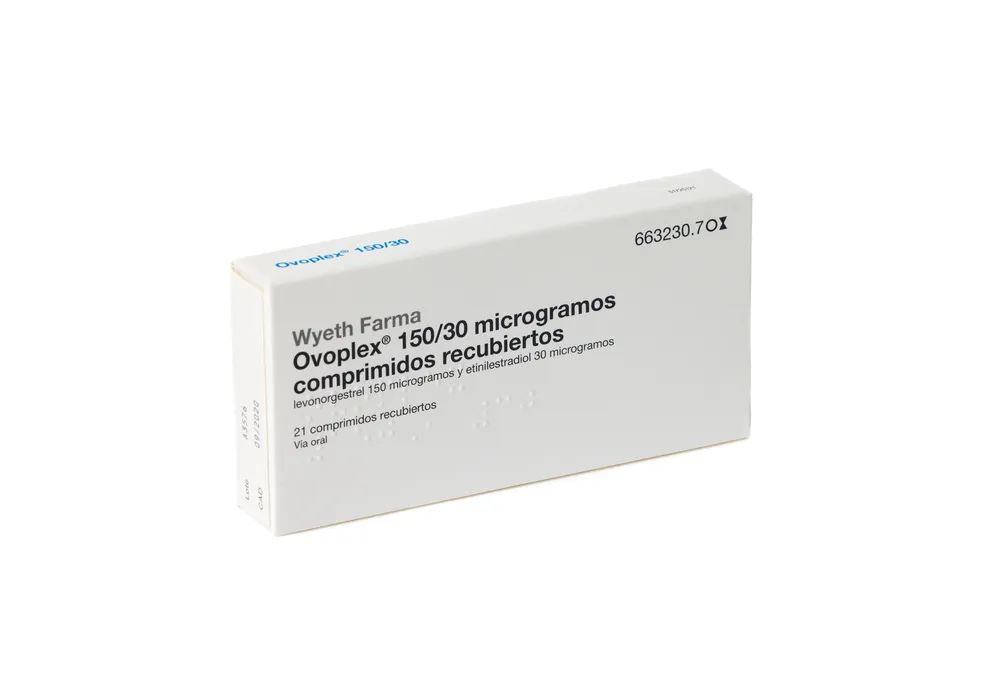
Table of Contents
- Package leaflet: Information for the user
- Introduction
- **OVOPLEX 0.15 mg/0.03 mg coated tablets**
- 1. What Ovoplex is and what it is used for
- 2. Before taking Ovoplex coated tablets
- 3. How to take Ovoplex
- 4. Possible adverse effects
- 5. Storage of Ovoplex 150/30 coated tablets
- 6. Information for the user
- ***Manufacturer***
Package leaflet: Information for the user
Introduction
Package leaflet: information for the user
OVOPLEX 0.15 mg/0.03 mg coated tablets
Levonorgestrel and Ethinylestradiol
Read the entire leaflet carefully before you start taking this medicine, because it contains important information for you.
- Keep this leaflet, as you may need to read it again.
- If you have any questions, consult your doctor or pharmacist.
- This medicine has been prescribed for you only and must not be given to other people, even if they have the same symptoms, as it could harm them.
- If you experience any adverse effects, consult your doctor or pharmacist, even if they are effects not listed in this leaflet. See section 4.
Contents of the leaflet:
- What Ovoplex is and what it is used for
- What you need to know before taking Ovoplex
- How to take Ovoplex
- Possible adverse effects
- How to store Ovoplex
- Contents of the pack and other information
1. What Ovoplex is and what it is used for
Ovoplex is an oral contraceptive medication.
It is prescribed for the following indications: oral hormonal contraception, menstrual cycle disorders, and ovarian rest.
Additionally, the use of oral contraceptives may have beneficial effects in conditions such as dysmenorrhea (menstrual pain) and in reducing the incidence of certain breast and reproductive organ disorders.
2. Before taking Ovoplex coated tablets
Do not take Ovoplex
- If you are allergic to levonorgestrel, ethinylestradiol, or any of the other components of this medicine (listed in section 6).
- If you are pregnant or think you might be pregnant.
- If you have severe disorders of liver function.
- If you have had blood clots in the veins of the legs that have broken loose and affected other parts of the body, even if this occurred a long time ago.
- If you have had tumors in the breasts, liver, cervix, uterus, or vagina.
- If you have diabetes associated with heart problems or circulatory disorders.
- If you have disorders of the arteries in the brain or heart.
- If you have heart valve disorders (valvulopathies).
- If you have heart rhythm disorders (arrhythmias) with risk of blood clot formation.
- If you have inherited or acquired disorders that predispose to blood clotting (thrombophilias).
- If you suffer from migraines associated with symptoms such as loss of strength or sensation in part of the body, or visual disturbances (aura).
- If you have high blood pressure.
- If you have vaginal bleeding of unknown cause.
- If you have pancreatitis (inflammation of the pancreas) due to a severe increase in triglycerides.
- If you have hepatitis C and are taking medications containing ombitasvir/paritaprevir/ritonavir and dasabuvir, glecaprevir/pibrentasvir, or sofosbuvir/velpatasvir/voxilaprevir (see also section “Other medicines and Ovoplex”).
Warnings and precautions
Before taking Ovoplex, you must visit your doctor for a physical examination. It is important that you inform your doctor if you currently have or have previously had any of the following conditions. If so, your doctor may need to monitor you more frequently. You should also contact your doctor if any of these conditions worsen or appear while using this medicine:
- Heart disease (chest pain, certain types of heart rhythm disorders, heart conditions).
- Personal or family history of high levels of fat (triglycerides) in the blood.
- High blood pressure, particularly if it worsens or does not improve while taking antihypertensive medications.
- Severe and recurrent migraines or migraines associated with visual disturbances (aura).
- Diabetes.
- Depression or history of depression, as it may worsen or reappear when using hormonal contraceptives.
- Epilepsy.
- Inflammatory bowel disease (Crohn’s disease or ulcerative colitis).
- Jaundice (yellowing of the whites of the eyes and skin) or disorders of liver function.
- Itching, especially if it occurred during a previous pregnancy.
- Permanent brown patches on the skin of the face, particularly if they occurred during a previous pregnancy. In such cases, avoid sunlight and ultraviolet radiation (e.g., sunbeds).
- If you experience symptoms of angioedema such as swelling of the face, tongue, and/or throat, and/or difficulty swallowing, or hives with possible breathing difficulties, contact a doctor immediately. Products containing estrogens may cause or worsen symptoms of hereditary or acquired angioedema.
Psychiatric disorders:
Some women using hormonal contraceptives such as Ovoplex have reported depression or a depressed mood. Depression can be severe and may sometimes lead to suicidal thoughts. If you experience mood changes or depressive symptoms, contact your doctor as soon as possible for further medical advice.
Also contact your doctor if you think you might be pregnant.
Potentially serious conditions:
Thrombosis (blood clots)
The use of contraceptive medicines may increase the risk of thrombosis (blood clots). This risk is higher during the first year of using contraceptive pills.
Blood clots can block major blood vessels and may cause: pulmonary embolism, myocardial infarction, angina pectoris, cerebral thrombosis, etc.
If you notice any of the following signs, inform your doctor immediately, as blood clots may be forming:
- Pain and swelling in one leg.
- Severe chest pain, sometimes also in the arm.
- Sudden shortness of breath.
- Sudden onset of coughing.
- Severe headache.
- Vision problems (loss of vision, double vision).
- Difficulty speaking clearly.
- Dizziness.
- Seizures.
- Weakness or numbness affecting one side of the body.
- Difficulty walking or holding objects.
- Severe stomach pain.
The following conditions may increase the risk of blood clot formation, so you must inform your doctor if you have any of them:
- Obesity.
- If you are a smoker and over 35 years old.
- If you have had a serious injury to your legs or hips.
- If you have recently given birth or had an abortion in the second trimester of pregnancy.
- If you need to remain bedridden for several days. In such cases, treatment should be suspended whenever possible.
- If you have undergone or are about to undergo major surgery. In such cases, treatment should be suspended, whenever possible, four weeks before and two weeks after the procedure.
- Advanced age.
Do not start treatment with oral contraceptives until 28 days after childbirth or after a second-trimester abortion, if not breastfeeding, since the risk of venous thromboembolism increases immediately after childbirth.
Blood pressure
If you have hypertension (high blood pressure) or suffer from any disease related to hypertension (including certain kidney diseases), it is preferable to use other contraceptive methods. If you decide to use oral contraceptives, your blood pressure should be monitored. However, if your blood pressure increases and cannot be controlled with medication, treatment must be discontinued.
Tumors
Slightly more cases of breast tumors have been observed in women using contraceptive pills, but it is not known whether this is due to the treatment. For example, more tumors may be detected in women using contraceptive pills because they visit their doctor more frequently. This increased frequency gradually decreases after stopping treatment. After ten years, the likelihood of developing breast tumors will be the same as in women who have never used contraceptive pills.
Similarly, cervical (cervix) tumors occur more frequently in women using contraceptive pills. However, the development of this tumor is associated with increased sexual activity and sexually transmitted diseases, so it is unclear whether the contraceptive pill plays a direct role in this risk.
Rarely, cases of liver tumors have been reported in women using contraceptive pills. In such cases, internal bleeding may occur, causing severe abdominal pain. If this happens, contact your doctor immediately.
Women who have previously experienced cholestasis (obstruction of bile flow) during treatment with oral contraceptives or during pregnancy are more likely to develop it again if they use oral contraceptives. These women should be monitored, and if cholestasis occurs, treatment with oral contraceptives should be discontinued.
Cases of severe liver injury have been reported with the use of oral contraceptives. If your doctor determines that you develop severe liver damage while taking oral contraceptives, treatment with oral contraceptives will be stopped, and you will be advised to use non-hormonal contraceptives.
Migraine
The onset or worsening of a migraine, or the appearance of a migraine with different characteristics than usual—recurrent, persistent, or severe—requires discontinuation of treatment with contraceptives and evaluation of the cause.
Women with migraines (particularly those associated with symptoms such as loss of strength or sensation in part of the body, or visual disturbances (aura)) who take oral contraceptives may have an increased risk of cerebral infarction.
Immune system
The use of oral contraceptives may worsen symptoms of angioedema (swelling similar to hives but occurring beneath the skin rather than on the surface), particularly in women with hereditary angioedema (an immune system disorder passed from parents to children).
Genital bleeding
You may not have your “period” during the rest week. If the contraceptive pill has been taken correctly, it is very unlikely that you are pregnant. However, if you miss two periods, you should consult your doctor, as pregnancy must be ruled out. If you have not taken the contraceptive pill as instructed in section “3. How to take Ovoplex” and miss a period, you should stop treatment and use a non-hormonal contraceptive method until pregnancy has been ruled out.
This medicine may cause vaginal bleeding or spotting between periods. If this occurs, continue treatment, but if the bleeding continues after the first three cycles, consult your doctor immediately. Errors in taking the pill may also cause spotting and light bleeding.
When you stop using this medicine, you may experience irregular, scanty, or no bleeding, especially during the first three months and particularly if your periods were already irregular before starting hormonal treatment.
Effects on carbohydrates and lipids
Cases of glucose intolerance have been reported in users of oral contraceptives. Women with glucose intolerance or diabetes mellitus should be carefully monitored.
A small proportion of women taking contraceptives may experience changes in their lipid profile (blood fat analysis). Non-hormonal contraceptive methods should be considered in women with uncontrolled lipid disorders. A small proportion of women taking oral contraceptives may develop persistent hypertriglyceridemia (increased triglycerides in the blood). A significant increase in plasma triglycerides may lead to pancreatitis and other complications.
Women previously treated for hyperlipidemia (increased cholesterol and/or triglycerides) should be monitored if they decide to take oral contraceptives.
Ocular lesions
Cases of retinal vascular thrombosis have been reported with the use of oral contraceptives, which may lead to partial or complete vision loss. If visual changes, onset of proptosis (bulging eyes), diplopia (double vision), papilledema (optic disc swelling), or retinal vascular lesions occur, treatment with oral contraceptives should be discontinued and the cause evaluated immediately.
Depression
If a severe episode of depression occurs, medication should be discontinued and an alternative contraceptive method used.
Women with a history of depression should be monitored.
Other
The contraceptive pill does not protect against HIV infection (AIDS) or any other sexually transmitted disease (e.g., chlamydia, genital herpes, genital warts, gonorrhea, hepatitis B, and syphilis). Condom use is necessary to protect against these diseases.
Other medicines and Ovoplex
Inform your doctor or pharmacist if you are currently using, have recently used, or might use any other medicines, including those obtained without a prescription.
Never take another medicine on your own initiative without your doctor’s recommendation, as some combinations must be avoided.
Note that these instructions may also apply to medicines you have taken before or may take in the future.
The following medicines may prevent combined hormonal contraceptives from working properly, and if this occurs, you could become pregnant:
- Some treatments for viral infections and HIV (ritonavir, indinavir).
- Some antibiotics (rifampicin, rifabutin, griseofulvin, and troleandomycin).
- Some antiepileptics (topiramate, barbiturates (phenobarbital), phenytoin, carbamazepine, primidone, oxcarbazepine, felbamate).
- Some anti-inflammatory drugs (phenylbutazone, dexamethasone).
- Antacids.
- Laxatives.
- Some mood-enhancing substances (modafinil).
- Medicines that reduce triglyceride and/or cholesterol levels (atorvastatin).
- Antifungals (fluconazole).
- Vitamin C.
- Analgesics (paracetamol).
The herbal remedy St. John’s wort (Hypericum perforatum) also reduces the effectiveness of oral contraceptives, and cases of pregnancy have been reported in women taking both the contraceptive pill and St. John’s wort preparations. The reduced contraceptive effect lasts up to two weeks after stopping St. John’s wort.
It is advisable to use another reliable contraceptive method if you are taking any medicine that may reduce the effectiveness of oral contraceptives. Women undergoing antibiotic treatment should use a non-hormonal contraceptive method during antibiotic use and for 7 days after discontinuation (except for rifampicin and griseofulvin, which require continued use for 28 days after discontinuation, as well as drugs that induce liver enzymes: antiepileptics).
If the treatment with the drug lasts longer than the number of tablets in the oral contraceptive (OC) pack, the next OC pack should be started without the usual tablet-free interval.
Other substances may increase ethinylestradiol concentrations:
- Medicines that reduce triglyceride and/or cholesterol levels (atorvastatin).
- Antifungals (fluconazole).
- Vitamin C.
- Analgesics (paracetamol).
Troleandomycin may increase the risk of intrahepatic cholestasis.
Ovoplex may reduce the effect of other medicines, such as:
- Oral anticoagulants (acenocoumarol).
- Analgesics (such as paracetamol and salicylates).
- Oral antidiabetics and insulin.
- Lamotrigine (used to treat epilepsy and some psychiatric disorders).
Likewise, Ovoplex may increase the effect of other drugs such as:
- β-blockers like metoprolol (used to treat high blood pressure).
- Theophylline (for asthma treatment).
- Corticosteroids (such as prednisolone).
- Cyclosporine (immunosuppressant), increasing the risk of liver toxicity.
- Flunarizine (for migraine treatment), increasing the risk of lactation.
Do not take OVOPLEX 150/30 if you have hepatitis C and are taking medications containing ombitasvir/paritaprevir/ritonavir, dasabuvir, glecaprevir/pibrentasvir, or sofosbuvir/velpatasvir/voxilaprevir, as these medications may cause increases in liver function test results (elevated liver enzyme ALT).
Your doctor will prescribe another type of contraceptive before starting treatment with these medications.
OVOPLEX 150/30 may be restarted approximately 2 weeks after completion of this treatment. See section “Do not take OVOPLEX 150/30”.
Laboratory tests
The use of oral contraceptives may affect the results of certain laboratory tests. If you are scheduled for any laboratory test, inform your doctor that you are using oral contraceptives.
Pregnancy and breastfeeding
Consult your doctor or pharmacist before using any medicine.
Do not use this medicine if you are pregnant or think you might be pregnant (for information on the use of Ovoplex after pregnancy, see section “3. How to take Ovoplex”).
If you become pregnant, you must stop taking this medicine immediately and consult your doctor.
This medicine should not be used until the end of the breastfeeding period.
Children and adolescents
The efficacy and safety of oral contraceptives have been established in women of reproductive age.
Its use is not indicated before the first menarche (menstruation).
Elderly patients
Its use is not indicated in postmenopausal women.
Driving and use of machines
No effects on the ability to drive or use machinery have been observed.
Ovoplex contains lactose and sucrose
This medicine contains lactose. If your doctor has informed you that you have an intolerance to certain sugars, consult with him before taking this medicine.
This medicine contains sucrose. If your doctor has informed you that you have an intolerance to certain sugars, consult with him before taking this medicine.
3. How to take Ovoplex
Follow exactly the administration instructions for Ovoplex 150/30 given by your doctor. Consult your doctor or pharmacist if you have any doubts.
This medicine is for oral use.
Remember to take your medicine, as forgetting to take Ovoplex 150/30 may reduce the effectiveness of the preparation.
Before starting treatment with this medicine, your doctor must carry out a detailed medical history and thorough physical examination, including blood pressure measurement, and must rule out pregnancy. Your doctor should also perform an examination of the breasts, liver, limbs, and pelvic organs (urinary bladder, vagina, uterus, and terminal part of the large intestine). Your doctor may also need to perform a cervical cytology test (a slight, painless scraping of the cervix to collect cells for analysis). Your doctor will repeat this examination 3 months after starting treatment and subsequently once a year.
See section “2. Before taking Ovoplex”.
Instructions for correct administration of the medicine
Take the tablets orally, in the order indicated on the blister pack, approximately at the same time every day, with some liquid if necessary. Take one tablet daily for 21 consecutive days, followed by a 7-day interval without tablets. Each subsequent pack should be started after this 7-day interval without tablets, during which withdrawal bleeding usually occurs. This bleeding, similar to menstruation, typically begins 2 to 3 days after taking the last tablet and may not have finished before starting the next pack.
Your doctor will determine the duration of your treatment with this medicine.
If you think that the effect of this medicine is too strong or too weak, inform your doctor or pharmacist.
Starting the first pack of Ovoplex
- When no hormonal contraceptive has been used the previous month
Treatment should begin on the first day of the menstrual cycle (i.e., the first day of bleeding).
For example, if bleeding starts on a Monday, you should start taking this medicine on the same day with the coated tablet marked “Lu”, and continue following the directional arrow for subsequent doses.
It is also permitted to start on days 2–7 of the menstrual cycle. In this case, it is recommended to use a non-hormonal contraceptive method (e.g., condoms or spermicide) for the first 7 days of tablet intake.
- When switching from another contraceptive to Ovoplex
You may start taking Ovoplex the day after taking the last active tablet of your current pill pack (meaning there is no tablet-free interval). If your current pill pack also contains inactive tablets, you may start taking Ovoplex the day after taking the last active tablet. Do not delay starting beyond the day following the end of the usual tablet-free interval or the interval of inactive tablets of your previous contraceptive.
- When switching from a method containing only a progestogen (mini-pill, implant, intrauterine device (IUD), or injection)
You may stop taking the progestogen-only pill (mini-pill) on any day and start taking Ovoplex the next day at the same time.
Begin using this medicine on the day you would normally receive your next injection or on the day your implant or intrauterine device (IUD) is removed.
In all these situations, ensure you also use an additional barrier method during sexual intercourse (e.g., condoms or spermicides) for the first 7 days of tablet intake.
- After a first-trimester abortion
You may start taking the tablets immediately. If you do so, no additional contraceptive measures are necessary.
- Postpartum
If you are breastfeeding, you must not take this medicine. See section “Pregnancy, breastfeeding and fertility”.
Tablet use should begin 28 days after delivery in women who are not breastfeeding, or after a second-trimester abortion. If you start later, you must use an additional barrier method for the first 7 days of tablet intake. However, if you have already had sexual intercourse, pregnancy must be ruled out before starting the contraceptive, or you must wait for your next menstrual period.
Subsequent cycles
After the 7-day break, continue with a new pack of Ovoplex, starting on the same day of the week as the first pack was started.
What to do if bleeding occurs during the 21 days of taking coated tablets
The occurrence of bleeding during the 3 weeks of taking coated tablets is not a reason to interrupt treatment. Light bleeding usually resolves on its own. If bleeding becomes as heavy as a normal menstrual period and persists for more than 3 cycles, you should consult your doctor.
Absence of bleeding
If vaginal bleeding does not occur during the break period, you should consult your doctor immediately to rule out pregnancy, especially if the coated tablets have not been taken regularly or if vomiting or diarrhea occurred during the cycle.
If you forget to take Ovoplex
Contraceptive protection may be reduced if you miss taking tablets. In particular, if the omission occurs in the first week of treatment and you had sexual intercourse in the previous week, there may be a risk of pregnancy.
-
If you are less than 12 hours late taking a tablet, contraceptive effectiveness is maintained. Take the tablet as soon as you remember and continue taking the following tablets at your usual time.
-
If you are more than 12 hours late taking a tablet, contraceptive effectiveness may be reduced.
-
Always take the most recently missed tablet as soon as you remember, even if this means taking two tablets in one day. Continue taking the following tablets at your usual time, but use an additional barrier method (such as condoms or spermicides) for the next 7 days.
- If you take the missed tablet before completing the 7 days requiring additional contraceptive protection, start a new pack immediately without a break. You will not have a menstrual period until the end of the new pack, although you may experience spotting or bleeding during tablet intake.
- If you do not have a period at the end of the new pack, contact your doctor, who must confirm that you are not pregnant before starting the next pack.
Advice in case of vomiting and/or diarrhea
If vomiting or diarrhea occurs within 4 hours after taking a tablet, follow the advice for missed tablets. If you do not wish to change your normal tablet-taking schedule, take the necessary additional tablets from another pack.
How to delay a period
To delay a period, start a new pack immediately after finishing the current pack, without any break. Periods can be delayed for as long as desired, but not beyond the end of the second pack. During this time, you may experience bleeding or spotting. Regular use of this medicine should then resume after the usual 7-day tablet-free interval.
If you take more Ovoplex than you should
You may experience nausea, vomiting, drowsiness, breast tenderness, dizziness, and vaginal bleeding; treatment consists of discontinuing administration of this medicine. Contact your doctor or pharmacist as soon as possible.
In case of overdose or accidental ingestion, consult your doctor or pharmacist or call the Toxicology Information Service. Telephone 915 620 420, indicating the medicine and the amount taken.
If you have any other questions about the use of this product, ask your doctor or pharmacist.
4. Possible adverse effects
Serious adverse effects
Contact a doctor immediately if you experience any of the following symptoms of angioedema: swelling of the face, tongue and/or throat, and/or difficulty swallowing or hives with possible breathing difficulties (see also section “Warnings and precautions”).
Like all medicines, Ovoplex may produce adverse effects, although not everyone experiences them.
The use of oral contraceptives has been associated with an increased risk of:
- Venous and arterial thrombotic and thromboembolic events, including cerebral infarction, transient ischaemic attack, myocardial infarction, venous thrombosis and pulmonary embolism (see Warnings and precautions).
- Cervical intraepithelial neoplasia (abnormal cells on the surface of the cervix) and cervical cancer (cancer of the cervix).
- Diagnosis of breast cancer (see Warnings and precautions).
- Benign liver tumours (e.g. focal nodular hyperplasia, hepatic adenomas).
The adverse effects listed below are classified according to frequency using the following criteria:
Very common adverse effects (more than 1 in 10 patients)
? Unexpected vaginal bleeding or spotting
? Headache, including migraines
Common adverse effects (at least 1 in 100 patients) are:
? Vaginitis (inflammation of the vagina), including candidiasis (fungal infection of the vagina)
- Mood changes, including depression; changes in libido (sex drive)
- Nervousness, dizziness
- Nausea, vomiting, abdominal pain
- Acne
- Breast pain or tenderness, breast swelling, breast discharge, dysmenorrhoea (painful menstruation), changes in menstrual flow, changes in vaginal discharge and cervical ectopia (alteration of the mucosa of the cervix), amenorrhoea (absence of menstruation)
- Fluid retention, oedema (swelling)
- Changes in weight (increase or decrease)
Uncommon adverse effects (at least 1 in 1,000 patients) are:
- Changes in appetite, increased or decreased
- Cramps, bloating sensation, diarrhoea
- Rash, chloasma (skin pigmentation) which may persist, hirsutism (excessive hair growth), alopecia (hair loss)
- Increased blood pressure; changes in blood lipid levels, including hypertriglyceridaemia (high levels of fatty acids in the blood)
Rare adverse effects (at least 1 in 10,000 patients) are:
- Intolerance to contact lenses
- Allergic-type reactions such as urticaria (itching), angioedema (swelling of the face, lips, mouth, and in very rare cases accompanied by difficulty breathing, dizziness and even loss of consciousness)
? Glucose intolerance
- Venous thrombotic events (formation of blood clots in veins)
- Cholestatic jaundice (yellowing of the whites of the eyes and skin due to bile retention)
- Erythema nodosum (a type of skin inflammation causing nodules on the legs)
- Vaginal discharge
- Decreased blood folate levels
Very rare adverse effects (less than 1 in 10,000 patients) are:
- Hepatocellular carcinomas (malignant liver tumours)
- Worsening of systemic lupus erythematosus (autoimmune disease)
- Worsening of porphyria (inherited metabolic disorder)
- Worsening of chorea (involuntary movements)
- Eye abnormalities and visual disorders
- Worsening of varicose veins
- Pancreatitis (inflammation of the pancreas); ischaemic colitis (a type of inflammation of the colon)
- Cholelithiasis (gallbladder disorders), including gallstones
- Erythema multiforme (a type of skin inflammation)
- Haemolytic uraemic syndrome (a kidney disease with blood abnormalities)
Adverse effects with unknown frequency are:
- Inflammatory bowel disease (Crohn’s disease, ulcerative colitis) (certain types of intestinal inflammation)
Do not be alarmed by these adverse effects, as it is very likely that none of them will occur.
If you consider any of the adverse effects you experience to be severe, or if you notice any adverse effects not listed in this leaflet, inform your doctor or pharmacist.
Reporting of adverse effects
If you experience any type of adverse effect, consult your doctor or pharmacist, even if it is a possible adverse effect not listed in this leaflet. You may also report them directly via the Spanish Pharmacovigilance System for Human Medicines: https://www.notificaRAM.es. By reporting adverse effects, you can help provide more information on the safety of this medicine.
5. Storage of Ovoplex 150/30 coated tablets
Do not store above 30°C.
Keep out of the reach and sight of children.
Do not use OVOPLEX 150/30 after the expiry date stated on the packaging. The expiry date refers to the last day of the month indicated.
Medicines must not be disposed of via wastewater or household waste. Dispose of packaging and unused medicines at the SIGRE collection point at your pharmacy. If in doubt, ask your pharmacist how to properly dispose of unused medicines and their packaging. This will help protect the environment.
6. Information for the user
Composition of Ovoplex coated tablets
The active substances in Ovoplex are: 0.15 mg levonorgestrel and 0.03 mg ethinylestradiol.
The other components (excipients) are: sucrose, lactose, corn starch, povidone K-25, magnesium stearate, povidone K-90, macrogol 6000, calcium carbonate, talc, white wax, carnauba wax, and purified water.
Appearance of the medicinal product and contents of the pack
The product is presented in a calendar pack containing 1 blister with 21 coated tablets.
The blister is packed in an aluminium bag containing a sachet with desiccant (silica gel).
After opening the aluminium bag, the desiccant may be removed.
Marketing Authorisation Holder
WYETH FARMA, S.A.
Ctra. Burgos, Km 23. Desvío Algete, Km 1.
San Sebastián de los Reyes – Madrid
SPAIN
Manufacturer
Pfizer Ireland Pharmaceuticals Unlimited Company
Little Connell
Newbridge,
Co. Kildare
W12 HX57
Ireland
Local representative
Pfizer, S.L.
Avda. de Europa, 20-B
Parque Empresarial La Moraleja
28108 Alcobendas (Madrid)
Date of the most recent review of this leaflet: November 2022
Detailed and up-to-date information on this medicine is available on the website of the Spanish Agency for Medicines and Health Products (AEMPS) http://www.aemps.gob.es/