Otix ear drops solution
Spain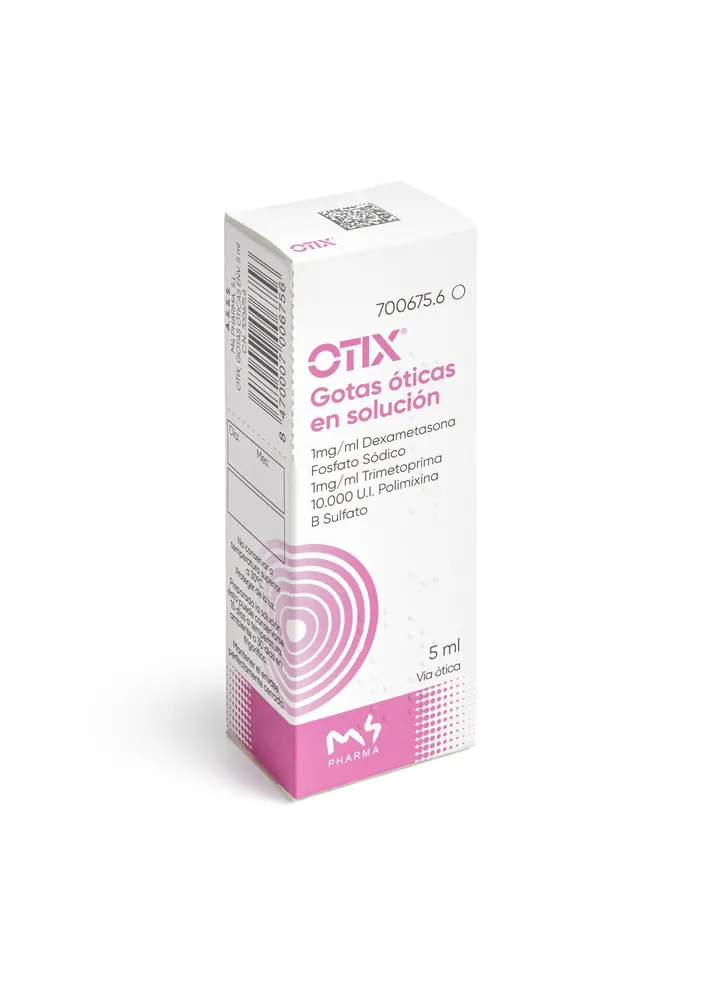
Table of Contents
Package leaflet: Information for the user
Introduction
Package leaflet: information for the user
Otix ear drops solution
Sodium dexamethasone phosphate/polymyxin B sulfate/trimethoprim
Read the entire leaflet carefully before you start using this medicine, because it contains important information for you.
- Keep this leaflet, as you may need to read it again.
- If you have any questions, ask your doctor or pharmacist.
- This medicine has been prescribed for you only, and you should not give it to other people, even if they have the same symptoms as you, because it could harm them.
- If you experience any adverse reactions, talk to your doctor or pharmacist, even if the adverse reactions are not listed in this leaflet. See section 4.
Leaflet contents:
- What Otix is and what it is used for
- What you need to know before using Otix
- How to use Otix
- Possible side effects
- How to store Otix
- Contents of the pack and other information
1. What Otix is and what it is used for
Otix belongs to a group of medicines called combinations of dexamethasone and anti-infectives. It contains a glucocorticosteroid, dexamethasone phosphate (sodium), and two antibiotics, polymyxin B sulfate and trimethoprim.
The combination of trimethoprim and polymyxin B has an antimicrobial spectrum covering both gram-positive and gram-negative organisms that may grow in the external ear. The corticosteroid-antimicrobial combination reduces inflammation of the external auditory canal while simultaneously treating existing infection or preventing superinfection in inflammatory conditions.
Antibiotics are used to treat bacterial infections and are not effective against viral infections. It is important to follow your doctor's instructions regarding dosage, dosing interval, and duration of treatment. Do not store or reuse this medication. If you have leftover antibiotics after completing the treatment, return them to the pharmacy for proper disposal. Medicines must not be disposed of via wastewater or household waste. |
Otix is indicated for acute external otitis caused by microorganisms sensitive to the Trimethoprim-Polymyxin B combination in adults and children over 2 years of age.
2. What you need to know before using Otix
Before prescribing this medicine, your doctor will have examined your eardrums to ensure they are not perforated.
Do not use Otix:
- If you are allergic to the active substances or to any of the other components of this medicine (listed in section 6).
- If you have a perforated or damaged eardrum.
- If you have chronic or acute infection or inflammation of the middle ear (otitis media).
- If you have any viral, fungal, or tuberculosis infection of the external ear canal.
- If you have ever developed a severe skin rash, skin peeling, blisters, and/or mouth ulcers after using trimethoprim.
- If you are pregnant (first 3 months) or might be pregnant.
Warnings and precautions
This medicine is for ear use only. It must not be swallowed or injected. If, after starting treatment, you develop symptoms of itching (urticaria) or allergy (including rash, itching, or breathing problems), it is advisable to stop the medication and consult your doctor.
When applying the medicine, avoid contact between the dropper tip and the ear or fingers to prevent possible contamination.
Use of this medicine may increase your susceptibility to other infections. Consult your doctor if symptoms and signs persist after one week of treatment. Consult your doctor if you experience swelling and weight gain around the trunk and face, as these are usually the first signs of a condition called Cushing's syndrome. Suppression of adrenal gland function may occur after discontinuation of intensive or long-term treatment with Otix. Consult your doctor before stopping treatment on your own. These risks are particularly important in children and patients treated with a medicine called ritonavir.
Consult your doctor before starting to use Otix if:
- Severe skin reactions, such as Stevens-Johnson syndrome (SJS), toxic epidermal necrolysis (TEN), and drug reaction with eosinophilia and systemic symptoms (DRESS), have been reported in association with trimethoprim treatment. Discontinue use of trimethoprim and seek immediate medical attention if you notice any of the symptoms related to these severe skin reactions described in section 4.
Children
Use of Otix is not recommended in children under 2 years of age due to lack of data in this patient group.
Other medicines and Otix
Inform your doctor or pharmacist if you are taking, have recently taken, or might need to take any other medicines.
Since systemic absorption is not expected following otic application, interactions with systemically administered medicines are highly unlikely. No interaction studies have been conducted.
Concomitant administration of other ear medications is not recommended. If more than one medicine needs to be administered via this route, it is advisable to administer them separately.
Inform your doctor if you are taking ritonavir, as it may cause an increase in the amount of dexamethasone in the blood.
Pregnancy and breastfeeding
If you are pregnant or breastfeeding, think you may be pregnant, or are planning to become pregnant, consult your doctor or pharmacist before using this medicine.
Pregnancy:
Your doctor will assess whether this medicine should be used if you are pregnant.
This medicine should not be taken during the first three months of pregnancy. Treatment with trimethoprim during the first trimester of pregnancy may increase the risk of spontaneous abortion. Infants born to mothers treated with trimethoprim during the first trimester may have an increased risk of congenital malformations, particularly neural tube defects (where the spinal column and spinal cord do not form properly), oral clefts (where the lip and palate do not form properly), and heart defects.
Breastfeeding:
Your doctor will assess whether this medicine should be used if you are breastfeeding.
Driving and using machines
Due to the route of administration and conditions of use, it is unlikely that this medicine will affect your ability to drive or operate machinery. No data are available on this.
This medicine contains 0.1 mg of benzalkonium chloride per vial.
3. How to use Otix
Follow exactly the instructions for administration of the medicine given by your doctor. If in doubt, ask your doctor or pharmacist again.
Otic route (administer in the ear).
The recommended dose is 4 drops 3–4 times daily into the affected ear for at least 7 days. If symptoms persist after this time, consult your doctor.
Use in children over 2 years of age
Dosage adjustment is not necessary in this patient group.
ATTENTION: It is important that when unsealing the product, you follow the instructions in the section "Preparation of the solution". The prepared solution should be used throughout the treatment following the instructions in the section "Instructions for correct administration". If you have any doubts about the preparation of the solution, consult your pharmacist.
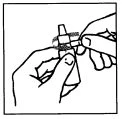
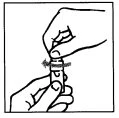
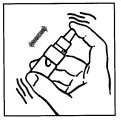
Preparation of the solution
To prepare the solution, work with cleanliness and care, following the instructions below:
INSTRUCTIONS
|
|
|
|
Instructions for proper administration.
Once the solution has been prepared as indicated in the instructions, unscrew the cap and tilt the head to one side so that the affected ear is facing upward. Instill the drops into the ear canal of the affected ear using the dropper. Avoid contact between the dropper and the ear or fingers to prevent possible contamination. Keep the head tilted for at least 30 seconds to allow the drops to penetrate the ear and prevent them from leaking out. Close the bottle after each use and keep it tightly sealed.
If you use more Otix than you should
Due to the characteristics of this preparation, intended for topical use, intoxication phenomena are not expected even if the patient inadvertently instills the unreconstituted product.
In case of overdose or accidental ingestion, contact the Toxicology Information Service at telephone number 91 562 04 20, indicating the medication and the amount ingested.
If you forget to use Otix
Apply a single dose as soon as you remember, and then continue with your next scheduled dose. However, if it is almost time for your next dose, do not take the missed dose and continue with your regular dosing schedule.
Do not use a double dose to make up for a missed dose.
If you have any further questions about the use of this product, ask your doctor or pharmacist.
4. Possible adverse effects
Like all medicines, this medicine may cause adverse effects, although not everyone will experience them.
The following adverse effects may occur with the use of Otix, for which frequency is unknown:
- Growth of microorganisms that are not sensitive, particularly fungi; in such cases, treatment must be discontinued and appropriate measures taken.
- Allergic reactions, which will require discontinuation of treatment.
- Local reactions (irritation).
- Ototoxicity (toxicity in the ear).
- Hormonal problems: excessive growth of body hair (particularly in women), muscle weakness and wasting, purple stretch marks on the skin, increased blood pressure, irregular or absent menstrual periods, changes in levels of body proteins and calcium, growth retardation in children and adolescents, and swelling with weight gain in the body and face (Cushing's syndrome) (see section 2, "Warnings and precautions").
The following adverse effects may occur with the use of Otix with very rare frequency:
- Hallucinations.
Corticosteroids may mask the clinical symptoms of infection or sensitization. Side effects typical of corticosteroids are not expected due to the specific conditions of use in the ear.
See also Important information about some of the components of Otix.
Stop using trimethoprim and seek immediate medical attention if you notice any of the following symptoms:
- Reddish spots on the trunk, often with central blisters, skin peeling, and ulcers in the mouth, throat, nose, genitals, and eyes. These serious skin rashes may be preceded by fever and flu-like symptoms (Stevens-Johnson syndrome (SJS)/toxic epidermal necrolysis (TEN)).
- Widespread skin rash, high body temperature, and enlarged lymph nodes (DRESS syndrome or drug hypersensitivity syndrome).
Reporting of adverse effects
If you experience any type of adverse effect, consult your doctor or pharmacist, even if it is a possible adverse effect not listed in this leaflet. You may also report them directly via the Spanish Pharmacovigilance System for Human Medicines: https://www.notificaram.es. By reporting adverse effects, you can help provide more information on the safety of this medicine.
5. Storage of Otix
Keep this medicine out of the sight and reach of children.
Do not use this medicine after the expiry date stated on the packaging, after EXP.
The expiry date refers to the last day of the month indicated.
Do not store above 30°C. Protect from light.
Once the solution has been prepared, it may be stored for 15 days at room temperature.
Medicines must not be disposed of via wastewater or household waste. Return unused containers and medicines to the SIGRE collection point at your pharmacy. If you are unsure, please ask your pharmacist how to dispose of containers and unused medicines. This helps protect the environment.
6. Contents of the pack and other information
Composition of Otix
- The active substances are dexamethasone (as sodium phosphate), trimethoprim and polymyxin B (as sulfate).
- The other components are benzalkonium chloride, sulfuric acid, sodium chloride, sodium hydroxide (E 524), trisodium citrate, polysorbate 80, citric acid and purified water.
Once prepared: Each ml contains 1 mg of dexamethasone (as sodium phosphate), 1 mg of trimethoprim and 10,000 IU of polymyxin B (as sulfate).
Appearance of the product and contents of the container
Polyethylene bottle with a dropper, containing two solutions (upper and lower) to prepare 5 ml of a clear, colourless solution.
The upper chamber (1 ml) is made of low-density polyethylene and the lower chamber (4 ml) of high-density polyethylene.
Marketing Authorization Holder
M4 PHARMA, S.L.
C/ Tànger, 86
08018 Barcelona, Spain
Manufacturer
Laboratori Fundació DAU
c/ C, 12-14 Pol. Ind. Zona Franca
08040 Barcelona – Spain
Local representative
Laboratorios ERN, S.A.
C/Perú, 228
08020 Barcelona, Spain
Date of the most recent review of this leaflet: December 2025
Detailed information on this medicine is available on the website of the Spanish Agency of Medicines and Medical Devices (AEMPS) http://www.aemps.gob.es/