Osvaren 435 mg/235 mg film-coated tablets
Spain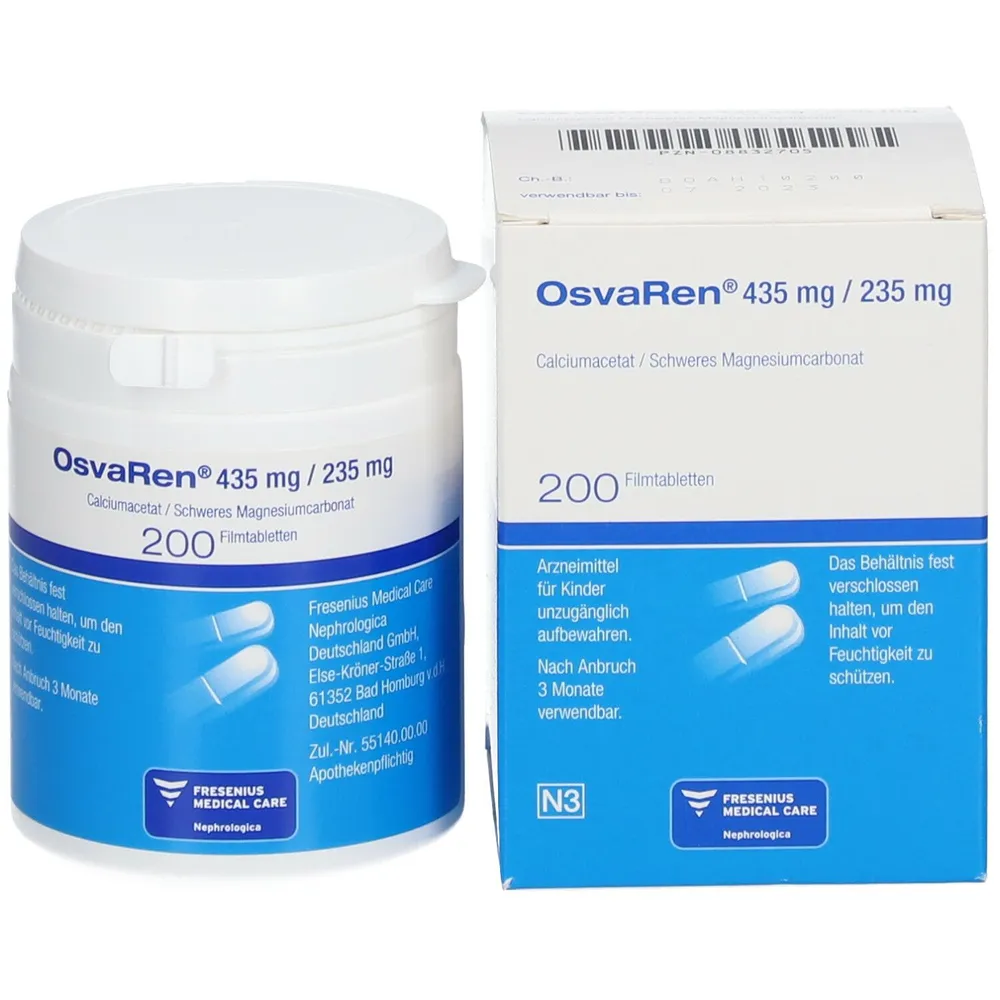
Instructions for Use
Package leaflet: Information for the user
Introduction
Package leaflet: Information for the user
OsvaRen 435 mg / 235 mg film-coated tablets
Calcium acetate / Magnesium carbonate heavy
Read this entire leaflet carefully before you start taking this medicine because it contains important information for you.
- Keep this leaflet as you may need to read it again.
- If you have any questions, ask your doctor or pharmacist.
- This medicine has been prescribed for you only and must not be given to other people, even if they have the same symptoms as you, because it could harm them.
- If you experience any adverse effects, consult your doctor or pharmacist, even if they are adverse effects not listed in this leaflet. See section 4.
Leaflet contents
-
What OsvaRen is and what it is used for
-
What you need to know before taking OsvaRen
-
How to take OsvaRen
-
Possible adverse effects
-
How to store OsvaRen
-
Contents of the pack and other information
1. What OsvaRen is and what it is used for
This medicine is used to treat high levels of phosphate in the blood in adult patients with chronic renal failure who are on dialysis (haemodialysis, peritoneal dialysis).
OsvaRen belongs to a group of medicines that bind phosphate. Phosphate is a mineral that affects bone health. When kidney function is impaired, you tend to have elevated levels of phosphate in the blood. This may put you at risk of developing bone problems. OsvaRen binds phosphate and thereby helps balance your phosphate levels.
2. What you need to know before taking OsvaRen
Do not take OsvaRen
-
if you are allergic to calcium acetate, magnesium carbonate, or any of the other components of this medicine (listed in section 6).
-
if your blood phosphate levels are too low.
-
if you have high levels of calcium in your blood.
-
if you have high levels of magnesium in the blood and/or related symptoms.
-
if you have a heart rhythm disorder known as third-degree AV block.
-
if you suffer from muscle weakness, including weakness of the eye muscles and muscles used in swallowing, chewing, or breathing (myasthenia gravis).
Warnings and precautions
Talk to your doctor or pharmacist before starting OsvaRen. Your doctor will advise you on any dietary changes due to the effect of food on phosphate levels in your body, depending on the type of dialysis you receive.
-
OsvaRen should be used with caution if you have:
-
very high, untreatable blood phosphate levels
-
high, difficult-to-treat blood potassium levels
-
slow heart rate or conduction defects in the heart associated with a slow heartbeat (second-degree AV block).
Your doctor will regularly monitor your blood levels of phosphate, magnesium, calcium, and the calcium-phosphate product. If your blood levels of calcium and magnesium are too high, your doctor will reduce your OsvaRen dose according to blood test results or discontinue treatment. It may be necessary to adjust the amount of calcium and magnesium in the dialysate.
Caution is advised:
-
when taking vitamin D preparations and certain diuretics, such as hydrochlorothiazide, simultaneously, as they may increase calcium levels in your body.
-
if you take high doses of OsvaRen for a prolonged period, as this may increase your blood magnesium levels. Possible symptoms of high magnesium levels include stomach problems such as nausea, loss of appetite, and constipation. If magnesium levels become very high, you may experience muscle weakness, low blood pressure, fainting, or even coma.
-
if you have chronic kidney failure, as this may lead to high blood calcium levels. Possible signs of elevated blood calcium include muscle weakness and stomach problems such as abdominal pain, constipation, nausea, and vomiting. Inform your doctor if you experience any of these symptoms.
-
be aware of possible symptoms of high blood calcium levels as described in section 4.
-
if you take OsvaRen for a long time, as this may lead to calcium deposits in tissues and subsequent hardening.
-
if you require medications from the group of digitalis glycosides (such as digoxin or digitoxin), your doctor will monitor your electrocardiogram and control your calcium levels during OsvaRen treatment.
-
if you begin to experience constipation.
-
if you develop diarrhea. In this case, contact your doctor and take a lower dose of OsvaRen.
Other medicines and OsvaRen
Inform your doctor or pharmacist if you are taking, have recently taken, or might need to take any other medicines.
None of the oral medicines mentioned in this leaflet should be taken within 2 hours before or 3 hours after taking OsvaRen.
Even if you take OsvaRen as recommended, it may affect the action of other medicines due to its influence on blood calcium and magnesium levels.
? OsvaRen may reduce blood levels, and therefore the effect, of the following medicines:
-
antibiotics such as tetracycline, doxycycline; some cephalosporins such as cefpodoxime and cefuroxime; and some quinolones such as ciprofloxacin and norfloxacin, nitrofurantoin.
-
bisphosphonates, such as alendronate and risedronate, medicines used to treat bone diseases
-
fluorides used to prevent and treat tooth decay and bone disorders
-
ketoconazole, a medicine used to treat fungal infections
-
estramustine, a medicine used to treat prostate cancer
-
anticholinergics, substances used to treat Parkinson's disease and overactive bladder
-
zinc
-
ursodiol and chenodeoxycholic acid, substances used to treat gallstones
-
halofantrine, a medicine used to treat malaria
-
oral preparations of iron
-
digoxin (a cardiac glycoside), a medicine used to improve heart performance
-
penicillamine, a medicine used to treat chronic joint inflammation
-
levotiroxine, a medicine used for thyroid gland function disorders
-
hypoxia-inducible factor-prolyl hydroxylase inhibitors (HIF-PHI), medicines used to treat anemia, such as vadadustat, roxadustat, and molidustat
-
Blood calcium levels should be monitored if you are taking OsvaRen together with the following medicines or preparations:
-
Vitamin D preparations,
-
certain substances that help eliminate water (diuretics), such as hydrochlorothiazide, as they may increase calcium levels in your body.
-
estrogens, such as female sex hormones
-
vitamin A preparations, as they may increase calcium levels in the body.
OsvaRen may increase calcium or magnesium levels if taken simultaneously with antacids (used to relieve stomach acidity) and/or supplements containing calcium or magnesium.
-
OsvaRen may increase calcium levels and thus the effect of the following substances:
-
digitalis glycosides (cardiac glycosides such as digoxin), medicines used to improve heart performance
-
adrenaline, a substance used to control allergic reactions and treat shock
Possible consequences may even lead to serious heart rhythm disturbances.
-
OsvaRen may reduce the effect of the following medicines:
-
calcium antagonists, agents used to lower blood pressure.
Taking OsvaRen with food and drink
OsvaRen must be taken with meals.
Pregnancy and breastfeeding
If you are pregnant or breastfeeding, think you may be pregnant, or are planning to become pregnant, consult your doctor or pharmacist before using this medicine.
There are no data or data are limited regarding the use of OsvaRen during pregnancy and breastfeeding.
If you are pregnant, you should take OsvaRen only if your doctor determines that your clinical condition requires treatment. Your calcium and magnesium levels will be monitored regularly.
Driving and using machines
Not relevant.
OsvaRen contains sucrose.
If your doctor has diagnosed you with an intolerance to certain sugars, consult him before taking this medicine.
OsvaRen contains sodium
This medicine contains less than 1 mmol of sodium (23 mg) per coated tablet, i.e., essentially “sodium-free”
3. How to take OsvaRen
Follow exactly the instructions given by your doctor for taking this medicine. If in doubt, consult your doctor or pharmacist again.
The dose to be taken must be prescribed and monitored by your doctor according to your blood phosphate levels.
Recommended dose: 3 to 10 film-coated tablets
Maximum daily dose: 12 film-coated tablets.
The recommended starting dose is 3 tablets per day. The dose may then be gradually increased until the desired blood phosphate levels are achieved, unless elevated blood calcium levels occur.
Use in children and adolescents
The safety and efficacy of this medicine have not been established in children and adolescents. Therefore, it must not be used in children and adolescents under 18 years of age.
Method of administration
Always take this medicine with meals.
Do not crush or chew the tablets. If you are unable to swallow the tablets whole, you may split them along the score immediately before taking them. The score is provided only to facilitate splitting the tablet if you have difficulty swallowing it whole.
Splitting the tablets immediately before intake will help avoid an unpleasant taste.
This medicine may be used for a long period; your doctor will decide exactly how long.
Consult your doctor or pharmacist if you think that the effect of this medicine is too strong or too weak.
If you take more OsvaRen than you should
Contact your doctor, as blood calcium and magnesium levels may rise and cause serious adverse effects.
In case of overdose or accidental ingestion, contact your doctor or pharmacist or call the Toxicology Information Service at telephone number 91 562 04 20, indicating the medicine and the amount ingested.
Typical signs of elevated calcium and magnesium levels in blood include gastrointestinal disturbances, muscle weakness, low blood pressure, nausea, loss of appetite, constipation, heart rhythm disturbances, and drowsiness. Typical signs of extremely high calcium levels in blood are fatigue, unconsciousness, and even coma. Typical signs of extremely high magnesium levels in blood are decreased blood pressure and even coma.
If you forget to take OsvaRen
If you miss a dose, continue with your next scheduled dose. Do not take a double dose to make up for a missed dose.
If you stop taking OsvaRen
Do not interrupt or stop taking this medicine without consulting your doctor.
If you have any further questions about the use of this medicine, ask your doctor or pharmacist.
4. Possible adverse effects
Like all medicines, this medicine can cause adverse effects, although not everyone will experience them.
Frequent (may affect up to 1 in 10 people):
-
gastrointestinal disturbances such as
-
soft stools
-
nausea
-
loss of appetite
-
feeling of fullness
-
belching
-
constipation
-
diarrhoea
-
increased calcium levels in blood, which may occur without symptoms or may be associated with symptoms such as
-
constipation
-
loss of appetite
-
nausea
-
vomiting
-
increased magnesium levels in blood, mainly without symptoms
Uncommon (may affect up to 1 in 100 people):
-
moderate to severe increase in calcium levels in blood, which may be associated with the following symptoms:
-
disturbances in consciousness such as lethargy, disorientation, unconsciousness (stupor), and even coma
-
muscle and general weakness
-
confusion
-
increased calcium excretion in urine
-
blood hypo-acidification
-
disturbances in heart rhythm
-
high blood pressure
-
hardening of tissues (calcium salt deposits)
-
moderate to severe increase in magnesium levels in blood, which may be associated with the following symptoms:
-
fatigue
-
muscle weakness
-
drowsiness leading to reduced consciousness
-
slower pulse
-
drop in blood pressure
Very rare (may affect up to 1 in 10,000 people):
- elevated potassium levels in blood
- disturbance in the mineral balance of bones
Reporting of adverse effects
If you experience any type of adverse effect, consult your doctor or pharmacist, even if it is a possible adverse effect not listed in this leaflet. You may also report them directly via the Spanish Pharmacovigilance System for Human Medicines: https://www.notificaram.es. By reporting adverse effects, you can help provide more information on the safety of this medicine.
5. Storage of OsvaRen
Keep this medicine out of the sight and reach of children.
Do not use this medicine after the expiry date stated on the packaging after EXP. The expiry date refers to the last day of the month indicated.
Expiry: 3 months after first opening of the container.
Keep the container tightly closed to protect it from moisture.
Medicines must not be disposed of via wastewater or household waste. Return any unused medicines and their containers to your pharmacy’s SIGRE collection point. If you are unsure, ask your pharmacist how to dispose of medicines and containers you no longer need. This will help protect the environment.
6. Contents of the pack and other information
Composition of OsvaRen
- The active substances are calcium acetate and heavy magnesium carbonate.
Each film-coated tablet contains:
435 mg calcium acetate, equivalent to 110 mg of calcium, and 235 mg heavy magnesium carbonate, equivalent to 60 mg of magnesium.
- The other components are pregelatinized starch (from corn), corn starch, sucrose, gelatin, sodium croscarmellose, magnesium stearate, refined castor oil, and hypromellose.
Appearance of OsvaRen and contents of the pack
White or yellowish, oblong, film-coated tablets with a groove.
Available in polyethylene containers containing 180 film-coated tablets.
Marketing Authorization Holder
Fresenius Medical Care Nephrologica Deutschland GmbH
Else-Kröner-Straße 1, 61352 Bad Homburg v.d.H., Germany
Manufacturer
Fresenius Medical Care Deutschland GmbH
Else-Kröner-Straße 1,
61352 Bad Homburg v.d.H., Germany
Local representative
Vifor Fresenius Medical Care Renal Pharma España, S.L.
Avenida Diagonal 613
Barcelona 08028 - Spain
Date of the most recent revision of this leaflet: December 2024
Detailed information on this medicinal product is available on the website of the Spanish Agency for Medicines and Health Products (AEMPS) http://www.aemps.gob.es/.
This page has been machine-translated and may contain inaccuracies. The original data is available in the manufacturing country's language.
Last data check: May 18, 2026 · Data source: CIMA — AEMPS