Osteopor 830 mg film-coated tablets
Spain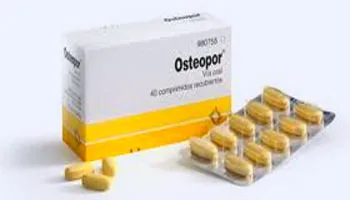
Table of Contents
Package leaflet: Information for the user
Introduction
Package leaflet: information for the user
OSTEOPOR 830 mg film-coated tablets
Ossine-hydroxyapatite complex
Read all of this leaflet carefully before you start taking this medicine because it contains important information for you.
- Keep this leaflet. You may need to read it again.
- If you have any questions, ask your doctor or pharmacist.
- This medicine has been prescribed for you only and must not be given to other people, even if they have the same symptoms as you. It could harm them.
- If you experience any adverse effects, consult your doctor or pharmacist, even if they are adverse effects not listed in this leaflet. See section 4.
Leaflet contents
- What Osteopor is and what it is used for
- What you need to know before taking Osteopor
- How to take Osteopor
- Possible side effects
- How to store Osteopor
- Contents of the pack and other information
1. What Osteopor is and what it is used for
Osteopor contains the active ingredient complex of ossein-hydroxyapatite.
It belongs to the group of medicines known as alimentary tract and metabolism treatments.
Osteopor is indicated for the prevention, and as an adjunctive complementary treatment to primary therapy, of conditions associated with decalcification: prevention of bone mass loss, adjunctive treatment of osteoporosis, prevention and treatment of calcium deficiency.
2. What you need to know before taking Osteopor
Do not take Osteopor:
- if you are allergic to the oseine-hydroxyapatite complex or to any of the other components of this medicine (listed in section 6),
- if you have excessive levels of calcium in your blood (hypercalcemia) or in your urine (hypercalciuria),
- if you require artificial blood filtration (hemodialysis),
- if you have severe kidney problems (severe renal insufficiency),
- if you currently have calcium-containing kidney stones (acute calcium nephrolithiasis),
- if it is for children under 6 years of age.
Warnings and precautions
Consult your doctor or pharmacist before starting to take Osteopor.
Consult your doctor if:
- you are taking vitamin D concomitantly; your doctor will periodically monitor your calcium levels in blood and urine,
- you are undergoing long-term treatment and/or have renal impairment, as prolonged high calcium levels in blood (hypercalcemia) may lead to calcium deposits in soft tissues (such as the kidneys) and irreversible renal failure (kidneys unable to function properly),
- you are taking concomitantly alkaline-containing preparations/foods (such as absorbable antacids (e.g. sodium bicarbonate) and high doses of calcium), as there is a risk of excessive calcium levels in blood (hypercalcemia) or a risk of milk-alkali syndrome (i.e. excessive calcium levels in blood (hypercalcemia), increased blood pH (alkalosis), and kidney disorder (renal failure)),
- you are over 65 years old and taking thiazide diuretics (medicines used to treat hypertension) or cardiac glycosides (medicines used to treat heart rhythm disorders).
Your doctor will periodically monitor your blood and urine levels of phosphorus and calcium.
If blood or urine levels of calcium or phosphorus increase, you should consult your doctor, who will adjust the dose as appropriate.
In patients with a history of kidney stone formation, it is necessary to follow standard dietary preventive measures, adhere to the prescribed dose of this medicine, adjust calcium intake according to diet, and avoid vitamin D supplements.
Children and adolescents
Do not administer to children under 6 years of age.
Other medicines and Osteopor
Inform your doctor or pharmacist if you are taking, have recently taken, or might need to take any other medicines:
- thiazide diuretics (medicines used to treat hypertension), as they may increase blood calcium levels,
- cardiac glycosides (medicines used to treat heart rhythm disorders), as they may enhance adverse effects,
- certain antibiotics (tetracyclines), iron- or zinc-containing medicines, bisphosphonates (medicines used to treat bone weakness), quinolones, strontium (a medicine used to treat severe osteoporosis), thyroid hormones (medicines used to treat thyroid disorders), or estramustine (a medicine used to treat certain types of cancer), as Osteopor may reduce their absorption. A minimum interval of 2 hours between administrations is required,
- glucocorticoids (anti-allergic and anti-inflammatory medicines), as they may reduce calcium absorption,
- integrase inhibitors (dolutegravir, bictegravir, elvitegravir, medicines used to treat HIV), as Osteopor may reduce their gastrointestinal absorption. Calcium and integrase inhibitors may be taken together with food. When taken on an empty stomach, the integrase inhibitor should be administered 2 hours before or 6 hours after calcium salts,
- fluoride (a medicine used to prevent dental caries). As a precautionary measure, a minimum interval of at least 2 hours should be observed between fluoride intake and osein-hydroxyapatite compound administration.
Taking Osteopor with food and drinks
Calcium absorption may be reduced by foods containing oxalic acid (found in spinach and rhubarb) and phytic acid (found in whole grains). You should wait at least two hours after consuming foods high in oxalic or phytic acid before taking Osteopor.
Pregnancy, breastfeeding, and fertility
If you are pregnant or breastfeeding, think you may be pregnant, or are planning to become pregnant, consult your doctor or pharmacist before using this medicine.
Osteopor may be used during pregnancy when clinically indicated.
Osteopor may be used during breastfeeding.
Driving and using machines
No data are available regarding the impact of the osein-hydroxyapatite complex on the ability to drive or operate machinery.
3. How to take Osteopor
Follow exactly the instructions for use of this medicine as given by your doctor. If in doubt, consult your doctor or pharmacist again.
Adults and elderly patients
2 to 4 film-coated tablets per day, divided into two daily doses, taken with some liquid. In cases of advanced osteoporosis, the dosage may be increased, always according to medical judgment.
Children and adolescents under 18 years of age
A recommended dose cannot be established in children and adolescents.
If you take more Osteopor than you should
An overdose of Osteopor could cause the following symptoms: increased thirst, increased urination, nausea, vomiting, dehydration, increased blood pressure, disturbances in blood flow, constipation, loss of appetite, abnormal or irregular heartbeat, weakness, increased calcium levels in the kidneys, kidney stones, bone pain, or mental disturbances.
Severe hypercalcemia (excessively high calcium concentration in the blood) may lead to coma and death.
If you suspect an overdose, contact your doctor or pharmacist immediately.
In addition, prolonged high calcium concentration in the blood may cause calcium deposits in soft tissues (such as the kidneys) and irreversible renal failure (the kidneys' inability to function properly).
If you suspect you have taken more Osteopor than you should, stop treatment immediately and contact your doctor or pharmacist immediately or call the Toxicology Information Service. Telephone (91) 562 04 20.
If you forget to take Osteopor
Do not take a double dose to make up for missed doses.
If you stop taking Osteopor
If you have any further questions about the use of this medicine, ask your doctor or pharmacist.
4. Possible adverse effects
Like all medicines, this medicine can cause adverse effects, although not everyone will experience them.
The following adverse effects have unknown frequency (cannot be estimated from the available data):
- Prolonged treatment and/or high doses of the product may increase calcium levels in blood and/or urine (hypercalcaemia and hypercalciuria).
- Abdominal pain, constipation, nausea, vomiting.
- Itching (pruritus), skin rash.
Reporting of adverse effects:
If you experience any type of adverse effect, consult your doctor or pharmacist, even if it is a possible adverse effect not listed in this leaflet. You may also report them directly via the Spanish Pharmacovigilance System for Human Medicines: https://www.notificaram.es. By reporting adverse effects, you can help provide more information on the safety of this medicine.
5. Storage of Osteopor
Keep this medicine out of sight and reach of children.
No special storage conditions are required.
Do not use this medicine after the expiry date stated on the package. The expiry date is the last day of the month indicated.
Medicines must not be disposed of via wastewater or household waste. Dispose of unused medicines and their containers at the SIGRE point at your pharmacy. If you are in doubt, ask your pharmacist how to dispose of medicines and containers you no longer need. This will help protect the environment.
6. Contents of the container and other information
Composition of Osteopor
The active substance is:
osein-hydroxyapatite complex (COH)……………… 830 mg*
- i.e., 444 mg of hydroxyapatite equivalent to 178 mg or 4.44 mmol of calcium
The other components are:
Core: microcrystalline cellulose (E460), potato starch, anhydrous colloidal silica (E551), magnesium stearate (470b).
Coating: hypromellose (E464), titanium dioxide (E171), macrogol 6000 (E1521), talc (E553b), yellow iron oxide (E172).
Appearance of the product and contents of the container
Osteopor film-coated tablets are pale yellow, uniformly colored, oblong and biconvex.
Packaging containing 40 film-coated tablets.
Marketing Authorization Holder
PIERRE FABRE IBÉRICA, S.A.
C/ Ramón Trias Fargas, 7-11
08005 Barcelona - Spain
Manufacturer
PIERRE FABRE MÉDICAMENT PRODUCTION
Site PROGIPHARM
Rue du Lycee
45500 Gien
France
Date of the most recent review of this leaflet: February 2025.
“Detailed and up-to-date information on this medicinal product is available on the website of the Spanish Agency for Medicines and Health Products (AEMPS) http://www.aemps.gob.es”