OraMorph 20 mg/ml oral solution
Spain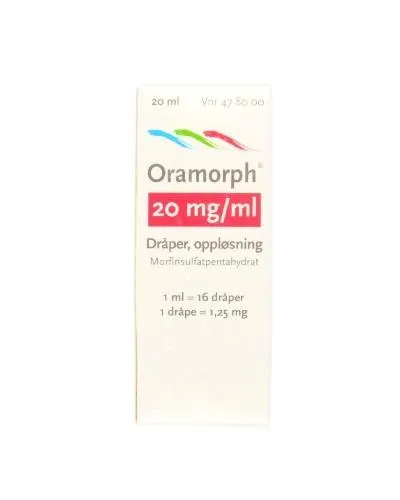
Table of Contents
Package leaflet: Information for the user
Introduction
Package leaflet: information for the user
Oramorph 20 mg/ml oral solution
Morphine sulfate
Read the entire leaflet carefully before you start taking this medicine, because it contains important information for you.
-
Keep this leaflet, as you may need to read it again.
- If you have any questions, consult your doctor or pharmacist.
-
This medicine has been prescribed for you only, and you should not give it to others, even if they have the same symptoms as you, because it could harm them.
- If you experience any adverse effects, consult your doctor or pharmacist, even if they are adverse effects not listed in this leaflet. See section 4.
Contents of the leaflet
-
What Oramorph is and what it is used for
-
What you need to know before taking Oramorph
-
How to take Oramorph
-
Possible adverse effects
-
Storage of Oramorph
-
Contents of the pack and other information
1. What Oramorph is and what it is used for
Oramorph belongs to a group of medicines called narcotic analgesics.
This medicine is used for the long-term treatment of severe chronic pain and for relief of postoperative pain.
2. What you need to know before taking Oramorph
Do not take Oramorph
- if you are allergic to morphine or any of the other ingredients of this medicine (listed in section 6).
- if you suffer from respiratory insufficiency or respiratory depression without assisted ventilation
- if you have acute or severe bronchial obstruction
- if you have increased intracranial pressure
- if you have intestinal paralysis (paralytic ileus) or acute abdominal pain of unknown cause
- if you have severe liver disease
- if you have convulsive disorders
- if you have head trauma or when intracranial pressure is increased
- if associated with monoamine oxidase inhibitors (MAOIs), buprenorphine, nalbuphine, or pentazocine (see Other medicines and Oramorph)
- if you are a child under 1 year of age
- if you are pregnant
- if you are breastfeeding
- if administered within 24 hours following surgery.
Warnings and precautions
Consult your doctor or pharmacist before taking Oramorph:
- If you have convulsive disorders.
- If you have intracranial hypertension (elevated blood pressure inside the skull).
- If you have hypotension (low blood pressure) with hypovolemia.
- In case of opioid dependence.
- If you have acute liver disease.
- In case of acute alcoholism.
- If you have chronic kidney or liver disease.
- If you have hypothyroidism.
- If you have adrenocortical insufficiency.
- In conditions associated with reduced respiratory reserve, such as kyphoscoliosis (abnormal backward and lateral curvature of the spine that initially impairs respiratory function and later cardiac function), emphysema (a respiratory disease), and severe obesity.
- If you are at risk of developing intestinal paralysis (paralytic ileus) or have chronic constipation.
- If you have biliary, intestinal obstruction or urogenital disorders.
- If your ability to maintain hemostatic blood pressure is compromised due to reduced blood volume or administration of drugs such as phenothiazines or certain anesthetics, as morphine may cause severe hypotension.
- If you are scheduled for surgical procedures for pain relief, you should not receive Oramorph during the 24 hours prior to surgery.
Consult your doctor, pharmacist, or nurse if you experience any of the following symptoms while taking this medicine:
- Increased sensitivity to pain despite increasing doses (hyperalgesia). Your doctor will decide whether you need a dose adjustment or a switch to a stronger analgesic (see section 2).
- Weakness, fatigue, decreased appetite, nausea, vomiting, or low blood pressure. This could indicate that your adrenal glands are producing insufficient cortisol, and you may need hormonal supplements.
- Loss of libido, impotence, or cessation of menstruation. This may be due to reduced production of sex hormones.
- If you have a history of alcoholism or drug addiction. Also inform your doctor if you think you are beginning to become dependent on Oramorph while using it. You may find yourself thinking excessively about when you can take the next dose, even if you do not need it for pain.
- Acute generalized exanthematous pustulosis (AGEP) has been reported with morphine treatment. Symptoms usually occur within the first 10 days of treatment. Inform your doctor if you have ever had a severe skin rash, skin peeling, blisters, and/or mouth sores after taking Oramorph or other opioids. Stop using Oramorph and seek immediate medical attention if you notice any of the following symptoms: blisters, widespread skin peeling, or pus-filled spots (pustules) along with fever.
- Sleep-related breathing disorders. Oramorph may cause sleep-related breathing disorders such as sleep apnea (pauses in breathing during sleep) and sleep-related hypoxemia (low blood oxygen levels). Symptoms may include breathing pauses during sleep, nocturnal awakening due to shortness of breath, difficulty maintaining sleep, or excessive daytime sleepiness. If you or someone else notices these symptoms, contact your doctor. Your doctor may consider reducing the dose.
- Contact your doctor if you experience severe upper abdominal pain that may radiate to the back, nausea, vomiting, or fever, as these could be symptoms associated with inflammation of the pancreas (pancreatitis) or bile ducts.
Tolerance, dependence, and addiction
This medicine contains morphine, which is an opioid. Repeated use of opioids may lead to reduced effectiveness of the medicine (becoming accustomed to it, known as tolerance). Repeated use of Oramorph may also lead to dependence, abuse, and addiction, which could result in potentially fatal overdose. The risk of these adverse effects may be higher with higher doses and prolonged use.
Dependence or addiction may make you feel a lack of control over the amount of medicine you need to take or how often you need to take it.
The risk of dependence or addiction varies from person to person. You may have a higher risk of dependence or addiction to Oramorph if:
- You or any member of your family has abused or been dependent on alcohol, prescription medicines, or illegal drugs ("addiction").
- You smoke.
- You have ever had mood disorders (depression, anxiety, or a personality disorder) or have been treated by a psychiatrist for other mental illnesses.
If you notice any of the following symptoms while taking Oramorph, it could be a sign of dependence or addiction:
- You need to take the medicine for longer than recommended by your doctor
- You need to take a higher dose than recommended
- You are using the medicine for reasons other than prescribed, e.g., "to stay calm" or "to help you sleep"
- You have made repeated unsuccessful attempts to stop using the medicine or control its use
- You feel unwell when you stop taking the medicine, and feel better once you take it again ("withdrawal effects")
If you notice any of these symptoms, consult your doctor to determine the best course of treatment for you, including when it is appropriate to discontinue the medicine and how to do so safely (see section 3 "If you stop taking Oramorph").
Other medicines and Oramorph
Inform your doctor or pharmacist if you are taking, have recently taken, or might need to take any other medicines.
Certain medicines may interact with Oramorph; in such cases, it may be necessary to adjust the dose or discontinue treatment with one of them, as they may endanger the patient's life and affect the central nervous, respiratory, and circulatory systems.
It is important that you inform your doctor if you are taking or have recently taken any of the following medicines:
- Anesthetics
- Hypnotics (sleep-inducing medicines)
- Sedatives and phenothiazines
- Tricyclic antidepressants
- Other morphine derivatives (analgesics and medicines used to treat cough)
- Sedating H1 antihistamines (antiallergic medicines)
- Antihypertensives (medicines used to lower blood pressure)
- Benzodiazepines or other tranquilizing medicines
- Antipsychotics and related substances
- MAO inhibitors (monoamine oxidase inhibitors)
- Muscle relaxants
- Rifampicin, for example, used to treat tuberculosis
- Some medicines used to treat blood clots (e.g., clopidogrel, prasugrel, ticagrelor) may have delayed and reduced effects when taken with morphine
- Gabapentin or pregabalin for the treatment of epilepsy and nerve-related pain (neuropathic pain)
- Concomitant use of this medicine with sedatives such as benzodiazepines or other related medicines increases the risk of drowsiness, difficulty breathing (respiratory depression), coma, and may be potentially fatal. For this reason, concomitant use should only be considered when no other treatment options are possible. However, if your doctor prescribes this medicine together with sedative medicines, the dose and duration of concomitant treatment should be limited. Inform your doctor about all sedative medicines you are taking and strictly follow your doctor's recommendations regarding dosage. It may be helpful to inform friends or family members so they can recognize the signs and symptoms mentioned above. Contact your doctor if you experience these symptoms.
Morphine agonists/antagonists (buprenorphine, nalbuphine, pentazocine) should not be administered together with morphine, as they reduce its analgesic effect and may cause withdrawal syndrome.
Taking Oramorph with food, drinks, and alcohol
Taking alcoholic beverages together with this medicine may worsen the side effects of morphine, and particularly increase central nervous system depression, including inhibition of respiratory function.
Pregnancy, breastfeeding, and fertility
If you are pregnant or breastfeeding, think you may be pregnant, or plan to become pregnant, consult your doctor or pharmacist before using this medicine.
This medicine is contraindicated during pregnancy.
If this medicine is used for prolonged periods during pregnancy, there is a risk that the newborn may experience withdrawal symptoms, which must be treated by a doctor.
Morphine is contraindicated during breastfeeding as it is excreted in breast milk.
Driving and using machines
This medicine may affect your reaction ability; therefore, do not drive or operate any tools or machinery while taking it, especially if taken together with alcohol or central nervous system depressants.
Oramorph contains sodium benzoate (E-211) and sodium
This medicine contains 1 mg of sodium benzoate (E-211) per ml. Sodium benzoate may increase the risk of jaundice (yellowing of the skin and eyes) in newborns (up to 4 weeks of age).
This medicine contains less than 1 mmol of sodium (23 mg) per ml; hence, it is essentially "sodium-free".
Athletes are advised that this medicine contains a component that may lead to a positive analytical finding in doping control tests.
3. How to take Oramorph
Follow exactly the instructions for using this medicine as given by your doctor. If in doubt, consult your doctor or pharmacist again.
Before starting treatment and periodically during treatment, your doctor will explain to you what to expect from using Oramorph, when and for how long you need to take it, when to contact your doctor, and when you should discontinue it (see also section "If you stop taking Oramorph").
Remember to take your medicine.
If you think that the effect of this medicine is too strong or too weak, tell your doctor or pharmacist.
The dose depends on the intensity of pain and the patient's previous history.
It must be administered orally, as directed by your doctor.
Use in adults and adolescents aged 13 years and older
The usual initial dose of morphine sulfate is 10–20 mg, corresponding to 8–16 drops or 0.5–1 ml of oral solution, administered every 4–6 hours.
Use in children
- Children aged 6 to 13 years
The maximum dose is 5–10 mg of morphine sulfate, corresponding to 4–8 drops or 0.25–0.5 ml of oral solution, administered every 4 hours.
- Children aged 1 to 5 years
This medicine is intended for children requiring higher doses, also administered at 4-hour intervals.
- Its use is not recommended in children under 1 year of age.
Use in patients aged 65 years and older
It should be administered with caution in patients over 65 years of age, as they are particularly sensitive to central adverse effects (confusion) or gastrointestinal effects, and have physiologically reduced renal function, thus requiring a reduction in the initial dose.
The dose may be increased under medical supervision depending on the severity of pain and the patient's previous analgesic requirements. An increase in doses to control pain generally does not imply the development of tolerance.
A dose reduction is recommended in debilitated patients.
The duration of treatment required for each patient varies according to the persistence of pain. Your doctor will indicate how long your treatment with this medicine should last. Do not stop treatment prematurely.
Method of administration
The solution should be added to a light drink immediately before administration.
-
How to measure the dose from the 20 ml bottle: It is recommended to measure the oral solution in drops using the integrated dropper cap. For example:
-
4 drops correspond to 5 mg
-
8 drops correspond to 10 mg
-
16 drops correspond to 20 mg
-
How to measure the dose from the 100 ml bottle: It is recommended to measure the oral solution in millilitres using the graduated syringe. The syringe must not be used to measure drops. For example:
-
0.25 ml corresponds to 5 mg
-
0.5 ml corresponds to 10 mg
-
1 ml corresponds to 20 mg
If you take more Oramorph than you should
In case of mild or moderate morphine overdose, symptoms include profound drowsiness, pinpoint pupils, decreased blood pressure, lowered body temperature, and reduced heart rate. With higher doses, coma is accompanied by respiratory depression and cessation of breathing, which may be fatal.
The onset of drowsiness is an early symptom of respiratory depression.
People who have taken an overdose may develop aspiration pneumonia from vomiting or foreign particles; symptoms may include shortness of breath, cough, and fever.
People who have taken an overdose may also experience difficulty breathing leading to loss of consciousness or even death.
If you have taken more medicine than you should, contact your doctor or pharmacist immediately or contact the Toxicology Information Service at telephone number (91) 562 04 20, indicating the medicine and the amount taken.
If you forget to take Oramorph
Do not take a double dose to make up for forgotten doses.
If you stop taking Oramorph
Do not stop taking this medicine unless approved by your doctor. If you wish to discontinue treatment, ask your doctor how to gradually reduce the dose to avoid withdrawal symptoms.
Withdrawal syndrome symptoms usually begin within a few hours, peak at 36–72 hours, and gradually subside thereafter. Symptoms include generalized aches, yawning, pupil dilation (mydriasis), tearing, intense watery nasal discharge (rhinorrhea), sneezing, muscle tremors, headaches, weakness, sweating, anxiety, irritability, sleep disturbances or insomnia, restlessness, orgasm, stomach pain, anorexia, nausea, vomiting, weight loss, diarrhoea, dehydration, bone pain, abdominal and muscular cramps, flu-like symptoms, palpitations, increased heart rate, respiratory rate, blood pressure, and body temperature, and vasomotor disturbances. Psychological symptoms include a profound sense of dissatisfaction, anxiety, and irritability.
Morphine is a narcotic that may be used for unintended purposes (misuse, abuse); in this context, chronic use may lead to physical and psychological dependence and tolerance.
If you have any further questions about the use of this medicine, ask your doctor or pharmacist.
4. Possible adverse effects
Like all medicines, this medicine may produce adverse effects, although not everyone will experience them.
Important adverse effects or symptoms to be aware of, and what to do if they occur:
- Severe allergic reaction causing difficulty breathing or dizziness.
- Severe skin reaction with blisters, widespread skin peeling, pus-filled spots (pustules) together with fever. This could be a condition called acute generalized exanthematous pustulosis (AGEP).
If you experience these serious adverse effects, consult a doctor immediately.
At normal doses, the most frequent adverse effects are nausea, vomiting, constipation, and drowsiness. Under chronic treatment, morphine and related opioids may produce a wide range of side effects including: respiratory depression, sleep apnoea (pauses in breathing during sleep), symptoms associated with inflammation of the pancreas (pancreatitis) and of the biliary system, for example severe upper abdominal pain that may radiate to the back, nausea, vomiting, or fever, nausea, vomiting, dizziness, confusion, dysphoria (depression, restlessness, general discomfort, and low self-esteem), constipation, increased pressure in the biliary tract, urinary retention, hypotension, drowsiness, sedation, euphoria, nightmares (particularly in the elderly) with possible hallucinations, increased intracranial pressure, urticaria and other types of skin rashes, increased sensitivity to pain, sweating, dry mouth, symptoms of withdrawal or dependence (for a list of symptoms, see section 3 of this leaflet: If you stop taking Oramorph).
Reporting of adverse effects
If you experience any type of adverse effect, consult your doctor or pharmacist, even if it is a possible adverse effect not listed in this leaflet. You may also report them directly via the Spanish Pharmacovigilance System for Human Medicines: https://www.notificaram.es. By reporting adverse effects, you can help provide more information on the safety of this medicine.
5. Storage of Oramorph
Keep this medicine out of the sight and reach of children.
Do not use this medicine after the expiry date which is stated on the packaging after EXP. The expiry date refers to the last day of the month indicated.
After opening the bottle, the solutions are valid for 90 days.
Store in the original outer packaging to protect from light.
Medicines must not be disposed of via wastewater or household waste. Dispose of unused medicines and their containers at a SIGRE collection point at your pharmacy. If you are unsure, ask your pharmacist how to dispose of medicines and containers you no longer need. This will help protect the environment.
6. Contents of the pack and other information
Composition of Oramorph
- The active substance is morphine sulfate. Each ml (equivalent to 16 drops) of oral solution contains 20 mg of morphine sulfate.
- The other components (excipients) are: edetate disodium, sodium benzoate (E-211), citric acid, and purified water.
Appearance of Oramorph and contents of the pack
A nearly colourless aqueous solution.
It is presented in amber glass bottles with a safety cap, containing 20 ml or 100 ml of oral solution. The 20 ml pack includes an integrated dropper plug, and the 100 ml pack includes a graduated dosing syringe marked in ml.
Only certain pack sizes may be marketed.
Marketing Authorization Holder and Manufacturer
- MOLTENI & C. DEI F.LLI ALITTI SOCIETÀ DI ESERCIZIO S.p.A.
SS67 Fraz. Granatieri
50018 Scandicci (Florence)
Italy
For further information about this medicinal product, please contact the local representative of the Marketing Authorization Holder:
Grünenthal Pharma, S.A.
C/ Doctor Zamenhof 36
28027 Madrid
Spain
Date of the most recent review of this leaflet: November 2023
Other sources of information
Detailed information on this medicinal product is available on the website of the Spanish Agency for Medicines and Health Products (AEMPS) (http://www.aemps.gob.es/)
This information is intended for healthcare professionals only:
Management of overdose
Naloxone, a specific opioid antagonist, is the treatment of choice: the initial dose is 0.4–2 mg intravenously, which may be repeated every 2–3 minutes if no response is achieved, up to a total dose of 10–20 mg.
The duration of action of naloxone (2–3 hours) may be shorter than the duration of effect of the morphine overdose. Therefore, patients who regain consciousness after naloxone administration must remain under observation for at least 3–4 hours after the last dose of naloxone has been administered.
Maintenance of the airway should be monitored, as mechanical assisted ventilation may be required.
Administration of oxygen, intravenous fluids, vasopressors, and other supportive measures may also be necessary.