Optalidon 500 mg/75 mg suppositories
Spain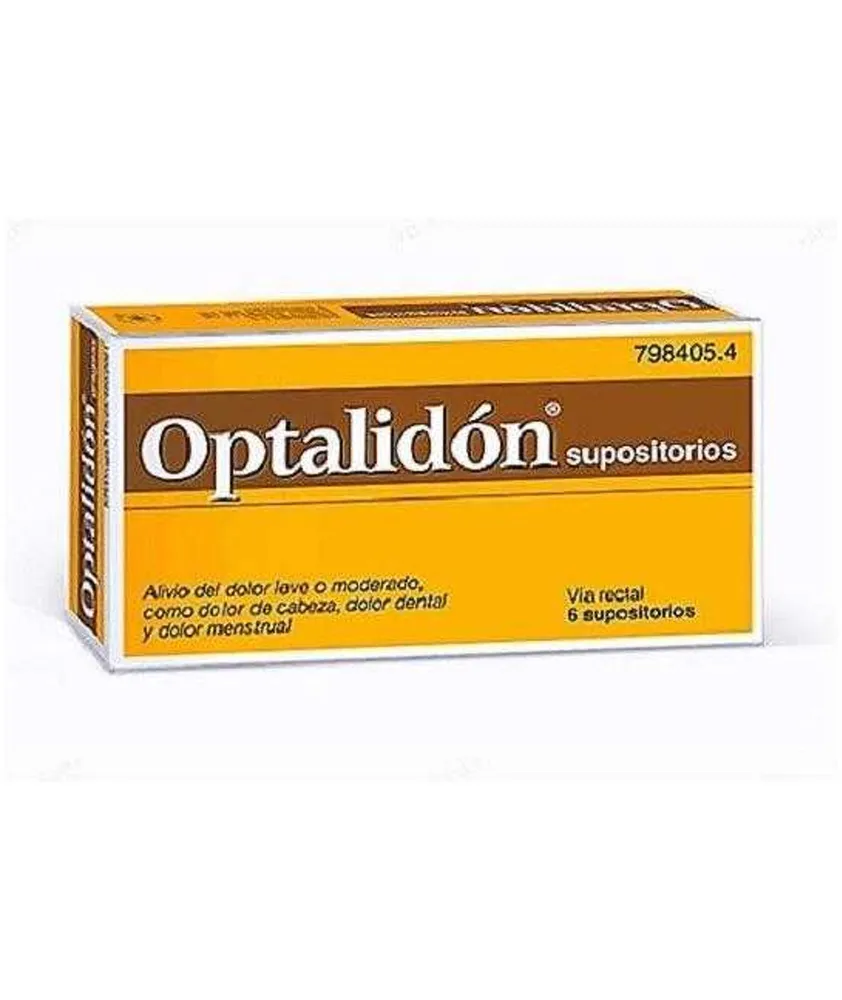
Table of Contents
Package leaflet: Information for the user
Introduction
Package leaflet: information for the patient
Optalidon 500 mg/75 mg suppositories Propyphenazone, anhydrous caffeine
Read the entire leaflet carefully before you start using this medicine, because it contains important information for you.
Follow exactly the instructions for use of the medicine contained in this leaflet or as indicated by your doctor or pharmacist.
- Keep this leaflet, as you may need to read it again.
- If you need advice or more information, consult your pharmacist.
- If you experience adverse effects, consult your doctor or pharmacist, even if they are adverse effects not listed in this leaflet. See section 4.
- You should consult a doctor if you worsen or do not improve after 10 days.
Leaflet contents
- What Optalidon is and what it is used for
- What you need to know before using Optalidon
- How to use Optalidon
- Possible adverse effects
- Storage of Optalidon
- Contents of the pack and other information
1. What Optalidon is and what it is used for
Optalidon® is a medicine containing two active ingredients in combination: propyphenazone for pain, and caffeine, which has a stimulating effect on the central nervous system and helps counteract drowsiness.
It is indicated for adults and children over 12 years of age, for the relief of mild to moderate pain, such as headache, dental pain, and menstrual pain.
You should consult a doctor if your condition worsens or does not improve after 10 days.
2. What you need to know before using Optalidon
Do not use Optalidon
- If you are allergic to propyphenazone or caffeine, or to any of the other components of this medicine (listed in section 6).
- If you are allergic to medicines containing metamizole, phenylbutazone, or other components of the pyrazolone group.
- If you are allergic to medicines containing aminophylline, diprophylline, oxtriphylline, theobromine, theophylline, or other components of the xanthine group.
- If you have previously experienced asthma-type allergic reactions (difficulty breathing, suffocation, bronchospasms, and in some cases coughing or wheezing) when taking acetylsalicylic acid or other non-steroidal anti-inflammatory drugs (NSAIDs).
- If you have blood disorders (granulocytopenia, agranulocytosis).
- If you have a metabolic disease such as porphyria (a rare disorder, usually hereditary, characterized by excessive excretion of porphyrins in feces and urine) or congenital glucose-6-phosphate-dehydrogenase deficiency.
- If you have severe liver, kidney, or heart disease (hepatic, renal, or cardiac insufficiency).
- If you have an anxiety disorder.
- If you have active gastroduodenal ulcer.
Warnings and precautions
Consult your doctor or pharmacist before starting to use Optalidon.
Do not exceed the recommended dose indicated in the Dosage section, nor use it for more than 10 days. Consult your doctor or pharmacist before starting to use Optalidon if:
- you have hypertension,
- you have gastroduodenal ulcer,
- you suffer from asthma or severe respiratory diseases (chronic obstructive pulmonary disease, emphysema, chronic bronchitis).
If pain persists, worsens, or new symptoms appear—especially fever or mouth ulcers—treatment must be stopped immediately and you should consult your doctor.
Caffeine may increase blood glucose levels.
In individuals with sleep difficulties, it is recommended not to take this medicine in the hours before bedtime to avoid possible insomnia.
Athletes should be informed that this medicine contains a component that may lead to a positive analytical result in doping controls.
Children and adolescents
Optalidon must not be administered to children under 12 years of age.
Other medicines and Optalidon
Taking Optalidon with other medicines.
Inform your doctor or pharmacist if you are currently taking or using, have recently taken or used, or might need to take or use any other medicine. In particular, if you are taking any of the following medicines, it may be necessary to adjust the dose or discontinue treatment:
- oral anticoagulants (medicines used to "thin" the blood and prevent clot formation) such as warfarin,
- barbiturates (medicines used to treat seizures),
- antihistamines (used to reduce symptoms of allergic reactions),
- lithium (reducing its therapeutic effect).
Use of Optalidon with food, beverages, and alcohol
It is recommended to limit consumption of products containing caffeine while undergoing treatment with this medicine.
Pregnancy, breastfeeding, and fertility
If you are pregnant or breastfeeding, think you may be pregnant, or are planning to become pregnant, consult your doctor or pharmacist before using this medicine. This medicine should not be taken during pregnancy or breastfeeding without medical advice.
Do not take Optalidon during the last 3 months of pregnancy, as it may harm the fetus or cause complications during delivery. It may cause kidney and heart problems in the fetus. It may affect your tendency and that of the fetus to bleed and may delay or prolong labor. Optalidon should not be taken during the first 6 months of pregnancy unless absolutely necessary and specifically advised by your doctor. If treatment is needed during this period or while trying to conceive, the lowest possible dose for the shortest possible time should be used. If taken for more than a few days beyond 20 weeks of pregnancy, Optalidon may cause kidney problems in the fetus, leading to low levels of amniotic fluid surrounding the fetus (oligohydramnios) or narrowing of a blood vessel (ductus arteriosus) in the baby's heart. If longer-term treatment is required, your doctor may recommend additional monitoring.
Driving and using machines
Do not drive or operate dangerous machinery, as this medicine may cause drowsiness or reduced reaction capacity even at recommended doses.
3. How to use Optalidon
Follow exactly the administration instructions for this medicine as given by your doctor or pharmacist. If in doubt, consult your doctor or pharmacist again.
Rectal use.
The recommended dose is 1 suppository per day. The maximum dose is 2 suppositories per day.
Always use the lowest effective dose. Administration of this medicine should be based on the occurrence of pain. As the pain subsides, this medication should be discontinued.
Instructions for correct administration of the medicine
If the suppository is too soft to insert, cool it in the refrigerator for 30 minutes or hold it under cold running water before removing the plastic wrapper, or afterwards if necessary, to prevent softening.
Use in children and adolescents
This medicine must not be used in children under 12 years of age.
If you use more Optalidon than you should
Symptoms of overdose include: abdominal pain, nausea, vomiting, drowsiness, excitement, seizures, and coma.
In case of overdose or accidental ingestion, go immediately to a medical center or call the Toxicology Information Service (Telephone: (91)-562.04.20), stating the medicine and the amount ingested.
If you forget to use Optalidon
Do not use a double dose to make up for missed doses.
If you stop treatment with Optalidon
If you have any further questions about the use of this medicine, ask your doctor or pharmacist.
4. Possible adverse effects
Like all medicines, this medicine may cause adverse effects, although not everyone experiences them.
These are not usually observed at the recommended doses. Very rarely, allergic skin-type reactions have been observed in hypersensitive individuals: redness or itching, skin disturbances with blister formation, urticaria, or shock. In such cases, discontinue treatment and consult a doctor. Occasionally, dizziness, nausea, nervousness, difficulty sleeping, rapid heartbeat, or gastrointestinal irritation may occur.
Reporting of adverse effects
If you experience any type of adverse effect, consult your doctor or pharmacist, even if it is a possible adverse effect not listed in this leaflet. You can also report them directly through the Spanish Pharmacovigilance System for Human Medicinal Products: www.notificaram.es.
By reporting adverse effects, you can help provide more information on the safety of this medicine.
5. Storage of Optalidon
Keep this medicine out of the sight and reach of children. No special storage conditions are required.
Do not use this medicine after the expiry date stated on the label and on the carton after EXP. The expiry date is the last day of the month indicated.
Medicines must not be disposed of via wastewater or household waste. Dispose of empty containers and any unused medicines at the SIGRE collection point at your pharmacy. Ask your pharmacist how to dispose of medicines and containers you no longer need. This will help protect the environment.
6. Contents of the pack and other information
Composition of Optalidon
Per suppository:
The active substances are propyphenazone (INN) 500 mg, anhydrous caffeine 75 mg.
The other components (excipients) are yellow iron oxide, red iron oxide, sorbitan laurate (Span 20), and suppository base.
Appearance of the product and contents of the pack
Pack containing 6 suppositories.
Marketing Authorization Holder
Perrigo España S.A.
Pza de Xavier Cugat 2, Edificio D, planta 1, 08174 Sant Cugat del Vallès
Barcelona, Spain
Manufacturer responsible for production
MIPHARM. S.P.A.
Via B. Ouaranta, 12, 1-201 40, Italy
Date of the most recent review of this leaflet: 12/2022
Other sources of information
Detailed information about this medicinal product is available on the website of the Spanish Agency of Medicines and Health Products (AEMPS) http://www.aemps.gob.es