Oponaf 10 g powder for oral solution
Spain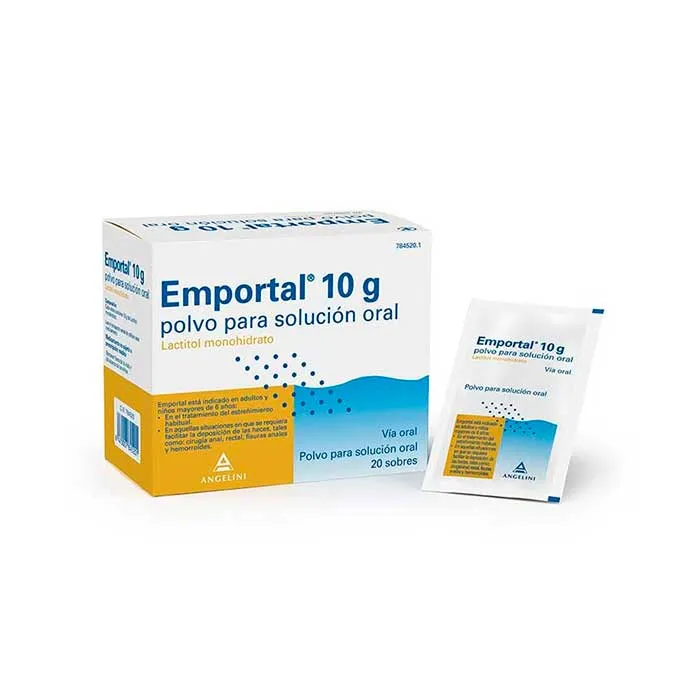
Table of Contents
Package leaflet: Information for the user
Introduction
Package leaflet: information for the patient
Oponaf 10 g powder for oral solution
Lactitol
Read the entire leaflet carefully before you start taking this medicine, because it contains important information for you.
- Keep this leaflet, as you may need to read it again.
- If you have any questions, ask your doctor or pharmacist.
- This medicine has been prescribed for you only, and you should not give it to other people, even if they have the same symptoms as you, because it could harm them.
- If you experience any adverse effects, consult your doctor or pharmacist, even if they are adverse effects not listed in this leaflet.
Contents of the leaflet
- What Oponaf is and what it is used for
- What you need to know before taking Oponaf
- How to take Oponaf
- Possible adverse effects
- How to store Oponaf
- Contents of the pack and other information
1. What Oponaf is and what it is used for
Oponaf belongs to a group of medicines called oral osmotic laxatives.
Oponaf is indicated:
- In the treatment of chronic habitual constipation.
- As part of the treatment of certain symptoms of portosystemic encephalopathy, which is a consequence of severe liver disease.
2. What you need to know before starting to take Oponaf
Chronic constipation should first be treated with a high-fiber diet, adequate fluid intake, and physical exercise. If no improvement occurs with these measures, your doctor may recommend the use of Oponaf.
Particularly in children, prolonged use of laxatives may interfere with the normal defecation reflex; therefore, constipation should preferably be managed with appropriate dietary and hygienic measures.
Long-term use of laxatives should be avoided.
Do not take Oponaf
- if you are allergic (hypersensitive) to lactitol;
- if you have intestinal obstruction or suspected organic lesions in the gastrointestinal tract;
- if you have unexplained abdominal pain or rectal bleeding;
- if you are on a galactose-free diet;
- in cases of fecal impaction (prolonged retention), which should be treated previously by other means;
- if you have galactosemia;
- if you are breastfeeding an infant with hereditary autosomal recessive fructose intolerance;
- if you have a pre-existing imbalance of serum electrolytes.
Warnings and precautions
- In elderly, debilitated patients, or those with dehydration or hypokalemia (low blood potassium levels), your doctor should regularly monitor your blood electrolyte levels, especially during prolonged treatment;
- if you are scheduled to undergo any internal intestinal examination, consult your doctor;
- administration of Oponaf is not recommended in cases of ileostomy or colostomy (an opening from the ileum or colon to the outside);
- if constipation is particularly resistant, consult your doctor;
- if nausea occurs, it is advisable to take Oponaf during meals;
- in infants, Oponaf should only be used after medical recommendation.
Taking Oponaf with other medicines
Inform your doctor or pharmacist if you are using or have recently used any other medicines, including those obtained without a prescription.
Certain medicines may interact with Oponaf; in such cases, it may be necessary to adjust the dose or discontinue treatment with one of them.
It is important that you inform your doctor if you are taking or have recently taken any of the following medicines:
- Antacids or neomycin (antibiotic) should not be administered concomitantly with Oponaf in the treatment of cirrhosis with hepatic encephalopathy, as these medicines may interfere with its mechanism of action.
- Thiazide diuretics (medicines used to increase urine elimination).
- Corticosteroids (anti-inflammatory and anti-allergic medicines).
- Carbenoxolone (gastric mucosa protector and anti-inflammatory).
- Amphotericin B (medicine used to treat fungal infections).
- Mesalazine (anti-inflammatory medicine).
Pregnancy and breastfeeding
Consult your doctor or pharmacist before using any medicine.
Oponaf should not be used during the first trimester of pregnancy unless otherwise advised by your doctor.
Although it has not been studied whether lactitol passes into breast milk, the use of Oponaf is considered safe for breastfeeding mothers.
Driving and using machines
Oponaf has no effect on the ability to drive vehicles or operate machinery.
Oponaf contains lactitol
If your doctor has informed you that you have an intolerance to certain sugars, consult with him before taking this medicine.
Lactitol has a caloric value of 2.1 kcal/g.
Oponaf does not affect blood glucose or insulin levels and is therefore suitable for diabetic patients.
The use of Oponaf does not affect the teeth.
3. How to take Oponaf
Follow exactly the dosing instructions for Oponaf provided by your doctor. If in doubt, consult your doctor or pharmacist again.
Constipation
Treatment with Oponaf should be individually adjusted in order to achieve one bowel movement per day.
Oponaf is administered orally as a single daily dose, in the morning or at night, preferably mixed with food or drink, and accompanied by 1–2 glasses of liquid during the meal. The patient should choose to take the medication either in the morning or at night, depending on their response, as the laxative effect mostly occurs several hours after administration.
The first laxative effect may not occur until the second or third day of treatment.
Use in children: The initial daily dose is 0.25 g/kg body weight per day; a general guideline may be as follows:
- from 1 to 6 years: 2.5 to 5 g of powder/day (¼–½ sachet)
- from 6 to 12 years: 5 to 10 g of powder/day (½–1 sachet)
- from 12 to 16 years: 10 to 20 g of powder/day (1–2 sachets)
Oponaf administration in children must be supervised by an adult, and the doctor's instructions must be strictly followed.
Adults (including elderly patients): Oponaf is administered orally; however, in hospitalized patients, it may also be administered via nasogastric tube or as a retention enema via rectal balloon catheter, according to the physician's instructions.
The initial daily dose should be 2 sachets (20 g of lactitol) as a single dose. After a few days, a daily dose of 1 sachet (10 g) may be sufficient for many patients.
If the initial dose is not effective, a maximum daily dose of 3 sachets (30 g/day) may be administered.
Hepatic encephalopathy:
Treatment with Oponaf should be individually adjusted. It is important to follow your doctor's instructions. The initial dose for treatment in adults is 0.5 to 0.7 g/kg body weight per day. The daily dose should be divided into 3 doses, taken with meals, drinking 1–2 glasses of liquid during each meal.
The prescribed dose may be adjusted until two soft bowel movements per day are achieved, depending on the severity of the disease and the response to treatment.
If you feel that the effect of Oponaf is too strong or too weak, inform your doctor or pharmacist.
Your doctor will determine the duration of your treatment with Oponaf. Do not stop treatment before the prescribed time, as irregular use or premature discontinuation may carry a risk of relapse.
If you take more Oponaf than you should
If you have taken more Oponaf than you should, contact your doctor or pharmacist immediately.
The sign of overdose with Oponaf is diarrhea, which may resolve by reducing the dose. If diarrhea persists, consult your doctor.
In case of accidental ingestion, contact your doctor or pharmacist immediately, or call the Toxicology Information Service at telephone number 91 562 04 20.
If you forget to take Oponaf
Take the next dose at your usual time.
Do not take a double dose to make up for a missed dose.
If you stop taking Oponaf
If you have any further questions about the use of this product, ask your doctor or pharmacist.
4. Possible adverse effects
Like all medicines, Oponaf may cause adverse effects, although not everyone experiences them:
At the beginning of treatment, abdominal discomfort and flatulence may occur; sometimes stomach pain or spasms may appear. These effects tend to decrease or disappear after a few days of regular use of Emportal.
Due to individual differences, some patients may experience diarrhea at the recommended doses. This problem can be resolved by reducing the dose.
Rare adverse effects (affects 1 to 10 patients in 10,000)
- abdominal pain
- abdominal discomfort
- diarrhea
- flatulence
- vomiting
Very rare adverse effects (affects fewer than 1 in 10,000 patients)
- nausea
- abnormal gastrointestinal sounds
- anal itching
If you experience any adverse effects, consult your doctor or pharmacist, even if they are adverse effects not listed in this leaflet.
Reporting of adverse effects
If you experience any type of adverse effect, consult your doctor or pharmacist, even if they are possible adverse effects not listed in this leaflet. You can also report them directly through the Spanish Pharmacovigilance System for Human Medicines: https://www.notificaram.es. By reporting adverse effects, you can help provide more information on the safety of this medicine.
5. Storage of Oponaf
Keep this medicine out of sight and reach of children.
Do not store above 30°C. Store protected from moisture.
The prepared solution should preferably be stored between 2°C and 8°C (in the refrigerator) and must be consumed within a maximum of 2 days.
Do not use Oponaf after the expiry date stated on the packaging after the abbreviation “EXP”. The expiry date refers to the last day of the month indicated.
Medicines should not be disposed of via wastewater or household waste. Dispose of unused medicines and their containers at the SIGRE Point at your pharmacy. If you have any doubts, ask your pharmacist how to dispose of unused medicines and their containers. This will help protect the environment.
6. Contents of the pack and other information
Composition of Oponaf
The active substance is lactitol monohydrate. One sachet contains 10 g of lactitol monohydrate.
Oponaf contains no excipients.
Appearance of the product and contents of the pack
Oponaf 10 g powder for oral solution is a white, crystalline powder with a slightly sweet taste, intended for preparation of an oral solution. It is supplied in 10 g sachets made of paper/aluminium/polyethylene, packed in boxes containing 20 or 50 sachets.
Marketing Authorisation Holder and Manufacturer
Marketing Authorisation Holder:
ANGELINI PHARMA ESPAÑA, S.L.
c/ Antonio Machado, 78-80
3rd floor, module A-Building Australia
08840 Viladecans, Barcelona (Spain)
Manufacturer:
Lamp S. Prospero SpA
Via della Pace, 25/A
San Prospero (Modena)
Italy
or
A.C.R.A.F. S.p.A (Aziende Chimiche Riunite Angelini Francesco)
Via Vecchia Del Pinocchio, 22
60131 Ancona (AN)
Italy
This leaflet was approved in November 2015
Detailed and up-to-date information on this medicinal product is available on the website of the Spanish Agency of Medicines and Health Products (AEMPS) http://www.aemps.gob.es/