Ondansetron Serraclinics 2 mg/ml solution for injection EFG
Spain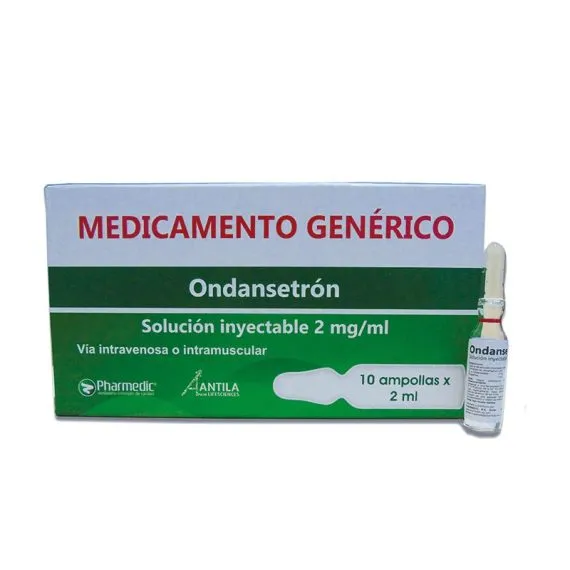
Table of Contents
- Package leaflet: Information for the user
- Introduction
- 1. What Ondansetron Serraclinics is and what it is used for
- 2. What you need to know before using Ondansetrón Serraclinics
- 3. How to use Ondansetron Serraclinics
- 4. Possible adverse effects
- 5. Storage of Ondansetron Serraclinics
- 6. Contents of the pack and other information
- **Composition of Ondansetron Serraclinics**
Package leaflet: Information for the user
Introduction
Package leaflet: information for the user
Ondansetron Serraclinics 2 mg/ml solution for injection EFG
Read all of this leaflet carefully before you start using this medicine, because it contains important information for you.
- Keep this leaflet, as you may need to read it again.
- If you have any questions, ask your doctor, pharmacist or nurse.
- This medicine has been prescribed for you only, and you should not give it to others, even if they have the same symptoms as you, because it could harm them.
- If you experience any adverse effects, consult your doctor, pharmacist or nurse, even if these adverse effects are not listed in this leaflet. See section 4.
Contents of the leaflet
- What Ondansetron Serraclinics is and what it is used for
- What you need to know before using Ondansetron Serraclinics
- How to use Ondansetron Serraclinics
- Possible adverse effects
- How to store Ondansetron Serraclinics
- Contents of the pack and other information
1. What Ondansetron Serraclinics is and what it is used for
Ondansetron belongs to a group of medicines known as antiemetics. Ondansetron is a 5HT3 receptor antagonist. It works by blocking 5HT3 receptors located on neurons in the central and peripheral nervous system.
It is used to prevent nausea and vomiting caused by:
- chemotherapy in the treatment of cancer in adults and children over 6 months of age.
- radiotherapy in the treatment of cancer in adults.
- preventing and treating postoperative nausea and vomiting in adults and children over 1 month of age.
2. What you need to know before using Ondansetrón Serraclinics
Do not use Ondansetrón Serraclinics
- If you are allergic to the active substance or any of the other components of this medicine (listed in section 6).
- If you have or have had an allergic reaction (hypersensitivity) to other antiemetics (e.g., granisetron or dolasetron).
- If you are taking apomorphine (a medicine used to treat Parkinson's disease).
→ If any of the above applies to you, do not use Ondansetrón Serraclinics and consult your doctor.
Warnings and precautions
Talk to your doctor, pharmacist, or nurse before starting to use Ondansetrón Serraclinics:
- If you are allergic to other antiemetic medicines.
- If you have intestinal obstruction or suffer from severe constipation, as Ondansetrón Serraclinics may worsen the blockage or constipation.
- If you have ever had heart problems, including irregular heartbeat (arrhythmia).
- If you are undergoing tonsillectomy.
- If you have any liver disease.
If you are scheduled for any diagnostic tests (including blood and urine tests, skin tests using allergens, etc.), inform your doctor that you are taking this medicine, as it may alter test results.
Other medicines and Ondansetrón Serraclinics
Inform your doctor or pharmacist if you are taking, have recently taken, or might need to take any other medicines.
In particular, tell your doctor if you are taking the following medicines, as it may be necessary to interrupt treatment or adjust the dose of one or more of them:
- Phenytoin, carbamazepine (used to treat epilepsy), as they reduce blood levels of ondansetron.
- Rifampicin (used to treat certain infections such as tuberculosis), as it reduces blood levels of ondansetron.
- Tramadol (used to treat pain), as ondansetron may reduce the analgesic effect of tramadol.
- Medicines used to treat heart problems such as irregular heartbeat (antiarrhythmics) and/or high blood pressure (beta-blockers).
- Haloperidol or methadone (medicines that may affect the heart).
- Anthracyclines and trastuzumab (medicines used to treat cancer).
- Fluoxetine, paroxetine, sertraline, fluvoxamine, citalopram, escitalopram (selective serotonin reuptake inhibitors, used to treat depression and/or anxiety).
- Venlafaxine, duloxetine (serotonin-norepinephrine reuptake inhibitors, used to treat depression and/or anxiety).
→ Inform your doctor or pharmacist if you are taking any of these medicines.
Ondansetrón Serraclinics injectable solution must not be administered in the same syringe or infusion with other medicines. Ondansetron should only be mixed with those infusion solutions recommended.
Pregnancy, breastfeeding, and fertility
If you are pregnant or breastfeeding, think you may be pregnant, or are planning to become pregnant, consult your doctor or pharmacist before using this medicine.
Ondansetrón Serraclinics must not be used during the first trimester of pregnancy. This is because Ondansetrón Serraclinics may slightly increase the risk of a baby being born with cleft lip and/or cleft palate (openings or splits in the upper lip or palate). If you are already pregnant or breastfeeding, think you may be pregnant, or plan to become pregnant, consult your doctor or pharmacist before using Ondansetrón Serraclinics, as it may cause harm to the fetus. If you are a woman of childbearing age, you are advised to use an effective contraceptive method.
If you are a woman of childbearing age, your doctor or nurse should check whether you are pregnant and perform a pregnancy test before starting treatment with Ondansetrón Serraclinics.
Women of childbearing age must use an effective contraceptive method during treatment with Ondansetrón Serraclinics. Consult your doctor about contraceptive options.
Ondansetron from the ampoules may pass into breast milk. Therefore, breastfeeding mothers are advised not to breastfeed while using Ondansetrón.
If you become pregnant during treatment with Ondansetrón Serraclinics, inform your doctor.
Driving and using machines
Ondansetron does not affect the ability to drive or operate machinery. However, if you experience adverse effects such as dizziness or blurred vision, your ability to drive or use machinery may be impaired.
Ondansetrón Serraclinics contains sodium: This medicine contains less than 23 mg of sodium (1 mmol) per ampoule, i.e., essentially “sodium-free”.
This medicine contains 2.5 mmol (57.9 mg) of sodium per maximum daily dose of 32 mg of ondansetron, which should be taken into account when treating patients on low-sodium diets.
3. How to use Ondansetron Serraclinics
Ondansetron Serraclinics must always be administered by a qualified healthcare professional and never by yourself.
Ondansetron Serraclinics is administered as an intravenous injection or, after dilution, as an intravenous infusion (over a longer period of time).
Dosage
Your doctor will determine the appropriate dosage for treatment with Ondansetron Serraclinics.
The dose varies depending on your medical treatment (chemotherapy or radiotherapy), liver function, and whether administration is via intravenous injection or infusion.
If you feel that the effect of Ondansetron Serraclinics is too strong or too weak, inform your doctor or pharmacist.
The recommended dosage and administration schedule is:
NAUSEA AND VOMITING INDUCED BY CHEMOTHERAPY OR RADIOTHERAPY
Adults
On the day you receive chemotherapy or radiotherapy, you will be given a single dose of 8 mg (4 ml) as a slow intravenous injection immediately before chemotherapy or radiotherapy, and another 8 mg twelve hours later.
On subsequent days:
- The usual intravenous dose in adults will not exceed 8 mg.
- Oral administration may begin twelve hours after chemotherapy or radiotherapy and may continue for up to 5 days. The usual dose is 8 mg twice daily.
Highly emetogenic chemotherapy: one of the following dosage regimens:
- A single intravenous dose of 8–16 mg immediately before chemotherapy. Doses greater than 8 mg of ondansetron must be diluted in 50–100 ml of saline solution or another compatible infusion fluid and administered via infusion over no less than 15 minutes. A single dose greater than 16 mg must not be administered due to the dose-dependent increased risk of QT interval prolongation.
- An 8 mg dose via slow intravenous injection immediately before chemotherapy, followed by two additional 8 mg intravenous doses spaced 2 to 4 hours apart, or via continuous infusion of 1 mg/hour for 24 hours.
The efficacy of ondansetron in highly emetogenic chemotherapy may be enhanced by adding a single intravenous dose of 20 mg of dexamethasone sodium phosphate before chemotherapy.
To prevent delayed or prolonged vomiting after the first 24 hours, continue administering ondansetron orally, 8 mg twice daily, for 5 days after a treatment cycle.
NAUSEA AND VOMITING INDUCED BY CHEMOTHERAPY
Children over 6 months of age and adolescents
The doctor will determine the dose based on your child's weight or body surface area.
On the day of chemotherapy: the first dose is administered as an injection into a vein, immediately before your child's treatment.
Typically, twelve hours after chemotherapy, your child will receive ondansetron orally. The usual dose is 4 mg twice daily and may continue for up to 5 days.
POSTOPERATIVE NAUSEA AND VOMITING
To prevent nausea and vomiting after surgery
Adults
A single dose of 4 mg administered intramuscularly or as a slow intravenous injection at the time of anesthesia induction.
Children over 1 month of age and adolescents
The doctor will determine the dose. The maximum dose is 4 mg, administered as an injection into a vein. This dose will be given immediately before surgery.
To treat nausea and vomiting after surgery
Adults
The usual dose in adults is 4 mg, administered via intramuscular or slow intravenous injection.
Children over 1 month of age and adolescents
The doctor will determine the dose. A single dose of ondansetron may be administered via slow intravenous injection (over no less than 30 seconds) at a dose of 0.1 mg/kg up to a maximum of 4 mg before, during, or after anesthesia induction.
Dosage adjustments
Patients with hepatic impairment
In patients with liver problems, the dose should be adjusted to a maximum of 8 mg daily of Ondansetron Serraclinics.
Elderly patients, patients with renal impairment, or slow metabolizers of sparteine/debrisoquine
No adjustment of the daily dose, frequency of administration, or route of administration is necessary.
Duration of treatment
Your doctor will decide the duration of your treatment with Ondansetron Serraclinics. Do not stop treatment prematurely. If you feel that the effect of Ondansetron Serraclinics is too strong or too weak, inform your doctor or pharmacist.
If you use more Ondansetron Serraclinics than you should
This medicine will be administered in the hospital.
Your doctor or nurse will administer Ondansetron Serraclinics to you or your child, so it is unlikely that you or your child will receive an excessive amount. If you believe that you or your child has received too much or missed a dose, inform the doctor or nurse immediately.
If, for any reason, you receive more ondansetron than prescribed, contact your doctor or pharmacist immediately, go to the nearest hospital, or contact the Toxicology Information Service (telephone 91.562.04.20), stating the medication and the amount administered.
If you forget to use Ondansetron Serraclinics
Do not take a double dose to make up for missed doses.
4. Possible adverse effects
Like all medicines, this medicine may cause adverse effects, although not everyone experiences them.
Very common adverse effects
May affect more than 1 in 10 people using Ondansetron:
- Headache.
Common adverse effects
May affect up to 1 in 10 people using Ondansetron:
-
Feeling of warmth or flushing.
-
Irritation at the injection site, as well as pain, burning sensation, swelling, redness, or itching.
-
Constipation.
Uncommon adverse effects
May affect up to 1 in 100 people using Ondansetron. If any of the following occur, inform your doctor immediately:
- Upward and rotational eye movements, abnormal muscle stiffness/body movements/tremor.
- Seizures.
- Slow or irregular heartbeat.
- Lower than normal blood pressure (hypotension).
- Dizziness or lightheadedness.
- Hiccups.
- This medicine may affect the results of blood tests used to monitor liver function.
Rare adverse effects
May affect up to 1 in 1,000 people using Ondansetrón Serraclinics. If any of the following symptoms appear shortly after using Ondansetrón Serraclinics, inform your doctor immediately:
- Blurred vision.
- Dizziness.
- Changes in heart rhythm (sometimes may cause sudden loss of consciousness).
Allergic reactions (sometimes severe): Sudden onset of "wheezing" and pain or tightness in the chest.
Swelling of the eyelids, face, lips, mouth, or tongue.
Skin rash or hives anywhere on the body.
Very rare adverse effects
May affect up to 1 in 10,000 people using Ondansetron. Inform your doctor as soon as possible if you have experienced any of the following symptoms:
- Transient blindness, which usually resolves within 20 minutes.
- Changes in the electrocardiogram.
- Widespread skin rash with blisters and peeling, affecting a large part of the body surface (toxic epidermal necrolysis).
Adverse effects of unknown frequency
Frequency cannot be estimated:
Myocardial ischemia. Signs include sudden chest pain or tightness in the chest.
If you consider any of the adverse effects you experience to be severe, or if you notice any adverse effects not listed in this leaflet, inform your doctor or pharmacist.
Reporting of adverse effects
If you experience any type of adverse effect, consult your doctor or pharmacist, even if it is a possible adverse effect not listed in this leaflet. You may also report them directly through the Spanish Pharmacovigilance System for Human Medicinal Products: https://www.notificaram.es. By reporting adverse effects, you can help provide more information on the safety of this medicine.
5. Storage of Ondansetron Serraclinics
Keep this medicine out of the sight and reach of children.
Do not use this medicine after the expiry date stated on the packaging, after EXP. The expiry date refers to the last day of the month indicated.
Do not use this medicine if you notice that the ampoules are broken or damaged.
Store in the original packaging.
Medicines must not be disposed of via wastewater or household waste. Dispose of unused containers and medicines at the SIGRE Point located at your pharmacy. If in doubt, ask your pharmacist how to dispose of unused containers and medicines. This will help protect the environment.
6. Contents of the pack and other information
Composition of Ondansetron Serraclinics
The active substance is Ondansetron. Each 2 ml ampoule contains 4 mg of ondansetron (as ondansetron dihydrochloride dihydrate), and each 4 ml ampoule contains 8 mg of ondansetron (as ondansetron dihydrochloride dihydrate).
- The other components (excipients) are: citric acid, sodium citrate, sodium chloride, and water for injections.
Appearance of the product and contents of the pack
Ondansetron Serraclinics is presented as a clear, colourless injectable solution, packed in colourless or amber glass ampoules.
Each pack contains:
5 or 50 ampoules of 2 ml.
5 or 50 ampoules of 4 ml.
The ampoules are arranged in trays, which may be covered with an aluminium foil, depending on the type of ampoule. Each tray contains 5 or 10 ampoules.
Marketing Authorisation Holder and Manufacturer
Laboratorios SERRA PAMIES S.A.
Ctra. Castellvell, 24
43206 Reus (Tarragona)
Date of the most recent revision of this leaflet: October 2025
Detailed information on this medicinal product is available on the website of the Spanish Agency of Medicines and Health Products (AEMPS) http://www.aemps.gob.es/
This information is intended for healthcare professionals only:
Use only clear solutions free from particulate matter.
For single use only. Any unused solution must be discarded.
For immediate use once the ampoule is opened.
Ondansetron Serraclinics should only be administered with the following recommended infusion solutions: 0.9% w/v sodium chloride, 5% w/v glucose, 10% w/v mannitol, Ringer's solution, 0.3% w/v potassium chloride in 0.9% w/v sodium chloride, and 0.3% w/v potassium chloride in 5% w/v glucose.
Compatibility studies have demonstrated that these mixtures are physically and chemically stable for up to 7 days when stored at 4–25°C.
From a microbiological standpoint, the medicine should be used immediately. If not used immediately, the storage time and conditions prior to use are the responsibility of the user and should normally not exceed 24 hours at 2–8°C, unless the dilution has been carried out under controlled and validated aseptic conditions.