Ondansetron Ratio 4 mg film-coated tablets EFG
Spain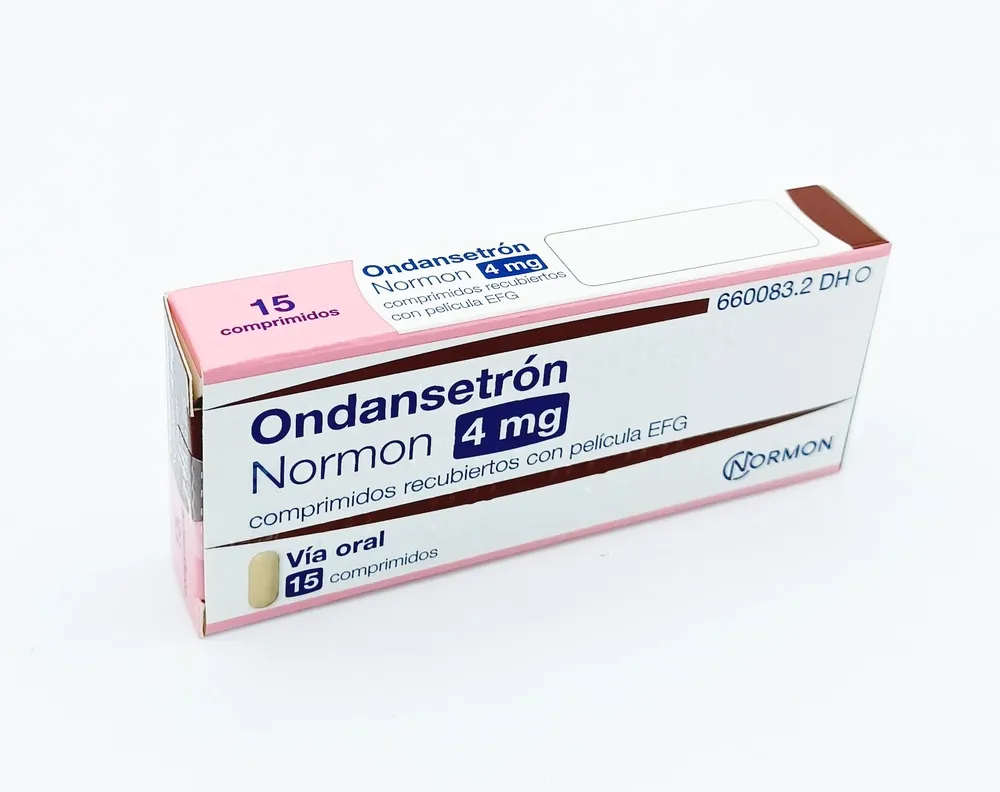
Table of Contents
- Package leaflet: Information for the user
- Introduction
- 1. What Ondansetron ratio is and what it is used for
- 2. What you need to know before taking Ondansetron ratio
- 3. How to take Ondansetron ratio
- 4. Possible adverse effects
- 5. Ondansetron ratiopharm Storage
- 6. Contents of the pack and other information
Package leaflet: Information for the user
Introduction
Package leaflet: Information for the patient
Ondansetron ratio 4 mg film-coated tablets EFG
Read the entire leaflet carefully before you start taking this medicine, because it contains important information for you.
- Keep this leaflet, as you may need to read it again.
- If you have any questions, ask your doctor or pharmacist.
- This medicine has been prescribed for you only and must not be given to other people, even if they have the same symptoms as you, because it could harm them.
- If you experience any adverse effects, consult your doctor or pharmacist, even if they are adverse effects not listed in this leaflet. See section 4.
Leaflet contents
- What Ondansetron ratio is and what it is used for
- What you need to know before taking Ondansetron ratio
- How to take Ondansetron ratio
- Possible side effects
- How to store Ondansetron ratio
Pack contents and other information
1. What Ondansetron ratio is and what it is used for
Ondansetron belongs to a group of medicines known as antiemetics, which prevent nausea and vomiting.
Ondansetron tablets are used to:
-
prevent nausea and vomiting caused by:
-
chemotherapy in cancer treatment in adults and children over 6 months of age.
-
radiotherapy in cancer treatment in adults.
-
prevent postoperative nausea and vomiting in adults.
2. What you need to know before taking Ondansetron ratio
Do not take Ondansetron ratio
- If you are allergic (hypersensitive) to ondansetron or to any of the other ingredients of this medicine (listed in section 6).
- If you have had an allergic reaction to another similar medicine, such as granisetron, tropisetron, or dolasetron.
- If you are taking apomorphine (used to treat Parkinson's disease).
Warnings and precautions
Consult your doctor or pharmacist before taking this medicine if:
- You have liver problems.
- You have intestinal obstruction or suffer from severe constipation.
- You have undergone intestinal surgery.
- You have had a tonsillectomy.
- You have heart problems, including irregular heartbeat (arrhythmias).
- You have problems with your blood levels of electrolytes, such as potassium, sodium, or magnesium.
Taking Ondansetron ratio with other medicines
Inform your doctor if you are taking, have recently taken, or might need to take any of the following medicines:
- Phenytoin (used in the treatment of epilepsy).
- Carbamazepine (used in the treatment of epilepsy).
- Rifampicin (used in the treatment of tuberculosis).
- Tramadol (used to relieve mild to moderately severe pain).
- Medicines that affect the heart (such as haloperidol or methadone).
- Medicines used to treat irregular heart rhythm (antiarrhythmics).
- Beta-blockers (used to treat heart problems, eye conditions, anxiety, or to prevent migraines).
- Cancer medicines (especially anthracyclines).
- Medicines used to treat infections (erythromycin, ketoconazole).
If you are undergoing blood tests to monitor liver function while taking ondansetron, make sure your doctor knows you are taking this medicine, as it may affect the results of these tests.
Pregnancy and breastfeeding
Ondansetron ratio should not be used during the first trimester of pregnancy. This is because Ondansetron ratio may slightly increase the risk of a baby being born with cleft lip and/or cleft palate (openings or splits in the upper lip or the roof of the mouth). If you are already pregnant, think you might be pregnant, or plan to become pregnant, consult your doctor or pharmacist before using Ondansetron ratio. If you are a woman of childbearing age, you are advised to use an effective method of contraception.
Do not breast-feed while taking ondansetron, as small amounts of ondansetron pass into breast milk. Consult your doctor.
Driving and using machines
Treatment with ondansetron does not affect the ability to drive or operate machinery.
Ondansetron ratio contains lactose
This medicine contains lactose. If your doctor has informed you that you have an intolerance to certain sugars, consult with him before taking this medicine.
Ondansetron ratio contains sodium
This medicine contains less than 1 mmol of sodium (23 mg) per film-coated tablet; hence, it is essentially "sodium-free".
3. How to take Ondansetron ratio
Follow exactly the instructions for use of this medicine given by your doctor. If in doubt, consult your doctor or pharmacist again.
The tablets should be swallowed whole, preferably with a glass of water. The recommended dose is:
For the treatment of nausea and vomiting induced by chemotherapy and radiotherapy
- Adults (including elderly people):
8 mg taken 1 to 2 hours before chemotherapy or radiotherapy, followed by 8 mg taken 12 hours later. 24 hours after chemotherapy or radiotherapy, 8 mg twice daily may be taken for up to 5 days.
- Children (over 6 months of age) and adolescents
Ondansetron may initially be given as a single intravenous injection over 15 minutes before chemotherapy, followed by tablets which may be taken two to three times daily for up to 5 days after chemotherapy. The tablet dose will depend on body weight and will be calculated by your doctor.
For the prevention of nausea and vomiting after surgery
- Adults (including elderly people):
A 16 mg dose may be taken one hour before anaesthesia.
Alternatively, an 8 mg dose may be taken one hour before anaesthesia, followed by two further 8 mg doses at eight-hour intervals.
- Children (over 1 month of age) and adolescents
An intravenous injection containing ondansetron is recommended.
Patients with liver problems
The total daily dose must not exceed 8 mg.
Ondansetron should start working within one or two hours after taking the dose. If you vomit the dose within the first hour, take another dose. Otherwise, continue taking your tablets as instructed, but do not take more than your doctor has recommended. If you continue to feel unwell, you should inform your doctor.
If you take more Ondansetron ratio than you should
If you or your child take more ondansetron than you should, speak to your doctor or go immediately to the nearest hospital. Take the medicine with you.
An overdose may cause temporary vision problems, severe constipation, dizziness or fainting.
Take this leaflet, any remaining tablets, and the container with you to the hospital or doctor so they know which tablets you have taken.
In case of overdose or accidental ingestion, contact the Toxicology Information Service at telephone 91-562 04 20, indicating the medicine and the amount ingested.
If you forget to take Ondansetron ratio
If you forget to take a tablet and feel unwell or vomit, take one as soon as you remember and continue as before. If you forget to take a tablet and do not feel unwell, then wait until the next dose as instructed. Take any missed doses at the correct time.
If you stop taking Ondansetron ratio
Do not stop treatment with ondansetron without first consulting your doctor, even if you feel better.
If you have any further questions about the use of this medicine, ask your doctor or pharmacist.
4. Possible adverse effects
Like all medicines, this medicine can cause adverse effects, although not everyone will experience them.
If any of the following occur, stop taking the tablets immediately and contact your doctor or go to the nearest hospital emergency department:
- An allergic reaction causing swelling of the face, lips, tongue or throat, difficulty breathing or swallowing, skin rash.
- Collapse
Other adverse effects include:
Very common (affect more than 1 in 10 people)
- Headache.
Common (affect up to 1 in 10 people)
- Feeling of warmth or flushing
- Constipation
- Changes in liver function test results (if you take ondansetron tablets with a medicine called cisplatin; otherwise this adverse effect is uncommon).
Uncommon (affect up to 1 in 100 people)
- Hiccups
- Low blood pressure, which may make you feel weak or dizzy
- Irregular heartbeat or chest pain
- Seizures
- Unusual body movements, restlessness.
Rare (affect up to 1 in 1,000 people)
- Feeling dizzy or lightheaded
- Blurred vision
- Changes in heart rhythm (sometimes leading to loss of consciousness).
Very rare (affect up to 1 in 10,000 people)
- Impaired vision or temporary loss of vision, which usually returns within 20 minutes.
Frequency not known (cannot be estimated from available data)
- Sudden chest pain or tightness in the chest (myocardial ischaemia)
Reporting of adverse effects:
If you experience any type of adverse effect, talk to your doctor, pharmacist or nurse, even if it is a possible adverse effect not listed in this leaflet. You can also report them directly via the Spanish Pharmacovigilance System for Human Medicinal Products: www.notificaram.es. By reporting adverse effects, you can help provide more information on the safety of this medicine.
5. Ondansetron ratiopharm Storage
Keep this medicine out of the sight and reach of children.
No special storage conditions are required.
Do not use this medicine after the expiry date stated on the blister pack and outer packaging, following EXP. The expiry date refers to the last day of the month indicated.
Medicines should not be disposed of via wastewater drains or household waste. Dispose of unused medicines and their packaging at the SIGRE point at your pharmacy. If you have any doubts, ask your pharmacist how to properly dispose of unused medicines and their packaging. This will help protect the environment.
No special storage conditions are required.
6. Contents of the pack and other information
Composition of Ondansetrón ratio
-
The active substance is ondansetrón. Each tablet contains 4 mg of ondansetrón (as ondansetrón hydrochloride dihydrate).
-
The other components (excipients) are:
-
Tablet core: lactose monohydrate, sodium carboxymethyl starch of potato (type A), microcrystalline cellulose, pregelatinized starch, magnesium stearate
-
Coating: hypromellose, titanium dioxide (E171), macrogol, and yellow iron oxide (E172)
Appearance of the product and contents of the pack
- Ondansetrón ratio 4 mg is presented as yellow, film-coated, oval-shaped tablets, with the number “4” engraved on one side and smooth on the other.
- Ondansetrón ratio 4 mg tablets are available in pack sizes of 6 and 15 film-coated tablets.
Only some pack sizes may be marketed.
Marketing Authorization Holder and Manufacturer:
Marketing Authorization Holder
Teva Pharma, S.L.U.
C / Anabel Segura, 11 Edificio Albatros B, 1ª Planta
Alcobendas, 28108 Madrid (Spain)
Manufacturer
Teva Pharmaceutical Works Company Ltd
Pallagi Street 13
H-4042 Debrecen
Hungary
Or
Pharmachemie B.V.
Swensweg 5, Postbus 552, 2003 RN Haarlem
The Netherlands
Or
Merckle GmbH
Ludwig-Merckle-Strasse 3
89143 Blaubeuren
Germany
Date of the most recent review of this leaflet: February 2022
“Detailed information on this medicine is available on the website of the Spanish Agency of Medicines and Medical Devices (AEMPS) http://www.aemps.gob.es/ ”