Omylclo 75 mg solution for injection in pre-filled syringe
SpainTable of Contents
Package leaflet: Information for the user
Introduction
Package leaflet: information for the user
Omlyclo 75 mg injectable solution in pre-filled syringe
omalizumab
This medicinal product is subject to additional monitoring, which will allow quicker detection of new safety information. You can help by reporting any side effects you may experience. The end of section 4 includes information on how to report side effects.
Read the entire leaflet carefully before you start using this medicine, as it contains important information for you.
- Keep this leaflet, as you may need to read it again.
- If you have any questions, ask your doctor, pharmacist, or nurse.
- This medicine has been prescribed for you only, and you should not give it to others, even if they have the same symptoms as you, because it may harm them.
- If you experience any side effects, talk to your doctor, pharmacist, or nurse, even if the side effects are not listed in this leaflet. See section 4.
Contents of the leaflet
- What Omlyclo is and what it is used for
- What you need to know before using Omlyclo
- How to use Omlyclo
- Possible side effects
- How to store Omlyclo
- Contents of the pack and other information
1. What Omlyclo is and what it is used for
Omlyclo contains the active substance omalizumab. Omalizumab is a human protein, similar to the natural proteins produced by the body. It belongs to a class of medicines called monoclonal antibodies.
Omlyclo is used for the treatment of:
- allergic asthma
- chronic rhinosinusitis (inflammation of the nose and sinuses) with nasal polyps
Allergic asthma
This medicine is used to prevent asthma from worsening by controlling the symptoms of severe allergic asthma in adults, adolescents, and children (from 6 years of age) who are already receiving asthma medications, but whose symptoms are not adequately controlled with medications such as high-dose inhaled corticosteroids and inhaled beta agonists.
Chronic rhinosinusitis with nasal polyps
This medicine is used to treat chronic rhinosinusitis with nasal polyps in adults (from 18 years of age) who are receiving intranasal corticosteroids (nasal corticosteroid spray), but whose symptoms are not well controlled with these medications. Nasal polyps are small growths in the lining of the nose. Omlyclo helps reduce the size of the polyps and improves symptoms including nasal congestion, loss of sense of smell, postnasal drip, and nasal discharge.
Omlyclo works by blocking a substance called immunoglobulin E (IgE) that is produced by the body. IgE is involved in a type of inflammation that plays a key role in causing allergic asthma and chronic rhinosinusitis with nasal polyps.
2. What you need to know before using Omlyclo
Do not use Omlyclo
- if you are allergic to omalizumab or to any of the other ingredients of this medicine (listed in section 6). (See the special warnings at the end of this section, under the subtitle “Omlyclo contains polysorbate”).
- If you think you may be allergic to any of the ingredients, inform your doctor, as you must not use Omlyclo.
Warnings and precautions
Talk to your doctor before using Omlyclo:
- if you have kidney or liver problems,
- if you have a condition in which your own immune system attacks parts of your body (autoimmune disease),
- if you are travelling to an area where parasitic infections are common, as Omlyclo may reduce your resistance to such infections,
- if you have previously experienced a severe allergic reaction (anaphylaxis), for example due to a medicine, an insect sting, or food.
Omlyclo does not treat acute asthma symptoms, such as a sudden asthma attack. Therefore, Omlyclo should not be used to treat these types of symptoms.
Omlyclo is not intended to prevent or treat other allergic-type conditions such as sudden allergic reactions, hyperimmunoglobulin E syndrome (an inherited immune disorder), aspergillosis (a lung disease caused by a fungus), food allergy, eczema, or hay fever, as Omlyclo has not been studied in these conditions.
Monitor for signs of allergic reactions and other serious adverse effects
Omlyclo may cause serious adverse effects. You should monitor for signs of these effects while using Omlyclo. Seek immediate medical help if you notice any signs indicating a severe allergic reaction or other serious adverse effects. These signs are described in the section “Serious adverse effects” in section 4.
Before you or someone else (who is not a healthcare professional) injects Omlyclo, it is important that you receive training from your doctor on how to recognize early symptoms of severe allergic reactions and what to do if they occur (see section 3, “How to use Omlyclo”). Most severe allergic reactions occur during the first three doses of Omlyclo.
Children and adolescents
Allergic asthma
Omlyclo is not recommended for children under 6 years of age. Its use has not been studied in children under 6 years of age.
Chronic rhinosinusitis with nasal polyps
Omlyclo is not recommended for children and adolescents under 18 years of age. Its use has not been studied in patients under 18 years of age.
Other medicines and Omlyclo
Tell your doctor, pharmacist, or nurse if you are taking, have recently taken, or might need to take any other medicines.
This is especially important if you are using:
- medicines to treat a parasitic infection, as Omlyclo may reduce the effectiveness of these medicines,
- inhaled corticosteroids and other medicines for allergic asthma.
Pregnancy and breastfeeding
If you are pregnant, think you may be pregnant, or are planning to become pregnant, consult your doctor before using this medicine. Your doctor will discuss with you the potential benefits and risks of using this medicine during pregnancy.
Inform your doctor immediately if you become pregnant while being treated with Omlyclo.
Omlyclo may pass into breast milk. If you are breastfeeding or plan to breastfeed, consult your doctor before using this medicine.
Driving and using machines
It is unlikely that Omlyclo will affect your ability to drive or use machines.
Omlyclo contains polysorbate
This medicine contains 0.20 mg of polysorbate 20 in each pre-filled syringe, equivalent to 0.40 mg/ml. Polysorbates may cause allergic reactions. Inform your doctor if you or your child has known allergies.
3. How to use Omlyclo
Follow exactly the administration instructions for this medicine given by your doctor. If in doubt, consult your doctor, pharmacist, or nurse again.
How Omlyclo is used
Omlyclo is administered as an injection under the skin (known as a subcutaneous injection).
Omlyclo injection
- You and your doctor will decide whether you will self-inject Omlyclo. The first three doses will always be administered under the supervision of a healthcare professional (see section 2).
- It is important that you receive proper training on how to inject the medicine yourself before doing so.
- A caregiver (e.g., parents) may administer the Omlyclo injection after receiving appropriate training.
For detailed instructions on how to inject Omlyclo, see “Instructions for use of Omlyclo in pre-filled syringe” at the end of this leaflet.
Training for recognizing severe allergic reactions
It is also important that you do not self-inject Omlyclo until your doctor or nurse has taught you:
- how to recognize the early signs and symptoms of severe allergic reactions,
- what to do if symptoms occur.
For more information on the early signs and symptoms of severe allergic reactions, see section 4.
How much to administer
Your doctor will decide the dose of Omlyclo you need and how often it should be administered. This depends on your body weight and the results of a blood test performed before starting treatment to determine the level of IgE in your blood.
You will need between 1 and 4 injections at the same time. You will require injections every two or every four weeks.
Continue taking your current asthma and/or nasal polyps medication during treatment with Omlyclo. Do not stop any asthma and/or nasal polyps medication without consulting your doctor.
You may not notice immediate improvement after starting treatment with Omlyclo. In patients with nasal polyps, effects have been observed 4 weeks after starting treatment. In patients with asthma, it generally takes between 12 and 16 weeks for the medicine to achieve its full effect.
Use in children and adolescents
Allergic asthma
Omlyclo can be used in children and adolescents aged 6 years and older who are already receiving asthma medication, but whose asthma symptoms are not well controlled by medications such as high-dose inhaled corticosteroids and inhaled beta-agonists. Your doctor will inform you of the dose of Omlyclo your child needs and how often it should be administered. This will depend on the child's body weight and the results of blood tests performed before starting treatment to determine the level of IgE in their blood.
Children (aged 6 to 11 years) should not self-administer Omlyclo. However, if considered appropriate by the doctor, a caregiver may administer the Omlyclo injection after receiving adequate training.
Chronic rhinosinusitis with nasal polyps
Omlyclo must not be used in children and adolescents under 18 years of age.
If you forget a dose of Omlyclo
If you miss an appointment, contact your doctor or hospital as soon as possible to reschedule.
If you forget to self-inject a dose of Omlyclo, administer it as soon as you remember. Then consult your doctor to determine when the next dose should be given.
If you stop treatment with Omlyclo
Do not stop treatment with Omlyclo unless instructed by your doctor. Interrupting or stopping treatment with Omlyclo may cause your symptoms to return.
If you have any further questions about the use of this medicine, ask your doctor, pharmacist, or nurse.
4. Possible adverse effects
Like all medicines, this medicine can cause adverse effects, although not everyone experiences them. The adverse effects caused by Omlyclo are generally mild to moderate, but occasionally they may be serious.
Serious adverse effects:
Seek immediate medical attention if you notice any of the signs of the following adverse effects:
Rare (may affect up to 1 in 1,000 patients)
- Severe allergic reactions (including anaphylaxis). Symptoms may include rash, itching or hives, swelling of the face, lips, tongue, larynx (voice box), trachea, or other parts of the body, rapid heartbeat, dizziness and mild lightheadedness, confusion, dyspnea, wheezing or difficulty breathing, blue-colored skin or lips, collapse, and loss of consciousness. If you have a history of severe allergic reactions (anaphylaxis) unrelated to Omlyclo, you may have a higher risk of developing a severe allergic reaction after using Omlyclo.
- Systemic lupus erythematosus (SLE). Symptoms may include muscle pain, joint pain and swelling, rash, fever, weight loss, and fatigue.
Frequency not known (cannot be estimated from available data)
- Churg-Strauss syndrome or hypereosinophilic syndrome. Symptoms may include one or more of the following: swelling, pain, or rash around blood or lymph vessels, elevated levels of a specific type of white blood cell (marked eosinophilia), worsening respiratory problems, nasal congestion, heart problems, pain, numbness, or tingling in the arms and legs.
- Low platelet count, with symptoms such as bleeding or bruising occurring more easily than normal.
- Serum sickness. Symptoms may include one or more of the following: joint pain with or without inflammation or stiffness, rash, fever, lymph node swelling, muscle pain.
Other adverse effects include:
Very common (may affect more than 1 in 10 patients)
- fever (in children)
Common (may affect up to 1 in 10 patients)
- reactions at the injection site including pain, swelling, itching, and redness
- upper abdominal pain
- headache (very common in children)
- dizziness
- joint pain (arthralgia)
Uncommon (may affect up to 1 in 100 patients)
- feeling sleepy or tired
- tingling or numbness in hands or feet
- fainting, drop in blood pressure when sitting or standing up (postural hypotension), flushing
- sore throat, cough, acute breathing problems
- nausea, diarrhea, indigestion
- itching, hives, rash, increased skin sensitivity to sunlight
- weight gain
- flu-like symptoms
- swollen arms
Rare (may affect up to 1 in 1,000 patients)
- parasitic infection
Frequency not known (cannot be estimated from available data)
- muscle pain and joint inflammation
- hair loss
Reporting of adverse effects
If you experience any adverse effect, talk to your doctor, pharmacist, or nurse, even if it is a possible adverse effect not listed in this leaflet. You can also report them directly through the national reporting system detailed in Appendix V. By reporting adverse effects, you can help provide more information on the safety of this medicine.
5. Storage of Omlyclo
- Keep this medicine out of the sight and reach of children.
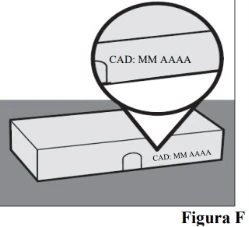
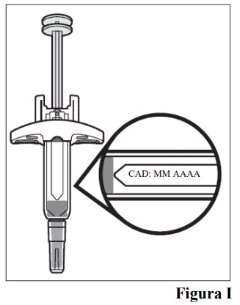
- Do not use this medicine after the expiry date which is stated on the labelling after CAD/EXP. The expiry date refers to the last day of the month indicated. The container holding the pre-filled syringe may be stored for a total of 7 days at room temperature (25 °C) before use.
- Store in the original packaging to protect from light.
- Store in a refrigerator (between 2 °C and 8 °C). Do not freeze.
- Do not use any container that is damaged or shows signs of deterioration.
6. Contents of the pack and other information
Composition of Omlyclo
- The active substance is omalizumab. One 0.5 ml syringe of solution contains 75 mg of omalizumab.
- The other components are L-arginine hydrochloride, L-histidine hydrochloride monohydrate, L-histidine, polysorbate 20 (E 432), and water for injections.
Appearance of Omlyclo and contents of the pack
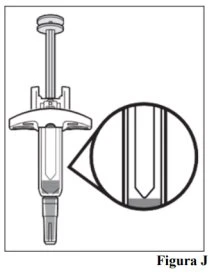
Omlyclo solution for injection is presented as a solution ranging from clear to slightly opalescent, colourless to light yellowish-brown, in a pre-filled syringe.
Omlyclo 75 mg solution for injection is available in packs containing 1 pre-filled syringe and in multiple packs containing 3 (3 x 1) pre-filled syringes.
Not all pack sizes may be marketed.
Marketing Authorization Holder
Celltrion Healthcare Hungary Kft.
1062 Budapest
Váci út 1-3. WestEnd Office Building B tower
Hungary
Manufacturer responsible for manufacturing
Nuvisan France SARL
2400, Route des Colles,
06410, Biot,
France
MIDAS Pharma GmbH
Rheinstrasse 49
55218 West Ingelheim Am Rhein
Rhineland-Palatinate
Germany
Kymos S.L.
Ronda de Can Fatjó 7B
Parc Tecnològic del Vallès
08290 Cerdanyola del Vallès
Barcelona
Spain
Further information on this medicinal product is available upon request by contacting the local representative of the Marketing Authorization Holder:
Belgium/Belgium/Belgium Celltrion Healthcare Belgium BVBA Tel/Tel: +32 1528 7418 | Lithuania Celltrion Healthcare Hungary Kft. Tel.: +36 1 231 0493 |
| Luxembourg/Luxembourg Celltrion Healthcare Belgium BVBA Tel/Tel: +32 1528 7418 |
Czech Republic Celltrion Healthcare Hungary Kft. Tel: +36 1 231 0493 | Hungary Celltrion Healthcare Hungary Kft. Tel.: +36 1 231 0493 |
Denmark Celltrion Healthcare Denmark ApS Tlf: +45 3535 2989 | Malta Mint Health Ltd. Tel: +356 2093 9800 |
Germany Celltrion Healthcare Deutschland GmbH Tel: +49 303 464 941 50 | Netherlands Celltrion Healthcare Netherlands B.V. Tel: +31 20 888 7300 |
Estonia Celltrion Healthcare Hungary Kft. Tel: +36 1 231 0493 | Norway Celltrion Healthcare Norway AS [email protected] |
Spain CELLTRION FARMACEUTICA (SPAIN) S.L. Tel: +34 910 498 478 | Austria Astro-Pharma GmbH Tel: +43 1 97 99 860 |
Greece BIANEX S.A. Tel: +30 210 8009111 - 120 | Poland Celltrion Healthcare Hungary Kft. Tel.: +36 1 231 0493 |
France Celltrion Healthcare France SAS Tél.: +33 (0)1 71 25 27 00 | Portugal CELLTRION PORTUGAL, UNIPESSOAL LDA Tel: +351 21 936 8542 |
Croatia Oktal Pharma d.o.o. Tel: +385 1 6595 777 | Romania Celltrion Healthcare Hungary Kft. Tel: +36 1 231 0493 |
Ireland Celltrion Healthcare Ireland Limited Tel: +353 1 223 4026 | Slovenia OPH Oktal Pharma d.o.o. Tel.: +386 1 519 29 22 |
Iceland Celltrion Healthcare Hungary Kft. Sími: +36 1 231 0493 | Slovakia Celltrion Healthcare Hungary Kft. Tel: +36 1 231 0493 |
Italy Celltrion Healthcare Italy S.R.L. Tel: +39 0247927040 | Finland/Finland Celltrion Healthcare Finland Oy. Puh/Tel: +358 29 170 7755 |
Cyprus C.A. Papaellinas Ltd Tel: +357 22741741 | Sweden Celltrion Sweden AB [email protected] |
Latvia Celltrion Healthcare Hungary Kft. Talr.: +36 1 231 0493 |
Date of the most recent review of this leaflet:
Other sources of information
Detailed information on this medicine is available on the website of the European Medicines Agency: http://www.ema.europa.eu
INSTRUCTIONS FOR USE OF OMLYCLO PRE-FILLED SYRINGE
Read and follow the instructions for use provided with the Omlyclo pre-filled syringe before starting to use it and each time you receive a refill. They may contain new information.
This information does not replace consultation with your healthcare professional regarding your condition or treatment.
Children (6 to 11 years of age) must not self-inject with Omlyclo pre-filled syringe; however, if considered appropriate by the healthcare professional, a caregiver may administer the injection after receiving adequate training.
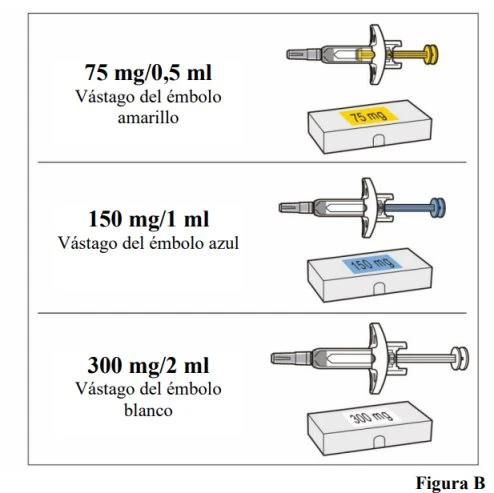
Select the correct pre-filled syringe or combination of pre-filled syringes
Omlyclo in pre-filled syringe is available in 3 concentrations (see Figure B). These instructions must be followed for all concentrations.
You may need more than one injection to achieve your prescribed dose. The following Dosing Table (Figure C) shows the combination of pre-filled syringes required to administer your complete dose. Check the label on the Omlyclo packaging to ensure you have received the correct pre-filled syringe or combination of pre-filled syringes for your prescribed dose. If more than one injection is required for your dose, administer all the necessary injections for your prescribed dose, one immediately after the other. If in doubt, contact your healthcare professional.
! | Important: If the dose is for a child under 12 years of age, it is recommended to use only yellow prefilled syringes (75 mg) and blue prefilled syringes (150 mg), as white prefilled syringes (300 mg) are not indicated for use in children under 12 years of age. Refer to the following Dosing Table (Figure C) for the recommended combination of prefilled syringes for children under 12 years of age. |
Contact your healthcare professional if you have any questions about the Dosing Table.
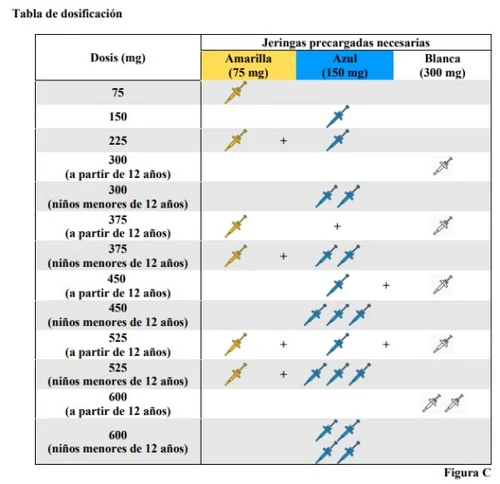
Note: Your healthcare professional may prescribe a different combination of prefilled syringes to administer your full dose.
Important information you should know before injecting Omlyclo
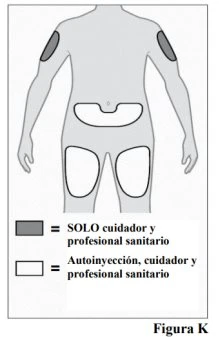
- Omlyclo is for subcutaneous injection only (inject into the fatty layer beneath the skin).
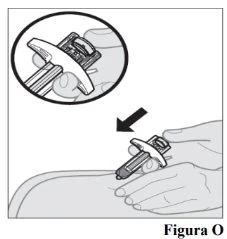
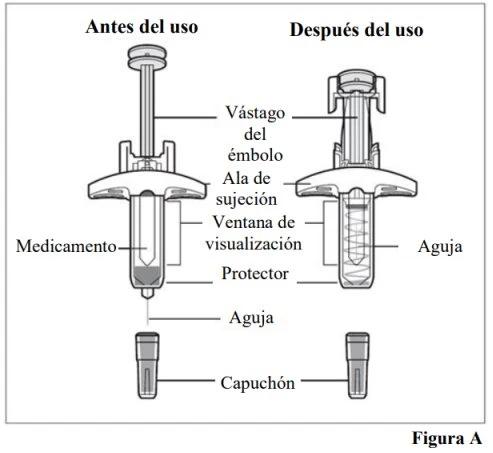
- The prefilled syringe has a needle shield that automatically activates to cover the needle once the injection is complete. The needle shield will help prevent needlestick injuries to anyone handling the prefilled syringe after the injection.
- Do not open the sealed package until you are ready to administer the injection with the prefilled syringe.
- Do not use if the package or the prefilled syringe is damaged or appears to have been tampered with.
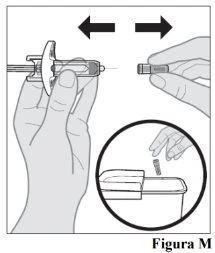
- Do not remove the cap until you are ready to administer the injection with the prefilled syringe.
- Do not use the prefilled syringe if it has been dropped on a hard surface or dropped after removing the cap.
- Do not reuse the same prefilled syringe.
- Do not leave the prefilled syringe unattended.
- Do not attempt to disassemble the prefilled syringe under any circumstances.
- Do not pull back on the plunger rod.
How should I store Omlyclo?
- Store unused prefilled syringes in their original packaging in the refrigerator at between 2 °C and 8 °C.
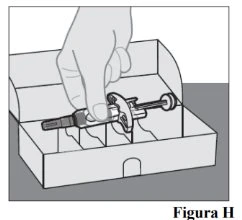
- Do not remove the prefilled syringe from its original packaging during storage.
- Keep the prefilled syringe in its original packaging to protect it from light until ready to use.
- Do not freeze the prefilled syringe.
- Do not use the prefilled syringe if it has been frozen.
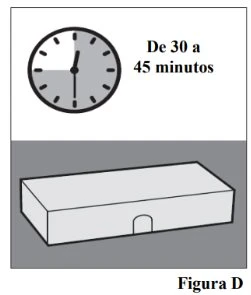
- Before administering the injection, you may remove the package from the refrigerator and return it to the refrigerator if necessary. The total cumulative time outside the refrigerator must not exceed 7 days. If the prefilled syringe is exposed to temperatures above 25 °C, do not use the syringe and dispose of it in a sharps container.
- Keep the prefilled syringe, the sharps container, and all medication out of the sight and reach of children. The prefilled syringe contains small parts.
|
|
|
Note: You may need more than one pre-filled syringe to administer your prescribed dose. Refer to the Dosage Table (see Figure C) for more information. Each container contains one pre-filled syringe. |
|
|
|
|
|
|
|
Note: If the expiration date is not visible in the viewing window, you may rotate the inner cylinder of the pre-filled syringe until the expiration date becomes visible. |
|
|
|
|
|
|
Administering the injection
|
|
|
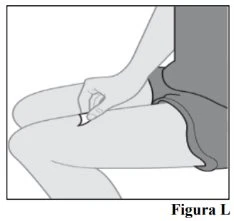
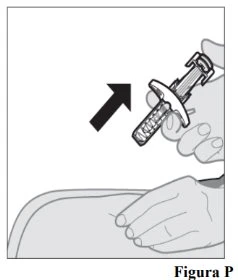
Note: It is important to pinch the skin to ensure the medication is injected under the skin (into the fatty layer) and not deeper (into the muscle).
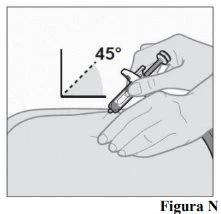
Note: It is important to inject at the correct angle to ensure the medication enters under the skin (into the fatty layer); otherwise, the injection may be uncomfortable and the medication may not work properly.
|
|
|
|
|
| |
|