Omifin 50 mg tablets
Spain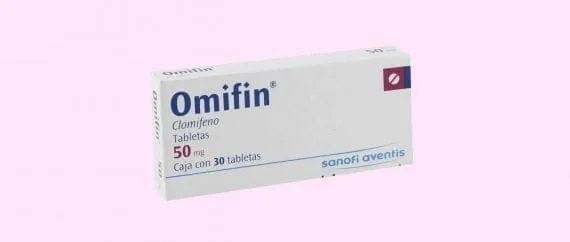
Table of Contents
Package leaflet: Information for the user
Introduction
Package leaflet: information for the user
Omifin 50 mg tablets
Clomifene citrate
Read the entire leaflet carefully before you start taking this medicine, because it contains important information for you.
- Keep this leaflet, as you may need to read it again.
- If you have any questions, ask your doctor or pharmacist.
- This medicine has been prescribed for you only, and you should not give it to others, even if they have the same symptoms as you, because it may harm them.
- If you experience any adverse effects, consult your doctor or pharmacist, even if they are adverse effects not listed in this leaflet. See section 4.
Leaflet contents
- What Omifin is and what it is used for
- What you need to know before taking Omifin
- How to take Omifin
- Possible side effects
- How to store Omifin
- Contents of the pack and other information
1. What Omifin is and what it is used for
Omifin is a treatment for female infertility due to ovulatory insufficiency. It can be used as a diagnostic and therapeutic test in certain cases of amenorrhea (absence of menstruation). It is used in assisted reproduction to stimulate ovulation.
2. What you need to know before starting to take Omifin
Do not take Omifin
You should not take Omifin if any of the following conditions apply to you. If any of these conditions develop during treatment, stop taking the medicine and consult your doctor:
- Female infertility not due to the cause stated above.
- Disorders of the thyroid or adrenal glands.
- If you have or have had severe liver disease.
- Gynecological bleeding of unknown origin.
- Certain types of tumors.
- Ovarian cysts, except in polycystic ovary syndrome.
- Visual disturbances during treatment or during previous treatments.
- If you are allergic to clomiphene citrate or to any of the other ingredients of this medicine (listed in section 6).
Warnings and precautions
Talk to your doctor or pharmacist before starting to take Omifin.
Omifin should be used under medical supervision.
Treatment with Omifin in women slightly increases the chance of multiple pregnancy, with its associated risks.
Pregnancy
If in doubt, perform a pregnancy test. Confirm the absence of pregnancy before starting each new treatment cycle.
Omifin may cause ovarian hyperstimulation, which is usually mild but can occasionally be severe. To minimize this risk, it is recommended to use the lowest effective dose. Ovarian hyperstimulation typically occurs a few days after completing treatment with Omifin. Hyperstimulation caused by Omifin rarely leads to complications and usually resolves spontaneously. Symptoms may include abdominal pelvic pain, bloating, weight gain, and/or generalized sensation of swelling. If these occur, Omifin treatment should not be repeated until the ovaries have returned to their normal size. Consult your doctor if such symptoms occur.
Special monitoring is required in cases of uterine fibroids due to the potential for an increase in their size.
There have been reports of benign or malignant tumors associated with the use of fertility medications, but conclusive data on this risk are not available to establish specific recommendations.
Other medicines and Omifin
Inform your doctor or pharmacist if you are taking, have recently taken, or might need to take any other medicines, including those obtained without a prescription, homeopathic medicines, herbal remedies, and other health-related products.
Concomitant use of clomiphene with other selective estrogen receptor modulators (SERMs) is not recommended.
Use in athletes
Patients should be informed that this medicine contains clomiphene, which may lead to a positive result in doping control tests.
Pregnancy, breastfeeding and fertility
If you are pregnant or breastfeeding, think you may be pregnant, or are planning to become pregnant, consult your doctor or pharmacist before using this medicine.
Omifin is not indicated during pregnancy. Animal studies have shown harmful effects on the fetus. Extrapolation of these results to humans is uncertain. Currently, there are no sufficiently clear data to assess any potential risk of fetal malformations when clomiphene is administered during pregnancy. The incidence of fetal abnormalities associated with clomiphene use during pregnancy has been within the range reported for the general population in clinical studies. In cases of administration during pregnancy, there is no basis for recommending termination of pregnancy.
It is not known whether clomiphene citrate is excreted in human milk. Lactation may be reduced.
Driving and use of machines
Visual adverse effects have been reported, particularly under conditions of variable light intensity, which may interfere with the ability to drive vehicles.
Omifin contains lactose and sucrose
This medicine contains lactose and sucrose. If your doctor has informed you of an intolerance to certain sugars, consult him before taking this medicine.
3. How to take Omifin
Follow exactly the instructions for administration of this medicine as given by your doctor or pharmacist. If in doubt, consult your doctor again.
The tablets are taken with water. The tablet may be divided into equal doses. The recommended dose is:
Treatment of infertility in women
Start with a cycle of 1 tablet (50 mg) daily for 5 days. Treatment should begin 2 to 5 days after the onset of natural or medicinally induced menstrual bleeding (progestogen), or, if there is no menstruation, on any day chosen by the physician. The following situations may occur:
-
When treatment results in ovulation, the dose need not be increased in subsequent cycles. When ovulation occurs but pregnancy does not occur, the effective dose may be maintained for up to a total of 6 cycles.
-
When ovulation does not occur (no rise in basal body temperature, no increase in progesterone measured in blood tests between days 20 and 26 of the cycle), a new cycle with 100 mg (2 tablets taken as a single dose) for 5 days is recommended. In these cases, treatment with Clomifene should not exceed 3 cycles.
Some patients with polycystic ovaries may be hypersensitive to Omifin even at the initial dose of 50 mg per day. In such cases, the dose may be reduced to half a tablet per day (25 mg) in subsequent cycles.
It is important to properly time sexual intercourse with ovulation.
In assisted reproduction, ovulation is induced with 2 tablets of Omifin daily from day 2 to day 6 of the cycle, followed by administration of a hormone (hMG) for several days to achieve maturation of multiple follicles.
Diagnostic test
Dose of 2 tablets of Omifin taken as a single daily dose for 5 consecutive days and during only one cycle. Your doctor will evaluate the production of certain hormones (FSH) after treatment with this medicine.
If you take more Omifin than you should
In case of overdose or accidental ingestion, contact your doctor or pharmacist immediately or call the Toxicology Information Service at telephone number 915620420, indicating the medicine and the amount ingested.
No cases of acute poisoning have been reported. In case of overdose, symptoms such as nausea, vomiting, hot flushes, visual disturbances, ovarian enlargement with abdominal and pelvic pain may occur. In the treatment of overdose, symptomatic and supportive measures are recommended.
If you forget to take Omifin
Do not take a double dose to make up for missed doses.
If you forget to take a dose, it is unknown whether it can be compensated during the cycle; therefore, cancellation of the cycle should be considered.
If you have any further questions about the use of this medicine, ask your doctor or pharmacist.
4. Possible adverse effects
Like all medicines, this medicine can cause adverse effects, although not everyone will experience them.
For most of the adverse effects listed below, frequency data are not available.
Benign or malignant tumours
- Isolated cases of certain tumours, most frequently those dependent on hormone production.
Metabolism and nutrition disorders
- Increase in blood fats (triglycerides), associated with pancreatitis in cases of familial hypertriglyceridaemia, related to prolonged use or higher than recommended doses.
Psychiatric disorders
- Worsening of pre-existing psychosis, asthenia-depression, nervousness, insomnia have been reported.
Nervous system disorders
- Cases of dizziness, drowsiness, feeling of drunkenness, headache, and convulsions have been described.
Eye disorders
- Blurred vision, persistence of luminous and flickering images, occurring in approximately 2% of cases. Frequency increases with higher ingested doses. These may appear for the first time or intensify upon exposure to bright light. They usually disappear within a few days to a few weeks after discontinuation of the medicine. Their occurrence contraindicates any further use of clomiphene. A few rare cases of cataracts have been reported.
Cardiac disorders
- Tachycardia (increased heart rate), palpitations.
Vascular disorders
- Hot flushes (may affect up to 1 in 10 women).
Gastrointestinal disorders
- Nausea and vomiting, abdominal distension, and pancreatitis.
Skin and subcutaneous tissue disorders
- Urticaria, allergic dermatitis, alopecia (hair loss).
Renal and urinary disorders
- Polyuria (increased urinary frequency).
Pregnancy, puerperium and perinatal disorders
- Moderate risk of multiple and ectopic pregnancy.
Female reproductive and breast disorders
- Ovarian hyperstimulation (see section 2. What you need to know before taking Omifin).
- Cervical mucus insufficiency due to antiestrogenic effect, which may require local oestrogen treatment.
- Some cases of worsening of pre-existing endometriosis (inflammation or thickening of the endometrium) have been reported.
- Intermenstrual bleeding.
- Breast pain.
Reporting of adverse effects
If you experience any type of adverse effect, consult your doctor or pharmacist, even if it is a possible adverse effect not listed in this leaflet. You may also report them directly via the Spanish Pharmacovigilance System for Human Medicines: https://www.notificaram.es. By reporting adverse effects, you can help provide more information on the safety of this medicine.
5. Storage of Omifin
Keep this medicine out of sight and reach of children.
This medicine does not require special storage conditions. Store in the original packaging to protect from light.
Do not use this medicine after the expiry date stated on the packaging after EXP. The expiry date refers to the last day of the month indicated.
Medicines should not be disposed of via wastewater or household waste. Dispose of unused medicines and their containers at the SIGRE collection point at your pharmacy. If you are in doubt, ask your pharmacist how to properly dispose of unused medicines and their packaging. This will help protect the environment.
6. Contents of the pack and other information
Composition of Omifin
The active substance is clomifene citrate. Each tablet contains 50 mg of clomifene citrate.
The other components (excipients) are: monohydrate lactose, sucrose, corn starch, pregelatinized corn starch, magnesium stearate.
Appearance of the medicine and contents of the pack
The tablets are presented in thermoformed PVC/PVDC-Al blisters.
Each pack contains 10 white, round, scored tablets.
Marketing Authorization Holder
Laboratorios Effik, S.A.
C/ San Rafael n° 3
28108 Alcobendas, Madrid
Spain
Manufacturer
Cyndea Pharma, S.L.
Pol. Ind. Emiliano Revilla Sanz
Avenida de Ágreda, 31
42110 Ólvega, Soria
Spain
Date of the most recent revision of this leaflet: November 2021
Detailed and up-to-date information on this medicine is available on the website of the Spanish Agency of Medicines and Health Products (AEMPS) http://www.aemps.gob.es/.