Okedi 100 mg powder and solvent for prolonged-release injection suspension
Spain
Table of Contents
Package leaflet: Information for the user
Introduction
Package leaflet: information for the user
OKEDI 100 mg, powder and solvent for prolonged-release injectable suspension
risperidone
Read the entire leaflet carefully before you start using this medicine, because it contains important information for you.
- Keep this leaflet, as you may need to read it again.
- If you have any questions, consult your doctor or pharmacist.
- This medicine has been prescribed for you only, and you should not give it to other people, even if they have the same symptoms as you, because it may harm them.
- If you experience any adverse effects, consult your doctor or pharmacist, even if they are adverse effects not listed in this leaflet. See section 4.
Contents of the leaflet
- What OKEDI is and what it is used for
- What you need to know before using OKEDI
- How to use OKEDI
- Possible side effects
- How to store OKEDI
- Contents of the pack and other information
1. What OKEDI is and what it is used for
OKEDI contains the active substance risperidone, which belongs to a group of medicines called "antipsychotics".
OKEDI is used in adult patients to treat schizophrenia, a disorder in which patients may see, hear, or feel things that are not there, believe things that are not true, or feel unusually suspicious or confused.
OKEDI is indicated for patients who have previously shown tolerability and effectiveness with oral risperidone (e.g., tablets).
OKEDI may help relieve the symptoms of the illness and prevent them from returning.
2. What you need to know before using OKEDI
Do not use OKEDI:
- If you are allergic (hypersensitive) to risperidone or to any of the other ingredients of this medicine (listed in section 6).
Warnings and precautions
Talk to your doctor or pharmacist before starting to use OKEDI if:
- You have heart problems. Examples include irregular heartbeat, a tendency to low blood pressure, or if you are taking medicines for blood pressure. OKEDI may cause low blood pressure. A dose adjustment may be necessary.
- You know you have risk factors that make you more likely to have a stroke, such as high blood pressure, cardiovascular disorder, or blood vessel problems in the brain.
- You have ever experienced involuntary movements of the tongue, mouth, or face.
- You have ever had a condition with symptoms such as high temperature, muscle stiffness, sweating, or reduced level of consciousness (also known as neuroleptic malignant syndrome).
- You have Parkinson's disease.
- You have dementia.
- You know you have previously had low levels of white blood cells (which may have been caused by other medicines or not).
- You are diabetic.
- You have epilepsy.
- You are male and have ever had a prolonged or painful erection.
- You have difficulty controlling your body temperature or feel excessive heat.
- You have kidney problems.
- You have liver problems.
- You have abnormally high levels of the hormone prolactin in the blood or a tumor that may be prolactin-dependent.
- You or a family member has a history of blood clots, as antipsychotics have been associated with blood clot formation.
If you are unsure whether any of the above apply to you, consult your doctor or pharmacist before starting to use oral risperidone or OKEDI.
During treatment
Very rarely, dangerously low counts of a type of white blood cell needed to fight infections have been observed in patients taking risperidone. Therefore, your doctor may need to monitor your white blood cell counts before and during treatment.
Although you may have previously tolerated oral risperidone, allergic reactions may rarely occur after receiving OKEDI injections. Seek immediate medical help if you develop a rash, throat swelling, itching, or breathing difficulties, as these may be signs of a serious allergic reaction.
OKEDI may cause weight gain. Significant weight gain may negatively affect your health. Your doctor should weigh you periodically.
Diabetes mellitus has been reported or worsening of pre-existing diabetes mellitus has been observed in patients using OKEDI. Therefore, your doctor should perform checks for signs of high blood sugar levels. In patients with pre-existing diabetes mellitus, blood glucose concentrations should be monitored regularly.
OKEDI usually increases levels of a hormone called "prolactin". This may cause adverse effects such as menstrual disorders or fertility problems in women, and breast enlargement in men (see section 4, "Possible side effects"). If these adverse effects occur, measuring prolactin levels in the blood is recommended.
During cataract eye surgery (clouding of the lens), complications may arise that could lead to eye damage. If you are planning eye surgery, make sure to inform your ophthalmologist that you are taking this medicine.
Children and adolescents
Do not give this medicine to children and adolescents under 18 years of age.
Other medicines and OKEDI
Tell your doctor or pharmacist if you are taking, have recently taken, or might need to take any other medicines.
It is especially important that you talk to your doctor or pharmacist if you are taking any of the following:
- Medicines that act on the brain, for example, to calm you (benzodiazepines) or certain pain medicines (opioids), or allergy medicines (some antihistamines), as OKEDI may increase the sedative effect of all of these.
- Medicines that may alter the electrical activity of the heart, such as medicines used to treat malaria, heart rhythm disorders, allergies (antihistamines), certain antidepressants, or other medicines for mental disorders.
- Medicines that slow the heartbeat.
- Medicines that cause low potassium levels in the blood (such as certain diuretics).
- Medicines for high blood pressure. OKEDI may reduce blood pressure.
- Medicines for Parkinson's disease (such as levodopa).
- Medicines that increase central nervous system activity (psychostimulants, such as methylphenidate).
- Diuretics used to treat heart problems or swelling of body parts due to excess fluid accumulation (e.g., furosemide or chlorothiazide). OKEDI, either alone or in combination with furosemide, may increase the risk of stroke or death in elderly patients with dementia.
The following medicines may reduce the effect of risperidone:
- Rifampicin (a medicine used to treat certain infections).
- Carbamazepine, phenytoin (medicines for epilepsy).
- Phenobarbital.
If you start or stop taking any of these medicines, you may need a different dose of risperidone.
The following medicines may increase the effect of risperidone:
- Quinidine (used for certain heart conditions).
- Antidepressants (such as paroxetine, fluoxetine, tricyclic antidepressants).
- Medicines known as beta-blockers (used to treat high blood pressure).
- Phenothiazines (such as medicines used to treat psychosis or to calm).
- Cimetidine, ranitidine (stomach acid blockers).
- Itraconazole and ketoconazole (medicines for fungal infections).
- Certain medicines for the treatment of HIV/AIDS, such as ritonavir.
- Verapamil, used to treat high blood pressure and/or heart rhythm disorders.
- Sertraline and fluvoxamine, medicines used to treat depression and other psychiatric disorders.
If you start or stop taking any of these medicines, you may need a different dose of risperidone.
If you are unsure whether any of the above apply to you, consult your doctor or pharmacist before starting to use OKEDI.
Use of OKEDI with food, drinks, and alcohol
You should avoid alcohol consumption while using OKEDI.
Pregnancy, breastfeeding, and fertility
- If you are pregnant or breastfeeding, think you may be pregnant, or are planning to become pregnant, consult your doctor or pharmacist before using this medicine. Your doctor will decide whether you can use it.
- The following symptoms may occur in newborns of mothers who have used risperidone during the last trimester (last three months of pregnancy): tremor, muscle stiffness and/or weakness, drowsiness, agitation, breathing difficulties, and feeding problems. If your baby shows any of these symptoms, you may need to consult your doctor.
- OKEDI may increase levels of a hormone called "prolactin" which may affect fertility (see section 4, "Possible side effects").
Driving and using machines
Dizziness, fatigue, and visual disturbances may occur during treatment with OKEDI. Do not drive or operate tools or machinery without first consulting your doctor.
3. How to use OKEDI
A healthcare professional will administer OKEDI to you as an intramuscular injection in the arm or buttock every 28 days. Injections should be alternated between the right and left side.
The recommended dose is 75 mg every 28 days, but a higher dose of 100 mg every 28 days may be required. Your doctor will decide which dose of OKEDI is appropriate for you.
If you are currently receiving treatment with antipsychotics other than risperidone, but have previously taken risperidone, you should start taking oral risperidone at least 6 days before beginning treatment with OKEDI.
If you have never taken any form of risperidone, you must start taking oral risperidone at least 14 days before starting treatment with OKEDI. Your doctor will determine the duration of the oral risperidone administration period.
If you have kidney problems
The use of OKEDI is not recommended in patients with moderate to severe renal impairment.
If you use more OKEDI than you should
- Consult a doctor immediately.
- In case of overdose, you may feel drowsy or tired, have abnormal body movements, problems standing and walking, dizziness due to low blood pressure, or you may experience abnormal heartbeats or seizures.
If you stop using OKEDI
You will lose the medicine's effects. You must not stop treatment with this medicine unless instructed by your doctor, as symptoms may return.
It is important that you do not miss your appointments every 28 days when you are supposed to receive the injections of this medicine. If you are unable to attend an appointment, make sure to inform your doctor immediately to schedule another date for your injection.
If you have any further questions about the use of this medicine, ask your doctor or pharmacist.
4. Possible adverse effects
Like all medicines, this medicine can cause adverse effects, although not everyone will experience them.
Consult a doctor or go immediately to the nearest emergency department if you experience the following uncommon adverse effect (may affect up to 1 in 100 people):
- You have tardive dyskinesia (involuntary movements or tics of the face, tongue, or other parts of the body that you cannot control).
Consult a doctor or go immediately to the nearest emergency department if you experience any of the following rare adverse effects (may affect up to 1 in 1,000 people):
- You have blood clots in the veins, especially in the legs (symptoms include swelling, pain, and redness of the legs), which may travel through blood vessels to the lungs and cause chest pain and difficulty breathing.
- You develop fever, muscle stiffness, sweating, or reduced level of consciousness (a disorder known as "neuroleptic malignant syndrome").
- You are male and have a prolonged or painful erection, known as priapism.
- You have a severe allergic reaction characterized by fever; swelling of the mouth, face, lips, or tongue; difficulty breathing; itching; rash; or low blood pressure (anaphylactic reaction or angioedema). Although you may have previously tolerated oral risperidone, allergic reactions may rarely occur after receiving injections of OKEDI.
- Your urine is dark red or brown, or you have significantly decreased urine output along with muscle weakness or difficulty moving your arms and legs. These may be signs of rhabdomyolysis (rapid muscle damage).
- You have weakness or dizziness, fever, chills, or mouth ulcers. These may be signs of very low granulocyte count (a type of white blood cell that helps fight infections).
Other adverse effects may also occur:
Very common adverse effects (may affect more than 1 in 10 people):
-
Difficulty falling asleep or staying asleep.
-
Parkinsonism: movement disorders that may include slow or impaired movements, a feeling of stiffness or muscle tension, and sometimes even a sensation that movements "freeze" before resuming. Other signs include shuffling slow gait, resting tremor, increased salivation or drooling, and reduced facial expression.
-
Headache.
Common adverse effects (may affect up to 1 in 10 people):
- Pneumonia (lung infection), bronchitis (infection of the main airways of the lungs), sinus infection, urinary tract infection, ear infection, influenza, flu-like symptoms, sore throat, cough, nasal congestion, fever, eye infection, or conjunctivitis.
- Increased concentrations of a hormone called "prolactin" detected in a blood test. Symptoms of high prolactin levels are uncommon and in males may include breast enlargement, difficulty achieving or maintaining erections, and decreased sexual desire. In females, symptoms may include milk discharge from the breasts, menstrual disorders, absence of menstrual periods, lack of ovulation, fertility problems.
- Weight gain, increased or decreased appetite.
- Sleep disorders, irritability, depression, anxiety, feeling drowsy or less alert.
- Dystonia (involuntary muscle contractions causing slow repetitive movements or abnormal postures), dyskinesia (another disorder affecting involuntary muscle movements, including repetitive, spastic, or twisting movements, or tics).
- Tremor (shakiness), muscle spasms, bone or muscle pain, back pain, joint pain, falls.
- Blurred vision.
- Urinary incontinence (involuntary loss of urine).
- Rapid heart rate, high blood pressure, shortness of breath.
- Abdominal pain, abdominal discomfort, vomiting, nausea, dizziness, constipation, diarrhea, indigestion, dry mouth, toothache.
- Rash, skin redness, injection site reaction (including discomfort, pain, redness, or swelling), body swelling of arms or legs, chest pain, lack of energy and strength, fatigue, pain.
Uncommon adverse effects (may affect up to 1 in 100 people):
- Bladder infection, tonsillitis, fungal nail infection, deep skin layer infection, viral infection, skin inflammation caused by mites.
- Decreased or increased white blood cells in the blood, decreased platelets (blood cells that help stop bleeding), anemia or decreased hematocrit (reduction in red blood cells), elevated creatine phosphokinase in the blood, elevated liver enzymes in the blood.
- Low blood pressure, drop in blood pressure upon standing, skin redness, cerebral ischemia (insufficient blood flow to the brain).
- Diabetes, elevated blood sugar, excessive water drinking, elevated blood cholesterol, weight loss, anorexia, elevated blood triglycerides (fat).
- Mania (euphoric mood), confusion, decreased libido, restlessness, nightmares.
- Fainting, seizure (epileptic fits), sensation of spinning (vertigo), tinnitus, ear pain.
- Overwhelming and persistent urge to move parts of the body, balance disorder, abnormal coordination, poor attention, speech problems, loss or alteration of taste, reduced skin sensation to pain and touch, tingling, prickling, or numbness of the skin.
- Irregular and often rapid heart rate, slow heart rate, abnormal electrocardiogram (test measuring electrical activity of heartbeats), palpitations (sensation of fluttering or pounding in the chest), interruption of conduction between upper and lower parts of the heart.
- Respiratory congestion, wheezing (harsh/sibilant sound during breathing), nosebleeds.
- Abnormal posture, joint stiffness, joint swelling, muscle weakness, neck pain, abnormal gait, thirst, feeling unwell, chest discomfort or general discomfort, feeling unwell.
- Stomach or intestinal irritation or infection, fecal incontinence, difficulty swallowing, excess gas or flatulence, frequent urination, inability to urinate, painful urination.
- Absence of menstrual periods or other menstrual cycle problems, milk discharge from the breasts, sexual dysfunction, breast pain or discomfort, vaginal discharge, erectile dysfunction, ejaculation disorder, breast development in males.
- Hives, skin thickening, skin disorder, intense skin itching, hair loss, eczema (areas of inflamed, itchy, cracked, and rough skin), dry skin, skin color change, acne, seborrheic dermatitis (red, scaly, greasy, itchy, and inflamed skin), skin lesion.
- Light sensitivity of the eyes, dry eyes, increased tearing.
- Allergic reaction, chills.
Rare adverse effects (may affect up to 1 in 1,000 people):
- Infection.
- Inappropriate secretion of the hormone controlling urine volume, dangerously excessive water intake, excess sugar in the urine, low blood sugar, elevated insulin (hormone controlling blood sugar levels) in the blood.
- Lack of response to stimulation, catatonia (not moving or responding while awake), reduced level of consciousness, sleepwalking, sleep-related eating disorder, difficulty breathing during sleep (sleep apnea), rapid shallow breathing, lung infection caused by aspiration of food into the airways, pulmonary congestion, airway disorder, voice disorder, crackling lung sounds, lack of emotion, inability to achieve orgasm.
- Problems in the blood vessels of the brain, coma due to uncontrolled diabetes, involuntary head tremor.
- Glaucoma (increased intraocular pressure), eye movement disorders, eye rolling, crust/inflammation at the eyelid margin, eye problems during cataract surgery.
- Pancreatitis (inflammation of the pancreas), intestinal obstruction.
- Swollen tongue, cracked lips, dandruff, jaundice (yellowing of the skin and eyes), skin hardening.
- Breast enlargement, breast engorgement (hard, swollen, and painful breasts due to excessive milk production).
- Low body temperature, cold sensation in arms and legs.
- Drug withdrawal symptoms (also in newborns).
Very rare adverse effects (may affect up to 1 in 10,000 people):
- Potentially life-threatening complications of uncontrolled diabetes.
- Absence of intestinal muscle movement causing obstruction.
Frequency not known: cannot be estimated from available data
- Severe or potentially life-threatening blistering rash with skin peeling that may start around the mouth, nose, eyes, genitals, and spread to other parts of the body (Stevens-Johnson Syndrome or toxic epidermal necrolysis).
Reporting of adverse effects
If you experience any type of adverse effect, consult your doctor or pharmacist, even if they are possible adverse effects not listed in this leaflet. You may also report them directly through the national reporting system included in Appendix V. By reporting adverse effects, you can help provide more information on the safety of this medicine.
5. Storage of OKEDI
Keep this medicine out of the sight and reach of children.
Do not use this medicine after the expiry date which is stated on the carton, aluminum sachets, or syringe labels after (EXP). The expiry date refers to the last day of the month indicated.
Store below 30 °C. Keep in the original packaging to protect from moisture.
Use OKEDI immediately after reconstitution.
Medicines should not be disposed of via wastewater or household waste. Ask your pharmacist how to properly dispose of any unused medicine and its packaging. This will help protect the environment.
6. Contents of the pack and other information
Composition of OKEDI
The active substance is risperidone.
Only the powder syringe contains the active substance. Once reconstituted, the amount of risperidone administered is 100 mg.
The other components are:
Pre-filled syringe of powder: poly(D,L-lactide-co-glycolide).
Pre-filled syringe of solvent: dimethyl sulfoxide.
Appearance of the medicine and contents of the pack
Each box of the OKEDI powder and solvent for prolonged-release injectable suspension kit contains:
- An aluminum pouch with a pre-filled syringe containing powder (the active substance, risperidone, is within the powder) and a silica gel desiccant packet. The powder is free-flowing and white to off-white in colour.
- An aluminum pouch with a pre-filled syringe containing the solvent and a silica gel desiccant packet. The pre-filled solvent syringe contains a clear solution and has BLUE gripping wings.
- One sterile 2-inch (0.90 × 51 mm [20G gauge]) needle for intramuscular injection with safety shield, intended for administration in the gluteal muscles.
- One sterile 1-inch (0.80 × 25 mm [21G gauge]) needle for intramuscular injection with safety shield, intended for administration in the deltoid muscles.
Marketing Authorization Holder
Laboratorios Farmacéuticos Rovi, S.A.
Julián Camarillo, 35
28037 Madrid
Spain
Manufacturer
ROVI Pharma Industrial Services, S.A.
Julián Camarillo, 35
28037 Madrid
Spain
Further information on this medicinal product is available from the local representative of the Marketing Authorization Holder:
Belgium/Belgium/Belgium Laboratorios Farmacéuticos Rovi, S.A. Julián Camarillo, 35 28037 Madrid Spain/Spain/Spain Tel/Tel: +34 91 375 62 30 | Lithuania Laboratorios Farmacéuticos Rovi, S.A. Julián Camarillo, 35 28037 Madrid Spain Tel/Tel: +34 91 375 62 30 |
| Luxembourg/Luxembourg Laboratorios Farmacéuticos Rovi, S.A. Julián Camarillo, 35 28037 Madrid Spain/Spain Tel/Tel: +34 91 375 62 30 |
Czech Republic Laboratorios Farmacéuticos Rovi, S.A. Julián Camarillo, 35 28037 Madrid Spain Tel/Tel: +34 91 375 62 30 | Hungary Laboratorios Farmacéuticos Rovi, S.A. Julián Camarillo, 35 28037 Madrid Spain Tel/Tel: +34 91 375 62 30 |
Denmark Orion Pharma A/S Tlf: +45 86 14 00 00 | Malta Laboratorios Farmacéuticos Rovi, S.A. Julián Camarillo, 35 28037 Madrid Spain Tel/Tel: +34 91 375 62 30 |
Germany Rovi GmbH Rudolf-Diesel-Ring 6 83607 Holzkirchen Tel: +49 8024 4782955 | Netherlands Fagron Nederland B.V. Venkelbaan 101 2908 KE Capelle a/d IJssel Netherlands Tel: +31 88 331 1133 |
Estonia Laboratorios Farmacéuticos Rovi, S.A. Julián Camarillo, 35 28037 Madrid Spain Tel/Tel: +34 91 375 62 30 | Norway Orion Pharma AS Tlf: +47 40 00 42 10 |
Greece BIANEΞ A.E. Varimpompis Street 8, 14671 N. Erythraea, Kifisia Tel. 210 8009111 | Austria Rovi GmbH Rudolf-Diesel-Ring 6 83607 Holzkirchen Germany Tel: +43 664 1340471 |
Spain Laboratorios Farmacéuticos Rovi, S.A. Julián Camarillo, 35 28037 Madrid Tel/Tel: +34 91 375 62 30 | Poland Laboratorios Farmacéuticos Rovi, S.A. Julián Camarillo, 35 28037 Madrid Spain Tel/Tel: +34 91 375 62 30 |
France ROVI 24, Rue Du Drac 38180 Seyssins Tel: +33 (0)4 76 968 969 | Portugal Laboratorios Farmacéuticos Rovi, S.A. Julián Camarillo, 35 28037 Madrid Spain Tel/Tel: +34 91 375 62 30 |
Croatia Laboratorios Farmacéuticos Rovi, S.A. Julián Camarillo, 35 28037 Madrid Spain Tel/Tel: +34 91 375 62 30 Ireland Laboratorios Farmacéuticos Rovi, S.A. Julián Camarillo, 35 28037 Madrid Spain Tel/Tel: +34 91 375 62 30 | Romania Laboratorios Farmacéuticos Rovi, S.A. Julián Camarillo, 35 28037 Madrid Spain Tel/Tel: +34 91 375 62 30 Slovenia Laboratorios Farmacéuticos Rovi, S.A. Julián Camarillo, 35 28037 Madrid Spain Tel/Tel: +34 91 375 62 30 |
Iceland Vistor hf. Sími: +354 535 7000 | Slovakia Laboratorios Farmacéuticos Rovi, S.A. Julián Camarillo, 35 28037 Madrid Spain Tel/Tel: +34 91 375 62 30 |
Italy Rovi Biotech, S.R.L. Viale Achille Papa, 30 20149 Milano Tel: +39 02 366 877 10 | Finland/Finland Orion Pharma Puh./Tel: +358 10 4261 |
Cyprus Laboratorios Farmacéuticos Rovi, S.A. Julián Camarillo, 35 28037 Madrid Spain Tel: +34 91 375 62 30 | Sweden Orion Pharma AB Tel: +46 8 623 64 40 |
Latvia Laboratorios Farmacéuticos Rovi, S.A. Julián Camarillo, 35 28037 Madrid Spain Tel/Tel: +34 91 375 62 30 |
Date of last review of this leaflet: MM/YYYY.
This information is intended for healthcare professionals only.
INSTRUCTIONS FOR HEALTHCARE PROFESSIONALS
OKEDI 100 mg, powder and solvent for prolonged-release injectable suspension
Important information
To ensure correct administration of OKEDI, it is essential to carefully follow these step-by-step instructions.
Use the provided components
The components included in the kit box are specifically designed for use with OKEDI. OKEDI must be reconstituted only with the solvent supplied in the kit box.
Do NOT substitute ANY component of the kit.
Administer the dose immediately after reconstitution. For intramuscular use only after reconstitution.
Correct administration
The entire content of the reconstituted syringe must be administered to ensure delivery of the prescribed dose of OKEDI.
Single-use device
- CHECK THE CONTENTS
On a clean surface, open the pouches and discard the desiccant.
The OKEDI kit box contains the following:
- An aluminum pouch containing a pre-filled syringe of OKEDI, with a WHITE plunger rod and WHITE gripping wings. The syringe is marked with .
- An aluminum pouch containing SOLVENT for the pre-filled syringe of OKEDI, with a TRANSPARENT plunger rod and BLUE gripping wings. The syringe is marked with
- Two administration needles (21G, 1 inch for deltoid muscle [green closure cap] and 20G, 2 inch for gluteal muscle [yellow closure cap]).
Discard the kit if any component is damaged.
If you observe any foreign particles and/or changes in physical appearance, do not administer OKEDI.
1.1 Inspect the solvent syringe
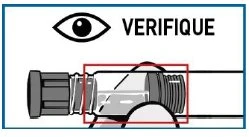
ENSURE that the content of the SOLVENT syringe flows normally as a liquid.
The solvent freezes below 19°C.
If frozen or partially frozen, allow it to thaw by holding it in your hands or leaving it at room temperature until it flows freely as a liquid.
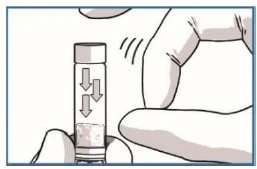
1.2 Dislodge powder from syringe
TAP the OKEDI syringe gently to dislodge any possible powder plug near the closure cap.
2. CONNECT THE SYRINGES
2.1 Remove closure caps while holding syringes vertically
Hold both syringes in a vertical position to avoid product loss.
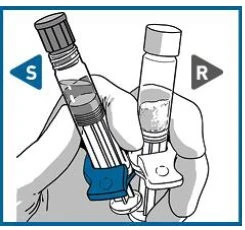
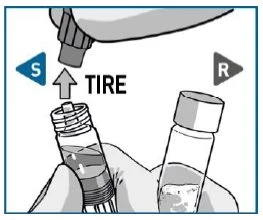
PULL the closure cap to remove it from the solvent syringe.
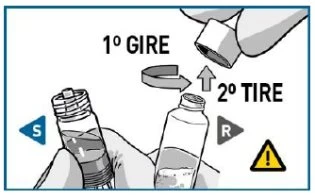
TWIST the closure cap and PULL it to remove it from the powder syringe.
2.2 Connect the syringes
Place the solvent syringe S with the colored gripping wings on top of the powder syringe R, or tilt slightly while connecting.
SCREW the syringes together until you feel slight resistance.
Ensure the powder syringe R remains in vertical position to avoid product loss.
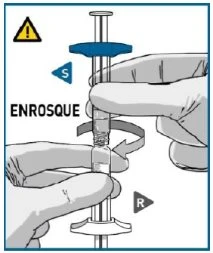
- MIX THE CONTENTS
STOP AND READ THIS SECTION BEFORE BEGINNING OR YOU MAY INCORRECTLY RECONSTITUTE THE MEDICINE.
• VIGOROUSLY PUSH the solvent content into the powder syringe.
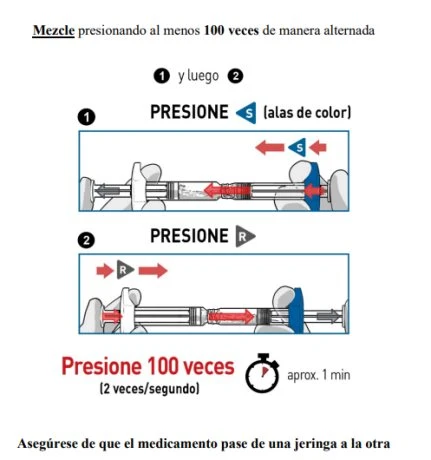
- DO NOT WAIT for the powder to wet; begin mixing RAPIDLY by pushing the plungers back and forth alternately approximately 100 times (twice per second, about 1 minute).
- ENSURE the medication passes from one syringe to the other to achieve proper mixing: the medication is viscous and you will need to apply force when pushing the plunger rods.
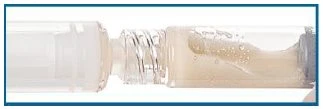
When properly mixed, the mixture will appear as a uniform suspension ranging in color from whitish to yellowish and with a thick consistency.
Once reconstituted, immediately prepare the injection syringe for administration to avoid loss of homogeneity.
- PREPARE THE INJECTION SYRINGE
4.1 Transfer the medication
Apply downward pressure on the plunger rod R and transfer all contents to syringe S with the colored gripping wings.
Ensure all contents have been transferred.
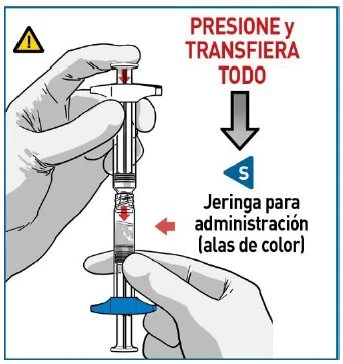
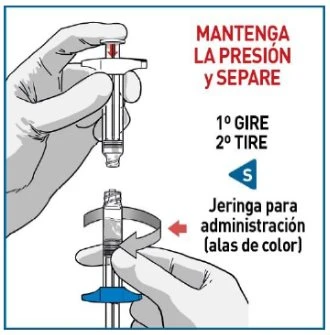
4.2 Separate the syringes
After complete transfer of medication, separate the syringes by unscrewing them.
OKEDI must be administered immediately to avoid loss of homogeneity.
4.3 Attach the sterile needle with safety shield
Choose the correct needle:
- Deltoid: 21G, 1 inch for deltoid muscle (green closure cap).
- Gluteal: 20G, 2 inch for gluteal muscle (yellow closure cap).
Attach by turning clockwise. Do not overtighten.
4.4 Remove excess air
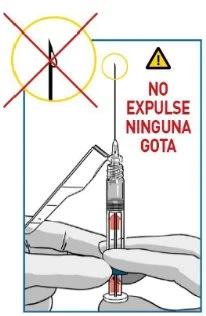
Remove the needle cap and expel excess air (only large bubbles) from the syringe barrel.
DO NOT expel any medication drops.
If medication appears at the needle tip, pull the plunger back slightly to prevent leakage.
5. ADMINISTER AND DISPOSE
5.1 Inject the medication
Insert the needle fully into the muscle. DO NOT ADMINISTER THE INJECTION BY ANY OTHER ROUTE.
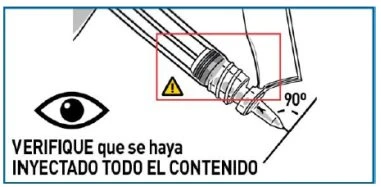
MEDICATION IS THICK — INJECT SLOWLY AND STEADILY.
ENSURE ALL MEDICATION IS INJECTED.
• Injection time is longer than usual due to the viscosity of the medication.
• Wait a few seconds before removing the needle.
• Avoid accidental injection into a blood vessel.
5.2 Dispose of the device
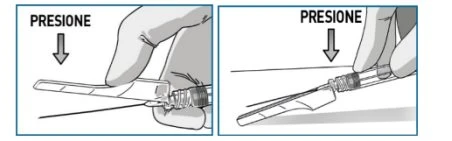
Cover the needle by pressing the safety shield with your finger or against a flat surface, and immediately discard it into a safe sharps container.