Ojosbel 0.30 mg/0.08 ml eye drops, solution
Spain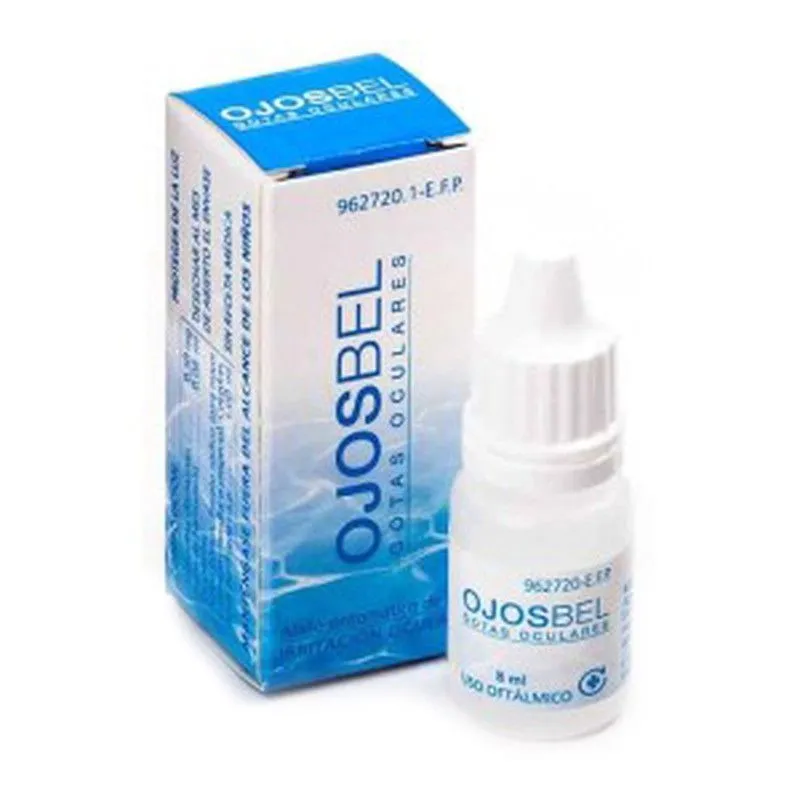
Table of Contents
Package leaflet: Information for the user
Introduction
PACKAGE LEAFLET FOR THE BOX CONTAINING 10 VIALS OF 0.5 ML |
Patient Information Leaflet
OJOSBEL EYE DROPS, 0.30 mg/0.08 ml Eye Drops Solution
Naphazoline Hydrochloride and Witch Hazel Water
Please read this leaflet carefully before using this medicine, as it contains important information for you.
This medicine is available without a prescription. However, to achieve the best results, it must be used correctly.
- Keep this leaflet, as you may need to read it again.
- If you need advice or further information, consult your pharmacist.
- If symptoms worsen or persist beyond 3 days, consult a doctor.
- If you consider any of the side effects you experience to be severe, or if you notice any side effects not listed in this leaflet, inform your doctor or pharmacist.
Leaflet Contents:
- What OJOSBEL is and what it is used for
- Before you use OJOSBEL
- How to use OJOSBEL
- Possible side effects
- How to store OJOSBEL
- Further information
1. What OJOSBEL is and what it is used for
OJOSBEL is an eye drop solution applied to the eyes and effective for their hygiene and care; it belongs to a group of medicines called sympathomimetics, which are used for their decongestant and antiseptic action.
OJOSBEL is indicated for the relief of symptoms of eye irritation, congestion, allergic conjunctivitis (inflammation of the eye due to allergy), and redness caused by external agents (air, sun, dust, smoke, acids, etc.).
2. BEFORE USING OJOSBEL
Do not use OJOSBEL
- If you are allergic (hypersensitive) to naphazoline hydrochloride, witch hazel water, or any of the other components of OJOSBEL.
- If you have glaucoma (increased pressure inside the eye).
- Do not use OJOSBEL in children under 2 years of age.
Take special care with OJOSBEL
- If you suspect you may have any type of injury or wound inside the eye.
- If you have an allergy or hypersensitivity to other ophthalmic sympathomimetic drugs.
- If you suffer from any of the following chronic conditions: angina pectoris, diabetes, arterial hypertension, hyperthyroidism, or coronary insufficiency.
Consult your doctor if any of the above-mentioned circumstances apply to you, or if they have ever occurred in the past.
- Do not apply the drops immediately after administering another specific eye medication, to avoid washing away the administered substance or interfering with its absorption.
- If there is no improvement after 3 days of treatment, or if symptoms worsen while using the medicine, consult your doctor.
- This medicine may mask symptoms in patients with ophthalmic infections.
Use of other medicines
Inform your doctor or pharmacist if you are using or have recently used any other medicines, including those obtained without a prescription.
It has not been specifically demonstrated that OJOSBEL interferes with other medicines; however, its simultaneous use with MAOI-type drugs, maprotiline, or tricyclic antidepressants is not recommended.
Pregnancy and Lactation
Consult your doctor or pharmacist before using any medicine.
The safety of this medicine during pregnancy and lactation has not been fully established; therefore, it is recommended to use it only if advised by your doctor.
IMPORTANT FOR WOMEN: If you are pregnant or think you might be pregnant, consult your doctor or pharmacist before using this medicine. Taking medication during pregnancy may be harmful to the embryo or fetus and should be monitored by a physician. |
Driving and operating machinery
OJOSBEL does not affect your ability to drive or operate machinery.
3. HOW TO USE OJOSBEL
Follow exactly the administration instructions for OJOSBEL as indicated by your doctor. Consult your doctor or pharmacist if you have any doubts.
The usual dose is:
Adults and children over 2 years of age: apply one or two drops into each eye, three or four times every 24 hours. These doses may be increased if discomfort requires it, observing the precautions and other warnings indicated in section 2 of this leaflet.
Instructions for use
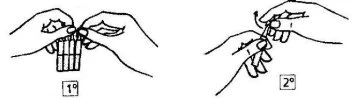
1st Separate the vial from the strip of vials.
2nd Twist the cap of the vial until it comes off, leaving the vial open for use.
To properly administer OJOSBEL, tilt your head backward and use your index finger to pull down the lower eyelid to form a small pouch. Instill one or two drops into this pouch, never into the tear duct (inner corner of the eye), taking care not to touch the eye with the tip of the dropper.
Keep the eye closed for a few moments to help the administered liquid spread evenly over the inner surface of the eye.
The application of OJOSBEL does not cause any discomfort; on the contrary, it immediately provides a sensation of freshness and well-being.
Use caution. Avoid touching the dropper tip with your hands or any object.
Each vial contains the amount needed for one application per eye (single-dose vial). If any solution remains in the vial after use, discard it for sterility reasons.
This medicine is a solution for ophthalmic use and must not be ingested.
Use in children
OJOSBEL must not be administered to children under 2 years of age.
If you use more OJOSBEL than you should
Excessive application of OJOSBEL may cause local disorders (irritation, burning sensation). In the event of massive ingestion, nervous system symptoms may occur: headache, tremors, dizziness.
If you have used more OJOSBEL than you should, consult your doctor, pharmacist, or call the Toxicology Information Service immediately at +34 91 562 04 20, stating the name of the medicine and the amount used. If you go to a healthcare professional, take the container and this leaflet with you.
If you forget to use OJOSBEL
Do not use a double dose to make up for missed doses.
If you have any questions about the use of this product, ask your doctor or pharmacist.
4. Possible adverse effects
Like all medicines, OJOSBEL may cause adverse effects, although not everyone will experience them.
The adverse effects that may occur during treatment with this medicine are the following:
- Uncommon: blurred vision, pupil dilation, stinging, burning sensation, hepatic-type reactions, and conjunctivitis.
- With prolonged treatment and/or high doses (used excessively): eye irritation.
- Very rare: headache, palpitations, nervousness, nausea, weakness, sweating.
If you consider any of the adverse effects you experience to be severe, or if you notice any adverse effects not listed in this leaflet, inform your doctor or pharmacist.
5. Storage of OJOSBEL
Keep out of the reach and sight of children.
Store in the original packaging to protect from light.
Expiry
Do not use OJOSBEL after the expiry date stated on the packaging after "EXP". The expiry date refers to the last day of the month indicated.
Medicines must not be disposed of via wastewater or household waste. Dispose of unused medicines and their containers at a SIGRE collection point. Ask your pharmacist how to properly dispose of medicines and containers you no longer need. This will help protect the environment.
6. ADDITIONAL INFORMATION
Composition of OJOSBEL
- The active substances are naphazoline hydrochloride and witch hazel water.
Each ml of eye drop solution contains: 0.3 mg of naphazoline hydrochloride and 0.08 ml of witch hazel water.
- The other components are: boric acid, sodium borate, cetalkonium chloride (cetavlon), and purified water.
Appearance of the medicinal product and content of the container
Box containing 10 single-dose vials with 0.5 ml of solution per vial. The vials are contained within 1 aluminum pouch.
Other pack sizes: 8 ml dropper bottle of solution.
Marketing Authorization Holder and Manufacturer
Marketing Authorization Holder:
DERMOFARM, S.A.U.
C/ Leonardo da Vinci 16-22
08191 Rubí (Barcelona) – Spain
Manufacturer:
C.O.C. FARMACEUTICI S.R.L.
Via Modena, 15
40019 Sant’Agata Bolognese – ITALY
This patient information leaflet was approved in July 2013
Detailed and up-to-date information on this medicine is available on the website of the Spanish Agency of Medicines and Medical Devices (AEMPS) http://www.aemps.es/
PATIENT INFORMATION LEAFLET IN THE BOX WITH 1 VIAL OF 8.0 ml |
Patient Information Leaflet
OJOSBEL EYE DROPS, 0.30 mg/0.08 ml Solution for Ophthalmic Use
Naphazoline Hydrochloride and Witch Hazel Water
Please read all of this leaflet carefully because it contains important information for you.
This medicine is available without a prescription. However, to achieve the best results, it must be used correctly.
- Keep this leaflet, as you may need to read it again.
- If you need advice or further information, consult your pharmacist.
- If symptoms worsen or persist beyond 3 days, consult your doctor.
- If you consider any of the side effects you experience to be severe, or if you notice any side effects not listed in this leaflet, inform your doctor or pharmacist.
Leaflet Contents:
- What OJOSBEL is and what it is used for
- Before using OJOSBEL
- How to use OJOSBEL
- Possible side effects
- How to store OJOSBEL
- Further information
1. WHAT OJOSBEL IS AND WHAT IT IS USED FOR
OJOSBEL is an eye drop solution applied to the eyes and effective for eye hygiene and care. It belongs to a group of medicines called sympathomimetics and is used for its decongestant and antiseptic properties.
OJOSBEL is indicated for the relief of eye irritation symptoms, congestion, allergic conjunctivitis (eye inflammation due to allergy), and redness caused by external agents (air, sun, dust, smoke, acids, etc.).
- BEFORE USING OJOSBEL
Do not use OJOSBEL
- If you are allergic (hypersensitive) to naphazoline hydrochloride, witch hazel water, or any of the other components of OJOSBEL.
- If you have glaucoma (increased pressure inside the eye).
- Do not use OJOSBEL in children under 2 years of age.
Take special care with OJOSBEL
- If you suspect you may have any type of injury or wound inside the eye.
- If you are allergic or hypersensitive to other ophthalmic sympathomimetic medicines.
- If you suffer from any of the following chronic conditions: angina pectoris, diabetes, arterial hypertension, hyperthyroidism, or coronary insufficiency.
Consult your doctor if any of the above conditions apply to you, or if you have ever experienced them.
- Do not instill the drops immediately after administering another specific eye medication, to avoid washing away the previously administered substance or interfering with its absorption.
- If there is no improvement after 3 days of treatment, or if symptoms worsen while using the medicine, consult your doctor.
- This medicine may mask symptoms in patients with ophthalmological infections.
Use of other medicines
Inform your doctor or pharmacist if you are using or have recently used any other medicines, including those obtained without a prescription.
There is no specific evidence that OJOSBEL interferes with other medicines. However, its simultaneous use with monoamine oxidase inhibitors (MAOIs), maprotiline, or tricyclic antidepressants is not recommended.
Pregnancy
Consult your doctor or pharmacist before using any medicine.
IMPORTANT FOR WOMEN: If you are pregnant or think you might be pregnant, consult your doctor or pharmacist before using this medicine. Taking medicines during pregnancy can be harmful to the embryo or fetus and should be monitored by a physician. |
Breastfeeding
Consult your doctor or pharmacist before using any medicine.
It is not known how the use of OJOSBEL affects breastfeeding. Therefore, it is recommended to discontinue breastfeeding or to avoid administering this medicine during that period, unless otherwise indicated by the physician.
Driving and use of machines
OJOSBEL does not affect your ability to drive or operate machinery.
- HOW TO USE OJOSBEL
Follow exactly the administration instructions for OJOSBEL as indicated by your doctor. Consult your doctor or pharmacist if you have any doubts.
The usual dose is:
Adults and children over 2 years of age: instill one or two drops into each eye, three or four times every 24 hours. This dose may be increased if discomfort requires it, observing the precautions and other warnings indicated in section 2 of this leaflet.
Instructions for use
To correctly administer OJOSBEL, tilt your head backwards and, using your index finger, gently pull down the lower eyelid to form a small pocket. Instill one or two drops into this pocket, never into the lacrimal area (inner part of the eye), taking care not to touch the eye with the tip of the dropper bottle.
Keep the eye closed for a few moments to allow the administered liquid to spread evenly over the inner surface of the eye.
The application of OJOSBEL does not cause any discomfort; on the contrary, it immediately provides a sensation of freshness and well-being.
Use caution. Avoid touching the tip of the dropper bottle with your hands or any object.
This medicine is a solution for ophthalmic use and must not be ingested.
Use in children
OJOSBEL must not be administered to children under 2 years of age.
If you use more OJOSBEL than you should
Excessive application of OJOSBEL may lead to local disorders (irritation, burning). In the event of massive ingestion, nervous system manifestations may occur: headache, tremors, dizziness.
If you have used more OJOSBEL than you should, consult your doctor, pharmacist, or contact the Toxicology Information Service immediately at telephone 91 562 04 20, indicating the medicine and amount used. If you visit a healthcare professional, take the container and this leaflet with you.
If you forget to use OJOSBEL
Do not use a double dose to make up for missed doses.
If you have any doubts about the use of this product, ask your doctor or pharmacist.
- POSSIBLE ADVERSE EFFECTS
Like all medicines, OJOSBEL can cause adverse effects, although not everyone experiences them.
The adverse effects that may occur during administration of this medicine are:
- Uncommon: blurred vision, pupil dilation, stinging, burning, hepatic-type reactions, and conjunctivitis.
- With prolonged treatment and/or high doses (overuse): eye irritation.
- Very rare: headache, palpitations, nervousness, nausea, weakness, sweating.
If you consider any of the adverse effects you experience to be severe, or if you notice any adverse effects not listed in this leaflet, inform your doctor or pharmacist.
- OJOSBEL STORAGE
Store in the original packaging to protect from light.
Keep out of the reach and sight of children.
Expiry date
Do not use OJOSBEL after the expiry date stated on the container after “EXP”. The expiry date refers to the last day of the month indicated.
After opening the 8 ml container, the product remains valid for 1 month.
Medicines must not be disposed of via wastewater or household waste. Return unused medicines and their containers to a SIGRE point. Ask your pharmacist how to dispose of medicines you no longer need. This will help protect the environment.
- ADDITIONAL INFORMATION
Composition of OJOSBEL
- The active substances are naphazoline hydrochloride and witch hazel water.
Each ml of eye drop solution contains: 0.3 mg of naphazoline hydrochloride and 0.08 ml of witch hazel water.
- The other components are: boric acid, sodium borate, cetavlon, and purified water.
Appearance of the product and contents of the container
Dropper bottle containing 8 ml of solution.
Other pack sizes: box containing 10 single-dose units with 0.5 ml of solution per unit.
Marketing Authorization Holder and Manufacturer
Marketing Authorization Holder:
DERMOFARM, S.A.U.
C/ Leonardo da Vinci 16-22
08191 Rubí (Barcelona) – Spain
Manufacturer:
C.O.C. FARMACEUTICI S.R.L.
Via Modena, 15
40019 Sant’Agata Bolognese – ITALY
This leaflet was approved in July 2013
Detailed and up-to-date information on this medicine is available on the website of the Spanish Agency of Medicines and Medical Devices (AEMPS) http://www.aemps.es/