Ogivri 420 mg powder for concentrate for solution for infusion
Spain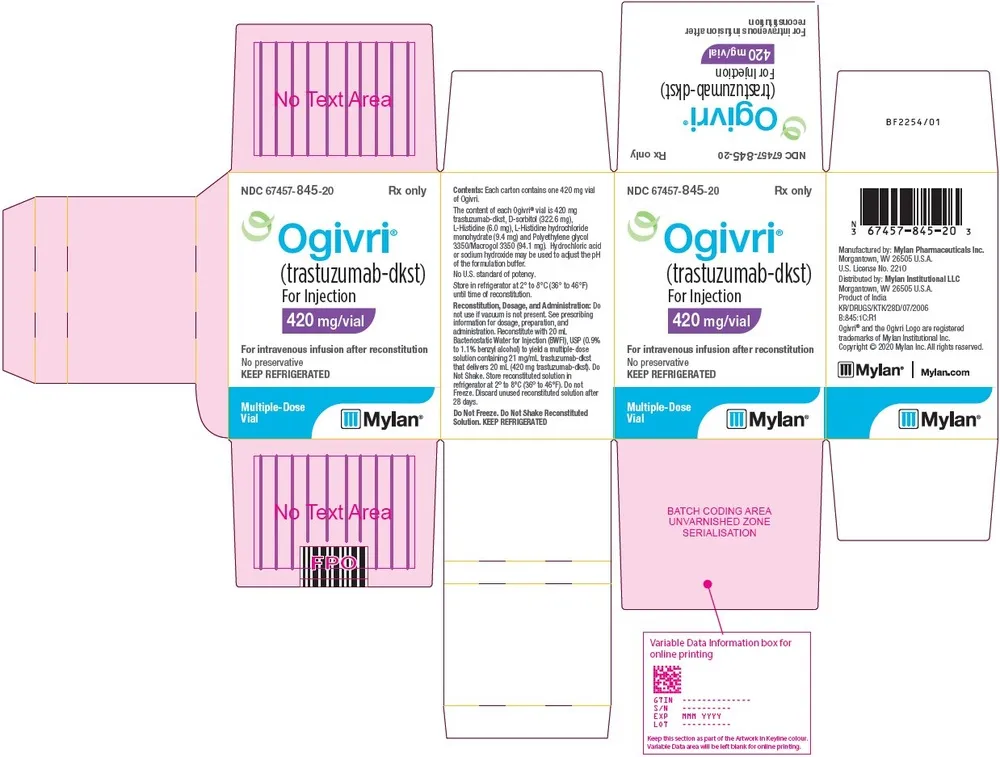
Table of Contents
Package leaflet: Information for the user
Introduction
Package leaflet: Information for the user
Ogivri 150 mg powder for concentrate for solution for infusion
Ogivri 420 mg powder for concentrate for solution for infusion
trastuzumab
Read the entire leaflet carefully before you start using this medicine, because it contains important information for you.
- Keep this leaflet, as you may need to read it again.
- If you have any questions, ask your doctor, pharmacist or nurse.
- If you experience any side effects, consult your doctor, pharmacist or nurse, even if they are possible side effects not listed in this leaflet. See section 4.
Contents of the leaflet
- What Ogivri is and what it is used for
- What you need to know before using Ogivri
- How to use Ogivri
- Possible side effects
- How to store Ogivri
- Contents of the pack and other information
1. What Ogivri is and what it is used for
Ogivri contains the active substance trastuzumab, which is a monoclonal antibody. Monoclonal antibodies specifically recognize proteins or antigens. Trastuzumab is designed to bind selectively to an antigen called human epidermal growth factor receptor 2 (HER2). HER2 is found in large amounts on the surface of certain cancer cells and stimulates the growth of these cells. When Ogivri binds to HER2, the growth of these cells is slowed down, leading to their death.
Your doctor may prescribe Ogivri for the treatment of breast or gastric cancer when:
-
You have early breast cancer with high levels of a protein called HER2.
-
You have metastatic breast cancer (breast cancer in which the original tumor has spread) with high levels of HER2. Ogivri may be prescribed in combination with the chemotherapy medicines paclitaxel or docetaxel as first treatment for metastatic breast cancer, or it may be prescribed alone if other treatments have not been successful. It is also used in combination with other medicines called aromatase inhibitors in patients with high levels of HER2 and hormone receptor-positive metastatic breast cancer (cancer that is sensitive to female sex hormones).
-
You have metastatic gastric cancer with high levels of HER2, and it is used in combination with other cancer medicines such as capecitabine or 5-fluorouracil and cisplatin.
2. What you need to know before using Ogivri
Do not use Ogivri:
- If you are allergic to trastuzumab, murine (mouse) proteins, or any of the other ingredients of this medicine (listed in section 6).
- If you have severe breathing problems at rest due to your tumour, or if you require oxygen treatment.
Warnings and precautions
Your doctor will closely monitor your treatment.
Heart checks
Treatment with Ogivri alone or in combination with a taxane may affect the heart, especially if you have ever received an anthracycline (taxanes and anthracyclines are two types of medicines used to treat cancer).
The effects can range from moderate to severe and may be fatal. Therefore, your heart function must be checked before, during (every three months), and after (up to two to five years) treatment with Ogivri. If you develop any signs of heart failure (inadequate pumping of blood by the heart), your heart function will be monitored more frequently (every six to eight weeks), you may receive treatment for heart failure, or you may need to stop treatment with Ogivri.
Talk to your doctor, pharmacist, or nurse before receiving Ogivri if:
- You have had heart failure, coronary artery disease, heart valve disease (heart murmur), high blood pressure, have taken any medicine for high blood pressure, or are currently taking any medicine for high blood pressure.
- You have ever received or are currently receiving a medicine called doxorubicin or epirubicin (medicines used to treat cancer). These medicines (or any other anthracycline) can damage heart muscle and increase the risk of heart problems when treated with Ogivri.
- You feel short of breath, especially if you are currently receiving a taxane. Ogivri can cause difficulty breathing, particularly when first administered. This could be more serious if you already have shortness of breath. In very rare cases, patients with severe breathing difficulties before treatment have died after receiving Ogivri.
- You have previously received any other cancer treatment.
If you receive Ogivri together with any other cancer medicine, such as paclitaxel, docetaxel, an aromatase inhibitor, capecitabine, 5-fluorouracil, or cisplatin, you should also read the package leaflets for these medicines.
Children and adolescents
Ogivri is not recommended for use in individuals under 18 years of age.
Other medicines and Ogivri
Tell your doctor, pharmacist, or nurse if you are taking, have recently taken, or might need to take any other medicines.
It may take up to 7 months for Ogivri to be completely eliminated from your body. Therefore, if you plan to take any new medicine within 7 months after stopping Ogivri treatment, you must inform your doctor, pharmacist, or nurse that you have been treated with Ogivri.
Pregnancy and breastfeeding
If you are pregnant or breastfeeding, think you may be pregnant, or plan to become pregnant, consult your doctor, pharmacist, or nurse before using this medicine.
Pregnancy
- You must use an effective method of contraception during treatment with Ogivri and for at least 7 months after completing treatment.
- Your doctor will explain the risks and benefits of taking Ogivri during pregnancy. In rare cases, a reduced amount of fluid surrounding the developing baby in the womb (amniotic fluid) has been observed in pregnant women who received trastuzumab. This may harm the unborn baby and has been associated with underdeveloped lungs, which may result in fetal death.
Breastfeeding
You must not breastfeed during treatment with Ogivri and for 7 months after the last dose of Ogivri, as this medicine may pass into your breast milk and harm your baby. Consult your doctor or pharmacist before taking any medicine.
Driving and using machines
Ogivri may affect your ability to drive or operate machinery. If you experience symptoms during treatment such as dizziness, drowsiness, chills, or fever, you should not drive or use machinery until these symptoms have resolved.
Ogivri contains sorbitol (E-420) and sodium
Ogivri 150 mg powder for concentrate for solution for infusion
This medicine contains 115.2 mg of sorbitol per vial.
Ogivri 420 mg powder for concentrate for solution for infusion
This medicine contains 322.6 mg of sorbitol per vial.
Sorbitol is a source of fructose. If you have hereditary fructose intolerance (HFI), a rare genetic disorder, you must not receive this medicine. Patients with HFI cannot break down fructose, which may lead to serious adverse effects. Consult your doctor before receiving this medicine if you have HFI or cannot consume foods or drinks containing sugar because they cause dizziness, vomiting, or unpleasant effects such as bloating, stomach cramps, or diarrhoea.
Ogivri contains less than 23 mg of sodium (1 mmol) per vial; this is essentially “sodium-free”.
3. How to use Ogivri
Before starting treatment with Ogivri, your doctor will determine the amount of HER2 in your tumor. Only patients with high levels of HER2 will be treated with Ogivri. Ogivri must be administered only by a doctor or nurse. Your doctor will prescribe a dose and treatment regimen appropriate for you. The dose of Ogivri depends on your body weight.
The first dose of your treatment is administered over approximately 90 minutes, and you will be monitored by a healthcare professional during administration for any adverse reactions. If the initial dose is well tolerated, subsequent doses may be given over 30 minutes (see section 2 “Warnings and precautions”). The number of infusions you receive will depend on your response to treatment. Your doctor will inform you about this.
Ogivri is administered as an intravenous infusion (IV infusion, drip) into a vein. This intravenous formulation is not for subcutaneous administration and must only be given as an intravenous infusion.
For early breast cancer, metastatic breast cancer, and metastatic gastric cancer, Ogivri is administered every 3 weeks. Ogivri may also be administered once weekly for metastatic breast cancer.
To prevent medication errors, it is important to check the vial labels to ensure that the medicine being prepared and administered is Ogivri (trastuzumab) and not another product containing trastuzumab (e.g., trastuzumab emtansine or trastuzumab deruxtecan).
If you interrupt treatment with Ogivri
Do not interrupt treatment with this medicine without first talking to your doctor. All doses should be taken at the correct time—either weekly or every three weeks (depending on your dosing schedule). This helps ensure the medicine works properly.
It may take up to 7 months for Ogivri to be completely eliminated from the body. Therefore, your doctor may decide to continue monitoring your heart function even after your treatment has ended.
If you have any further questions about using this medicine, ask your doctor, pharmacist, or nurse.
4. Possible adverse effects
Like all medicines, this medicine can cause adverse effects, although not everyone will experience them.
Some of these adverse effects may be serious and require hospitalization.
During an Ogivri infusion, chills, fever, and other flu-like symptoms may occur. This is very common (may affect more than 1 in 10 people). Other infusion-related symptoms include: feeling unwell (nausea), vomiting, pain, increased muscle tension and agitation, headache, dizziness, breathing difficulties, decreased or increased blood pressure, heart rhythm disturbances (palpitations, arrhythmias, or irregular heartbeat), swelling of the face and lips, rash, and feeling tired. Some of these symptoms may be severe, and in some patients, they have been fatal (see section 2 “Warnings and precautions”).
These effects occur mainly during the first intravenous infusion (“drip” into a vein) and within the first hours after the start of the infusion. They are usually transient. A healthcare professional will monitor you during the infusion and for at least six hours after the start of the first infusion, and for two hours after the start of subsequent infusions. If you have a reaction, the infusion may be administered more slowly or stopped, and you may be given treatment to counteract the adverse effects. The infusion may continue once your symptoms have improved.
Occasionally, symptoms may begin more than 6 hours after the start of the infusion. If this happens to you, contact your doctor immediately. Sometimes, symptoms may improve and then worsen again later.
Serious adverse effects
Other adverse effects may occur at any time during treatment with Ogivri, not only during the infusion.
Tell your doctor or nurse if you experience any of the following adverse effects:
-
Heart problems may sometimes occur during treatment and, occasionally, after treatment has been stopped, and these may be serious. These include weakening of the heart muscle, which may possibly lead to heart failure, inflammation of the lining surrounding the heart, and disturbances in heart rhythm. These may cause symptoms such as shortness of breath (including shortness of breath at night), cough, fluid retention (swelling) in the arms or legs, palpitations (arrhythmias or irregular heartbeat) (see section 2 “Cardiac monitoring”). Your doctor will periodically monitor your heart function during and after treatment, but you should inform your doctor immediately if you notice any of the symptoms described above.
-
Tumor lysis syndrome (a group of metabolic complications that occur after cancer treatment, characterized by high levels of potassium and phosphate in the blood and low levels of calcium). Symptoms may include kidney problems (weakness, shortness of breath, fatigue, and confusion), heart problems (heart palpitations or faster or slower heart rate), seizures, vomiting or diarrhea, and tingling in the mouth, hands, or feet.
If you experience any of these symptoms after your treatment with Ogivri has ended, you should consult your doctor and inform them that you have previously been treated with Ogivri.
Very common adverse effects (may affect more than 1 in 10 people):
- infections
- diarrhea
- constipation
- heartburn (dyspepsia)
- fatigue
- weakness
- skin rash
- chest pain
- abdominal pain (stomach)
- joint pain
- low red and white blood cell counts (which help fight infection), sometimes with fever
- muscle pain
- conjunctivitis (itchy, watery eyes and eyelids, with crusting)
- excessive tearing
- nosebleeds
- nasal discharge
- hair loss
- tremor
- hot flushes
- dizziness
- nail changes
- weight loss
- loss of appetite
- difficulty sleeping (insomnia)
- altered taste
- low platelet count
- bruising
- numbness or tingling in fingers and toes, which occasionally may extend to the rest of the limb
- redness, swelling, or ulcers in the mouth and/or throat
- pain, swelling, redness, or tingling in the hands and/or feet
- difficulty breathing
- headache
- cough
- vomiting
- nausea (feeling unwell)
Common adverse effects (may affect up to 1 in 10 people):
- allergic reactions
- dry mouth and dry skin
- throat infections
- dry eyes
- bladder and skin infections
- sweating
- feeling of weakness and discomfort
- breast swelling
- anxiety
- liver inflammation
- depression
- kidney disorders
- increased muscle tone or tension (hypertonia)
- asthma
- lung infection
- pain in arms and/or legs
- lung disorders
- itchy skin rash
- back pain
- drowsiness (somnolence)
- neck pain
- haemorrhoids (swelling of blood vessels around the anus)
- bone pain
- itching
- acne
- leg cramps
Uncommon adverse effects (may affect up to 1 in 100 people):
- deafness
- blistering skin rash
- wheezing
- lung inflammation/scarring
Rare adverse effects (may affect up to 1 in 1,000 people):
- jaundice (yellowing of the skin and whites of the eyes)
- anaphylactic reactions (sudden, severe allergic reactions with symptoms such as rash, itching, difficulty breathing, or dizziness or fainting)
Adverse effects with unknown frequency (frequency cannot be estimated from available data):
- abnormal blood clotting or failure to clot
- high potassium levels
- inflammation or bleeding at the back of the eyes
- shock (dangerously low blood pressure causing symptoms such as rapid, shallow breathing, cold, sweaty skin, fast and weak pulse, dizziness, weakness, and fainting)
- inflammation of the lining of the heart
- difficulty breathing
- respiratory failure
- acute accumulation of fluid in the lungs
- acute narrowing of the airways
- abnormally low levels of oxygen in the blood
- difficulty breathing when lying down
- liver damage
- swelling of the face, lips, and throat
- kidney failure
- abnormally low levels of fluid surrounding the fetus in the womb
- failure of the baby’s lungs to develop in the womb
- abnormal development of the baby’s kidneys in the womb
Some of the adverse effects you may experience could be due to your breast cancer. If you are receiving Ogivri in combination with chemotherapy, some of these effects may also be due to the chemotherapy itself.
Reporting of adverse effects
If you experience any adverse effect, talk to your doctor, pharmacist, or nurse, even if it is a possible adverse effect not listed in this leaflet. You can also report them directly via the Spanish Pharmacovigilance System for Human Medicines: www.notificaRAM.es. By reporting adverse effects, you can help provide more information on the safety of this medicine.
5. Storage of Ogivri
Keep this medicine out of the sight and reach of children.
Do not use this medicine after the expiry date stated on the carton and on the label of the vial after EXP or CAD. The expiry date refers to the last day of the month indicated.
Store in a refrigerator (between 2 °C and 8 °C).
Infusion solutions should be used immediately after dilution. Do not use Ogivri if you notice any foreign particles or discoloration before administration.
Medicines must not be disposed of via wastewater or household waste. Ask your pharmacist how to dispose of medicines and containers you no longer need. This will help protect the environment.
6. Contents of the pack and other information
Composition of Ogivri
-
The active substance is trastuzumab. Each vial contains:
- 150 mg of trastuzumab dissolved in 7.2 ml of water for injections or
- 420 mg of trastuzumab dissolved in 20 ml of water for injections.
-
The resulting solution contains approximately 21 mg/ml of trastuzumab.
-
The other components are L-histidine hydrochloride, L-histidine, sorbitol (E-420)
(see section 2 “Ogivri contains sorbitol (E-420) and sodium”), macrogol 3350, hydrochloric acid and sodium hydroxide (for pH adjustment).
Appearance of the product and contents of the pack
Ogivri is a powder for concentrate for solution for intravenous infusion, supplied in a glass vial with a rubber stopper containing 150 mg or 420 mg of trastuzumab. It is a white to pale yellow pellet-shaped lyophilized powder. Each pack contains 1 vial of powder.
Marketing Authorization Holder
Biosimilar Collaborations Ireland Limited
Unit 35/36
Grange Parade,
Baldoyle Industrial Estate,
Dublin 13
DUBLIN
Ireland
D13 R20R
Manufacturer
Biosimilar Collaborations Ireland Limited
Block B, The Crescent Building, Santry Demesne
Dublin
D09 C6X8
Ireland
Further information on this medicinal product is available upon request by contacting the local representative of the Marketing Authorization Holder:
Belgium/Belgium/Belgium Biocon Biologics Belgium BV Tel/Tel/Tel: 0080008250910 | Lithuania
| ||
???????? Biosimilar Collaborations Ireland Limited ???: 0080008250910 | Luxembourg/Luxemburg Biocon Biologics France S.A.S Tél/Tel: 0080008250910 | ||
Czech Republic
| Hungary Biosimilar Collaborations Ireland Limited Tel.: 0080008250910 | ||
Denmark
| Malta Biosimilar Collaborations Ireland Limited Tel.: 0080008250910 | ||
Germany Biocon Biologics Germany GmbH Tel: 0080008250910 | Netherlands Biocon Biologics France S.A.S Tel: 0080008250910 | ||
Estonia Biosimilar Collaborations Ireland Limited Tel: 0080008250910 | Norway Biocon Biologics Finland OY Tlf: +47 800 62 671 | ||
Greece Biocon Biologics Greece ΜΟΝΟΠΡΟΣΩΠΗ Ι.Κ.Ε Tel.: 0080008250910 | Austria Biocon Biologics Germany GmbH Tel: 0080008250910 | ||
Spain Biocon Biologics Spain S.L. Tel: 0080008250910 | Poland Biosimilar Collaborations Ireland Limited Tel: 0080008250910 | ||
France Biocon Biologics France S.A.S Tel: 0080008250910 | Portugal Biocon Biologics Spain S.L. Tel: 0080008250910 | ||
Croatia Biocon Biologics Germany GmbH Tel: 0080008250910 | Romania Biosimilar Collaborations Ireland Limited Tel: 0080008250910 | ||
Ireland Biosimilar Collaborations Ireland Limited Tel: 1800 777 794 | Slovenia Biosimilar Collaborations Ireland Limited Tel: 0080008250910 | ||
Iceland
| Slovak Republic Biocon Biologics Germany GmbH Tel: 0080008250910 | ||
Italy Biocon Biologics Spain S.L. Tel: 0080008250910 | Finland Biocon Biologics Finland OY Tel: 99980008250910 | ||
Cyprus
| Sweden Biocon Biologics Finland OY Tel: 0080008250910 | ||
Latvia
|
Date of most recent review of this leaflet: 11/2024
Detailed information on this medicine is available on the European Medicines Agency website: http://www.ema.europa.eu and on the website of the Spanish Agency of Medicines and Health Products (AEMPS) (http://www.aemps.gob.es/).
This information is intended for healthcare professionals only
To avoid medication errors, it is important to check the vial labels to ensure that the medicine being prepared and administered is Ogivri (trastuzumab) and not another product containing trastuzumab (e.g., trastuzumab emtansine or trastuzumab deruxtecan).
Always store this medicine in its original closed packaging at a temperature of 2 °C - 8 °C in a refrigerator. The Ogivri vial reconstituted with water for injections (not supplied in the pack) is stable for 10 days at 2 °C - 8 °C after reconstitution and must not be frozen.
Ogivri must be handled carefully during reconstitution. Excessive foaming during reconstitution or agitation of reconstituted Ogivri may cause problems in accurately withdrawing the intended amount of Ogivri from the vial.
Ogivri 150 mg powder for concentrate for solution for infusion
Appropriate aseptic technique must be used. Each 150 mg vial of Ogivri is reconstituted with 7.2 ml of sterile water for injections (not supplied). The use of other solvents for reconstitution should be avoided. This results in a 7.4 ml solution for single dose containing approximately 21 mg/ml of trastuzumab. A 4 % overfill allows the labeled 150 mg dose to be withdrawn from each vial.
Ogivri 420 mg powder for concentrate for solution for infusion
Appropriate aseptic technique must be used. Each 420 mg vial of Ogivri is reconstituted with 20 ml of sterile water for injections (not supplied). The use of other solvents for reconstitution should be avoided. This results in a 21 ml solution for single dose containing approximately 21 mg/ml of trastuzumab. A 4.8 % overfill allows the labeled 420 mg dose to be withdrawn from each vial.

Instructions for reconstitution
- Using a sterile syringe, slowly inject the appropriate volume (as indicated above) of water for injection into the vial containing the lyophilized Ogivri, directing the stream onto the lyophilized powder.
- Gently swirl the vial to assist reconstitution. DO NOT SHAKE!
The formation of slight foam after reconstitution is normal. Allow the vial to stand for approximately 5 minutes. Reconstituted Ogivri is a clear, colourless to pale yellow solution and should be essentially free from visible particles.
The volume of solution required will be determined:
- Based on an initial dose of 4 mg trastuzumab/kg body weight or subsequent weekly doses of 2 mg trastuzumab/kg body weight:

- The volume of solution required will be determined based on an initial dose of 8 mg trastuzumab/kg body weight or every 3-week doses of 6 mg trastuzumab/kg body weight:

The appropriate amount of solution should be withdrawn from the vial using a sterile needle and syringe and added to a polyvinyl chloride, polyethylene or polypropylene infusion bag containing 250 ml of 9 mg/ml (0.9 %) sodium chloride injection solution. Do not use with solutions containing glucose. The bag should be gently inverted to mix the solution and avoid foaming. Parenteral solutions should be inspected visually for particulate matter and discoloration prior to administration. Once the infusion is prepared, it should be administered immediately. If aseptically diluted, it may be stored for up to 90 days at 2 °C - 8 °C and for 24 hours at temperatures not exceeding 30 °C.