Oftalmolosa Cusi chloramphenicol 10 mg/g ophthalmic ointment
Spain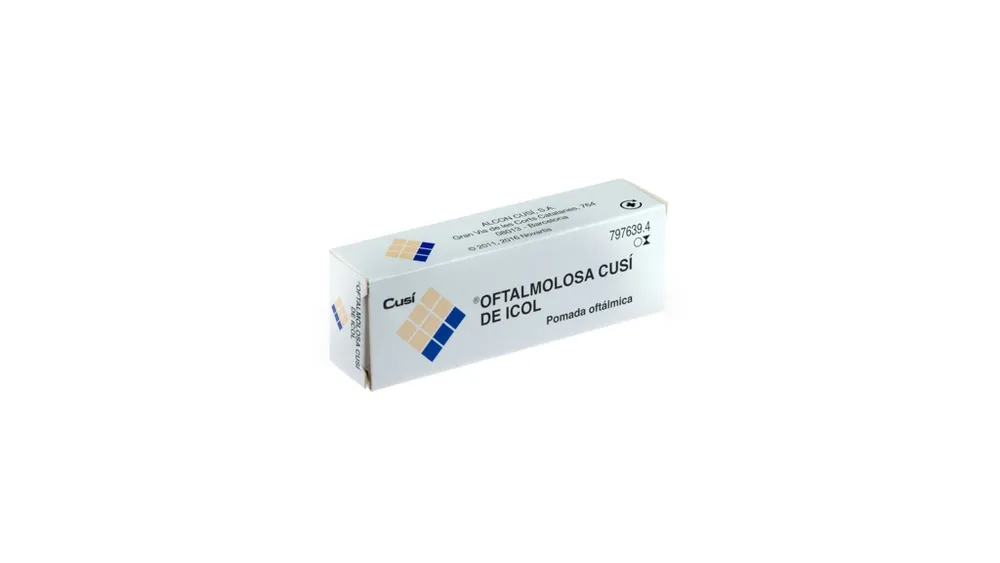
Table of Contents
- Package leaflet: Information for the user
- Introduction
- 1. What OFTALMOLOSA CUSÍ CLORAMFENICOL is and what it is used for
- 2. What you need to know before using OFTALMOLOSA CUSÍ CLORAMFENICOL
- 3. How to use OFTALMOLOSA CUSÍ CHLORAMPHENICOL
- 4. Possible adverse effects
- 5. Storage of OFTALMOLOSA CUSÍ CHLORAMPHENICOL
- 6. Contents of the pack and other information
Package leaflet: Information for the user
Introduction
Package leaflet: Information for the user
OFTALMOLOSA CUSÍ CHLORAMPHENICOL 10 mg/g eye ointment
Read the entire leaflet carefully before you start using this medicine, because it contains important information for you.
- Keep this leaflet, as you may need to read it again.
- If you have any questions, ask your doctor or pharmacist.
- This medicine has been prescribed for you only, and you should not give it to others, even if they have the same symptoms as you, because it could harm them.
- If you experience any adverse effects, consult your doctor or pharmacist, even if they are adverse effects not listed in this leaflet. See section 4.
Leaflet contents:
- What OFTALMOLOSA CUSÍ CHLORAMPHENICOL is and what it is used for
- What you need to know before using OFTALMOLOSA CUSÍ CHLORAMPHENICOL
- How to use OFTALMOLOSA CUSÍ CHLORAMPHENICOL
- Possible side effects
- How to store OFTALMOLOSA CUSÍ CHLORAMPHENICOL
- Contents of the pack and other information
1. What OFTALMOLOSA CUSÍ CLORAMFENICOL is and what it is used for
OFTALMOLOSA CUSÍ CLORAMFENICOL is an ophthalmic ointment containing an active substance (chloramphenicol) which is a broad-spectrum antibiotic with bacteriostatic action, working by inhibiting bacterial protein synthesis.
Antibiotics are used to treat bacterial infections and are not effective against viral infections. It is important that you follow your doctor's instructions regarding dosage, administration intervals, and treatment duration. Do not store or reuse this medication. If you have any antibiotic left after completing the treatment, return it to the pharmacy for proper disposal. Medicines must not be disposed of via wastewater or household waste. |
This medicine is indicated in adults and children for the treatment of anterior segment infections of the eye (conjunctiva and/or cornea) caused by microorganisms sensitive to chloramphenicol. In cases of severe infections, ocular administration should be supplemented with systemic administration of an appropriate antibiotic.
2. What you need to know before using OFTALMOLOSA CUSÍ CLORAMFENICOL
Do not use OFTALMOLOSA CUSÍ CLORAMFENICOL
- If you are allergic to chloramphenicol or to any of the other ingredients of this medicine (listed in section 6).
- If you have ever had problems with your bone marrow or blood abnormalities.
- If you have minor infections, for preventive treatments, or if other antibiotics can be used. This medicine is reserved for the treatment of more serious infections.
Warnings and precautions
Talk to your doctor or pharmacist before starting to use OFTALMOLOSA CUSÍ CLORAMFENICOL.
- Use this medicine only in the eye(s).
- Systemic use of chloramphenicol may occasionally cause blood toxicity, but this rarely occurs with topical administration (see section 4. Possible side effects).
- Do not administer this medicine to premature infants or full-term newborns with immature metabolism without consulting a doctor, as they may be more susceptible to serious adverse reactions.
- If you have liver or kidney problems, consult your doctor before using this medicine, as you may be more prone to experience serious adverse reactions (see section 4. Possible side effects).
- Use this medicine for the length of time prescribed by your doctor.
- If you develop allergic reactions such as skin rash, hives, fever, or swelling of the throat, tongue, or face, stop treatment immediately and consult your doctor.
- If your symptoms worsen or return, consult your doctor.
If you use this medicine, especially for a long period of time, you may become more susceptible to other infections.
Other medicines and OFTALMOLOSA CUSÍ CLORAMFENICOL
Tell your doctor or pharmacist if you are taking, have recently taken, or might need to take any other medicines.
Do not use this medicine with other medicines that may cause bone marrow disorders.
Do not use this medicine together with other ophthalmic medicines containing another antibiotic or a sulfonamide. Do not use this medicine with bactericidal antibiotics due to the possibility of incompatibility.
Pregnancy, breastfeeding, and fertility
If you are pregnant or breastfeeding, think you may be pregnant, or are planning to become pregnant, consult your doctor or pharmacist before using this medicine.
You must not use this medicine during pregnancy or breastfeeding.
Driving and using machines
You may notice blurred vision for a short time immediately after applying the ointment. Do not drive or operate machinery until these effects have disappeared.
3. How to use OFTALMOLOSA CUSÍ CHLORAMPHENICOL
Follow exactly the administration instructions for this medicine as indicated by your doctor. Consult your doctor or pharmacist if you have any doubts.
The recommended dose is:
Adults, including elderly patients
Generally, approximately 1 cm of ointment should be applied to the affected eye(s) every 3 hours, or more frequently during the first 48 hours, with the interval between applications possibly increased thereafter, always according to medical judgment. Treatment should continue for at least 48 hours after symptoms have disappeared.
Children
In newborns, a dosage adjustment may be necessary due to reduced systemic elimination caused by immature metabolism and the risk of dose-related adverse effects. The maximum duration of treatment is 10 - 14 days.
Usage recommendations:
|
|
|
|
If you are using other ophthalmic medications, wait at least 5 minutes between the administration of this ointment and the other ophthalmic medications. Ophthalmic ointments should be administered last.
If you use more OFTALMOLOSA CUSÍ CLORAMFENICOL than you should, remove the excess by washing your eyes with lukewarm water. Do not apply more ointment until your next scheduled dose.
In case of overdose or accidental ingestion, contact your doctor or pharmacist immediately or call the Toxicology Information Service at 91 562 04 20, indicating the medication and the amount used.
If you forget to use OFTALMOLOSA CUSÍ CLORAMFENICOL, apply a single dose as soon as you remember, and then continue with your next scheduled dose. However, if it is almost time for the next dose, do not apply the missed dose and continue with your next dose as part of your regular schedule. Do not apply a double dose to make up for missed doses.
If you stop treatment with OFTALMOLOSA CUSÍ CLORAMFENICOL
It is important that you complete the full course of treatment prescribed by your doctor, even if you start to feel better after a few days. If you stop using this medicine too early, the infection may not be completely cured, and symptoms may return or even worsen. Additionally, antibiotic resistance (loss of effectiveness) could develop.
If you have any further questions about the use of this product, ask your doctor or pharmacist.
4. Possible adverse effects
Like all medicines, this medicine can cause adverse effects, although not everyone experiences them.
The following adverse reactions of unknown frequency (cannot be estimated from the available data) have been observed:
- Eye effects: swelling of the eye and eyelid.
- General adverse effects: allergy.
Chloramphenicol may cause a reduction in blood cells in the bone marrow. Although most cases of blood disorders associated with chloramphenicol occurred after oral administration, defective development has also occurred with ophthalmic use (see section 2. Warnings and precautions).
Reporting of adverse effects
If you experience any type of adverse effect, consult your doctor or pharmacist, even if it is a possible adverse effect not listed in this leaflet. You may also report them directly through the national reporting system: https://www.notificaRAM.es. By reporting adverse effects, you can help provide more information on the safety of this medicine.
5. Storage of OFTALMOLOSA CUSÍ CHLORAMPHENICOL
Keep this medicine out of the sight and reach of children.
Do not use this medicine after the expiry date stated on the tube and on the carton after "EXP.". The expiry date refers to the last day of the month indicated.
Do not store above 25°C.
To prevent infection, discard the tube 4 weeks after first opening.
Record the date of first opening of the tube in the box provided for this purpose on the carton.
Medicines should not be disposed of via wastewater or household waste. Dispose of containers and unused medicines at the SIGRE collection point at your pharmacy. If you have any doubts, ask your pharmacist how to dispose of containers and unused medicines. This will help protect the environment.
6. Contents of the pack and other information
Composition of OFTALMOLOSA CUSÍ CLORAMFENICOL
- The active substance is chloramphenicol. Each gram of ointment contains 10 mg of chloramphenicol.
- The other components are cholesterol, liquid paraffin, and white soft paraffin.
Appearance of the product and contents of the container
OFTALMOLOSA CUSÍ CLORAMFENICOL is a whiteish ointment supplied in an aluminum tube containing 3 g, with a polyethylene cap.
Marketing Authorization Holder and Manufacturer
Marketing Authorization Holder
OmniVision GmbH
Lindberghstrasse 9
82178 Puchheim
Germany
Manufacturer
Siegfried El Masnou, S.A.
C/ Camil Fabra, 58
08320 El Masnou – Barcelona, Spain
Local Representative
OmniVision Farma España S.L.
C/ Josep Irla i Bosch, 1-3
Floor: 6, Office: 2
08034 Barcelona,
Spain
Date of the most recent revision of this leaflet: November 2016
Detailed and up-to-date information on this medicinal product is available on the website of the Spanish Agency of Medicines and Health Products (AEMPS) http://www.aemps.gob.es/