Oestraclin 0.6 mg/g gel
Spain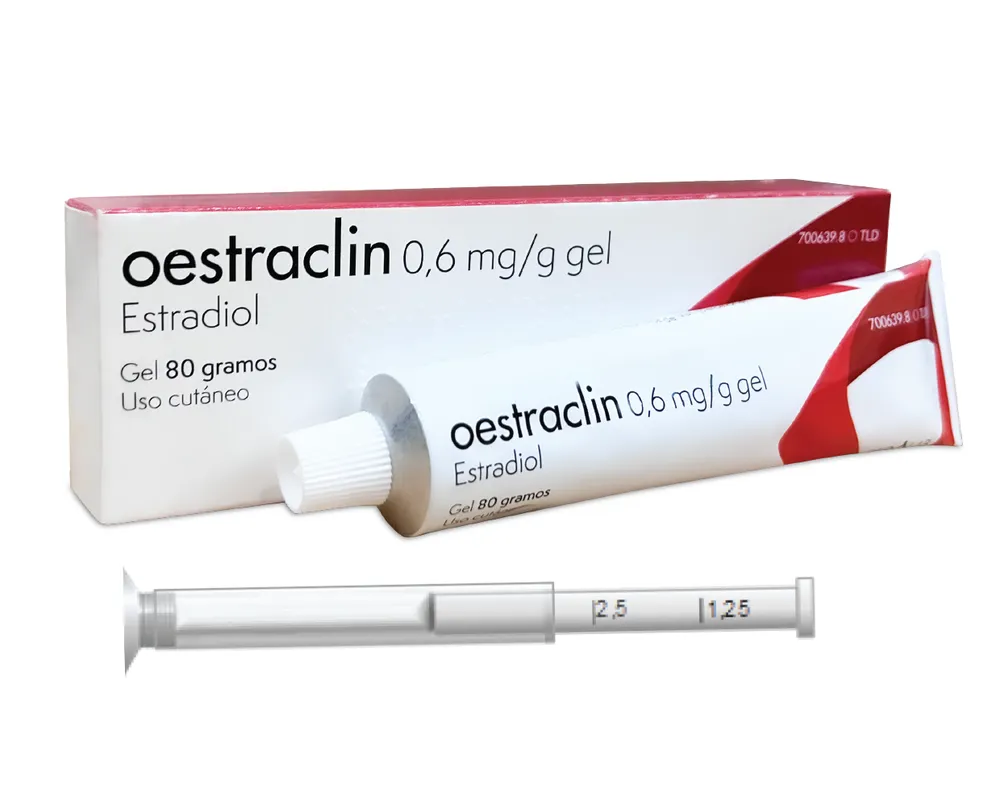
Table of Contents
Package leaflet: Information for the user
Introduction
Package leaflet: information for the user
oestraclin 0.6 mg/g gel
Estradiol
Read all of this leaflet carefully before you start using this medicine, because it contains important information for you.
|
Package leaflet:
- What Oestraclin is and what it is used for
- What you need to know before using Oestraclin
- How to use Oestraclin
- Possible side effects
- How to store Oestraclin
- Contents of the pack and other information
1. What Oestraclin is and what it is used for
Oestraclin is a hormone replacement therapy (HRT). It contains the female hormone oestrogen. This medicine is used in postmenopausal women.
It is used for:
Relieving postmenopausal symptoms
During menopause (natural or surgically induced), the amount of oestrogen produced by a woman's body decreases. This may cause symptoms such as heat in the face, neck and chest ("hot flushes"), night sweats, and urogenital disorders (atrophic vulvovaginitis). Oestraclin relieves these symptoms after menopause. This medicine will only be prescribed to you if your symptoms seriously interfere with your daily life.
Prevention of osteoporosis
After menopause, some women may develop brittle bones (osteoporosis). You should discuss with your doctor all available treatment options.
If you are at increased risk of fractures due to osteoporosis and other medicines are not suitable for you, this medicine may be used to prevent postmenopausal osteoporosis.
This medicine must not be used to prevent heart disease or to enhance intellectual ability.
This medicine is not a contraceptive and does not restore fertility.
2. What you need to know before starting to use Oestraclin
Medical history and periodic check-ups
The use of HRT carries risks that must be considered when deciding whether to start or continue treatment.
Experience with treating women with premature menopause (due to ovarian failure or surgery) is limited. If you have premature menopause, the risks of using HRT may differ. Speak with your doctor.
Before starting (or restarting) HRT, your doctor will ask about your personal and family medical history. Your doctor may also decide to perform a physical examination, which may include a breast examination and/or an internal examination, if necessary.
Once you have started using Oestraclin, you should visit your doctor for periodic check-ups (at least once a year). During these visits, discuss with your doctor the benefits and risks of continuing Oestraclin.
Have regular breast examinations as recommended by your doctor.
Do not use Oestraclin
If any of the following apply to you. If you are unsure about any of the following points, speak with your doctor before taking Oestraclin.
Do not take Oestraclin:
- If you are allergic (hypersensitive) to Estradiol or to any of the other components of Oestraclin listed in section 6 Additional Information;
- If you have or have had breast cancer or suspect you may have it;
- If you have a cancer sensitive to estrogens, such as cancer of the uterus (endometrium), or suspect you may have it;
- If you are pregnant or suspect you may be pregnant;
- If you have abnormal vaginal bleeding;
- If you have excessive thickening of the lining of the uterus (endometrial hyperplasia) that is not being treated;
- If you have or have ever had a blood clot in a vein (thrombosis), for example in the legs (deep vein thrombosis) or in the lungs (pulmonary embolism);
- If you have a blood clotting disorder (such as protein C, protein S or antithrombin deficiency);
- If you have or have recently had a disease caused by blood clots in the arteries, such as angina pectoris, myocardial infarction, stroke, or retinal artery disease;
- If you have or have ever had liver disease and your liver function tests have not returned to normal;
- If you have a rare blood disorder called "porphyria" that is inherited (passed from parents to children);
If any of the above conditions develop for the first time while you are using Oestraclin, stop using it immediately and consult your doctor.
Warnings and precautions
Consult your doctor or pharmacist before starting to use Oestraclin.
As a hydroalcoholic solution, it must not be applied directly to mucous membranes. Frequent applications may cause skin irritation and dryness.
Visit your doctor regularly, at least once a year. Discuss with your doctor at each visit whether dose adjustments or continuation of treatment are necessary.
For the treatment of menopausal symptoms (before and during menopause), HRT should be initiated when symptoms affect a woman's quality of life. In all cases, a careful annual assessment of risks and benefits should be performed, and HRT should only be continued as long as benefits outweigh risks. The lowest effective dose and shortest possible duration of treatment should always be considered.
Before starting hormone replacement therapy (HRT), inform your doctor about your personal and family medical history. Your doctor will perform a complete physical and gynecological examination before starting treatment and periodically during treatment.
Inform your doctor if you have ever had any of the following conditions before starting treatment, as they may reappear or worsen during treatment with Oestraclin. If so, you should have more frequent check-ups:
- Any gynecological disorders
- Uterine fibroids
- Growth of the uterine lining outside the uterus (endometriosis) or history of excessive growth of the uterine lining (endometrial hyperplasia)
- Increased risk of developing blood clots (see "Blood clots in a vein (thrombosis)")
- Increased risk of developing an estrogen-sensitive cancer (e.g., having a mother, sister, or grandmother who had breast cancer)
- Changes or abnormalities in the breasts
- Very high levels of fat in the blood (triglycerides)
- High blood pressure
- Liver disorders, such as benign liver tumor
- Diabetes
- Gallstones
- Migraines or severe headaches
- An immune disease affecting multiple organs (systemic lupus erythematosus, SLE)
- Epilepsy
- Asthma
- Otosclerosis (a disease affecting the eardrum and hearing)
- Fluid retention due to heart or kidney problems
- Hereditary or acquired angioedema
- Pregnancy
Take special care not to exceed the recommended doses.
During treatment with hormone replacement therapy, serious conditions such as blood clots (thrombosis) and certain types of tumors may occur more frequently.
Stop using Oestraclin and see your doctor immediately
If you experience any of the following symptoms while taking HRT:
- Any of the conditions listed in the section "DO NOT use Oestraclin";
- Yellowing of the skin or whites of the eyes (jaundice). These may be signs of liver disease;
- Swelling of the face, tongue and/or throat and/or difficulty swallowing or hives, along with difficulty breathing, suggestive of angioedema;
- A significant increase in blood pressure (symptoms may include headache, fatigue, dizziness);
- New-onset migraine-type headaches;
- If you become pregnant;
- If you notice signs of blood clots, such as:
- Painful swelling and redness in the legs;
- Sudden chest pain;
- Difficulty breathing;
For more information, see "Blood clots in a vein (thrombosis)".
Note: Oestraclin is not a contraceptive. If less than 12 months have passed since your last menstruation or if you are under 50 years of age, you may need to use additional contraceptive methods to prevent pregnancy. Consult your doctor.
HRT and cancer
Excessive thickening of the uterine lining (endometrial hyperplasia) and cancer of the uterine lining (endometrial cancer)
Taking HRT with estrogen alone increases the risk of excessive thickening of the uterine wall (endometrial hyperplasia) and cancer of the uterine wall (endometrial cancer).
Using a progestogen in addition to estrogen for at least 12 days of each 28-day cycle protects against this additional risk. Therefore, your doctor will prescribe a progestogen separately if you still have your uterus. If you have had your uterus removed (hysterectomy), consult your doctor whether you can safely take this product without a progestogen.
In women who still have a uterus and who do not use HRT, an average of 5 out of 1,000 women between the ages of 50 and 65 will be diagnosed with endometrial cancer.
Among women aged 50 to 65 who still have a uterus and who use HRT with estrogen alone, between 10 and 60 out of 1,000 women will be diagnosed with endometrial cancer (i.e., between 5 and 55 additional cases), depending on the dose and duration of use.
Unexpected bleeding
You will have a monthly bleed (called a withdrawal bleed) while taking Oestraclin. However, if in addition to the monthly bleed you experience unexpected bleeding or spotting that:
- Lasts beyond the first 6 months;
- Begins after you have been using Oestraclin for more than 6 months;
- Continues after you have stopped using Oestraclin;
see your doctor as soon as possible
Thrombosis (blood clots)
Hormone replacement therapy increases the risk of thrombosis (blood clots), with the risk being higher during the first year of use.
Blood clots can block major blood vessels. If a blood clot forms in the deep veins of the legs, it may break loose and block the pulmonary arteries (pulmonary embolism). Blood clots may also occur, although much less frequently, in the arteries of the heart (myocardial infarction, angina pectoris), in the cerebral arteries (cerebral thrombosis), or in the eyes (vision loss or double vision).
If you notice any possible signs of a blood clot, inform your doctor immediately. These symptoms include:
- Pain and swelling in one leg
- Sudden onset of cough
- Severe chest pain, sometimes radiating to the arm
- Difficulty breathing
- Severe and unusual headache
- Vision problems (vision loss, double vision)
- Difficulty speaking clearly
- Dizziness
- Seizures
- Weakness or numbness affecting one side of the body
- Difficulty walking or holding objects
The risk of blood clots may temporarily increase if you are immobilized due to surgery or other reasons. Therefore, in such cases, you should consult your doctor, as it may be necessary to interrupt treatment until you have fully regained mobility. If you are scheduled for surgery and know in advance that you will be bedridden for a period, inform your doctor.
Breast cancer
Available data show that the use of hormone replacement therapy (HRT), whether combined estrogen-progestogen or estrogen-only, increases the risk of breast cancer.
The additional risk depends on how long you use HRT. The additional risk becomes apparent after 3 years of use. After stopping HRT, the additional risk will decrease over time, but the risk may persist for 10 years or more if you have used HRT for more than 5 years.
Your doctor will advise you on how to detect abnormalities in your breasts and will perform periodic checks during treatment.
Comparison
In women aged 50 to 54 who are not using HRT, an average of 13 to 17 out of 1,000 will be diagnosed with breast cancer over a 5-year period.
In women aged 50 who start estrogen-only HRT for 5 years, there will be between 16 and 17 cases per 1,000 women users (i.e., between 0 and 3 additional cases).
In women aged 50 who start combined estrogen-progestogen HRT for 5 years, there will be 21 cases per 1,000 women users (i.e., between 4 and 8 additional cases).
In women aged 50 to 59 who are not taking HRT, an average of 27 cases of breast cancer per 1,000 women will be diagnosed over a 10-year period.
In women aged 50 who start estrogen-only HRT for more than 10 years, there will be 34 cases per 1,000 women users (i.e., 7 additional cases).
In women aged 50 who start combined estrogen-progestogen HRT for 10 years, there will be 48 cases per 1,000 users (i.e., 21 additional cases).
Regularly examine your breasts. See your doctor if you notice any changes such as:
- Dimpling of the skin;
- Changes in the nipple;
- Any lump you can see or feel;
In addition, you are advised to participate in mammographic screening programs when offered. For mammography, it is important to inform the nurse or healthcare professional performing the X-ray that you are using HRT, as this medication may increase breast density, which can affect the mammogram result. When breast density increases, the mammogram may not detect all lumps.
Ovarian cancer
Ovarian cancer is rare—much rarer than breast cancer. The use of HRT, whether estrogen-only or combined estrogen-progestogen, has been associated with a slightly increased risk of ovarian cancer.
The risk of ovarian cancer varies with age. For example, in women aged 50 to 54 who are not on HRT, about 2 cases of ovarian cancer will be diagnosed per 2,000 women over a 5-year period. In women on HRT for 5 years, there will be about 3 cases per 2,000 patients (i.e., about 1 additional case).
Effects of HRT on the heart and circulation
Blood clots in a vein (thrombosis)
The risk of blood clots in the veins is 1.3 to 3 times higher in HRT users than in non-users, especially during the first year of use.
Blood clots can be serious, and if one travels to the lungs, it can cause chest pain, shortness of breath, fainting, or even death.
You are more likely to develop a blood clot in the veins as you age and if any of the following apply. Inform your doctor if any of these apply:
- You cannot walk for a long time due to major surgery, injury, or illness (see also section 3, If you need to undergo surgery);
- You are severely overweight (BMI >30 kg/m²);
- You have a blood clotting disorder requiring long-term treatment with a medication used to prevent blood clots;
- A close family member has ever had a blood clot in the leg, lung, or another organ;
- You have systemic lupus erythematosus (SLE);
- You have cancer;
For signs of a blood clot, see "Stop taking Oestraclin and see your doctor immediately"
Comparison
In women aged 50 who are not taking HRT, it is expected that, on average, 4 to 7 out of 1,000 women will suffer a blood clot in a vein over a 5-year period.
In women aged 50 who have been taking combined estrogen-progestogen HRT for more than 5 years, there will be 9 to 12 cases per 1,000 users (i.e., 5 additional cases).
In women aged 50 who have had a hysterectomy and have been taking estrogen-only HRT for more than 5 years, there will be 5 to 8 cases per 1,000 users (i.e., 1 additional case).
Heart disease (myocardial infarction)
There is no evidence that HRT prevents myocardial infarction.
Women over 60 years of age who use combined estrogen-progestogen HRT have a slightly higher probability of developing heart disease than those who do not take HRT.
In women who have had a hysterectomy and are taking estrogen-only therapy, there is no increased risk of developing heart disease.
Stroke
The risk of stroke is approximately 1.5 times higher in HRT users than in non-users. The number of additional stroke cases due to HRT use increases with age.
Comparison
In women aged 50 who are not taking HRT, it is expected that, on average, 8 out of 1,000 will suffer a stroke over a 5-year period. In women aged 50 who take HRT, there will be 11 cases per 1,000 users over 5 years (i.e., 3 additional cases).
Other conditions
Oestraclin is not a contraceptive and must not be used as such; it also does not restore fertility.
Hormone replacement therapy does not improve memory or intellectual function. There is evidence of an increased risk of memory loss in women who start using HRT after age 65. Consult your doctor.
Other medicines and Oestraclin
Inform your doctor or pharmacist if you are using, have recently used, or might need to use any other medicines.
Some medicines may interfere with the effect of Oestraclin. This could cause irregular bleeding. This applies to the following medicines:
- Medicines for epilepsy (such as phenobarbital, phenytoin and carbamazepine);
- Medicines for tuberculosis (such as rifampicin, rifabutin);
- Medicines for HIV infection (such as nevirapine, efavirenz, ritonavir and nelfinavir);
- Herbal medicines containing St. John's wort (Hypericum perforatum).
HRT may affect the function of other medicines:
- An epilepsy medicine (lamotrigine), which could increase the frequency of seizures;
- Medicines for hepatitis C virus (HCV) (such as the combination regimen ombitasvir/paritaprevir/ritonavir with or without dasabuvir, as well as a regimen with glecaprevir/pibrentasvir) may cause increases in liver function blood test results (elevated liver enzyme ALT) in women using combined hormonal contraceptives (CHC) containing ethinylestradiol. Oestraclin contains estradiol instead of ethinylestradiol. It is unknown whether elevated ALT liver enzyme may occur when using Oestraclin with this HCV combination regimen;
- An anti-inflammatory (phenylbutazone);
- Antibiotics and other anti-infective medicines (e.g., erythromycin, ketoconazole);
- Some anti-ulcer medicines (cimetidine)
The effect of these latter preparations persists for up to two weeks after discontinuation.
Inform your doctor or pharmacist if you are using or have recently used any other medicines, including those obtained without a prescription, herbal remedies or other natural products. Your doctor will advise you.
Laboratory tests
If you need a blood test, inform your doctor or laboratory staff that you are taking Oestraclin, as this medicine may affect the results of certain tests.
Children
Estradiol in spray/gel form may be accidentally transferred from the skin to other people. Do not allow other people, especially children, to come into contact with the treated area of your skin. Cover the area if necessary after the spray/gel has dried. If a child comes into contact with the area of skin where estradiol has been sprayed/applied, wash the skin with soap and water as soon as possible. Due to estradiol transfer, young children may show signs of unexpected puberty (e.g., breast development). In most cases, symptoms will disappear once the child is no longer exposed to the estradiol spray/gel.
Contact your doctor if you notice any signs or symptoms (breast development or other sexual changes) in a child who may have been accidentally exposed to estradiol spray/gel.
Pregnancy and breastfeeding
If you are pregnant or breastfeeding, think you may be pregnant, or plan to become pregnant, consult your doctor or pharmacist before using this medicine.
Do not use Oestraclin if you are pregnant or wish to become pregnant.
Do not use Oestraclin if you are breastfeeding.
Driving and using machines
Oestraclin does not affect your ability to drive vehicles or operate machinery.
3. How to use Oestraclin
Follow exactly the instructions for administration of this medicine as given by your doctor. If in doubt, consult your doctor or pharmacist again.
The dose should be adjusted according to each patient's blood hormone levels. The daily dose is variable (depending on the individual patient), and the medical prescription must be strictly followed.
Your doctor will try to prescribe the lowest effective dose to treat your symptoms for the shortest time necessary. Talk to your doctor if you think this dose is too strong or if it seems insufficient.
The usual dose is 2.5 g of gel per day, i.e. one 2.5 g measure from the applicator, for 21 to 31 days per month.
Your doctor may recommend other doses adapted to your specific condition.
In patients with an intact uterus, oestrogen should be supplemented, as directed by the physician, with sequential administration of a progestogen for at least the last 12 days of treatment with Oestraclin.
The dosing regimen may be cyclic when oestrogen is administered cyclically with a break period, usually 21 days of treatment followed by 7 days without treatment. The progestogen is typically added during the last 12 or 14 days of the cycle.
The dosing regimen may be continuous sequential when oestrogen is administered continuously. The progestogen is usually added sequentially for at least 12–14 days within each 28-day cycle.
The dosing regimen may be continuous combined when both oestrogen and progestogen are administered daily without a break.
This cycle should be repeated consecutively for several months, as directed by your doctor. Since this is a hormone replacement therapy, it is usually continued for a prolonged period.
Administration of this medicine should be performed by the patient herself, either in the morning or at night.
How to use the tube and applicator:
It is preferable to apply the gel once daily, always at the same time, and after bathing (the skin should be clean, dry, and free of wounds or other skin lesions).
To measure a daily dose of 2.5 g:
- Screw the applicator onto the mouth of the tube.
- Squeeze the tube to fill the applicator with gel until the plunger stops at the 2.5 g mark.
- Remove the applicator from the tube and apply the gel to the skin.
- After each application, separate the plunger from the cannula and wash both parts.
At this dose, an 80 g tube will provide approximately 25 applicator measures.
Method of use:
Spread the gel over a large area so that it is completely absorbed within approximately two minutes. Massage or rubbing is not necessary. Allow it to dry before dressing. Oestraclin is odourless and does not stain.
Recommended application sites:
- NECK
- SHOULDERS AND INNER SURFACES OF THE ARMS
- ABDOMEN
- INNER SURFACES OF THE THIGHS
Areas where application is not allowed:
- BREASTS (Risk of swelling and pain)
- VULVOVAGINAL MUCOSA (Irritation and itching)
If you use more Oestraclin than you should
Contact your doctor or pharmacist immediately, or go to the nearest hospital. Due to the characteristics of this medicine, poisoning is unlikely, although administration of higher-than-necessary doses should be corrected by your doctor.
In case of overdose or accidental ingestion, contact your doctor or pharmacist immediately or call the Toxicology Information Service at telephone number (91) 562 04 20, indicating the medicine and the amount ingested.
If you forget to use Oestraclin
- If more than 12 hours remain before the next dose, apply the gel as soon as you remember, then take the next dose at the usual time.
- If less than 12 hours remain before the next dose, skip the missed dose and take the next dose at the usual time.
- Do not use a double dose (two doses at the same time) to make up for a missed dose. If you miss a dose, you may experience intermenstrual bleeding or spotting.
Do not allow other people to touch the area of skin where the spray/gel has been applied until it has dried completely. Cover the area with clothing if necessary.
If you need to undergo surgery
If you are scheduled for surgery, inform your surgeon that you are using this medicine. You may need to stop using it 4 to 6 weeks before the operation to reduce the risk of blood clots (see section 2, Blood clots in a vein). Ask your doctor when you can start using Oestraclin again.
4. Possible adverse effects
Like all medicines, Oestraclin may cause adverse effects, although not everyone experiences them.
The following conditions are reported more frequently in women using HRT compared to women not using HRT:
- breast cancer;
- abnormal growth or cancer of the lining of the womb (endometrial hyperplasia or cancer);
- ovarian cancer;
- blood clots in the veins of the legs or lungs (venous thromboembolism);
- heart disease;
- stroke;
- possible memory loss if HRT is started after the age of 65.
For more information about these side effects, see section 2.
Adverse reactions listed below are classified according to frequency using the following criteria:
Frequent (may affect up to 1 in 10 people)
General disorders | Gastrointestinal disorders | Reproductive system and breast disorders | Skin and subcutaneous tissue disorders | Vascular disorders | Nervous system disorders |
Headaches Ocular irritation due to contact lenses | Nausea Flatulence | Intermenstrual bleeding Spotting Vaginal dryness Exacerbation of cervical zone secretion Mastodynia | Increased or decreased libido Irritability Mood changes |
Uncommon (may affect up to 1 in 100 people)
General disorders | Gastrointestinal disorders | Reproductive system and breast disorders | Skin and subcutaneous tissue disorders | Vascular disorders | Nervous system disorders |
Sodium and water retention Edema Weight loss or weight gain Dizziness Asthenia Cramps in lower limbs | Abdominal distension Abdominal cramps | Dysmenorrhea Endometrial hyperplasia Benign breast tumors Breast cancer | Acne Pruritus | Hypertension | Migraine |
Rare (may affect up to 1 in 1,000 people)
General disorders | Gastrointestinal disorders | Reproductive system and breast disorders | Skin and subcutaneous tissue disorders | Vascular disorders | Nervous system disorders |
Biliary lithiasis Cholestatic jaundice | Increase in size of uterine fibroids Galactorrhea | Urticaria | Exacerbation of varicose veins | Depression Dizziness Exacerbation of epilepsy |
Very rare (may affect up to 1 in 10,000 people)
Exceptional cases of chloasma or melasma, which may be persistent, erythema multiforme, nodular erythema, and hepatic adenoma have been reported in women treated with estrogens.
Venous thromboembolic disorders, i.e. deep vein thrombosis and pulmonary embolism, are more frequent among users of HRT than among non-users.
If you experience any type of adverse reactions, consult your doctor or pharmacist, even if they are adverse reactions not listed in this leaflet. You may also report them directly via the Spanish Pharmacovigilance System for Human Medicinal Products: www.notificaRAM.es. By reporting adverse reactions, you can help provide more information on the safety of this medicine.
5. Storage of Oestraclin
No special storage conditions are required.
Keep this medicine out of the sight and reach of children.
Do not use Oestraclin after the expiry date which is stated on the carton after EXP. The expiry date is the last day of the month indicated.
Medicines should not be disposed of via wastewater or household waste. Dispose of unused medicines and their containers at the SIGRE collection point at your pharmacy. Ask your pharmacist how to dispose of medicines and containers you no longer need. This will help protect the environment.
6. Contents of the pack and other information
Composition of Oestraclin
- The active substance is estradiol. Each gram of gel contains 0.6 mg of estradiol.
- The other components (excipients) are: carbomers, tromethamine, 96% ethanol, and purified water.
Appearance of Oestraclin and contents of the pack
Clear, colorless gel.
It is presented in a tube containing 80 g, together with a dosing applicator.
Marketing Authorization Holder and Manufacturer
SEID, S.A.
Carretera de Sabadell a Granollers, Km. 15
08185 - Lliçà de Vall (Barcelona)
Date of latest review of this leaflet: June 2024
Detailed and up-to-date information on this medicinal product is available on the website of the Spanish Agency for Medicines and Health Products (AEMPS) http://www.aemps.gob.es/