Octocaine 20 mg/ml + 0.01 mg/ml solution for injection
Spain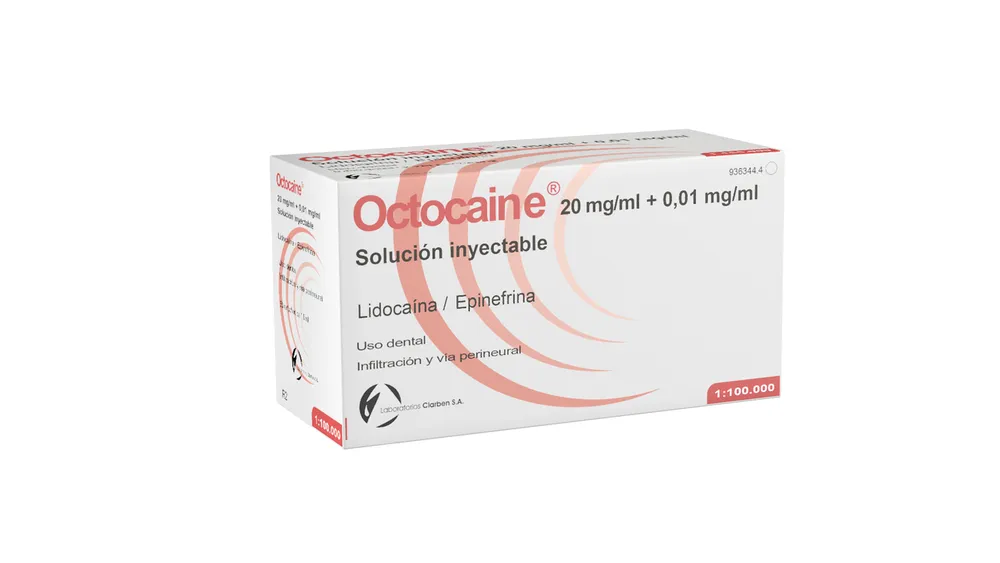
Table of Contents
- Package leaflet: Information for the user
- Introduction
- 1. What Octocaine 20 mg/ml + 0.01 mg/ml is and what it is used for
- 2. What you need to know before using Octocaine 20 mg/ml + 0.01 mg/ml injectable solution.
- 3. How to use Octocaine 20 mg/ml + 0.01 mg/ml injectable solution
- 4. Possible adverse effects
- 5. Storage of Octocaine 20 mg/ml + 0.01 mg/ml solution for injection.
- 6. Package contents and other information
Package leaflet: Information for the user
Introduction
Package leaflet: Information for the user
Octocaine 20 mg/ml + 0.01 mg/ml solution for injection
lidocaine / epinephrine
Read the entire leaflet carefully before you start using this medicine because it contains important information for you.
- Keep this leaflet as you may need to read it again.
- If you have any questions, ask your doctor, pharmacist, or nurse.
- If you experience any side effects, talk to your doctor, pharmacist, or nurse, even if they are side effects not listed in this leaflet. See section 4.
Contents of the leaflet:
- What Octocaine 20 mg/ml + 0.01 mg/ml solution for injection is and what it is used for.
- What you need to know before using Octocaine 20 mg/ml + 0.01 mg/ml solution for injection.
- How to use Octocaine 20 mg/ml + 0.01 mg/ml solution for injection.
- Possible side effects
- How to store Octocaine 20 mg/ml + 0.01 mg/ml solution for injection.
- Contents of the pack and other information.
1. What Octocaine 20 mg/ml + 0.01 mg/ml is and what it is used for
Octocaine is indicated for local anaesthesia in dental and oral surgery, by infiltration or trunk block, in adults, adolescents and children over 4 years of age.
Octocaine 20 mg/ml + 0.01 mg/ml injectable solution: It is especially indicated for most dental procedures and in children.
2. What you need to know before using Octocaine 20 mg/ml + 0.01 mg/ml injectable solution.
Do not use Octocaine 20 mg/ml + 0.01 mg/ml injectable solution:
- in children under 4 years of age.
- if you are allergic (hypersensitive) to lidocaine hydrochloride, amide-type local anesthetics, epinephrine, or to any of the other ingredients of this medicine (listed in section 6).
- if you are taking tricyclic antidepressants or monoamine oxidase inhibitors (MAOIs).
- if you have untreated or uncontrolled severe hypertension, heart rhythm disorders, unstable angina, or have recently suffered a heart attack. Consult your doctor, as this medicine may not be suitable for you.
- if you have coagulation disorders (severe bleeding).
- if you have a degenerative neurological disease.
- if you have reduced plasma cholinesterase activity.
- if you have untreated or uncontrolled congestive heart failure.
- if you have recently undergone coronary artery bypass surgery.
- if you are allergic or hypersensitive to sulfites.
- if you have severe bronchial asthma.
Warnings and precautions
Consult your doctor or dentist before using Octocaine 20 mg/ml + 0.01 mg/ml injectable solution if:
- you have severe untreated hypertension (high blood pressure).
- you have a serious heart condition or have recently undergone heart surgery.
- you have severe anemia.
- you have a serious liver disease.
- you have poor blood circulation.
- you have blood coagulation disorders or are undergoing anticoagulant therapy (medications to prevent blood clots).
- you have a lung disease, especially allergic asthma.
- you have uncontrolled thyroid gland disease.
- you have narrow-angle glaucoma (vision loss due to retinal degeneration).
- you have advanced diabetes.
- you have epilepsy.
- you have acute porphyria.
- you have pheochromocytoma.
- you have atherosclerosis.
Children
Octocaine 20 mg/ml + 0.01 mg/ml injectable solution must not be used in children under 4 years of age.
Caregivers of young children should be informed that, due to prolonged soft tissue numbness, there is a risk of accidental self-biting by the child.
Using Octocaine 20 mg/ml + 0.01 mg/ml injectable solution with other medicines
Inform your doctor or pharmacist if you are taking, have recently taken, or might need to take any other medicines.
You must inform your dentist if you are taking any of the following medicines, as they may alter the effect of Octocaine 20 mg/ml + 0.01 mg/ml injectable solution:
- Phenothiazines, butyrophenones used to treat psychotic disorders.
- Tricyclic antidepressants or MAO inhibitors used to treat depression.
- Non-selective beta-blockers such as propranolol used to treat high blood pressure.
- Anticoagulants such as heparin or acetylsalicylic acid to prevent blood clot formation.
- Antiarrhythmics to regulate heart rhythm.
- Non-steroidal anti-inflammatory drugs (NSAIDs) such as ibuprofen to combat inflammation, pain, or fever.
- Plasma substitutes (dextran).
- Ergot-type oxytocics (medications used to promote labor).
Using Octocaine 20 mg/ml + 0.01 mg/ml injectable solution with food, drinks, and alcohol
It is recommended not to eat until sensation has returned, to prevent the risk of biting inside the mouth. Excessive alcohol consumption may reduce sensitivity to anesthetics.
Pregnancy and breastfeeding
If you are pregnant or breastfeeding, think you may be pregnant, or are planning to become pregnant, consult your doctor before using this medicine.
There are no studies on fetal developmental safety. Administration should be carefully considered, especially during early stages of pregnancy.
Driving and using machines
Although effects on the ability to drive or operate machinery are not expected, your dentist will decide when you are fit to do so.
Use in athletes
Athletes should be informed that this medicine contains a component that may lead to a positive analytical result in doping controls.
Octocaine 20 mg/ml + 0.01 mg/ml injectable solution contains potassium metabisulfite and sodium.
This medicine may cause severe allergic reactions and bronchospasm (sudden sensation of suffocation) because it contains potassium metabisulfite.
This medicine contains less than 1 mmol of sodium (23 mg) per cartridge and is therefore considered essentially sodium-free.
3. How to use Octocaine 20 mg/ml + 0.01 mg/ml injectable solution
Your dentist will determine the dose and method of administration of Octocaine 20 mg/ml + 0.01 mg/ml injectable solution. In doing so, they will generally follow the recommendations below.
The smallest possible volume of solution necessary to achieve effective anesthesia should be used.
Octocaine 20 mg/ml + 0.01 mg/ml injectable solution
Recommended dose (number of 1.8 ml cartridges: 0.5 – 2.5). Maximum dose: 8.5 cartridges of 1.8 ml.
Dosage depends on the patient's individual characteristics, the area to be anesthetized, the vascularization of the involved tissues, and the anesthetic technique used.
The maximum dose within 24 hours is 500 mg of lidocaine, and must never exceed 7 mg/kg of body weight in adults.
Use in children:
Do not administer to children under 4 years of age.
In children under 10 years of age, it is rare to require more than 0.5 cartridge per procedure.
The average dose to be used ranges from 20 mg to 30 mg of lidocaine hydrochloride per session.
Do not exceed the equivalent of 5 mg of lidocaine hydrochloride per kilogram of body weight.
Dosage in elderly patients and patients with underlying diseases:
In elderly patients, plasma levels of Octocaine 20 mg/ml + 0.01 mg/ml injectable solution may increase due to reduced metabolic processes and decreased volume of distribution. The same applies to weak patients or those with impaired liver or kidney function. Therefore, in all such cases, the lowest possible dose achieving deep anesthetic effect should be used.
Method of administration
Infiltration and perineural route. For dental anesthesia use only.
Aspiration is strongly recommended, as it avoids the risk of intravascular injection and minimizes the possibility of adverse effects. The solution must always be administered slowly.
For single use only. Opened cartridges must not be used for other patients. Any unused portion of the solution must be discarded.
If you use more Octocaine 20 mg/ml + 0.01 mg/ml injectable solution than you should
In case of overdose, adverse reactions may occur affecting the nervous system and the heart.
Initial symptoms include restlessness, numbness of the lips, tongue, and around the mouth, dizziness, visual and auditory disturbances, and tinnitus. Difficulty speaking, muscle stiffness, or spasms are more severe symptoms that may lead to generalized seizures.
Cardiovascular symptoms include sensation of warmth, sweating, changes in blood pressure and heart rhythm, which may lead to cardiovascular arrest.
If you experience any of these symptoms immediately or shortly after receiving Octocaine 20 mg/ml + 0.01 mg/ml injectable solution, inform your dentist immediately.
If more than the recommended amount has been administered, consult your doctor or pharmacist immediately or call the Toxicology Information Service at telephone number 91 562 04 20, indicating the medication and the amount used.
4. Possible adverse effects
Like all medicines, Octocaine 20 mg/ml + 0.01 mg/ml can cause adverse effects, although not everyone will experience them.
Cardiovascular disorders:
Rare (may affect up to 1 in 1,000 patients).
Sensation of heat, sweating, migraine-type headaches, angina disorders, disturbances in blood pressure and cardiac impulse conduction, decreased heart rate, cardiac arrest.
Nervous system disorders:
Rare (may affect up to 1 in 1,000 patients).
Metallic taste, tinnitus (ringing in the ears), dizziness, nausea, vomiting, anxiety, tremors, restlessness, nystagmus (involuntary eye movement), headache, increased respiratory rate, paresthesia (loss of sensation accompanied by burning) of the lip and/or tongue, loss of consciousness, and seizures.
Respiratory disorders:
Rare (may affect up to 1 in 1,000 patients).
Increased respiratory rate, followed by decreased respiratory rate, possibly leading to respiratory arrest.
Very rare adverse effects (may affect up to 1 in 10,000 patients).
Skin rash, erythema (redness), edema (swelling) of the tongue, mouth, lips, or throat. Particularly in bronchial asthmatics, allergic reactions may occur, manifesting as vomiting, diarrhea, wheezing, acute asthma attack, confusion, or anaphylactic shock.
Reporting of adverse effects
If you experience any type of adverse effect, consult your doctor, even if it is a possible adverse effect not listed in this leaflet. You may also report them directly via the Spanish Pharmacovigilance System for Human Medicines at www.notificaRAM.es. By reporting adverse effects, you can help provide more information on the safety of this medicine.
5. Storage of Octocaine 20 mg/ml + 0.01 mg/ml solution for injection.
No special storage conditions are required.
Keep out of the sight and reach of children.
Do not use Octocaine 20 mg/ml + 0.01 mg/ml after the expiry date stated on the container, after the abbreviation EXP. The expiry date refers to the last day of the month indicated.
Medicines must not be disposed of via wastewater or household waste. Ask your pharmacist how to dispose of medicines and packaging you no longer need. This will help protect the environment.
6. Package contents and other information
Composition of Octocaine 20 mg/ml + 0.02 mg/ml solution for injection.
The active substances are Lidocaine (hydrochloride) and epinephrine (bitartrate).
The other components (excipients) are: sodium chloride, potassium metabisulfite, sodium edetate, sodium hydroxide or hydrochloric acid (for pH adjustment), water for injections.
Appearance of the product and contents of the pack
Octocaine 20 mg/ml + 0.02 mg/ml solution for injection, colourless and translucent.
Pack containing 50 cartridges of 1.8 ml.
Marketing Authorization Holder and Manufacturer
Marketing Authorization Holder:
Laboratorios Clarben S.A. – Av. Valdelaparra 27 – 28108 Alcobendas, Spain
Manufacturer:
Laboratorios Clarben S.A., C/ Eduardo Marconi, 2. Polígono Industrial Codein. Fuenlabrada 28946 Madrid, Spain
The most recent revision of this leaflet was in January 2019
Detailed and up-to-date information on this medicinal product is available on the website of the Spanish Agency of Medicines and Health Products (AEMPS) http://www.aemps.gob.es
This information is intended for healthcare professionals only
Local injection / Dental use
Injections must always be administered slowly and with prior aspiration in at least two planes (by rotating the needle 180º) to avoid accidental intravascular injection.
The injection rate must not exceed 0.5 ml in 15 seconds, equivalent to one cartridge per minute.
The Summary of Product Characteristics includes guidelines and recommendations to ensure correct use of the product (see Dosage and method of administration; Warnings and special precautions for use).
Instructions for use:
- Open the package.
- Remove a cartridge and place it into the syringe barrel.
- Adjust the syringe plunger against the cartridge plunger.
- Carefully insert the short end of the double-ended needle into the syringe end and screw it securely into place.
- Remove and discard the protective cap from the long end of the needle, then proceed with the injection.
AUTO-ASPIRATION
To perform auto-aspiration, an aspirating syringe is required. Auto-aspiration is achieved by applying gentle pressure on the plunger and immediately releasing it. The elastic spring of the cartridge membrane, initially pressed against the base of the syringe shaft, creates a negative pressure within the cartridge, ensuring aspiration.
MANUAL ASPIRATION
For manual aspiration, a syringe with a hook or harpoon is required. Manual aspiration is achieved when the harpoon engages the anesthetic cartridge and the plunger is pulled backward.