OctaplasmaLG (A) 45-70 mg/ml solution for infusion
Spain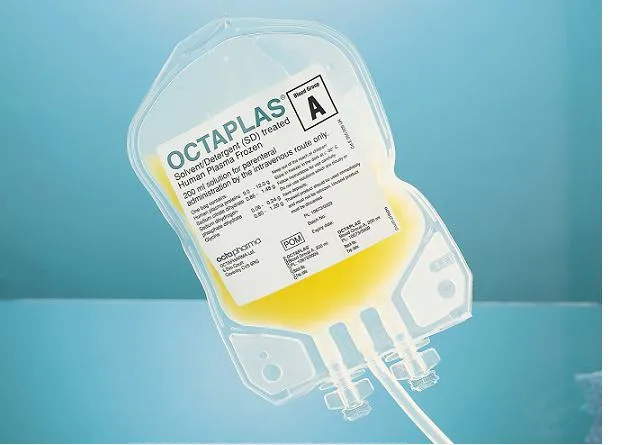
Table of Contents
- Package leaflet: Information for the user
- Introduction
- 1. What OctaplasmaLG is and what it is used for
- 2. What you need to know before using OctaplasmaLG
- ***Do not use OctaplasmaLG:***
- ***Exercise special caution with OctaplasmaLG***
- ***Children***
- ***Use of OctaplasmaLG with other medicines***
- ***Use of OctaplasmaLG with food and beverages***
- ***Driving and operating machinery***
- ***Important information about some of the components of OctaplasmaLG***
- 3. How to use OctaplasmaLG
- ***If you use more OctaplasmaLG than you should***
- ***If you forget to use OctaplasmaLG***
- ***If treatment with OctaplasmaLG is interrupted***
- 4. Possible adverse effects
- 5. Storage of OctaplasmaLG
- 6. Contents of the pack and other information
- ***Composition of OctaplasmaLG***
- ***Appearance of the product and contents of the pack***
- ***Marketing Authorization Holder:***
- ***Manufacturer:***
Package leaflet: Information for the user
Introduction
PACKAGE LEAFLET: INFORMATION FOR THE USER
OctaplasmaLG (A) 45-70 mg/ml solution for infusion
OctaplasmaLG (B) 45-70 mg/ml solution for infusion
OctaplasmaLG (AB) 45-70 mg/ml solution for infusion
OctaplasmaLG (0) 45-70 mg/ml solution for infusion
Human plasma proteins, with ABO blood group specificity
Read the entire leaflet carefully before you start using this medicine, because it contains important information for you.
- Keep this leaflet, as you may need to read it again.
- If you have any questions, ask your doctor.
- This medicine has been prescribed for you only, and you should not give it to other people, even if they have the same symptoms as you, because it may harm them.
- If you experience any adverse effects, consult your doctor, even if they are effects not listed in this leaflet. See section 4.
Leaflet contents
- What OctaplasmaLG is and what it is used for
- What you need to know before using OctaplasmaLG
- How to use OctaplasmaLG
- Possible side effects
5 Storage of OctaplasmaLG
- Contents of the pack and other information
1. What OctaplasmaLG is and what it is used for
OctaplasmaLG is pooled human plasma that has been treated for viral inactivation. Human plasma is the liquid portion of human blood in which blood cells are suspended. It contains essential human plasma proteins important for maintaining normal coagulation properties and is used in the same way as fresh frozen plasma (FFP).
OctaplasmaLG helps in cases of complex deficiencies of coagulation factors, which may be caused by severe liver failure or massive transfusion. OctaplasmaLG may also be administered in emergency situations when a coagulation factor concentrate (such as factor V or factor XI) is not available or when the necessary laboratory diagnosis cannot be performed.
It may also be given to rapidly reverse the effects of oral anticoagulants (coumarin or indandione type) when vitamin K is insufficient due to impaired liver function or in emergency situations.
OctaplasmaLG may be administered to patients undergoing plasma exchange to restore the balance of coagulation factors.
2. What you need to know before using OctaplasmaLG
Do not use OctaplasmaLG:
- if you are allergic (hypersensitive) to human plasma proteins or to any of the other components of this medicine (listed in section 6).
- if you know you have antibodies against the immunoglobulin called IgA.
- if you have previously had reactions to human plasma or plasma-derived clotting factor concentrates (PFC).
- if you know you have low levels of protein S (a vitamin K-dependent blood protein).
Warnings and precautions
Consult your doctor before starting to use OctaplasmaLG.
Inform your doctor if you have any other medical conditions.
Exercise special caution with OctaplasmaLG
- if you have low levels of immunoglobulin A.
- if you have previously experienced reactions to plasma protein, including PFC.
- if you have heart failure or fluid in the lungs (pulmonary edema).
- if you are aware of having an increased risk of blood clotting complications (thrombotic events) due to a potential risk of venous thromboembolism (blood clots forming in the veins).
- in case of increased coagulation inhibition (fibrinolysis).
OctaplasmaLG is not generally recommended for the treatment of von Willebrand disease.
Viral safety
When medicines prepared from human plasma or blood are administered, certain measures are taken to prevent the transmission of infections to patients. These include careful selection of blood and plasma donors to ensure exclusion of those at risk of infections, and testing of each donation and plasma pools for signs of viruses or infections. Manufacturers of these products also include steps in the processing of blood or plasma that can inactivate or remove viruses. Despite these measures, when medicines prepared from human plasma or blood are administered, the possibility of transmitting infectious agents cannot be completely ruled out. This also applies to any unknown or emerging viruses, as well as to other types of infections.
The measures taken are considered effective against enveloped viruses, such as human immunodeficiency virus (HIV), hepatitis B virus, and hepatitis C virus.
These measures may have limited effectiveness against certain non-enveloped viruses, such as hepatitis A virus, hepatitis E virus, and parvovirus B19.
It is strongly recommended that the name and batch number of the product be recorded each time a dose of OctaplasmaLG is administered, in order to maintain a record of the batch used.
Your doctor may recommend that you receive vaccinations against hepatitis A and B viruses if you regularly or repeatedly receive products derived from human plasma.
Children
Low calcium levels, possibly caused by citrate binding, have been observed in some cases during therapeutic plasma exchange in children. Calcium levels should be monitored during the use of OctaplasmaLG.
Use of OctaplasmaLG with other medicines
During clinical trials, OctaplasmaLG has been administered concomitantly with various medications, and no interactions have been detected.
When receiving OctaplasmaLG, you may also receive substances (e.g., pregnancy hormone) that can cause false-positive test results (e.g., positive pregnancy test despite not being pregnant).
OctaplasmaLG must not be mixed with other intravenous fluids or medications except red blood cells and platelets.
To avoid the risk of blood clots, solutions containing calcium must not be administered through the same intravenous line as OctaplasmaLG.
No interactions with other medicines are known.
Inform your doctor if you are using, have recently used, or might need to use any other medicines, including those obtained without a prescription.
Use of OctaplasmaLG with food and beverages
No effects have been observed.
Pregnancy, breastfeeding, and fertility
If you are pregnant or breastfeeding, think you may be pregnant, or are planning to become pregnant, consult your doctor before using this medicine. You will receive OctaplasmaLG if your doctor considers it important for you.
Driving and operating machinery
No effects on the ability to drive or operate machinery have been observed. You are solely responsible for deciding whether you are fit to drive a vehicle or perform tasks requiring high concentration.
Important information about some of the components of OctaplasmaLG
For a list of components, see section 6.
This medicine contains up to 920 mg of sodium (the main component of table/cooking salt) per bag. This is equivalent to up to 46% of the maximum daily recommended sodium intake for an adult.
3. How to use OctaplasmaLG
A doctor or nurse will administer OctaplasmaLG to you as an intravenous infusion.
Your dose will depend on your clinical condition and body weight. Your doctor will determine the appropriate amount you should receive.
- A blood group ABO compatibility test must be performed before administering OctaplasmaLG by infusion.
- In emergency situations, AB blood group OctaplasmaLG can be administered to all patients.
It is important that the infusion rate does not exceed 1 ml of OctaplasmaLG per kg of body weight per minute. Calcium gluconate may be administered through another vein to minimize the adverse effects of citrate contained in OctaplasmaLG.
You should be monitored for at least 20 minutes after administration for possible allergic reactions (anaphylactic reactions) or shock; if these occur, the infusion must be stopped immediately.
Use in children and adolescents
Data on use in children and adolescents (0–16 years of age) are limited.
If you use more OctaplasmaLG than you should
An elevated dose may cause fluid overload, fluid in the lungs, and/or cardiac problems.
If you forget to use OctaplasmaLG
Your doctor should supervise administration and maintain your laboratory values within the specified range.
If treatment with OctaplasmaLG is interrupted
Depending on laboratory values, your doctor will decide when to stop administering OctaplasmaLG and will assess any potential risks.
Do not use after the expiry date stated on the label.
There are several options for thawing frozen OctaplasmaLG
- Water bath:
Thaw, with the outer packaging, in a water bath with good circulation for at least 30 minutes at a temperature between +30°C and +37°C. If necessary, use a protective bag as an additional outer wrapping.
Ensure that water does not contaminate the entry port. The minimum thawing time is 30 minutes at 37°C. The water bath temperature must never exceed +37°C and must not be lower than +30°C.
The thawing time will depend on the number of bags placed in the bath. If multiple bags are thawed simultaneously, the time may be extended, but not beyond 60 minutes.
- Use of a dry warming system such as SAHARA-III:
Place the OctaplasmaLG bags in the agitation tray according to the manufacturer's instructions and thaw the plasma using the rapid warming function. When the temperature display indicates a derivative blood product temperature of +37°C, stop the warming process and remove the bags.
During thawing of OctaplasmaLG using a dry warming system, it is recommended to use the protocol printer to maintain a record of the temperature progression of the blood derivative and any error messages in case of malfunction.
- Others:
Other thawing systems may be used for frozen OctaplasmaLG, provided they are validated for this purpose.
Allow the contents of the bag to warm up to approximately +37°C before infusion. The temperature of OctaplasmaLG must not exceed +37°C. Remove the outer packaging and check that the bag has no cracks or leaks.
Avoid shaking the bag.
After thawing, the resulting solution should be clear or slightly opalescent and free from solid or gelatinous particles.
Do not use solutions that are cloudy or contain sediment and/or discoloration.
Thawed OctaplasmaLG must not be refrozen. Any unused product must be discarded.
Disposal of unused medicinal product and all materials that have been in contact with it must be carried out in accordance with local regulations.
4. Possible adverse effects
Like all medicines, this medicine can cause adverse effects, although not everyone experiences them.
Rarely, hypersensitivity reactions may occur. These are usually mild allergic reactions consisting of skin redness, urticaria, or itching. More severe forms may lead to complications such as decreased blood pressure or swelling of the face or tongue. Severe systemic allergic reactions may have a rapid onset and could be serious. Symptoms include: decreased blood pressure, increased heart rate, difficulty breathing, wheezing, coughing, shortness of breath, nausea, vomiting, diarrhea, abdominal or back pain. Severe reactions may progress to shock, loss of consciousness, respiratory failure, and very rarely, even death.
The citrate contained in OctaplasmaLG may cause negative effects and be associated with low calcium levels, especially if the infusion rate is high, if you have impaired liver function, or if you are undergoing plasma exchange procedures. You may experience symptoms such as: fatigue, tingling sensation (paresthesia), tremors, decreased calcium levels.
OctaplasmaLG may increase the risk of blood clots in the veins of:
- limbs, causing pain and swelling of the limbs;
- lungs, causing chest pain and difficulty breathing;
- brain, causing weakness and/or loss of sensation on one side of the body;
- heart, causing chest pain;
Special precautionary measures must be taken in all patients at risk of increased blood coagulation, and appropriate measures should be considered.
In rare cases, incompatibility between the antibodies in OctaplasmaLG and blood antigens may cause destruction of your red blood cells (hemolytic transfusion reactions). Symptoms are: chills; fever; irritative cough; difficulty breathing; skin rash; and internal bleeding.
Infusion of OctaplasmaLG may increase certain antibodies of coagulation factors.
A high dose or infusion rate may cause an increase in blood volume; fluid in the lungs and/or heart failure.
Acute respiratory difficulties have been reported during or after the infusion of OctaplasmaLG.
During clinical trials with the predecessor product of OctaplasmaLG and its post-authorization use, the following adverse effects have been identified:
System organ class | Common (≥ 1/100 to < 1/10) | Uncommon (≥ 1/1,000 to < 1/100) | Rare (≥ 1/10,000 to < 1/1,000) | Very rare (< 1/10,000) | Not known§ |
Blood and lymphatic system disorders | Loss of red blood cells Bleeding tendency | ||||
Immune system disorders | Hypersensitivity | Severe allergic reaction and shock | |||
Psychiatric disorders | Anxiety Agitation Restlessness | ||||
Nervous system disorders | Reduced sense of touch or sensitivity | Dizziness Tingling sensation | |||
Cardiac disorders | Heart failure | ||||
Vascular and circulatory disorders | Blood clots in blood vessels Decreased blood pressure Increased blood pressure Circulatory failure Redness of the skin | ||||
Respiratory disorders | Oxygen deficiency | Respiratory failure Lung hemorrhage Lung congestion Difficulty breathing | Acute respiratory problems | ||
Gastrointestinal disorders | Vomiting Nausea | Abdominal pain | |||
Skin disorders | Urticaria | Rash Increased sweating | |||
Musculoskeletal and connective tissue disorders | Back pain | ||||
General disorders and administration site conditions | Fever | Chest pain Chest discomfort Chills Localized edema General malaise | |||
Investigations | Positive antibody tests Decreased oxygen in blood | ||||
Injury, poisoning and procedural complications | Increased blood volume Citrate toxicity Red blood cell destruction |
§Spontaneous reporting data
Depending on the type and severity of adverse reactions, the infusion rate should be reduced or the infusion interrupted. Your doctor will take the necessary measures.
Inform your doctor or pharmacist if you consider any of the adverse effects you experience to be severe, or if you notice any adverse effects not mentioned in this leaflet.
Paediatric population
Low calcium levels may be observed in children undergoing plasma exchange procedures, particularly in patients with hepatic dysfunction or in cases of high infusion rates. Calcium levels should be monitored during the use of OctaplasmaLG.
Reporting of adverse effects
If you experience any type of adverse effect, consult your doctor, even if it is a possible adverse effect not listed in this leaflet. You may also report them directly via the Spanish Pharmacovigilance System for Human Medicines: www.notificaRAM.es.
By reporting adverse effects, you can help provide more information on the safety of this medicine.
5. Storage of OctaplasmaLG
Keep this medicine out of the sight and reach of children.
Do not use this medicine after the expiry date stated on the label.
Store and transport frozen (at ≤ -18°C).
Keep in the original packaging to protect from light.
After thawing, physical and chemical stability in use has been demonstrated for 5 days between +2 and +8 °C or up to 8 hours at room temperature (between +20 and +25 °C).
From a microbiological point of view, unless the opening method prevents the risk of microbial contamination, the product should be used immediately. If not used immediately, the storage times and conditions shall be the responsibility of the user.
Do not use this medicine if the solution appears cloudy or contains particles and/or discoloration.
Medicines must not be disposed of via wastewater or household waste. Ask your pharmacist how to dispose of medicines and containers you no longer need. This will help protect the environment.
6. Contents of the pack and other information
Composition of OctaplasmaLG
- The active substance is human plasma proteins with ABO blood group specificity. One 200 ml bag contains: 9–14 g (45–70 mg/ml).
- The other components are:
Sodium citrate dihydrate, sodium dihydrogen phosphate dihydrate, and glycine.
Appearance of the product and contents of the pack
OctaplasmaLG is presented as a solution for infusion.
Blood bags of 200 ml.
Pack size: 1 or 10 bags.
The frozen solution is (slightly) yellow.
Marketing Authorization Holder:
Octapharma S.A.
Avda. Castilla, 2. (P.E. San Fernando)
Ed. Dublín, 2ª Planta
28830 San Fernando de Henares, Madrid
Manufacturer:
Octapharma AB
SE-112 75 Stockholm, Sweden
Date of the most recent review of this package leaflet: 11/2024
Detailed information on this medicine is available on the website of the Spanish Agency of Medicines and Health Products (AEMPS)
http://www.aemps.gob.es/
This information is intended for healthcare professionals only:
Dosage and administration
Dosage
The dose depends on the clinical situation and underlying disorder, but the initial dose is usually between 12 and 15 ml of OctaplasmaLG/kg body weight. This dose is expected to increase the patient's plasma coagulation factor levels by approximately 25%.
It is important to monitor the response both clinically and by laboratory measurements, for example, activated partial thromboplastin time (aPTT), prothrombin time (PT), and/or specific coagulation factor assays.
Dosage for coagulation factor deficiencies:
Adequate hemostatic effect in mild to moderate bleeding or during procedures in patients with coagulation factor disorders is usually achieved after an infusion of 5 to 20 ml of OctaplasmaLG/kg body weight. This dose should increase the patient's plasma coagulation factor levels by approximately 10–33%. In cases of severe bleeding or surgical intervention, consultation with a hematologist is recommended.
Dosage for TTP (thrombotic thrombocytopenic purpura) and bleeding during intensive plasma exchange:
For therapeutic plasma exchange procedures, expert advice from a hematologist should be sought.
In patients with TTP, the total volume of plasma exchanged should be replaced with OctaplasmaLG.
Method of administration
OctaplasmaLG should be administered according to blood group specificity. In emergency situations, AB group OctaplasmaLG may be considered as universal plasma, as it can be administered to all patients regardless of their blood group.
After thawing, OctaplasmaLG should be administered by intravenous infusion using an infusion set with filters. Aseptic technique must be used during infusion.
Citrato toxicity may occur if more than 0.02–0.025 mmol of citrate per kg per minute is administered. Therefore, the infusion rate of OctaplasmaLG should not exceed 1 ml per kg per minute.
Citrato toxic effects can be minimized by administering calcium gluconate intravenously through another vein.
Warnings and precautions for administration:
Infusion must be stopped immediately in case of anaphylactic reaction or shock. Treatment should follow established guidelines for managing shock.
Patients should be monitored for at least 20 minutes after administration.
Incompatibilities:
- OctaplasmaLG may be mixed with red blood cells and platelets if ABO compatibility is ensured for both products.
- OctaplasmaLG must not be mixed with other medicinal products, as inactivation and precipitation may occur.
- To avoid the risk of clot formation, solutions containing calcium must not be administered through the same intravenous line as OctaplasmaLG.
- Interference with serological testing
- Passive transmission of plasma components from OctaplasmaLG (e.g., β-human chorionic gonadotropin; β-hCG) may lead to false laboratory results in the recipient. For example, false-positive pregnancy test results have been reported due to passive transmission of β-hCG.