Ocrevus 300 mg concentrate for solution for infusion
Spain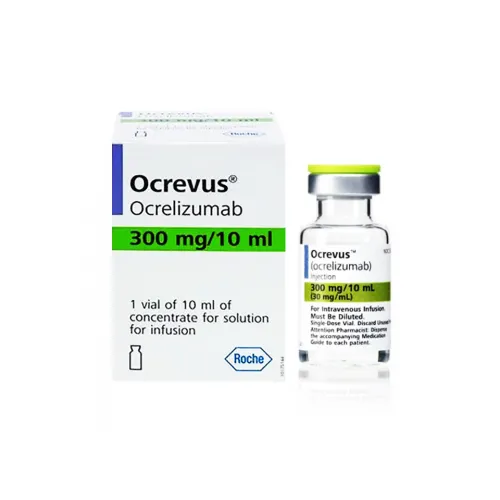
Table of Contents
Package leaflet: Information for the user
Introduction
Package leaflet: information for the patient
Ocrevus 300mg concentrate for solution for infusion
ocrelizumab
Read the entire leaflet carefully before you start using this medicine, because it contains important information for you.
- Keep this leaflet, as you may need to read it again.
- If you have any questions, consult your doctor.
- If you experience any adverse reactions, consult your doctor or nurse, even if they are adverse reactions not listed in this leaflet. See section 4.
Leaflet contents
- What Ocrevus is and what it is used for
- What you need to know before using Ocrevus
- How to use Ocrevus
- Possible side effects
- How to store Ocrevus
- Contents of the pack and other information
1. What Ocrevus is and what it is used for
What is Ocrevus
Ocrevus contains the active substance “ocrelizumab”. It is a type of protein called a “monoclonal antibody”. Antibodies work by binding to specific targets in your body.
What Ocrevus is used for
Ocrevus is used to treat adults with:
- Relapsing forms of multiple sclerosis (RMS)
- Early primary progressive multiple sclerosis (PPMS)
What is Multiple Sclerosis:
Multiple sclerosis (MS) affects the central nervous system, particularly the nerves in the brain and spinal cord. In MS, the immune system (the body's defense system) malfunctions and attacks the protective layer (called the myelin sheath) surrounding nerve cells, causing inflammation. Damage to the myelin sheath prevents nerves from functioning properly.
MS symptoms depend on which part of the central nervous system is affected and may include difficulty walking and maintaining balance, weakness, numbness, double and blurred vision, poor coordination, and bladder problems.
-
In relapsing forms of MS, patients experience repeated episodes of symptoms (relapses). Symptoms may appear suddenly within a few hours, or gradually over several days. Symptoms disappear or improve between each relapse, but damage may accumulate and lead to permanent disability.
-
In patients with primary progressive MS, symptoms generally worsen continuously from the onset of the disease.
How Ocrevus works
Ocrevus binds to specific B-lymphocytes, a type of white blood cell that is part of the immune system and plays a role in MS. Ocrevus binds to and eliminates these specific B-lymphocytes. This reduces inflammation and attacks on the myelin sheath, decreases the likelihood of experiencing a relapse, and slows disease progression.
-
In relapsing forms of MS (RMS), Ocrevus significantly reduces the number of relapses and significantly slows disease progression. Ocrevus also significantly increases the likelihood that a patient will have no evidence of disease activity (brain lesions, relapses, and worsening of disability).
-
In primary progressive MS (PPMS), Ocrevus helps slow disease progression and reduce the decline in walking speed.
2. What you need to know before using Ocrevus
Do not use Ocrevus:
- if you are allergic to ocrelizumab or any of the other ingredients of this medicine (listed in section 6).
- if you currently have an infection.
- if you have been diagnosed with serious problems with your immune system.
- if you have cancer.
If you are not sure, talk to your doctor before using Ocrevus.
Warnings and precautions
Talk to your doctor before starting Ocrevus if any of the following apply to you. Your doctor may decide to delay your treatment with Ocrevus or determine that you should not use Ocrevus if:
- you have an infection. Your doctor will wait until the infection has resolved before administering Ocrevus.
- you have ever had hepatitis B or are a carrier of the hepatitis B virus. This is because medicines like Ocrevus can cause the hepatitis B virus to reactivate. Before treatment with Ocrevus, your doctor will check whether you are at risk of hepatitis B infection. Patients who have had hepatitis B or who are carriers of the hepatitis B virus will have a blood test and will be monitored by a doctor for signs of hepatitis B infection.
- you have cancer or have had cancer in the past. Your doctor may decide to delay your treatment with Ocrevus.
Effects on the immune system:
- Diseases affecting your immune system: if you have another disease that affects the immune system. You may not be suitable for treatment with Ocrevus.
- Medicines affecting your immune system: if you have ever taken, are currently taking, or are planning to take medicines that affect the immune system – such as chemotherapy, immunosuppressants, or other medicines used to treat MS. Your doctor may decide to delay your treatment with Ocrevus or may ask you to stop taking these medicines before starting Ocrevus. For more information, see “Other medicines and Ocrevus” below.
Infusion-related reactions
- Infusion-related reactions are the most common side effect of Ocrevus treatment.
- Tell your doctor or nurse immediately if you experience any infusion-related reactions (see section 4 for a list of infusion-related reactions). Infusion-related reactions may occur during the infusion or up to 24 hours after it.
- To reduce the risk of infusion-related reactions, your doctor will give you other medicines before each Ocrevus infusion (see section 3), and you will be closely monitored during the infusion and for at least one hour after it ends.
Infections
-
Tell your doctor before receiving Ocrevus if you think you may have an infection. Your doctor will wait until your infection has resolved before giving you Ocrevus.
-
You may be more likely to get infections while taking Ocrevus. This is because the immune cells that Ocrevus acts on also help fight infections.
-
Before you start treatment with Ocrevus and before subsequent infusions, your doctor may order a blood test to check the status of your immune system, as infections may occur more frequently if you have serious immune system problems.
-
If you have been treated with Ocrevus for primary progressive multiple sclerosis and have difficulty swallowing, Ocrevus may increase your risk of severe pneumonia.
-
Tell your doctor or nurse immediately if you experience any of the following signs of infection during or after treatment with Ocrevus:
-
fever or chills
-
persistent cough
-
herpes (such as mouth sores, shingles, or genital ulcers).
- Tell your doctor or nurse immediately if you think your MS is getting worse or if you notice any new symptoms. This is due to a very rare but potentially fatal brain infection called “progressive multifocal leukoencephalopathy” (PML), which can cause symptoms similar to those of MS. PML can occur in patients taking Ocrevus.
Inform your partner or caregiver about your Ocrevus treatment. They may notice PML symptoms that you do not, such as memory problems, difficulty thinking, trouble walking, vision loss, or changes in speech. Your doctor may need to evaluate these symptoms.
Vaccines
- Tell your doctor if you have recently received any vaccine or if you might receive a vaccine in the near future.
- While being treated with Ocrevus, you should not receive live or live-attenuated vaccines (for example, BCG for tuberculosis or yellow fever vaccines).
- Your doctor may recommend that you receive the seasonal influenza vaccine.
- Your doctor will check whether you need any vaccines before starting Ocrevus treatment. Vaccines should be given at least 6 weeks before starting Ocrevus treatment.
Children and adolescents
Ocrevus is not intended for use in children and adolescents under 18 years of age. This is because it has not yet been studied in this age group.
Other medicines and Ocrevus
Tell your doctor if you are taking, have recently taken, or might need to take any other medicines.
In particular, tell your doctor if:
- you have ever taken, are currently taking, or plan to take medicines that affect the immune system – such as chemotherapy, immunosuppressants, or other medicines used to treat MS. The combined effect of these medicines with Ocrevus on the immune system could be too strong. Your doctor may decide to delay your treatment with Ocrevus or ask you to stop taking these medicines before starting Ocrevus.
- you are taking medicines for high blood pressure. This is because Ocrevus may lower your blood pressure. Your doctor may ask you to stop taking your blood pressure medicines 12 hours before each Ocrevus infusion.
If any of these conditions apply to you (or you are not sure), talk to your doctor before using Ocrevus.
Pregnancy
- If you are pregnant, think you may be pregnant, or plan to become pregnant, consult your doctor before receiving this medicine. This is because Ocrevus may cross the placenta and affect your baby.
- Do not use Ocrevus if you are pregnant unless you have discussed it with your doctor. Your doctor will weigh the benefits of using Ocrevus against the risks to your baby.
- Talk to your doctor before vaccinating your baby.
Contraception for women
If you can become pregnant (are fertile), women of childbearing potential must use contraceptive methods:
- during treatment with Ocrevus and
- for 4 months after the last Ocrevus infusion.
Breastfeeding
Ocrevus may be used during breastfeeding. Talk to your doctor about the best way to feed your baby if you are receiving Ocrevus.
Driving and using machines
It is unknown whether Ocrevus affects your ability to drive or use tools or machines.
Your doctor will advise you whether MS may affect your ability to drive or use tools or machines safely.
Ocrevus contains sodium
This medicine contains less than 1 mmol of sodium (23 mg) per dose; this is essentially “sodium-free”.
3. How to use Ocrevus
Ocrevus will be administered by a doctor or a nurse experienced in the use of this treatment.
You will be monitored during the administration of the medicine in case you experience any adverse effects. Ocrevus is always given as an intravenous infusion (IV drip).
Medicines you will receive before Ocrevus
Before receiving Ocrevus, you will be given other medicines to prevent or reduce possible adverse effects such as infusion-related reactions (see sections 2 and 4 for more information about infusion-related reactions).
You will receive a corticosteroid and an antihistamine before each infusion, and you may also be given medicines to reduce fever.
How much Ocrevus and how often it is given
You will receive a total dose of 600 mg of Ocrevus every 6 months.
- The first 600 mg dose of Ocrevus will be given as two infusions (300 mg each), separated by a 2-week interval. Each infusion will last approximately 2 hours and 30 minutes.
- Subsequent 600 mg doses of Ocrevus will be given as a single infusion. Depending on the infusion rate, this will last either approximately 3 hours and 30 minutes or 2 hours.
How Ocrevus is given
- Ocrevus will be administered by a doctor or nurse. It will be given as an infusion into a vein (intravenous infusion or IV infusion).
- You will be closely monitored while receiving Ocrevus and for at least 1 hour after the infusion. This is in case you experience any adverse effects such as infusion-related reactions. The infusion may be slowed down, temporarily interrupted, or permanently stopped if you experience an infusion-related reaction, depending on its severity (see sections 2 and 4 for more information about infusion-related reactions).
If you miss an Ocrevus infusion
- If you miss an Ocrevus infusion, speak with your doctor to schedule a new infusion as soon as possible. Do not wait until your next scheduled infusion.
- To get the full benefit from Ocrevus, it is important that you receive each infusion when due.
If you stop treatment with Ocrevus
- It is important that you continue your treatment for as long as you and your doctor consider it beneficial.
- Some adverse effects may be related to low levels of B-lymphocytes. After stopping treatment with Ocrevus, you may continue to experience adverse effects until your B-lymphocyte levels return to normal. Your blood levels of B-lymphocytes will gradually increase back to normal levels. This may take from six months to two and a half years, or even longer in rare cases.
- Before starting any other medicine, inform your doctor about when you received your last Ocrevus infusion.
If you have any further questions about the use of this medicine, ask your doctor.
4. Possible adverse effects
Like all medicines, this medicine can cause adverse effects, although not everyone gets them.
The following adverse effects have been reported with Ocrevus:
Serious adverse effects:
Infusion-related reactions
-
Infusion-related reactions are the most common adverse effect of Ocrevus treatment (very common: may affect more than 1 in 10 people). In most cases, these are mild reactions, but some serious reactions may occur.
-
Immediately inform your doctor or nurse if you experience any sign or symptom of an infusion-related reaction during or up to 24 hours after the infusion. Symptoms may include, among others:
-
skin itching
-
skin rash
-
hives
-
skin redness
-
throat irritation or pain
-
difficulty breathing
-
throat swelling
-
flushing
-
low blood pressure
-
fever
-
fatigue
-
headache
-
dizziness
-
nausea
-
rapid heartbeat.
- If you experience an infusion-related reaction, you will be given medications to treat it, and the infusion may need to be slowed down or stopped. Once the reaction has subsided, the infusion may continue. If the infusion-related reaction is potentially life-threatening, your doctor will permanently discontinue treatment with Ocrevus.
Infections
-
You may be more likely to get infections while taking Ocrevus. The following infections have been observed in patients treated with Ocrevus in the context of MS:
-
Very common: may affect more than 1 in 10 people
-
sore throat and runny nose (upper respiratory tract infection)
-
flu.
- Common: may affect up to 1 in 10 people
-
sinus infection
-
bronchitis (inflammation of the bronchial tube)
-
herpes infection (cold sores or shingles)
-
stomach and intestinal infection (gastroenteritis)
-
respiratory tract infection
-
viral infection
-
skin infection (cellulitis)
Some of these may be serious.
-
Immediately inform your doctor or nurse if you experience any of these signs of infection:
-
fever or chills
-
persistent cough
-
herpes (such as cold sores, shingles, or genital ulcers).
Other adverse effects
Very common: may affect more than 1 in 10 people
- decrease in certain proteins in the blood (immunoglobulins) that help protect against infections.
Common: may affect up to 1 in 10 people
- eye discharge with itching, redness, and swelling (conjunctivitis)
- cough
- buildup of thick mucus in the nose, throat, or chest
- low levels of a type of white blood cells (neutropenia).
Unknown: frequency cannot be estimated from the available data
- delayed reduction in white blood cells
Reporting of adverse effects
If you experience any adverse effect, talk to your doctor or nurse, even if it is a possible adverse effect not listed in this leaflet. You can also report them directly through the national reporting system listed in Appendix V. By reporting adverse effects, you can help provide more information on the safety of this medicine.
5. Storage of Ocrevus
Hospital or clinic healthcare professionals will store Ocrevus under the following conditions:
- Keep this medicine out of the sight and reach of children.
- Do not use this medicine after the expiry date stated on the outer packaging and on the label of the vial following “EXP”. The expiry date refers to the last day of the month indicated.
- Store this medicine in a refrigerator (2°C - 8°C). Do not freeze. Keep the vials in their original packaging to protect them from light.
Ocrevus must be diluted before administration. Dilution will be performed by a healthcare professional. Immediate use after dilution is recommended. If not used immediately, the storage periods during use and storage conditions prior to use are the responsibility of the healthcare professional and generally should not exceed 24 hours at 2°C – 8°C and 8 hours at room temperature.
Medicines should not be disposed of via wastewater. Doing so helps protect the environment.
6. Contents of the pack and other information
Composition of Ocrevus
- The active substance is ocrelizumab. Each vial contains 300 mg of ocrelizumab in 10 ml at a concentration of 30 mg/ml.
- The other components are sodium acetate trihydrate (see Section 2 “Ocrevus contains sodium”), glacial acetic acid, trehalose dihydrate, polysorbate 20, and water for injections.
Appearance of the product and contents of the pack
- Ocrevus is a solution ranging from transparent to slightly opalescent, and from colorless to light brown.
- It is supplied as a concentrate for solution for infusion.
- This medicine is available in packs containing 1 or 2 vials (10 ml concentrate vials). Only certain pack sizes may be marketed.
Marketing Authorization Holder and Manufacturer Responsible
Roche Registration GmbH
Emil-Barell-Strasse 1
79639 Grenzach-Wyhlen
Germany
Manufacturer Responsible
Roche Pharma AG
Emil-Barell-Strasse 1
D-79639 Grenzach-Wyhlen
Germany
For more information about this medicine, please contact the local representative of the Marketing Authorization Holder:
Belgium/Belgium/Belgium N.V. Roche S.A. Tel/Tel: +32 (0) 2 525 82 11 | Lithuania UAB “Roche Lietuva” Tel: +370 5 2546799 |
| Luxembourg/Luxembourg (See/see Belgium/Belgium) |
Czech Republic Roche s. r. o. Tel: +420 - 2 20382111 | Hungary Roche (Hungary) Kft. Tel: +36 - 1 279 4500 |
Denmark Roche Pharmaceuticals A/S Tlf.: +45 - 36 39 99 99 | Malta (See Ireland) |
Germany Roche Pharma AG Tel.: +49 (0) 7624 140 | Netherlands Roche Nederland B.V. Tel.: +31 (0) 348 438050 |
Estonia Roche Eesti OÜ Tel.: + 372 - 6 177 380 | Norway Roche Norge AS Tlf.: +47 - 22 78 90 00 |
Greece Roche (Hellas) A.E. Tel: +30 210 61 66 100 | Austria Roche Austria GmbH Tel: +43 (0) 1 27739 |
Spain Roche Farma S.A. Tel: +34 - 91 324 81 00 | Poland Roche Polska Sp.z o.o. Tel: +48 - 22 345 18 88 |
France Roche Tél: +33 (0) 1 47 61 40 00 | Portugal Roche Farmacêutica Química, Lda Tel: +351 - 21 425 70 00 |
Croatia Roche d.o.o. Tel: +385 1 47 22 333 | Romania Roche România S.R.L. Tel: +40 21 206 47 01 |
Ireland Roche Products (Ireland) Ltd. Tel: +353 (0) 1 469 0700 | Slovenia Roche farmacevtska družba d.o.o. Tel: +386 - 1 360 26 00 |
Iceland Roche Pharmaceuticals A/S c/o Icepharma hf Tel: +354 540 8000 | Slovakia Roche Slovensko, s.r.o. Tel: +421 - 2 52638201 |
Italy Roche S.p.A. Tel: +39 - 039 2471 | Finland Roche Oy Tel: +358 (0) 10 554 500 |
Cyprus Roche (Hellas) A.E. Tel: +30 210 61 66 100 | Sweden Roche AB Tel: +46 (0) 8 726 1200 |
Latvia Roche Latvija SIA Tel: +371 - 6 7039831 |

Date of the most recent review of this leaflet:
Other sources of information
Detailed information on this medicinal product is available on the website of the European Medicines Agency: http://www.ema.europa.eu.
This information is intended for healthcare professionals only:
For further information, please refer to the Summary of Product Characteristics.
To improve the traceability of biological medicines, the name and batch number of the administered product should be clearly recorded.
Dosage
- Initial dose
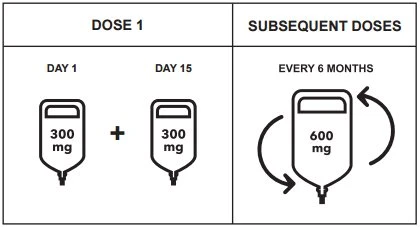
The initial dose of 600 mg is administered as two separate intravenous infusions: first, an infusion of 300 mg followed by a second infusion of 300 mg given 2 weeks later.
- Subsequent doses
After the initial dose, subsequent doses of ocrelizumab are administered as a single 600 mg intravenous infusion every 6 months (Table 1). The first 600 mg subsequent dose should be administered 6 months after the first infusion of the initial dose. A minimum interval of 5 months must be maintained between each ocrelizumab dose.
Figure 1: Dosing and administration schedule of Ocrevus
Management of IRIs prior to infusion
-
Ocrelizumab treatment should be initiated and supervised by an experienced healthcare professional with access to adequate medical support for managing serious reactions such as serious infusion-related reactions (IRIs), hypersensitivity reactions, and/or anaphylactic reactions.
-
Premedication for IRIs
The following two premedications should be administered prior to each Ocrevus infusion to reduce the frequency and severity of IRIs:
- 100 mg intravenous methylprednisolone (or equivalent) approximately 30 minutes before each infusion;
- an antihistamine approximately 30–60 minutes before each infusion.
Additionally, premedication with an antipyretic (e.g., paracetamol) may also be considered approximately 30–60 minutes before each Ocrevus infusion.
- Hypotension, as a symptom of an IRI, may occur during Ocrevus infusions. Therefore, interruption of antihypertensive treatments should be considered for 12 hours before and during each Ocrevus infusion. Patients with a history of congestive heart failure (NYHA classes III and IV) have not been studied.
Instructions for dilution
- The product must be prepared by a healthcare professional using aseptic techniques. Do not shake the vial. Use sterile needles and syringes to prepare the diluted infusion solution.
- This medicinal product is for single use only.
- The concentrate may contain fine translucent and/or reflective particles associated with increased opalescence. Do not use the concentrate if there is a change in colour or if the concentrate contains foreign particulate matter.
- The medicine must be diluted before administration. Intravenous infusion solutions are prepared by diluting the concentrate into an infusion bag containing 9 mg/ml of 0.9% isotonic sodium chloride solution for infusion (300 mg/250 ml or 600 mg/500 ml) to achieve a final concentration of approximately 1.2 mg/ml. The diluted infusion solution must be administered using an infusion set with an in-line 0.2 or 0.22 micron filter.
- Prior to initiating intravenous infusion, the contents of the infusion bag should be at room temperature to avoid infusion reactions due to administration of cold solution.
Method of administration
- After dilution, the treatment is administered as an intravenous infusion through a dedicated line.
- Ocrevus infusions must not be administered as intravenous push or bolus.
Table 1: Dosing and administration schedule of Ocrevus
Ocrelizumab amount to administer | Infusion instructions | ||
Initial dose (600 mg) divided into 2 infusions | Infusion 1 | 300 mg in 250 ml |
|
Infusion 2 (2 weeks later) | 300 mg in 250 ml | ||
Subsequent doses (600 mg) single infusion every 6 months | Option 1 Infusion lasting approximately 3.5 hours | 600 mg in 500 ml |
|
Or | |||
Option 2 Infusion lasting approximately 2 hours | 600 mg in 500 ml |
|
Management of IRRs during and after infusion
Patients should be monitored during the infusion and for at least one hour after its completion.
During infusion
- Adjustments to the infusion in case of IRRs
If IRRs occur during infusion, refer to the following adjustments.
Potentially life-threatening IRRs
If signs of a potentially life-threatening or disabling IRR occur during infusion, such as acute hypersensitivity or acute respiratory failure syndrome, the infusion must be stopped immediately and the patient should receive appropriate treatment. In these patients, infusion must be permanently discontinued (see section 4.3).
Severe IRRs
If a patient experiences a severe IRR (such as dyspnea) or a combination of flushing, fever, and sore throat, the infusion must be immediately interrupted and the patient should receive symptomatic treatment. The infusion may be restarted only after all symptoms have resolved. The initial infusion rate upon restarting must be half the rate at which the reaction occurred. No further infusion adjustments are required for subsequent infusions unless the patient experiences another IRR.
Mild to moderate IRRs
If a patient experiences a mild to moderate IRR (e.g., headache), the infusion rate should be reduced to half the rate at which the event occurred. This reduced rate should be maintained for at least 30 minutes. If tolerated, the infusion rate may be gradually increased according to the patient's initial infusion rate. No infusion adjustments are required for subsequent infusions unless the patient experiences another IRR.
-
Patients experiencing severe pulmonary symptoms, such as bronchospasm or asthma exacerbation, must immediately and permanently discontinue the infusion. After administration of symptomatic treatment, the patient should be monitored until pulmonary symptoms resolve, as initial clinical improvement may be followed by deterioration.
-
Hypersensitivity may be clinically indistinguishable from an IRR in terms of symptoms. If a hypersensitivity reaction is suspected during infusion, the infusion must be immediately and permanently discontinued.
After infusion
- Patients should be monitored for at least one hour after completion of the infusion to detect possible symptoms of an IRR.
- Physicians should inform patients that an IRR may occur within 24 hours after the infusion.
Shelf Life
Unopened vial
2 years
Diluted solution for intravenous infusion
- Chemical and physical stability has been demonstrated for 24 hours at 2–8°C followed by 8 hours at room temperature.
- From a microbiological standpoint, the prepared infusion should be used immediately. If not used immediately, the storage duration and conditions prior to use are the responsibility of the user and, in general, should not exceed 24 hours at 2–8°C followed by 8 hours at room temperature, unless the dilution is performed under controlled and validated aseptic conditions.
- If an intravenous infusion cannot be completed on the same day, the remaining solution must be discarded.