Nulojix 250 mg powder for concentrate for solution for infusion
Spain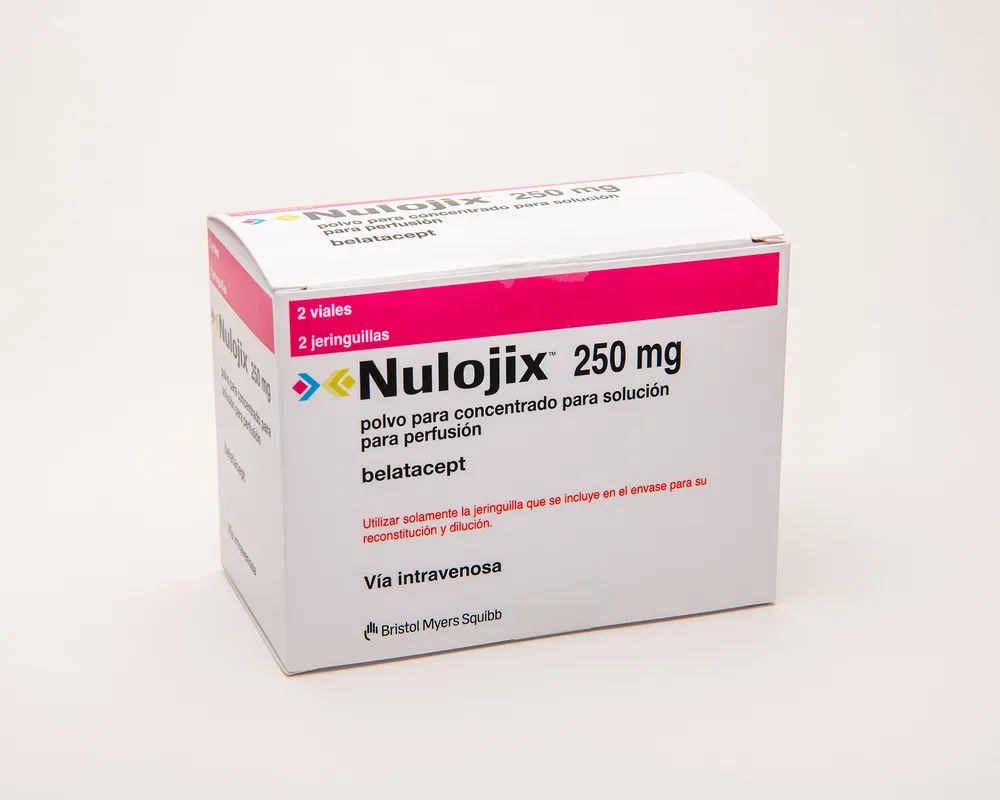
Table of Contents
Package leaflet: Information for the user
Introduction
Package leaflet: information for the user
NULOJIX 250mg powder for concentrate for solution for infusion
belatacept
Read all of this leaflet carefully before you start using this medicine because it contains important information for you.
- Keep this leaflet. You may need to read it again.
- If you have any questions, ask your doctor or pharmacist.
- If you get any side effects, talk to your doctor or pharmacist. This includes any possible side effects not listed in this leaflet. See section 4.
Contents of this leaflet:
- What NULOJIX is and what it is used for
- What you need to know before you use NULOJIX
- How to use NULOJIX
- Possible side effects
- How to store NULOJIX
- Contents of the pack and other information
1. What NULOJIX is and what it is used for
NULOJIX contains the active substance belatacept, which belongs to a group of medicines called immunosuppressors. These are medicines that reduce the activity of the immune system, the body's natural defenses.
NULOJIX is used in adults to help prevent the immune system from attacking your transplanted kidney and causing transplant rejection. It is used together with other immunosuppressive medicines, such as mycophenolic acid and corticosteroids.
2. What you need to know before using NULOJIX
Do not use NULOJIX
- If you are allergic to belatacept or to any of the other ingredients of this medicine (listed in section 6). Allergic reactions associated with the use of belatacept have been reported in clinical trials.
- If you have not been exposed to the Epstein-Barr virus (EBV) or are unsure whether you have been, you must not receive treatment with NULOJIX. EBV is the virus that causes infectious mononucleosis. If you have never been exposed to this virus, your risk of developing a cancer called post-transplant lymphoproliferative disorder (PTLD) is higher. If you are unsure whether you were infected with the virus previously, consult your doctor.
Warnings and precautions
Post-transplant lymphoproliferative disorder (PTLD)
Treatment with NULOJIX increases the risk of developing a cancer called post-transplant lymphoproliferative disorder (PTLD). With NULOJIX, this cancer occurs more frequently in the brain and can be fatal. The risk of developing PTLD is higher in the following cases:
- If you were not exposed to EBV before your transplant
- If you have a viral infection called cytomegalovirus (CMV)
- If you have received treatment for acute rejection, for example, antithymocyte globulin to reduce T-lymphocytes. T-lymphocytes are responsible for maintaining the body's ability to resist diseases and infections, but they can also cause rejection of the transplanted kidney.
- If you are unsure about any of these conditions, consult your doctor.
Serious infections
Serious infections, which may be life-threatening, can occur during treatment with NULOJIX.
NULOJIX weakens the body's ability to fight infections. Serious infections may include:
- Tuberculosis
- Cytomegalovirus (CMV), a virus that can cause severe infections in the blood and tissues
- Herpes zoster
- Other herpes virus infections.
Cases of a rare type of brain infection called progressive multifocal leukoencephalopathy (PML) have been reported in patients treated with NULOJIX. PML often leads to severe disability or death.
Inform your family or caregiver about your treatment. You may experience symptoms of which you yourself may not be aware. Your doctor may need to evaluate your symptoms to rule out PML, PTLD, or other infections. For a list of symptoms, see section 4, "Possible side effects."
Skin cancer
Limit your exposure to sunlight and ultraviolet (UV) light while using NULOJIX. Wear protective clothing and use sunscreen with a high sun protection factor. Patients receiving treatment with NULOJIX have an increased risk of developing certain types of cancer, especially skin cancer.
Blood clots in the transplanted kidney
Depending on the type of kidney transplant you have received, you may have an increased risk of developing blood clots in your transplanted kidney.
Use in conversion from another type of immunosuppressive treatment
If your doctor switches your maintenance therapy to immunosuppressive treatment with NULOJIX, your kidney function will be monitored more frequently for a period of time after the switch to detect possible rejection.
Use in liver transplants
The use of NULOJIX is not recommended if you have had a liver transplant.
Use with other immunosuppressive medicines
NULOJIX is usually administered with steroids. Too rapid a reduction in steroid intake may increase the risk of your body rejecting the transplanted kidney. Please take the exact dose of steroids prescribed by your doctor.
Children and adolescents
NULOJIX has not been studied in children and adolescents under 18 years of age and therefore is not recommended for this age group.
Using NULOJIX with other medicines
Tell your doctor or pharmacist if you are taking, have recently taken, or might take any other medicines, including those obtained without a prescription.
While using NULOJIX, consult your doctor or pharmacist before taking any medicine.
The use of live vaccines should be avoided while you are using NULOJIX. If you need any vaccination, inform your doctor. Your doctor will advise you on what to do.
Pregnancy and breastfeeding
If you are pregnant or breastfeeding, think you might be pregnant, or plan to become pregnant, consult your doctor before using this medicine.
If you become pregnant while using NULOJIX, inform your doctor.
Do not use NULOJIX during pregnancy unless your doctor specifically recommends it. The effects of NULOJIX in pregnant women are unknown. You must not become pregnant while using NULOJIX. If you are a woman of childbearing potential, you must use contraception during treatment with NULOJIX and for 8 weeks after the last dose, as the potential risk to embryonic or fetal development is unknown. Your doctor will advise you on the use of a reliable contraceptive method.
You must stop breastfeeding if you are being treated with NULOJIX. It is unknown whether belatacept, the active substance, passes into human milk.
Driving and using machines
Belatacept has a minor influence on the ability to drive and use machines. However, you must not drive or operate machinery if you feel tired or unwell after treatment with NULOJIX.
NULOJIX contains sodium
Inform your doctor if you are on a low-sodium (low-salt) diet before receiving treatment with NULOJIX.
This medicine contains 0.55 mmol (or 13 mg) of sodium per vial. This corresponds to 0.64% of the maximum daily recommended intake for an adult.
3. How to use NULOJIX
Treatment with NULOJIX will be prescribed and supervised by a kidney transplant specialist.
NULOJIX will be administered to you by a healthcare professional.
It will be given as an intravenous infusion (a "drip") into a vein over approximately 30 minutes.
The recommended dose is based on body weight (in kg) and will be calculated by a healthcare professional. The dose and frequency of administration are provided below.
Initial phase | Dose |
Day of transplant, prior to transplant (Day 1) | 10 mg/kg |
Day 5, Day 14, and Day 28 | |
At the end of weeks 8 and 12 after transplant | |
Maintenance phase | Dose |
Every 4 weeks (± 3 days), starting at the end of week 16 after transplant | 6 mg/kg |
At the time of kidney transplant, you may be given NULOJIX in combination with other types of immunosuppressive treatments to help prevent your body from rejecting the transplanted kidney.
Your doctor may decide to switch your immunosuppressive treatment to NULOJIX during the maintenance phase after your kidney transplant.
Information for doctors and healthcare professionals on dose calculation, preparation, and administration of NULOJIX is provided at the end of this leaflet.
If you are given more NULOJIX than you should
If this happens, your doctor will monitor you for any signs or symptoms of side effects and will treat these symptoms if necessary.
If you forget to receive NULOJIX
It is very important that you keep all your scheduled appointments for receiving NULOJIX treatment. If you missed a dose of NULOJIX when it was due, contact your doctor to schedule your next dose.
If you stop treatment with NULOJIX
If you stop treatment with NULOJIX, your body may reject the transplanted kidney. The decision to discontinue NULOJIX treatment should be discussed with your doctor, who will usually start another treatment.
If you stop treatment with NULOJIX for a long period of time without taking any other medication to prevent rejection, and then restart treatment, it is unknown whether belatacept will have the same effect as before.
If you have any further questions about the use of this medicine, ask your doctor or pharmacist.
4. Possible adverse effects
Like all medicines, this medicine can cause adverse effects, although not everyone will experience them. However, NULOJIX may cause serious adverse effects that might require treatment.
Inform your doctor or caregiver about your treatment, as you may experience symptoms of which you yourself may not be aware.
Contact your doctor immediately if you or your family notice any of the following symptoms:
Nervous system symptoms may include memory loss; difficulty speaking or communicating; changes in mood or behavior; confusion or inability to control muscles; weakness on one side of the body; changes in vision; or headache.
Symptoms of infection may include fever; unexplained weight loss; swollen lymph nodes; cold-like symptoms such as runny nose or sore throat; cough with sputum; blood in sputum; ear pain; red, warm, pus-discharging cuts or scratches.
Symptoms affecting the kidney or bladder may include discomfort around the transplanted kidney; difficulty urinating; changes in the amount of urine produced; blood in urine; pain or burning during urination.
Gastrointestinal symptoms may include pain when swallowing; painful mouth sores; white patches in the mouth or throat; stomach discomfort; stomach pain; vomiting; or diarrhea.
Skin changes may include unexpected bruising or bleeding; skin lesion with brown or black color and irregular borders, or one part of the lesion differing from the rest; changes in size or color of a mole; or a new skin lesion, new bruise, or skin injury.
Allergic reactions may include, but are not limited to, rash; skin redness; hives; itching; swelling of lips; swelling of tongue; facial swelling; whole-body swelling; chest pain; difficulty breathing; wheezing; or dizziness.
Very common adverse effects (may affect more than 1 in 10 people) are:
- Cystitis or kidney infection, upper respiratory tract infection, CMV infection (can cause serious blood and tissue infections), fever, cough, bronchitis
- Difficulty breathing
- Constipation, diarrhea, nausea, vomiting, abdominal pain
- High blood pressure, low blood pressure
- Headache, difficulty sleeping, feeling nervous or anxious, swollen hands and feet
- Joint, back, or limb pain
- Pain when urinating, blood in urine
Blood tests may reveal:
- Decreased number of red blood cells or anemia, decreased number of white blood cells
- Increased blood creatinine levels (a blood test used to measure kidney function), increased protein in urine
- Changes in blood levels of various salts and electrolytes
- Increased cholesterol and triglyceride levels (fats in blood)
- High blood sugar levels
Common adverse effects (may affect up to 1 in 10 people) are:
- Skin cancer and non-cancerous skin lesions
- Dangerously low blood pressure that, if untreated, may lead to collapse, coma, or death
- Stroke
- Tissue necrosis due to lack of blood supply
- Liver inflammation (cytolytic hepatitis)
- Kidney damage
- Fluid in the lungs, wheezing during breathing, chest pain or angina, enlargement of the heart (lower part of the heart)
- Blood or tissue infection, respiratory infections, pneumonia, influenza, sinusitis, runny nose, sore throat, mouth and throat area pain, herpes virus infections, herpes, and other viral infections, mouth sores, aphthous ulcers, kidney infection, fungal skin infections, fungal nail infections and other fungal infections, skin infection, soft tissue infection, wound infection, localized infection, slow wound healing, blood bruising, lymphatic fluid accumulation around the transplanted kidney
- Rapid heart rate, slow heart rate, irregular heartbeat, weak heart
- Diabetes
- Dehydration
- Stomach and intestinal inflammation, usually caused by a virus
- Stomach discomfort
- Unusual tingling, numbness, or weakness in arms and legs
- Skin rash, itching
- Muscle pain, muscle weakness, bone pain, joint inflammation, abnormal cartilage between spinal bones, sudden inability to bend joints, muscle spasms, arthritis
- Blockage of blood vessels in the kidney, kidney enlargement due to blocked urine outflow, urine reflux from bladder to kidney ducts, inability to retain urine, incomplete bladder emptying, nighttime urination, sugar in urine
- Weight gain, weight loss
- Cataracts, increased blood congestion in the eye, blurred vision
- Shaking or tremors, dizziness, fainting or loss of consciousness, ear pain, ringing or other persistent sounds in the ears
- Acne, hair loss, abnormal skin changes, excessive sweating, night sweats
- Abdominal muscle weakness/defects and skin bulging over the scarred area, stomach wall hernia
- Depression, fatigue, feeling tired, drowsiness, lack of energy, general malaise, difficulty breathing when lying down, nosebleeds
- Steroid-like appearance, such as moon face, humped back, upper-body obesity
- Abnormal fluid retention
- Blood tests may reveal:
- Low platelet count in blood, excess white and red blood cells
- Changes in blood carbon dioxide levels, fluid retention, low blood protein
- Abnormal liver function tests, increased parathyroid hormone in blood
- Increased C-reactive protein in blood, indicating inflammation
- Decreased antibodies (proteins that fight infections) in blood
Uncommon adverse effects (may affect up to 1 in 100 people) are:
- Lung cancer, rectal cancer, breast cancer, a form of cancer affecting bones, muscles, or fatty tissue, skin and intestinal tract tumors caused by a herpes virus and in patients with weakened immune systems, prostate cancer, cervical cancer, throat cancer, lymph node cancer, bone marrow cancer, kidney cancer, renal duct cancer, or bladder cancer
- Fungal brain infection, brain inflammation, severe brain inflammation called PML (progressive multifocal leukoencephalopathy)
- Abnormal brain inflammation, increased intracranial and brain pressure, seizures, weakness causing loss of movement or paralysis on one side of the body, loss of nerve covering, inability to move facial muscles
- Any brain disease causing headache, fever, hallucinations, confusion, speech and body movement disturbances
- Poor blood circulation to the heart, blocked heartbeats, abnormal aortic heart valve, abnormally fast heart rhythm
- Sudden breathing problems causing lung damage, increased pulmonary blood pressure, lung inflammation, coughing up blood, lung and airway abnormalities, fluid in the lung sac, temporary breathing stop during sleep, abnormal speech sounds
- Genital herpes
- Colon (large intestine) inflammation caused by cytomegalovirus, pancreatitis, stomach, small intestine, or large intestine ulcers, small intestine obstruction, black, tarry stools, rectal bleeding, abnormal stool color
- Bacterial infections, inflammation or infection of the inner heart layer, tuberculosis, bone infection, lymph node inflammation, chronic bronchiectasis with frequent lung infections
- Infection by the worm Strongyloides, diarrheal infections by the parasite Giardia
- Virus-induced kidney disease (polyomavirus-associated nephropathy), kidney inflammation, kidney scarring, shrinkage of small kidney ducts, hemorrhagic bladder inflammation
- Blood clot in the renal artery
- Guillain-Barré syndrome (a disease causing muscle weakness or paralysis)
- EBV (Epstein-Barr virus) lymphoproliferative disease
- Blood clotting in veins, inflamed veins, periodic leg cramps
- Abnormal arteries, arterial scarring, arterial clotting, arterial narrowing, temporary facial/skin redness, facial swelling
- Gallstones, fluid-filled liver cavity, fatty liver
- Skin disease with red, thickened patches, often with silvery scales, abnormal hair growth, excessive hair breakage, nail breakage, penile ulcer
- Abnormal mineral balance in the body causing bone problems, bone inflammation, abnormal bone weakening leading to bone issues, joint lining inflammation, rare bone disease
- Testicular inflammation, abnormally prolonged penile erection, abnormal cervical cells, breast lump, testicular pain, genital ulcers in women, vaginal wall thinning, infertility or inability to become pregnant, scrotal swelling
- Seasonal allergy
- Loss of appetite, loss of taste, decreased hearing
- Abnormal dreams, mood changes, abnormal inability to concentrate and stay still, difficulty understanding or thinking, memory loss, migraine, irritability
- Numbness or weakness due to poorly controlled diabetes, inability to keep legs still
- Swelling of the back of the eye causing vision changes, eye inflammation, uncomfortable/increased light sensitivity, eyelid swelling
- Cracks at the corners of the mouth, inflamed gums, pain in salivary glands
- Increased sex drive
- Burning sensation
- Infusion reaction, scar tissue, inflammation, disease relapse, feeling of warmth, ulcer
- Insufficient urine production
- Transplanted organ dysfunction, problems during or after transfusion, wound edge separation before healing, bone fractures, complete tendon tear or rupture, low blood pressure during or after a procedure, high blood pressure during or after a procedure, bruising/blood accumulation in soft tissues after a procedure, procedure-related pain, procedure-related headache, soft tissue contusion
- Blood tests may reveal:
- Excessively low red blood cell count, excessively low white blood cell count, red blood cell destruction, blood clotting problems, diabetic acidosis, lack of acids in blood
- Inadequate hormone production by adrenal glands
- Low vitamin D levels
- Increased pancreatic enzymes in blood, increased troponin levels in blood, increased prostate-specific antigen (PSA), high blood uric acid levels, decreased CD-4 lymphocyte count, low blood sugar
Reporting of adverse effects
If you experience any adverse effect, consult your doctor or pharmacist, even if they are possible adverse effects not listed in this leaflet. You can also report them directly through the national reporting system listed in Appendix V. By reporting adverse effects, you help provide more information on the safety of this medicine.
5. Storage of NULOJIX
Keep this medicine out of the sight and reach of children.
Do not use this medicine after the expiry date stated on the vial label and carton after EXP. The expiry date refers to the last day of the month indicated.
This medicine will be stored at the facility where the healthcare professional administers it to you.
Store in a refrigerator (between 2°C – 8°C).
Keep in the original packaging to protect from light.
After reconstitution, the reconstituted solution must be immediately transferred from the vial into the infusion bag or bottle.
From a microbiological standpoint, the product should be used immediately after dilution. If not used immediately, the infusion solution should be stored in a refrigerator (2°C – 8°C) for no longer than 24 hours. Of this total 24-hour period, the infusion solution may be kept for up to 4 hours at temperatures below 25°C. Do not freeze.
Infusion of NULOJIX must be performed within 24 hours after reconstitution of the powder.
Do not use NULOJIX if you notice any particles or colour changes in the reconstituted or diluted solution.
Medicines must not be disposed of via wastewater or household waste. Ask your pharmacist how to dispose of medicines and packaging that you no longer require. This will help protect the environment.
6. Contents of the container and other information
Composition of NULOJIX
- The active substance is belatacept. Each vial contains 250 mg of belatacept. After reconstitution, each ml of concentrate contains 25 mg of belatacept.
- The other components are sodium chloride, sodium dihydrogen phosphate monohydrate, sucrose, sodium hydroxide (to adjust pH), and hydrochloric acid (to adjust pH). (See section 2)
Appearance of the product and contents of the container
NULOJIX powder for concentrate for solution for infusion (powder for concentrate) is a white to off-white powder which may appear compact or fragmented.
Each vial contains 250 mg of belatacept.
Pack sizes of 1 glass vial and 1 syringe or 2 glass vials and 2 syringes.
Only certain pack sizes may be marketed.
Marketing Authorisation Holder and Manufacturer
Marketing Authorisation Holder:
Bristol‑Myers Squibb Pharma EEIG
Plaza 254
Blanchardstown Corporate Park 2
Dublin 15, D15 T867
Ireland
Manufacturer:
Swords Laboratories Unlimited Company T/A Bristol-Myers Squibb Cruiserath Biologics
Cruiserath Road, Mulhuddart
Dublin 15, D15 H6EF
Ireland
Date of the most recent revision of this leaflet
Detailed information on this medicine is available on the European Medicines Agency website: http://www.ema.europa.eu.
This information is intended for healthcare professionals only:
- Aseptic technique must be used for reconstitution of vials and dilution of the solution for administration.
- The provided disposable non-siliconized syringe should be used for reconstituting the vials and adding the solution to the infusion to avoid particle formation.
- Do not shake the vials to avoid foam formation.
- The infusion solution must be administered using a sterile, pyrogen-free, low protein-binding filter (pore size 0.2 µm to 1.2 µm).
Dose selection and vial reconstitution
Calculate the required dose and number of NULOJIX vials. Each NULOJIX vial provides 250 mg of belatacept.
- The total belatacept dose in mg equals the patient's weight in kg multiplied by the belatacept dose in mg/kg (6 or 10 mg/kg; see section 3).
- Dose adjustment of NULOJIX is not recommended for weight changes less than 10%.
- The number of vials required equals the belatacept dose in mg divided by 250, rounded up to the next whole number of vials.
- Reconstitute each vial with 10.5 ml of solution.
- The required volume of reconstituted solution (ml) equals the total belatacept dose in mg divided by 25.
Practical details for vial reconstitution
Under aseptic conditions, reconstitute each vial with 10.5 ml of one of the following diluents (sterile water for injection, sodium chloride 9 mg/ml (0.9%) solution for injection, or 5% glucose solution for injection), using the disposable syringe provided in the pack (required to avoid particle formation) and an 18–21 gauge needle. Syringes are marked in 0.5 ml units; therefore, the calculated dose should be rounded to the nearest 0.5 ml.
Remove the flip-off cap and disinfect the top with an alcohol-impregnated swab. Insert the syringe needle through the center of the rubber stopper into the vial. Direct the stream of liquid against the glass wall of the vial, not onto the powder. Remove the syringe and needle after adding 10.5 ml of reconstitution fluid to the vial.
To minimize foam formation, gently rotate and invert the vial for at least 30 seconds until the powder is completely dissolved. Do not shake. Although some foam may remain on the surface of the reconstituted solution, each vial contains a sufficient excess of belatacept to account for potential losses. Therefore, 10 ml of a 25 mg/ml belatacept solution can be withdrawn from each vial.
The reconstituted solution should be transparent to slightly opalescent and colourless to pale yellow. Do not use if particulate matter, discoloration, or other foreign particles are observed. Immediate transfer of the reconstituted solution from the vial to the infusion bag or bottle is recommended.
Practical details for preparation of the infusion solution
After reconstitution, dilute the product to a final volume of 100 ml with sodium chloride 9 mg/ml (0.9%) solution for injection or 5% glucose solution for injection. Remove from a 100 ml infusion bag or bottle (a 100 ml infusion volume is usually adequate for most patients and doses, although infusion volumes between 50 ml and 250 ml may be used) a volume of sodium chloride 9 mg/ml (0.9%) solution for injection or 5% glucose solution for injection equal to the volume of reconstituted NULOJIX solution (ml equal to total dose in mg divided by 25) required to deliver the dose, and discard it. Slowly add the required amount of reconstituted NULOJIX solution from the vial to the infusion bag or bottle using the same disposable syringe used for powder reconstitution. Mix the infusion container gently. The final concentration of belatacept in the infusion should be between 2 mg and 10 mg of belatacept per ml of solution.
Any unused portion of the vials must be discarded according to local regulations.
Administration
When reconstitution and dilution are performed under aseptic conditions, NULOJIX infusion should be started immediately or completed within 24 hours after reconstitution of the powder. If not used immediately, the infusion solution should be stored in a refrigerator (2°C–8°C) for a maximum of 24 hours. Do not freeze. The infusion solution may be stored for up to 4 hours of the 24-hour period at temperatures below 25°C. The infusion must be administered within 24 hours after reconstitution of the powder. Prior to administration, the infusion solution should be visually inspected for the presence of particles or discoloration. If particles or discoloration are observed, the infusion must be discarded. The fully diluted solution must be administered over 30 minutes using an infusion set and a sterile, pyrogen-free, low protein-binding filter (pore size 0.2 µm to 1.2 µm). After administration, it is recommended to flush the intravenous line with infusion fluid to ensure complete delivery of the dose.
NULOJIX must not be administered concomitantly through the same intravenous line with other medicinal products. No physical or biochemical compatibility studies have been conducted to evaluate co-administration of NULOJIX with other medicinal products.
Do not store any unused portion of the infusion solution for later reuse.
Disposal
Any unused medicine and materials that have come into contact with it must be disposed of in accordance with local regulations.