Novothirteen 2500 IU powder and solvent for solution for injection
Spain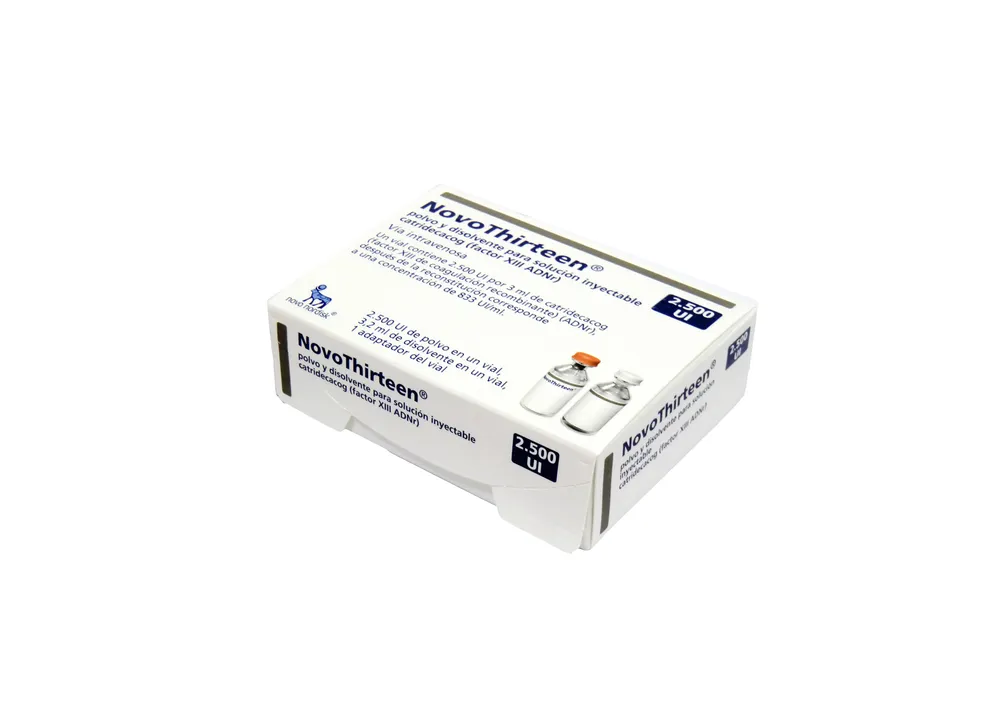
Table of Contents
Package leaflet: Information for the user
Introduction
Package leaflet: information for the user
NovoThirteen 2,500 IU powder and solvent for solution for injection
catridecacog (recombinant coagulation factor XIII)
Read all of this leaflet carefully before you start using this medicine, because it contains important information for you.
- Keep this leaflet, as you may need to read it again.
- If you have any questions, ask your doctor.
- This medicine has been prescribed for you only, and you should not give it to other people, even if they have the same symptoms as you, because it may harm them.
- If you experience any adverse reactions, consult your doctor, even if they are adverse reactions not listed in this leaflet. See section 4.
Contents of this leaflet
- What NovoThirteen is and what it is used for
- What you need to know before using NovoThirteen
- How to use NovoThirteen
- Possible adverse effects
- How to store NovoThirteen
- Contents of the pack and other information
1. What NovoThirteen is and what it is used for
What NovoThirteen is
NovoThirteen contains the active substance catridecacog, which is identical to human coagulation factor XIII, an enzyme necessary for blood clotting. NovoThirteen replaces the missing factor XIII and promotes stabilization of the initial blood clot by creating a mesh around it.
What NovoThirteen is used for
NovoThirteen is used to prevent bleeding in patients who have insufficient or are missing part of factor XIII (called the A subunit).
2. What you need to know before using NovoThirteen
It is important that you use NovoThirteen for injection solution immediately after preparation.
Do not use NovoThirteen
- If you are allergic to catridecacog or to any of the other ingredients of this medicine (listed in section 6).
If you are unsure, consult your doctor before starting to use this medicine.
Warnings and precautions
Talk to your doctor before starting to use NovoThirteen:
- If you have or have had an increased risk of blood clots (thrombosis), as NovoThirteen may increase the severity of an existing blood clot.
- If you have or have had any liver injury.
Contact your doctor immediately:
- If you experience bleeding during treatment with NovoThirteen and it occurs spontaneously and/or requires treatment.
- If you experience an allergic reaction to NovoThirteen. Symptoms may include: hives, itching, swelling, difficulty breathing, hypotension (symptoms include paleness and cold skin, rapid pulse), dizziness, and sweating.
Other medicines and NovoThirteen
Inform your doctor if you are taking, have recently taken, or might need to take any other medicines.
It is not recommended to use NovoThirteen together with recombinant coagulation factor VIIa (another blood clotting factor).
Pregnancy and breastfeeding
If you are pregnant or breastfeeding, think you may be pregnant, or are planning to become pregnant, consult your doctor before using this medicine.
NovoThirteen contains sodium
This medicine contains less than 23 mg (1 mmol) of sodium per injection and is therefore considered essentially “sodium-free”.
3. How to use NovoThirteen
Your treatment with NovoThirteen should be initiated by a physician experienced in the treatment of rare bleeding disorders.
Always follow exactly the administration instructions given by your doctor. If in doubt, consult your doctor again.
Before using NovoThirteen for injection, the product must be reconstituted. See the instructions for use of NovoThirteen.
NovoThirteen is administered intravenously. The dose depends on your body weight. The usual dose for prevention of bleeding is 35 IU per kilogram of body weight. Injections are given once per month (every 28 ± 2 days).
If you experience a bleeding episode, contact your doctor, who will decide whether you need an injection.
NovoThirteen should be injected at a rate not exceeding 2 ml/minute.
Depending on the concentration of the NovoThirteen solution, the dose volume for injection (in millilitres) can be calculated using the following formula:
Dose volume in millilitres = 0.042 × your body weight in kilograms.
You must use only the dose prescribed and calculated by your doctor based on this formula, taking into account that the usual dose and concentration of NovoThirteen differ from those of other medications containing factor XIII.
Your doctor may adjust the dose if necessary.
Use in young children
For children weighing less than 24 kg, reconstituted NovoThirteen should be further diluted with 6 ml of sodium chloride 0.9% for injection to allow accurate dosing in small children. For further information, see the section “Instructions for use of NovoThirteen – Instructions on how to dilute reconstituted NovoThirteen”.
The dose volume for reconstituted NovoThirteen diluted with 6 ml of sodium chloride 0.9% for injection can be calculated using the following formula:
Dose volume in millilitres = 0.117 × body weight in kilograms.
Use in children and adolescents (weighing more than 24 kg)
NovoThirteen may be used in adolescents and children in the same way as in adults, both for prevention of bleeding and in case of bleeding episodes.
If you use more NovoThirteen than you should
Information on overdose with NovoThirteen is limited. None of the reported cases has shown symptoms of illness. Contact your doctor if you have injected more NovoThirteen than prescribed.
If you forget to use NovoThirteen
Consult your doctor if you have missed an injection of NovoThirteen. Do not use a double dose to make up for a missed dose.
If you stop using NovoThirteen
If you stop treatment with NovoThirteen, you will no longer be protected against bleeding episodes. Do not interrupt treatment with NovoThirteen without consulting your doctor, who will explain the consequences of stopping treatment and offer you alternative options.
If you have any further questions about the use of this medicine, ask your doctor.
4. Possible adverse effects
Like all medicines, this medicine can cause adverse effects, although not everyone will experience them.
Adverse effects include:
Common: (may affect up to 1 in 10 people):
- Headache (the most common adverse effect)
- Pain at the injection site
- Pain in arms and legs
- Increased levels of small protein fragments due to the breakdown of blood clots
- Reduction in the number of certain types of white blood cells. This means your body may be more prone to infections
- Development of antibodies against factor XIII. These antibodies do not affect the medicine's efficacy.
Adverse effects in children:
Adverse effects observed in children are the same as those observed in adults, but adverse effects may occur more frequently in children than in adults.
Reporting of adverse effects
If you experience any type of adverse effect, consult your doctor, pharmacist, or nurse, even if it is a possible adverse effect not listed in this leaflet. You may also report them directly via the Spanish System of Pharmacovigilance for Human Medicinal Products: www.notificaRAM.es. By reporting adverse effects, you can help provide more information on the safety of this medicine.
5. Storage of NovoThirteen
Keep this medicine out of the sight and reach of children.
Do not use this medicine after the expiry date stated on the label and outer carton after EXP. The expiry date refers to the last day of the month indicated.
Store in a refrigerator (between 2°C and 8°C).
Do not freeze.
Keep in the original packaging to protect from light.
Once reconstituted, NovoThirteen for injection should be used immediately.
The solution is clear and colourless. Do not use this medicine if you notice particles or a change in colour after reconstitution.
Medicines should not be disposed of via wastewater or household waste. Ask your pharmacist how to dispose of medicines and containers you no longer need. This will help protect the environment.
6. Package contents and other information
Composition of NovoThirteen
- The active substance is catridecacog (recombinant coagulation factor XIII): 2,500 UI/3 ml, after reconstitution, corresponding to a concentration of 833 UI/ml.
- The other components are, for the powder: sodium chloride, sucrose and polysorbate 20, L-histidine, hydrochloric acid (for pH adjustment), sodium hydroxide (for pH adjustment); and for the solvent: water for injections.
Appearance of the product and contents of the container
NovoThirteen is supplied as a powder and solvent for injectable solution (2,500 UI of powder in a vial and 3.2 ml of solvent in a vial, with a vial adapter).
Pack size of 1.
The powder is white and the solvent is clear and colourless.
Marketing Authorisation Holder and Manufacturer
Novo Nordisk A/S
Novo Allé
DK-2880 Bagsværd
Denmark
Date of latest revision of this leaflet:
Detailed information on this medicine is available on the European Medicines Agency website: http://www.ema.europa.eu.
Instructions for use of NovoThirteen
To reconstitute and administer this medicine, the following materials are required: a 10 ml syringe or appropriately sized syringe depending on the injection volume, alcohol-impregnated wipes, the included vial adapter, and an infusion set (tubing, butterfly needle).
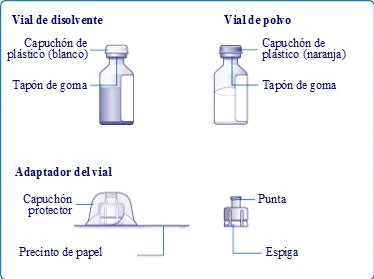
Preparation of the solution
Always use aseptic technique. Wash your hands before beginning. Bring the vials of powder and solvent to a temperature not exceeding 25°C by holding them in your hands until they feel the same temperature as your hands. Remove the plastic caps from both vials. Do not use the vials if the caps are loose or missing. Clean the rubber stoppers of the vials with an alcohol-impregnated wipe and allow them to dry before use.
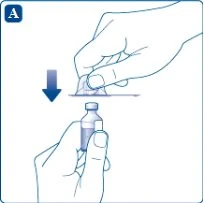
The medicine is reconstituted using the included vial adapter.
Remove the paper seal from the vial adapter without removing it from the protective cap. Place the vial adapter onto the solvent vial (water for injections). Be careful not to touch the spike of the vial adapter.
Once attached, remove the protective cap from the vial adapter.
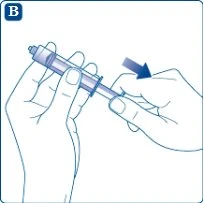
Pull back the plunger of the syringe to draw air equal to the total volume of solvent in the solvent vial.
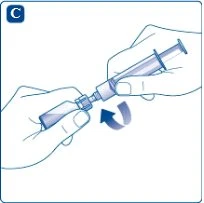
Screw the syringe firmly onto the vial adapter attached to the solvent vial. Inject air into the vial by pushing the plunger until you feel clear resistance.
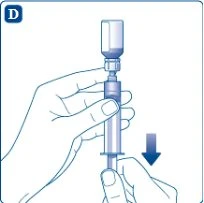
Hold the syringe with the solvent vial upside down. Pull back the plunger to withdraw the solvent into the syringe.
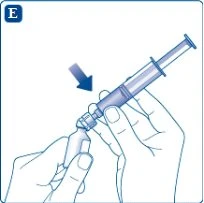
Remove the empty solvent vial by tilting the syringe attached to the vial adapter.
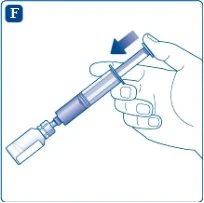
Attach the vial adapter, still connected to the syringe, to the powder vial until you hear a click. Hold the syringe slightly tilted with the vial downward. Slowly push the plunger to inject the solvent into the powder vial. Make sure not to direct the stream of solvent directly onto the powder, as this may cause foaming.
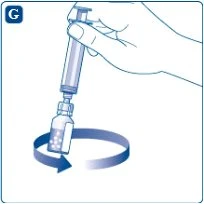
Gently rotate the vial until all the powder is dissolved. Do not shake the vial, as this may cause foaming.
NovoThirteen should be inspected visually for foreign particles and discoloration before administration. If either is observed, discard the medicine.
Reconstituted NovoThirteen is a clear, colourless solution.
If a higher dose is required, repeat the procedure in a separate syringe until the required dose is reached.
Important information
Once prepared, reconstituted NovoThirteen for injection should be used immediately.
If dilution of reconstituted NovoThirteen is required, refer to the section “Dilution of reconstituted product with 0.9% sodium chloride for injection”.
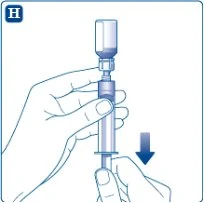
Ensure the plunger is fully depressed before turning the syringe (it may have been expelled by pressure in the vial). Hold the syringe with the vial upside down and pull back the plunger to draw up the calculated injection volume.
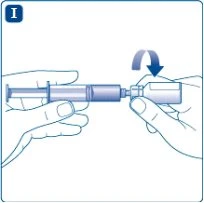
Unscrew the vial adapter with the vial.
The medicine is now ready for intravenous injection. Follow the injection procedure as instructed by your doctor.
After injection
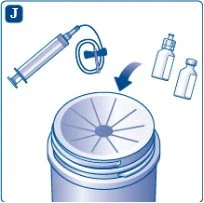
Safely dispose of the syringe, vial adapter, infusion set, and vials. Any unused medicine and all materials that have come into contact with it must be discarded in accordance with local regulations.
Instructions on how to dilute reconstituted NovoThirteen
To dilute reconstituted NovoThirteen, the following materials are required: a vial containing 0.9% sodium chloride for injection, a 10 ml syringe, and alcohol-impregnated wipes.
General instructions for dilution
Dilution must be performed using aseptic techniques.
Carefully draw exactly 6 ml of 0.9% sodium chloride for injection into the 10 ml syringe.
Slowly inject the 6 ml of 0.9% sodium chloride for injection into the vial of reconstituted NovoThirteen.
Gently rotate the vial to mix the solution.
The diluted solution is a clear, colourless solution. Inspect the injectable solution for particles and discoloration. If either is observed, please discard it.
After dilution, proceed to step H.
Any residual material from the diluted product must be discarded immediately.
If you have any doubts, consult your doctor or nurse.