NovoMix 50 FlexPen 100 U/ml injectable suspension in a pre-filled pen
Spain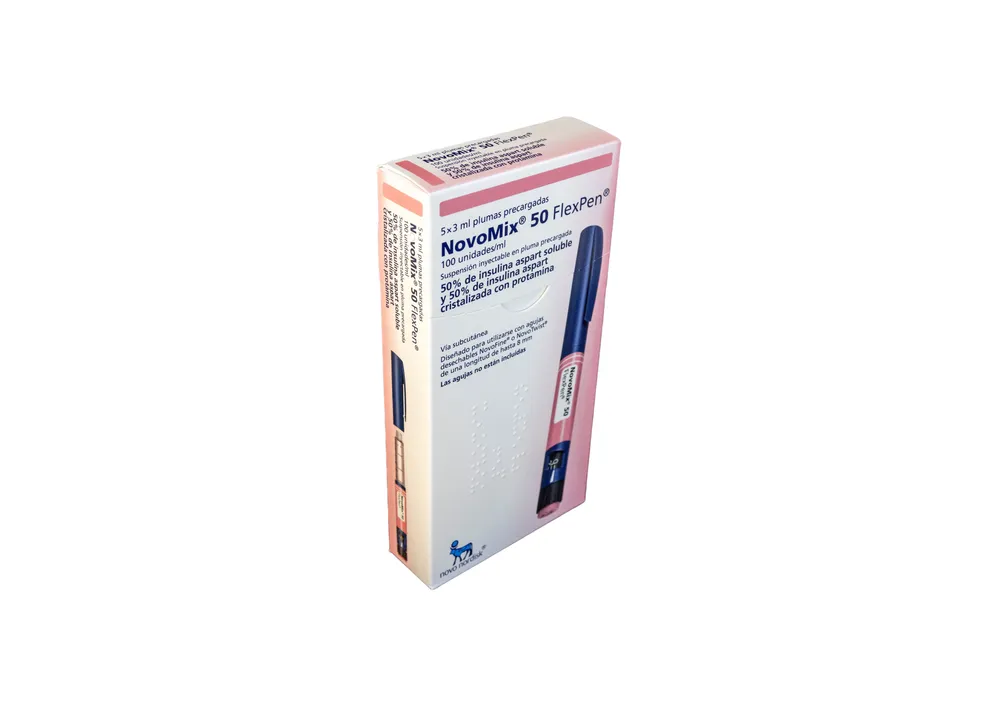
Table of Contents
Package leaflet: Information for the user
Introduction
Package leaflet: information for the user
NovoMix 50 FlexPen 100 units/ml injection suspension in a pre-filled pen
50% soluble insulin aspart and 50% protamine-crystallized insulin aspart
Read the entire leaflet carefully before you start using this medicine, because it contains important information for you.
- Keep this leaflet, as you may need to read it again.
- If you have any questions, ask your doctor, pharmacist or nurse.
- This medicine has been prescribed for you only, and you should not give it to others, even if they have the same symptoms as you, because it may harm them.
- If you experience any adverse effects, consult your doctor, pharmacist or nurse, even if they are adverse effects not listed in this leaflet. See section 4.
Leaflet contents
- What NovoMix 50 is and what it is used for
- What you need to know before using NovoMix 50
- How to use NovoMix 50
- Possible adverse effects
- How to store NovoMix 50
- Contents of the pack and other information
1. What NovoMix 50 is and what it is used for
NovoMix 50 is a modern insulin (insulin analogue) with a rapid- and intermediate-acting component in a 50/50 ratio. Modern insulins are improved versions of human insulin.
NovoMix 50 is used to lower high blood glucose levels in patients with diabetes mellitus (diabetes). Diabetes is a condition in which your body does not produce enough insulin to control your blood glucose level. NovoMix 50 may be used together with metformin.
NovoMix 50 begins to lower your blood glucose level approximately 10–20 minutes after injection, reaches maximum effect between 1 and 4 hours after injection, and the effect lasts up to 14–24 hours.
2. What you need to know before using NovoMix 50
Do not use NovoMix 50
- If you are allergic to insulin aspart or to any of the other ingredients of this medicine (see section 6, Contents of the pack and further information).
- If you suspect you are beginning to experience hypoglycaemia (low blood sugar levels), see a) Summary of serious and very common adverse effects in section 4.
- In insulin infusion pumps.
- If your FlexPen has been dropped, damaged, or broken.
- If it has not been stored correctly or if it has been frozen, see section 5, Storage of NovoMix 50.
- If the insulin does not appear uniformly white and cloudy or watery after resuspension.
- If after resuspension it contains clumps or solid white particles adhering to the bottom or sides of the cartridge.
If any of these apply to you, do not use NovoMix 50. Consult your doctor, nurse, or pharmacist.
Before using NovoMix 50
- Check the label to ensure it is the correct type of insulin.
- Always use a new needle for each injection to avoid contamination.
- You must not share needles or your NovoMix 50 FlexPen.
- NovoMix 50 FlexPen is intended only for subcutaneous injection. Consult your doctor if you need to administer insulin by another method.
Warnings and precautions
Certain conditions and activities may affect your insulin requirement. Consult your doctor:
- If you have kidney, liver, adrenal, pituitary, or thyroid gland problems.
- If you are doing more physical exercise than usual or if you wish to change your normal diet, as this may affect your blood sugar levels.
- If you are ill, continue using your insulin and consult your doctor.
- If you are travelling abroad, travelling across different time zones may affect your insulin requirement and timing of administration.
Skin changes at the injection site
Injection sites should be rotated to help prevent changes in fatty tissue, such as thickening of the skin, skin shrinkage, or lumps under the skin. Insulin may not work well if injected into a lumpy, shrunken, or thickened area (see section 3 How to use, NovoMix 50). Inform your doctor if you notice any changes at the injection site. Inform your doctor if you are currently injecting into these affected areas before switching to a different injection site. Your doctor may advise you to monitor your blood sugar levels more closely and may adjust your insulin dose or the dose of your other antidiabetic medications.
Other medicines and NovoMix 50
Inform your doctor, nurse, or pharmacist if you are taking, have recently taken, or might need to take any other medicines. Some medicines affect your blood sugar levels and may require adjustment of your insulin dose. The main medicines that may affect your insulin treatment are listed below.
Your blood sugar level may decrease (hypoglycaemia) if you take:
- Other medicines for the treatment of diabetes
- Monoamine oxidase inhibitors (MAOIs) (used to treat depression)
- Beta-blockers (used to treat high blood pressure)
- Angiotensin-converting enzyme (ACE) inhibitors (used to treat certain heart conditions or high blood pressure)
- Salicylates (used to relieve pain and reduce fever)
- Anabolic steroids (such as testosterone)
- Sulfonamides (used to treat infections)
Your blood sugar level may increase (hyperglycaemia) if you take:
- Oral contraceptives (birth control pills)
- Thiazides (used to treat high blood pressure or excessive fluid retention)
- Glucocorticoids (such as "cortisone" used to treat inflammation)
- Thyroid hormones (used to treat thyroid gland disorders)
- Sympathomimetics (such as epinephrine [adrenaline], salbutamol, or terbutaline used to treat asthma)
- Growth hormone (a medicine to stimulate somatic and skeletal growth that strongly influences metabolic processes)
- Danazol (a medicine that affects ovulation)
Octreotide and lanreotide (used to treat acromegaly, a rare hormonal disorder usually occurring in middle-aged adults, caused by the pituitary gland producing excess growth hormone) may either increase or decrease your blood sugar levels.
Beta-blockers (used to treat high blood pressure) may weaken or completely suppress the early warning symptoms that help you recognize when your blood sugar is low.
Pioglitazone (tablets used to treat type 2 diabetes)
Some patients with long-standing type 2 diabetes and heart disease or prior stroke who were treated with pioglitazone and insulin developed heart failure. Inform your doctor as soon as possible if you experience signs of heart failure such as unusual shortness of breath, rapid weight gain, or localized swelling (oedema).
If you have taken any of the medicines listed above, inform your doctor, nurse, or pharmacist.
Alcohol and use of NovoMix 50
- If you drink alcohol, your insulin requirement may change because your blood sugar level may increase or decrease. Careful monitoring is recommended.
Pregnancy and breastfeeding
- If you are pregnant, think you may be pregnant, or plan to become pregnant, consult your doctor or pharmacist before using this medicine. Clinical experience with insulin aspart during pregnancy is limited. Your insulin dose may need to be adjusted during pregnancy and after childbirth. Careful control of your diabetes is important for your baby's health, especially prevention of hypoglycaemia.
- There are no restrictions on the use of NovoMix 50 during breastfeeding.
Consult your doctor, pharmacist, or nurse before using any medicine during pregnancy or breastfeeding.
Driving and using machines
- Please ask your doctor if you can drive or operate machinery:
- If you frequently experience hypoglycaemia.
- If you have difficulty recognizing hypoglycaemia.
If your blood sugar levels are low or high, this may affect your concentration and reaction ability, and therefore also your ability to drive or operate machinery. Be aware that you could endanger your life or the lives of others.
Important information about some of the ingredients of NovoMix 50
NovoMix 50 contains less than 1 mmol (23 mg) of sodium per dose, therefore NovoMix 50 is considered essentially "sodium-free".
3. How to use NovoMix 50
Dosage and when to administer insulin
Always use insulin and adjust the dose exactly as your doctor has recommended. If in doubt, consult your doctor, pharmacist, or nurse again.
NovoMix 50 is usually administered immediately before a meal. Eat a meal within 10 minutes after the injection to avoid low blood sugar. If necessary, NovoMix 50 may be administered shortly after a meal. For further information, see below under How and where to inject.
When NovoMix 50 is used in combination with metformin, the dose should be adjusted.
Do not switch insulin unless your doctor tells you to. If your doctor changes you to another type or brand of insulin, you may need a dose adjustment.
Use in children and adolescents
Clinical trials with NovoMix 50 have not been conducted in children and adolescents under 18 years of age.
Use in special patient groups
If you have impaired kidney or liver function (renal or hepatic insufficiency), or if you are over 65 years of age, you should monitor your blood sugar levels more frequently and consult your doctor regarding any changes in your insulin dose.
How and where to inject
NovoMix 50 is injected under the skin (subcutaneous administration). Never inject insulin directly into a vein (intravenous administration) or into muscle (intramuscular administration). NovoMix 50 FlexPen is intended only for subcutaneous injection. Consult your doctor if you need to administer insulin by another method.
With each injection, change the injection site within the specific skin area you usually use. This may reduce the risk of developing lumps or pits in the skin (see section 4, Possible side effects). The best injection sites are: the front of the waist (abdomen), the buttocks, the front of the thigh, or the upper arm. Insulin will act more quickly if injected into the abdominal area. You should always measure your blood sugar level regularly.
How to use NovoMix 50 FlexPen
NovoMix 50 FlexPen is a disposable pre-filled pen with a color code containing a mixture of fast-acting and intermediate-acting insulin aspart in a 50/50 ratio.
Read carefully the instructions for use included in this leaflet. You must use the pen exactly as described in the instructions for use.
Always make sure you are using the correct pen before injecting your insulin.
If you use more insulin than you should
If you use too much insulin, your blood sugar level may become very low (hypoglycemia). See a) Summary of serious and very common adverse effects in section 4.
If you forget to use your insulin
If you forget to use your insulin, your blood sugar level may become very high (hyperglycemia). See c) Effects of diabetes in section 4.
If you stop using your insulin
Do not stop using your insulin without consulting your doctor; he or she will advise you what to do. This could result in very high blood sugar levels (severe hyperglycemia) and ketoacidosis. See c) Effects of diabetes in section 4.
If you have any further questions about the use of this medicine, ask your doctor, pharmacist, or nurse.
4. Possible adverse effects
Like all medicines, this medicine can cause adverse effects, although not everyone experiences them.
- Summary of serious and very common adverse effects
Low blood sugar (hypoglycaemia) is a very common adverse effect. It may affect more than 1 in 10 people.
Low blood sugar levels may occur if:
- Too much insulin is injected.
- You eat too little or skip a meal.
- You exercise more than usual.
- You drink alcohol (see Alcohol and use of NovoMix 50 in section 2).
Symptoms of low blood sugar: Cold sweat, cold and pale skin, headache, palpitations, nausea, excessive hunger, temporary changes in vision, drowsiness, unusual tiredness and weakness, nervousness or trembling, feelings of anxiety, confusion, difficulty concentrating.
Severe hypoglycaemia can cause you to faint. If severe and prolonged hypoglycaemia is not treated, it may lead to brain damage (transient or permanent) and even death. You may regain consciousness more quickly with an injection of the hormone glucagon administered by someone trained to do so. If glucagon is given, you should take glucose or sugary food as soon as you regain consciousness. If there is no response to glucagon treatment, you must be treated in a hospital.
What to do if your blood sugar level is low:
- If your blood sugar level is low, take glucose tablets or a sugary food (for example, sweets, biscuits, fruit juice). Test your blood sugar if possible and rest. Always carry glucose tablets or sugary food with you, just in case.
- When the symptoms of hypoglycaemia have disappeared or when your blood sugar level has stabilized, continue your insulin treatment as usual.
- If your blood sugar level has been so low that you fainted, if you required a glucagon injection, or if you have had many episodes of low blood sugar, speak to your doctor. It may be necessary to adjust your insulin dose or frequency, your diet, or your level of physical activity.
Inform others that you are diabetic and explain the possible consequences, including the risk of fainting (losing consciousness), due to low blood sugar levels. Let them know that if you faint, they should lay you on your side and seek immediate medical help. They should not give you any food or drink as you could choke.
Serious allergic reactions to NovoMix 50 or any of its components (called a systemic allergic reaction) are very rare but potentially life-threatening. It may affect up to 1 in 10,000 people.
Contact your doctor immediately:
- If allergy symptoms spread to other parts of your body.
- If you suddenly feel unwell: you sweat, feel nauseous (vomiting), have difficulty breathing, palpitations, or feel dizzy.
- If you notice any of these symptoms, contact your doctor immediately.
Skin changes at the injection site: If you inject insulin in the same place, fatty tissue may shrink (lipoatrophy) or become thicker (lipohypertrophy) (may affect up to 1 in 100 people). Lumps under the skin may also occur due to the accumulation of a protein called amyloid (cutaneous amyloidosis; frequency unknown). Insulin may not work well if injected into a lumpy, shrunken, or thickened area. Change your injection site regularly to help prevent these skin changes.
b) List of other adverse effects
Uncommon adverse effects
May affect up to 1 in 100 people.
Allergic symptoms: Local allergic reactions (pain, redness, hives, swelling, bruising, swelling, and itching) may occur at the injection site. These usually disappear after a few weeks of treatment. If symptoms do not disappear, you should consult your doctor.
Vision problems: When starting insulin treatment, you may experience vision problems, but this disturbance is usually temporary.
Joint swelling: When starting insulin treatment, fluid retention may cause swelling of the ankles and other joints. This effect usually disappears quickly. If not, consult your doctor.
Diabetic retinopathy (an eye disease related to diabetes that may lead to vision loss): If you have diabetic retinopathy and your blood sugar level improves very rapidly, the retinopathy may worsen. Consult your doctor.
Rare adverse effects
May affect up to 1 in 1,000 people.
Painful neuropathy (pain due to nerve damage): If your blood sugar level improves very rapidly, you may experience nerve-related pain. This is called acute painful neuropathy and is usually transient.
Reporting of adverse effects
If you experience any adverse effect, talk to your doctor, pharmacist, or nurse, even if it is a possible adverse effect not listed in this leaflet. You can also report them directly via the Spanish Pharmacovigilance System for Human Medicines: www.notificaRAM.es. By reporting adverse effects, you can help provide more information on the safety of this medicine.
c) Effects of diabetes
High blood sugar (hyperglycaemia)
High blood sugar levels may occur if:
- Not enough insulin has been injected.
- You forget to inject your insulin or stop insulin treatment.
- You repeatedly inject less insulin than you need.
- You have an infection and/or fever.
- You eat more than usual.
- You exercise less than usual.
Warning symptoms of high blood sugar:
Warning symptoms appear gradually. These include: increased need to urinate, thirst, loss of appetite, feeling dizzy (nausea or vomiting), drowsiness or tiredness, dry and flushed skin, dry mouth, and fruity-smelling breath (acetone).
What to do if your blood sugar level is high:
- If you notice any of the symptoms described: check your blood sugar level, check for ketones in your urine if possible, and contact your doctor immediately.
- These may be symptoms of a very serious condition called diabetic ketoacidosis (acid builds up in the blood because the body breaks down fat instead of sugar). If untreated, it could lead to diabetic coma and death.
5. Storage of NovoMix 50
Keep this medicine out of the sight and reach of children.
Do not use this medicine after the expiry date stated on the carton and on the label of the FlexPen, after EXP. The expiry date refers to the last day of the month indicated.
Always keep the cap on the FlexPen when not in use, to protect it from light. NovoMix 50 must be protected from heat and excessive light.
Before opening: Unused NovoMix 50 FlexPen must be stored in a refrigerator between 2°C and 8°C, away from the cooling element. Do not freeze.
Before using NovoMix 50 FlexPen, remove it from the refrigerator. Resuspension of the insulin is recommended each time you use a new pen, as instructed. See instructions for use.
During use or when carried as a spare: NovoMix 50 FlexPen in use or carried as a spare must not be stored in the refrigerator. It may be carried with you and stored at room temperature (below 30°C) for up to 4 weeks.
Medicines must not be disposed of via wastewater or household waste. Ask your pharmacist how to dispose of medicines and containers you no longer need. This will help protect the environment.
6. Contents of the pack and other information
Composition of NovoMix 50
- The active substance is insulin aspart. NovoMix 50 is a mixture consisting of 50% soluble insulin aspart and 50% insulin aspart crystallized with protamine. 1 ml contains 100 units of insulin aspart. Each pre-filled pen contains 300 units of insulin aspart in 3 ml of injectable suspension.
- The other ingredients are glycerol, phenol, metacresol, zinc chloride, disodium phosphate dihydrate, sodium chloride, protamine sulfate, hydrochloric acid, sodium hydroxide and water for injections.
Appearance of NovoMix 50 and contents of the pack
NovoMix 50 is presented as a suspension for injection in a pre-filled pen. The cartridge contains a glass ball to aid resuspension. After resuspension, the liquid should appear uniformly white, cloudy and aqueous. Do not use the pen if the resuspended insulin does not appear uniformly white, cloudy and aqueous.
Pack sizes of 1, 5 and 10 pre-filled pens of 3 ml. Not all pack sizes may be marketed.
The suspension is cloudy, white and aqueous.
Marketing Authorization Holder and Manufacturer
Novo Nordisk A/S
Novo Allé
DK-2880 Bagsværd, Denmark
Detailed instructions on how to use your FlexPen are printed on the reverse.
Date of the most recent revision of this leaflet:
Other sources of information
Detailed information on this medicine is available on the European Medicines Agency website: http://www.ema.europa.eu.
Instructions for use of NovoMix 50 injectable suspension in FlexPen.
Read the following instructions carefully before using your FlexPen. If you do not follow these instructions carefully, you may inject too little or too much insulin, which could result in blood sugar levels that are too high or too low.
FlexPen is a pre-filled insulin delivery pen.
- Doses from 1 to 60 units can be selected in increments of 1 unit.
- FlexPen is designed to be used with NovoFine or NovoTwist disposable needles with a length of up to 8 mm.
- Always keep a spare insulin delivery device in case your FlexPen is lost or damaged.
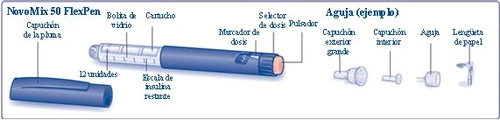
Care of the pen
-
Handle your FlexPen with care. If it is dropped, damaged or subjected to impact, there is a risk of insulin loss. This could lead to inaccurate dosing, which may result in blood sugar levels that are too high or too low.
-
You may clean the outside of your FlexPen with a piece of alcohol-soaked cotton. Do not immerse, wash or lubricate it, as the pen may be damaged.
-
Do not refill your FlexPen.
Resuspension of insulin
A
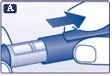
Check the name and color of the label on your pen to make sure it contains the correct type of insulin. This is especially important if you use more than one type of insulin. If you use the wrong type of insulin, your blood sugar level may become too high or too low.
Each time you use a new pen
Allow the insulin to reach room temperature before use. This makes resuspension easier.
Remove the pen cap.
B
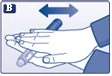
Before administering the first injection with a new FlexPen, you must resuspend the insulin:
Roll the pen between the palms of your hands 10 times, ensuring the pen remains in a horizontal position (parallel to the ground).
C
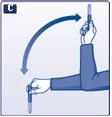
Move the pen up and down 10 times between the two positions shown in the illustration, so that the glass ball moves from one end to the other of the cartridge.
Repeat both movements until the liquid appears uniformly white, cloudy and aqueous.
For each subsequent injection
Move the pen up and down between the two positions at least 10 times until the liquid appears uniformly white, cloudy and aqueous. If this movement alone is not sufficient to achieve a uniformly white, cloudy and aqueous appearance, repeat the procedure described above (see Figures B and C) until the liquid appears as described.
- Always ensure that you have resuspended the insulin before each injection. This reduces the risk of having blood sugar levels that are too high or too low. After resuspending the insulin, complete the following injection steps without delay.
Always check that at least 12 units of insulin remain in the cartridge to allow resuspension. If less than 12 units remain, use a new FlexPen. The remaining insulin scale indicates whether 12 units remain. See the large illustration at the beginning of these instructions.
Do not use the pen if the resuspended insulin does not appear uniformly white, cloudy and aqueous.
Attaching the needle
D
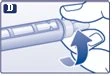
Take a new needle and remove the paper tab.
Screw the needle straight and firmly onto your FlexPen.
E
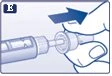
Remove the large outer needle cap and keep it for later use.
F
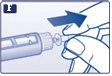
Remove the inner needle cap and discard it.
Never try to reinsert the inner needle cap. You could accidentally prick yourself with the needle.
-
Always use a new needle for each injection. This reduces the risk of contamination, infection, insulin loss, blocked needles and inaccurate dosing.
-
Be careful not to bend or damage the needle before use.
Checking insulin flow
Small amounts of air may accumulate in the cartridge during normal use before each injection. To avoid injecting air and to ensure proper dosing:
G
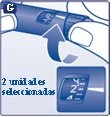
Turn the dose selector to select 2 units.
H
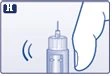
Hold your FlexPen with the needle pointing upwards and gently tap the cartridge a few times with your finger to allow air bubbles to rise to the top of the cartridge.
I
With the needle still pointing upwards, press the plunger fully. The dose selector returns to 0.
A drop of insulin should appear at the tip of the needle. If not, change the needle and repeat the procedure up to a maximum of 6 times.
If a drop of insulin still does not appear, the pen is faulty and you must use a new one.
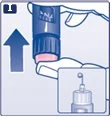
Always ensure a drop appears at the tip of the needle before injecting. This ensures that insulin is flowing. If no drop appears, no insulin will be injected, even if the dose selector moves. This may indicate that the needle is blocked or damaged.
Always check the flow before injecting. If you do not check the flow, you may receive an insufficient or even no insulin at all. This could result in blood sugar levels that are too high.
Selecting the dose
Check that the dose selector shows 0.
J
Turn the dose selector to select the number of units you need to inject.
The dose can be adjusted forwards and backwards by turning the dose selector in either direction until the correct dose aligns with the dose marker. When turning the dose selector, be careful not to press the plunger, as insulin may leak out.
You cannot select a dose larger than the number of units remaining in the cartridge.
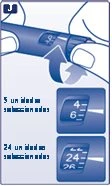
Before injecting insulin, always use the dose selector and dose marker to verify how many units you have selected.
Do not count the clicks of the pen. If you select and inject an incorrect dose, your blood sugar level may become too high or too low. Do not use the remaining insulin scale, as it only shows the approximate amount of insulin left in the pen.
Injection
Insert the needle under the skin. Use the injection technique recommended by your doctor or nurse.
K
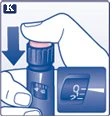
Inject the dose by pressing the plunger fully so that the 0 aligns with the dose marker. Be careful to press the plunger only when injecting.
Turning the dose selector will not deliver insulin.
L
-
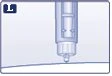
Keep the plunger fully pressed and keep the needle under the skin for at least 6 seconds. This ensures that the full dose is delivered.
-
Remove the needle from the skin and, once removed, release the plunger.
-
Always ensure that the dose selector returns to 0 after injection. If the dose selector stops before reaching 0, the full dose has not been administered, which could result in blood sugar levels that are too high.
M
Cover the needle with the large outer cap without touching it. Once the needle is covered, carefully press the large outer cap fully onto the needle and then unscrew the needle.
Dispose of it carefully and replace the pen cap on the FlexPen.
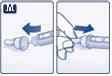
Always remove the needle after each injection and store your FlexPen without a needle attached. This reduces the risk of contamination, infection, insulin loss, blocked needles and inaccurate dosing.
Other important information
People caring for these patients must take great care when handling used needles to reduce the risk of accidental needlestick injuries and infections.
Dispose of your used FlexPen carefully without leaving the needle attached.
Never share the pen or needles with other people. This could cause infections.
Never share the pen with other people. Your medicine could be harmful to their health.
Always keep the pen and needles out of sight and reach of other people, especially children.