Norebox 4 mg tablets
Spain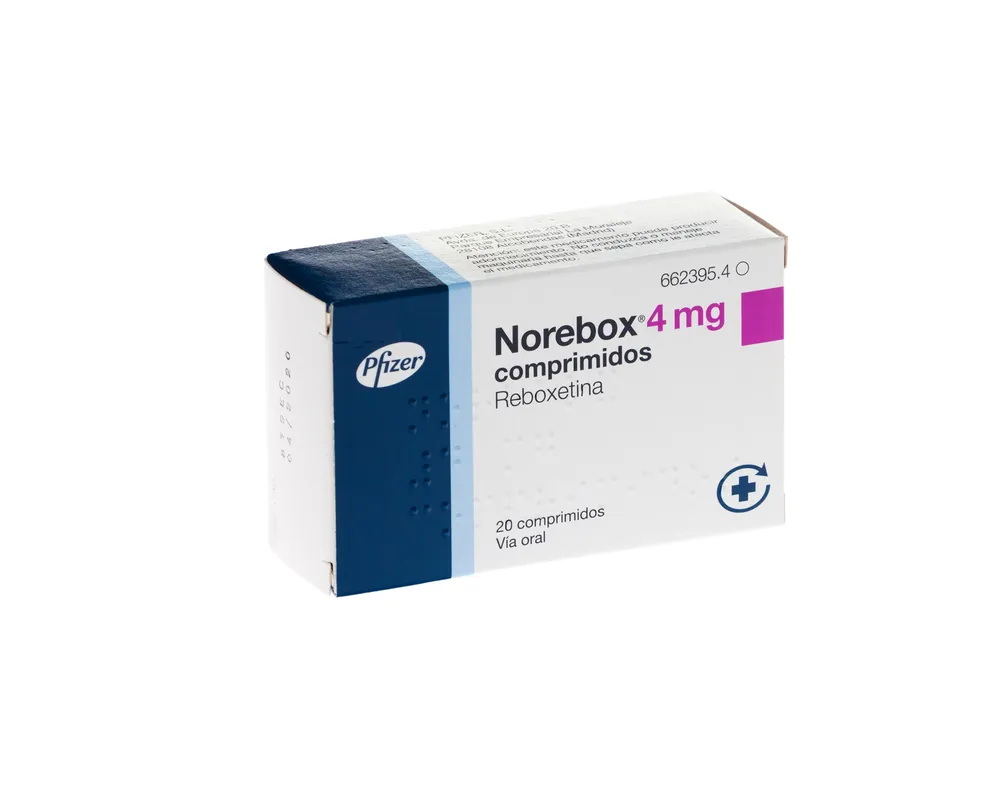
Table of Contents
Package leaflet: Information for the user
Introduction
Package leaflet: Information for the user
Norebox 4 mg tablets
reboxetine
Read the entire leaflet carefully before you start taking this medicine, because it contains important information for you.
- Keep this leaflet as you may need to read it again.
- If you have any questions, ask your doctor or pharmacist.
- This medicine has been prescribed for you only, and you should not give it to other people, even if they have the same symptoms as you, because it could harm them.
- If you experience any adverse effects, consult your doctor or pharmacist, even if they are adverse effects not listed in this leaflet. See section 4.
Leaflet contents:
- What Norebox is and what it is used for
- What you need to know before taking Norebox
- How to take Norebox
- Possible adverse effects
- How to store Norebox
- Contents of the pack and other information
1. What Norebox is and what it is used for
The active substance in Norebox is reboxetine, which belongs to a group of medicines known as antidepressants. Norebox is used to treat depressive disorders/major depression, as well as to maintain improvement in symptoms after you have initially responded to treatment with reboxetine.
2. What you need to know before taking Norebox
Do not take Norebox:
- if you are allergic to reboxetine or to any of the other ingredients of this medicine (listed in section 6).
Warnings and precautions
Consult your doctor or pharmacist before starting to take Norebox if:
- you have seizures or epilepsy. Treatment with reboxetine should be discontinued if you have a seizure.
- you have any urinary problems, enlarged prostate, or a history of heart problems.
- you are being treated with medicines to lower blood pressure.
- you have liver or kidney problems. Your doctor may need to adjust your dose.
- you are taking a medicine called a "monoamine oxidase inhibitor" (MAO inhibitor) used for depression, or if you have taken an MAO inhibitor within the last two weeks. Your doctor may need to stop the MAO inhibitor at least 2 weeks before starting treatment with Norebox.
- you have ever had episodes of mania (hyperactive behavior or racing thoughts).
- you have any eye disorders, such as certain types of glaucoma (increased pressure in the eye).
Serotonin syndrome:
Serotonin syndrome is a potentially life-threatening condition that may occur when taking Norebox alone or in combination with other medicines (see section 2 "Taking Norebox with other medicines"). Signs and symptoms of serotonin syndrome may include a combination of the following: confusion, restlessness, hallucinations, coma, rapid heartbeat, increased body temperature, rapid changes in blood pressure, sweating, flushing, tremors, overactive reflexes, nausea, vomiting, and diarrhea. Contact a doctor or go to the nearest emergency department immediately if you think you are experiencing serotonin syndrome.
Suicidal thoughts and worsening of depression:
If you are depressed, you may sometimes have thoughts of harming yourself or of suicide. These thoughts may increase at the beginning of treatment with antidepressants, because all of these medicines take time to work, usually one or two weeks or sometimes longer.
This is more likely to happen if:
- you have previously had thoughts of suicide or self-harm.
- you are a young adult. Clinical trial data show an increased risk of suicidal behavior in psychiatric patients under 25 years of age treated with antidepressants.
If you have thoughts of harming yourself or of suicide at any time, contact your doctor or go to the hospital immediately.
It may be helpful for you to explain to a close family member or friend that you are depressed and ask them to read this leaflet. You may also ask them to inform you if they think your depression is getting worse or if they are concerned about changes in your behavior.
Children and adolescents
Norebox should not normally be used to treat children and adolescents under 18 years of age. However, you should know that in patients under 18 years of age, there is an increased risk of adverse effects such as suicide attempts, suicidal ideation, and hostility (predominantly aggression, confrontational behavior, and anger reactions) when taking this type of medicine. Nevertheless, the doctor responsible may prescribe Norebox to patients under 18 years of age if they decide it is in the patient's best interest. If your doctor has prescribed Norebox to a patient under 18 years of age and you wish to discuss this decision, please return to your doctor.
You should inform your doctor if any of the symptoms listed above worsen or complications arise while patients under 18 years of age are taking Norebox.
In addition, the long-term effects on safety, as well as on growth, maturation, and cognitive and behavioral development with Norebox in this age group, have not yet been established.
Taking Norebox with other medicines
Inform your doctor or pharmacist if you are taking, have recently taken, or might need to take any other medicines.
Norebox may affect or be affected by other medicines. This includes:
-
Certain antifungals, such as ketoconazole.
-
Certain antibiotics, such as erythromycin, rifampicin.
-
Medicines known as ergot derivatives used to treat migraine and Parkinson's disease.
-
Any potassium-depleting diuretic (water tablet), such as thiazides.
-
Medicines used to treat epilepsy, such as phenobarbital, carbamazepine, and phenytoin.
-
Herbal medicines containing St. John's wort (Hypericum perforatum).
-
Medicines that, when taken with Norebox, could increase the risk of developing serotonin syndrome (see section 2 "Warnings and precautions"):
-
Certain antidepressants known as MAO inhibitors, tricyclic antidepressants, tetracyclic antidepressants, nefazodone, SSRIs (such as fluvoxamine), other serotonin and noradrenaline reuptake inhibitors (SNRIs), or lithium.
-
Medicines known as triptans used to treat migraine.
-
Other MAO inhibitors such as linezolid (an antibiotic) or methylene blue (used to treat high levels of methaemoglobin in the blood).
-
Medicines containing opioids (such as buprenorphine) used to treat severe pain and/or opioid addiction.
-
Medicines to treat anxiety, such as buspirone.
-
Products containing tryptophan (used to treat conditions such as sleep problems or depression).
Your doctor will advise you whether you can take Norebox with other medicines. Please inform your doctor or pharmacist if you are using or have recently used any other medicines, including those obtained without a prescription, herbal medicines, as well as vitamins and minerals.
Taking Norebox with food and drink
Norebox may be taken with or without food.
Pregnancy and breastfeeding
If you are pregnant or breastfeeding, think you may be pregnant, or are planning to become pregnant, consult your doctor or pharmacist before using this medicine.
Pregnancy
There is insufficient experience with the use of Norebox in pregnant women. Do not take Norebox if you are pregnant unless your doctor considers it absolutely necessary after a thorough clinical risk/benefit assessment. Inform your doctor immediately if you become pregnant or if you are planning to become pregnant.
Breastfeeding
Norebox is present in small amounts in breast milk. There is a risk of possible effects on the infant. Therefore, you should discuss this issue with your doctor, who will decide whether you should discontinue breastfeeding or treatment with Norebox.
Driving and using machines
Caution is advised when driving or operating machinery.
Do not drive or operate dangerous tools or machinery until you know that Norebox does not affect your ability (for example, if you feel dizzy), and therefore can safely perform these activities.
3. How to take Norebox
Follow exactly the instructions for administering this medicine as given by your doctor or pharmacist. If in doubt, consult your doctor or pharmacist again.
-
The recommended dose for adults is 8 mg per day (one 4 mg tablet taken twice daily). Depending on your response to the medicine, after 3 or 4 weeks your doctor may increase your dose to 10 mg per day if considered necessary. The maximum daily dose must not exceed 12 mg per day.
-
In patients with reduced renal or hepatic function, the starting dose is 4 mg per day. This dose may be increased according to individual patient response.
-
Use of Norebox is not recommended in elderly patients.
-
Norebox must not be used in children and adolescents under 18 years of age.
Norebox tablets should be taken twice daily, one dose in the morning and one at night. Norebox tablets should be swallowed with a glass of water. The tablet may be divided into equal doses. Do not chew the tablet.
Remember to take Norebox. To make it easier, take the medicine at the same time each day.
As with other medicines, Norebox will not relieve your symptoms immediately. You will begin to feel better after several weeks.
It is important that you continue taking your tablets, even if you feel better, until your doctor tells you to stop treatment. Please be patient; if you stop treatment too early, your symptoms may return.
If you take more Norebox than you should
Never take more tablets than your doctor has prescribed. If you have taken too many tablets, consult your doctor or go to the nearest hospital immediately. If you have taken more tablets than you should, you may experience symptoms of overdose including low blood pressure, anxiety, and hypertension.
In cases of overdose or accidental ingestion, contact your doctor or pharmacist immediately or call the Toxicology Information Service at 91 562 04 20, indicating the medicine and the amount ingested.
If you forget to take Norebox
If you forget to take a dose of Norebox, take the next dose at the usual time. Do not take a double dose to make up for forgotten doses.
If you stop taking Norebox
Do not stop treatment with Norebox without first consulting your doctor, as your symptoms may return.
Cases of withdrawal symptoms including headache, dizziness, nervousness, and nausea (feeling sick), have been reported when patients stopped treatment with Norebox.
If you have any further questions about the use of this medicine, ask your doctor or pharmacist.
4. Possible adverse effects
Like all medicines, this medicine can cause adverse effects, although not everyone will experience them. With Norebox, most adverse effects are mild and usually disappear within the first few weeks of treatment.
If you consider any of the adverse effects you experience to be severe, or if you notice any adverse effects not listed in this leaflet, inform your doctor or pharmacist.
Very common (may affect more than 1 in 10 people)
- Difficulty sleeping (insomnia).
- Dry mouth.
- Dizziness.
- Constipation.
- Nausea (feeling sick).
- Sweating.
Common (may affect up to 1 in 10 people)
- Headache.
- Loss of appetite.
- Agitation, anxiety.
- Paresthesia (tingling), inability to sit or stand still, altered taste.
- Blurred vision.
- Increased heart rate, palpitations (strong heartbeat).
- Dilation of blood vessels, drop in blood pressure upon standing, increase in blood pressure.
- Vomiting.
- Skin rash.
- Sensation of incomplete or slow bladder emptying, urinary tract infection, painful urination, inability to completely empty the bladder.
- Erectile dysfunction (impotence), pain during ejaculation, or delayed ejaculation.
- Chills.
Uncommon (may affect between 1 and 10 in 1,000 people)
- Dilated pupils.
- Sensation of spinning (vertigo).
Rare (may affect between 1 and 10 in 10,000 people)
- Glaucoma (a condition causing increased pressure in the eye).
Not known (frequency cannot be estimated from available data)
- Serotonin syndrome (see section 2 “Warnings and precautions”).
- Hyponatremia (very low levels of sodium in the blood).
- Aggressive behaviour, hallucination.
- Suicidal ideation, suicidal behaviour. Cases of suicidal ideation or suicidal behaviour have been reported during treatment with reboxetine or shortly after discontinuation of treatment (see section 2 “Warnings and precautions”).
- Cold extremities, Raynaud's phenomenon (reduced blood circulation to the extremities, usually fingers and toes, but may also affect the nose and ears; skin becomes pale, cold, and numb).
- Allergic-type skin inflammation.
- Testicular pain.
- Irritability.
- Increased eye pressure.
Reporting of adverse effects
If you experience any adverse effect, consult your doctor or pharmacist, even if it is a possible adverse effect not listed in this leaflet. You can also report them directly via the Spanish Pharmacovigilance System for Human Medicines: http://www.notificaram.es. By reporting adverse effects, you can help provide more information on the safety of this medicine.
5. Storage of Norebox
Keep this medicine out of the sight and reach of children.
Do not use this medicine after the expiry date which is stated on the pack following EXP. The expiry date refers to the last day of the month indicated.
Do not store Norebox above 25 °C.
Bottle: Keep the container tightly closed to protect it from moisture.
Medicines must not be disposed of via wastewater or household waste. Dispose of unused medicines and their containers at the SIGRE Point in your pharmacy. If you are unsure, please ask your pharmacist how to dispose of medicines and containers you no longer need. This will help protect the environment.
6. Contents of the pack and other information
Composition of Norebox
The active substance is reboxetine. Each tablet contains 4 mg of reboxetine.
The other components are microcrystalline cellulose, calcium hydrogen phosphate dihydrate, crospovidone, colloidal hydrated silica, and magnesium stearate.
Appearance of the product and contents of the pack
Norebox is presented as white, round, convex tablets with a score line. There is a "P" engraved to the left of the score line and a "U" to the right of it. On the side opposite the score line, the inscription "7671" is engraved. The tablet can be divided into equal doses.
Norebox is available in packs of 20 or 60 tablets in blisters or in high-density polyethylene (HDPE) bottles with a cylinder containing silica gel desiccant, closed with a child-resistant polypropylene cap with push-and-turn closure. Each bottle contains a silica gel desiccant which should remain in the bottle to help protect your tablets. The silica gel desiccant is contained in a separate cylinder and must not be swallowed.
Not all pack sizes may be marketed.
Marketing Authorization Holder and Manufacturer
Marketing Authorization Holder
Pfizer, S.L.
Avenida de Europa 20 B
Parque Empresarial La Moraleja
Alcobendas (Madrid) 1
Spain
Manufacturer
Pfizer Italia S.r.l.
63100 Località Marino del Tronto
Ascoli, Piceno
Italy
This medicinal product is authorized in the Member States of the European Economic Area and in the United Kingdom (Northern Ireland) under the following names:
- Austria, Belgium, Denmark, Ireland, Italy, Luxembourg, Portugal, Sweden and United Kingdom (Northern Ireland): Edronax
- Spain: Norebox
Date of the latest revision of this leaflet: October 2023
Detailed and up-to-date information on this medicinal product is available on the website of the Spanish Agency of Medicines and Health Products (AEMPS) http://www.aemps.gob.es