Noctamid 1 mg tablets
Spain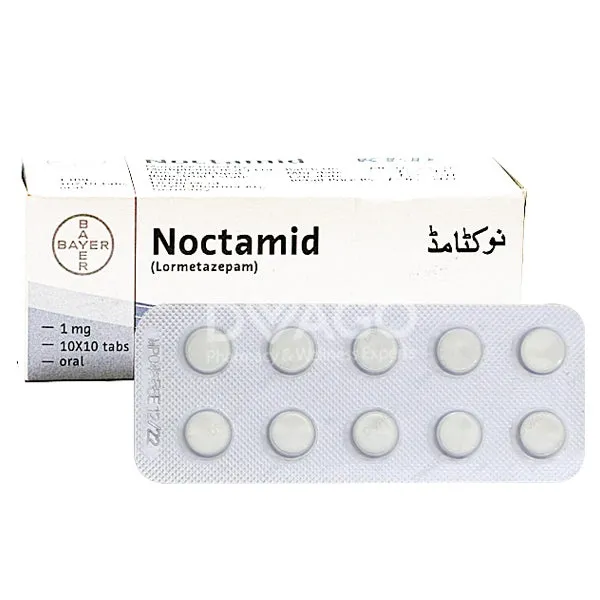
Table of Contents
- Package leaflet: Information for the user
- Introduction
- 1. What Noctamid 1 mg tablets are and what they are used for
- 2. What you need to know before taking Noctamid 1 mg tablets
- 3. How to take Noctamid 1 mg tablets
- 4. Possible adverse effects
- 5. Storage of Noctamid 1 mg tablets
- 6. Contents of the container and additional information
- **Composition of Noctamid 1 mg tablets**
Package leaflet: Information for the user
Introduction
PACKAGE LEAFLET: INFORMATION FOR THE USER
Noctamid 1 mg tablets
Lormetazepam
Read the entire package leaflet carefully before you start taking this medicine, because it contains important information for you.
|
Package leaflet contents:
- What Noctamid 1 mg tablets are and what they are used for
- What you need to know before taking Noctamid 1 mg tablets
- How to take Noctamid 1 mg tablets
- Possible side effects
- Storage of Noctamid 1 mg tablets
- Contents of the pack and other information.
1. What Noctamid 1 mg tablets are and what they are used for
Noctamid is a medicine belonging to the group of hypnotics that promote sleep: it normalizes the time required to fall asleep and the total duration of sleep, while reducing the number of sleep interruptions. It is indicated for:
- Short-term treatment of insomnia.
- Sleep induction in pre- and postoperative periods.
Noctamid belongs to a group of hypnotic medicines called benzodiazepines. Benzodiazepines are only indicated for the treatment of severe disorders that significantly impair the patient's daily activities or cause considerable stress.
2. What you need to know before taking Noctamid 1 mg tablets
Do not take Noctamid 1 mg tablets:
- If you are allergic (hypersensitive) to lormetazepam, to benzodiazepines, or to any of the other ingredients of this medicine (listed in section 6).
- If you have myasthenia gravis (a disease characterized by abnormal muscle weakness).
- If you have severe respiratory insufficiency.
- If you have sleep apnoea syndrome (interruption of breathing during sleep).
- In case of acute intoxication with alcohol, hypnotics, analgesics, or medicines acting on the central nervous system (neuroleptics, antidepressants, lithium).
Warnings and precautions:
- If you have chronic respiratory insufficiency, as you should receive a lower than usual dose.
- If you have hepatic insufficiency.
- If you have severe renal insufficiency.
- Noctamid should not be used as first-line treatment for psychotic illness or as sole treatment for anxiety or sleep disorders associated with depression.
- Noctamid should be administered with caution in patients with medullary or cerebellar ataxia.
Consult your doctor or pharmacist before starting to take this medicine.
Tolerance
- After continuous use for several weeks, a certain degree of loss of efficacy regarding hypnotic effects may be observed.
Dependence
- Noctamid may lead to physical and psychological dependence. The risk of dependence increases with dose and duration of treatment and is also higher in patients with a history of drug or alcohol abuse. Abrupt discontinuation of treatment may be accompanied by withdrawal symptoms such as marked anxiety, tension, restlessness, confusion, irritability, headache, and muscle pain. In more severe cases, derealization, depersonalization, hallucinations, paresthesia in the limbs, sensory intolerance to light, sounds, and physical contact, hyperacusis, and epileptic seizures may occur. Follow exactly the administration instructions for Noctamid given by your doctor to minimize the possibility of these symptoms occurring.
Rebound insomnia and anxiety
- You may experience a rebound episode (transient recurrence of the symptoms that led to starting treatment). The likelihood of withdrawal/rebound phenomena is higher after abrupt discontinuation of treatment; therefore, it is recommended to gradually reduce the dose until complete cessation.
Follow exactly the usage recommendations and administration instructions for Noctamid given by your doctor to minimize the possibility of these symptoms occurring.
Amnesia
- Noctamid may cause anterograde amnesia, i.e., difficulty in remembering recent events; this occurs more frequently within the first few hours after taking the medicine. To reduce this risk, ensure you will be able to sleep uninterrupted for 7–8 hours (see section 4).
Psychiatric and paradoxical reactions
- Noctamid may cause restlessness, agitation, irritability, aggression, delirium, rage attacks, nightmares, hallucinations, psychosis, abnormal and inappropriate behavior, and other adverse behavioral effects. These reactions occur more frequently in children, elderly patients, and patients with cerebral organic syndrome (physical disorders causing reduced mental function). Your doctor will discontinue your treatment with Noctamid if these reactions occur.
- Inform your doctor if you suffer from depression. Noctamid should not be used as the sole treatment for sleep disturbances associated with depression.
- Noctamid should not be used as first-line treatment for psychotic illness (see section 4).
Children and adolescents
Noctamid should not be administered to patients under 18 years of age for the treatment of insomnia without careful medical assessment of the necessity. In addition, treatment duration should be as short as possible (see section 3).
Use in elderly patients
Elderly patients should receive a lower than usual dose, as they are more susceptible to the effects of the medicine. Your doctor will recommend the most appropriate dosage (see section 3).
Taking Noctamid 1 mg tablets with other medicines
Inform your doctor or pharmacist if you are taking, have recently taken, or might take any other medicines, including those obtained without a prescription.
The effect of Noctamid may be enhanced when taken concomitantly with the following medicines:
- Medicines used to treat psychiatric disorders (antipsychotics, neuroleptics, hypnotics, anxiolytics/sedatives, antidepressants).
- Medicines used to relieve severe pain (narcotic analgesics). With these medicines, an increased feeling of euphoria may also occur, which could increase psychological dependence.
- Medicines used to treat epilepsy (antiepileptics).
- Anaesthetics.
- Medicines used to treat allergic symptoms (sedating antihistamines).
- Medicines used to treat cardiovascular diseases (calcium channel blockers, cardiac glycosides).
- Medicines used to treat hypertension (beta-blockers).
- Oral contraceptives.
- Certain antibiotics (such as rifampicin).
Interactions have also been reported with some medicines used to treat high blood pressure (beta-blockers) and with central nervous system stimulants (methylxanthines).
Concomitant use of lormetazepam and opioids (strong analgesics, substitution therapy medicines, and some cough medicines) increases the risk of drowsiness, breathing difficulties (respiratory depression), coma, and may be potentially fatal. Therefore, concomitant use should only be considered when no other treatment options are available.
However, if your doctor prescribes lormetazepam together with opioids, your doctor should limit the dose and duration of concomitant treatment.
Inform your doctor about all opioid medicines you are taking and strictly follow your doctor’s dosage recommendations. It may be helpful to inform friends or family members about the signs and symptoms mentioned above. Contact your doctor if you experience any of these symptoms.
If you are taking other medicines, consult your doctor.
Taking Noctamid 1 mg tablets with food, drinks, and alcohol
During treatment with Noctamid, avoid alcoholic drinks.
Benzodiazepines should be used with extreme caution in patients with a history of drug or alcohol abuse. The sedative effect may be enhanced when this medicine is taken together with alcohol; therefore, consumption of alcoholic beverages is not recommended. This should be especially noted, as it affects the ability to drive or operate machinery (see section “Driving and use of machines”).
Pregnancy and breastfeeding
Consult your doctor or pharmacist before using any medicine.
Pregnancy
If you are pregnant or breastfeeding, think you might be pregnant, or plan to become pregnant, consult your doctor before using this medicine.
If this medicine is administered during the third trimester of pregnancy or during childbirth due to strict medical necessity, effects on the newborn such as hypothermia, hypotonia, moderate respiratory depression, and feeding difficulties may be expected.
Infants born to mothers who chronically take benzodiazepines during the last trimester of pregnancy may develop physical dependence, potentially leading to a postnatal withdrawal syndrome.
Breastfeeding
As benzodiazepines pass into breast milk, their use is contraindicated in nursing mothers.
Driving and use of machines
Noctamid is a medicine that causes drowsiness and therefore significantly affects the ability to drive or operate machinery. Do not drive or operate machinery if you feel sleepy or if you notice that your attention and reaction ability are reduced. Pay special attention at the beginning of treatment or when the dose is increased.
Important information about some of the ingredients of Noctamid 1 mg tablets
This medicine contains lactose. If your doctor has informed you that you have an intolerance to certain sugars, consult with him before taking this medicine.
3. How to take Noctamid 1 mg tablets
Follow exactly the instructions for use of Noctamid provided by your doctor. If you have any doubts, consult your doctor or pharmacist. Remember to take your medication.
Short-term treatment of insomnia
The duration of treatment should be as short as possible. In general, it ranges from a few days to two weeks, with a maximum period—including gradual dose reduction—of four weeks.
The tablets should be taken with a drink, shortly before going to bed.
Adults
It is recommended to take 1 mg of lormetazepam (one tablet of Noctamid 1 mg or ½ tablet of the alternative presentation Noctamid 2 mg) as a single dose.
In cases of severe or persistent insomnia, and always according to strict medical judgment, the dose may be increased to 2 mg of lormetazepam (two tablets of Noctamid 1 mg or one tablet of Noctamid 2 mg).
Elderly patients
A daily dose of ½ tablet of Noctamid 1 mg (0.5 mg of lormetazepam) as a single dose is recommended.
In elderly individuals, benzodiazepines may be associated with an increased risk of falls due to possible muscle weakness, dizziness, drowsiness, and fatigue. Therefore, your doctor will determine the dose best suited to your condition.
If you feel that the effect of Noctamid is too strong or too weak, consult your doctor or pharmacist.
Induction of sleep in pre- and postoperative periods
Doses will depend on the patient's age, weight, and general condition.
Adults
A recommended average daily dose of 2 mg of lormetazepam is advised. The dose range is 0.5 to 3 mg of lormetazepam per day.
Children
A dose of 0.5 mg to 1 mg of lormetazepam per day is recommended.
Elderly patients and patients at risk
A daily dose of 1 mg of lormetazepam is generally recommended. One hour before surgery, half of this dose is recommended.
Dosage reduction should be considered in patients with mild or moderate breathing difficulties or in those with hepatic insufficiency.
Children and adolescents
Noctamid must not be used in children and adolescents under 18 years of age without careful assessment of the necessity of treatment.
If you take more Noctamid 1 mg tablets than you should
Overdose is not life-threatening unless the drug is taken together with other central nervous system depressants (including alcohol). In cases of overdose, it should be considered that the patient may have ingested multiple substances.
Overdose with benzodiazepines generally manifests as varying degrees of central nervous system depression, ranging from drowsiness to coma. In moderate cases, symptoms include drowsiness, confusion, and lethargy (dullness); in more severe cases, ataxia (impaired coordination of movement), visual disturbances, hypotonia (reduced muscle tone), hypotension (low blood pressure), respiratory depression, rarely coma, and very rarely death.
In case of overdose or accidental ingestion, contact your doctor or pharmacist immediately or call the Toxicology Information Service at telephone: 91 562 04 20, indicating the medication and the amount ingested.
If you forget to take Noctamid 1 mg tablets
Do not take a double dose to make up for missed doses.
If you stop taking Noctamid 1 mg tablets
Your doctor will advise you on the duration of treatment with Noctamid. Do not discontinue treatment prematurely, as the desired effect may not be achieved.
If you have any further questions about the use of this product, ask your doctor or pharmacist.
4. Possible adverse effects
Like all medicines, this medicine may cause adverse effects, although not everyone experiences them.
If the dosage is not adjusted to the individual conditions of each patient, adverse effects due to excessive sedation and muscle relaxation may occur.
At the beginning of treatment, daytime somnolence, emotional disturbance, fainting, confusion, fatigue, headache, dizziness, muscle weakness, ataxia (impaired coordination of movement), or double vision may occur. All these effects occur predominantly at the start of treatment and usually disappear with repeated administration.
The most serious adverse reactions observed in patients treated with Noctamid are angioedema (swelling), suicide completion or suicide attempt, generally associated with the masking of a pre-existing depression.
The most frequently observed adverse reactions in patients treated with Noctamid are headache, sedation, and anxiety.
Very common adverse effects
(may affect more than 1 in 10 patients)
- Headache
Common adverse effects
(may affect up to 1 in 10 patients)
-
- Angioedema (swelling of the face, lips, mouth, tongue, or throat that may cause difficulty swallowing or breathing).
- Anxiety, decreased libido (sexual desire).
- Dizziness, sedation, somnolence (drowsiness), attention disturbance, amnesia, visual disturbance, speech disorder, dysgeusia, mental slowing.
- Tachycardia (increased heart rate).
- Vomiting, nausea, upper abdominal pain, constipation, dry mouth.
- Pruritus (itching).
- Urinary disorder.
- Asthenia (lack of energy), excessive sweating.
Adverse effects with unknown frequency
(cannot be estimated from available data)
- Suicide attempt or completed suicide (masking of a pre-existing depression), acute psychosis (a type of mental disorder), hallucinations (false sensory perceptions), dependence, depression (masking of a pre-existing depression), delirium (false beliefs held as true and impossible to disprove), withdrawal syndrome (rebound insomnia), agitation, aggressiveness, irritability, restlessness, rage attacks, nightmares, inappropriate behavior, emotional disturbances.
- Confusion, decreased level of consciousness, ataxia (impaired coordination of movement), muscle weakness.
- Urticaria, exanthema (rash).
- Fatigue.
- Falls.
For more information on the following points, see section “Warnings and precautions”.
Dependence:
Administration of Noctamid and other benzodiazepines may lead to the development of physical and psychological dependence (see section “Warnings and precautions”).
Psychiatric disorders:
Rebound insomnia may occur upon discontinuation of the medicine (see section “Warnings and precautions”).
-
Psychiatric and paradoxical reactions: When using Noctamid, reactions such as restlessness, agitation, irritability, aggressiveness, delirium (false beliefs held as true and impossible to disprove), rage attacks, nightmares, hallucinations (false sensory perceptions), psychosis (a type of mental disorder), inappropriate abnormal behavior, and other behavioral disturbances may occur.
-
Depression: The use of benzodiazepines may mask a pre-existing depression. In such patients, suicide may be triggered. Noctamid should be used with caution in patients with depression.
Nervous system disorders
- Amnesia: Noctamid may cause anterograde amnesia (difficulty in remembering recent events). (See section “Warnings and precautions”).
Reporting of adverse effects
If you experience any type of adverse effect, consult your doctor or pharmacist, even if it is an effect not listed in this leaflet. You may also report them directly via the Spanish Pharmacovigilance System for Human Medicines: www.notificaRAM.es. By reporting adverse effects, you can help provide more information on the safety of this medicine.
5. Storage of Noctamid 1 mg tablets
Keep out of the reach and sight of children.
Noctamid does not require any special storage conditions.
Do not use Noctamid after the expiry date stated on the packaging after EXP. The expiry date refers to the last day of the month indicated.
Medicines must not be disposed of via wastewater or household waste. Dispose of unused medicines and their packaging at the SIGRE collection point in your pharmacy. If you are in doubt, ask your pharmacist how to dispose of unused medicines and their packaging. This will help protect the environment.
6. Contents of the container and additional information
Composition of Noctamid 1 mg tablets
The active substance is lormetazepam. Each tablet contains 1 mg of lormetazepam. The other components are monohydrate lactose, corn starch, povidone 25000 and magnesium stearate.
Appearance of the product and contents of the pack
Noctamid 1 mg tablets: white, round tablets, scored on one side and with the monogram “CF” inscribed within a hexagon on the other side. The tablet can be divided into equal doses. It is presented in blisters, in packs of 30 tablets.
Other presentations:
Noctamid 2 mg tablets, 20 tablets.
Noctamid 2.5 mg/ml oral drops solution, containing 20 ml of solution.
Marketing Authorization Holder and Manufacturer
Marketing Authorization Holder:
Teofarma, S.R.L.
Via F. Lli Cervi, 8
I-27010 Valle Salimbene (Pavia), Italy
Manufacturer:
TEOFARMA, S.R.L.
Viale Certosa 8 /a, Pavia I-27100 Italy
or
DOPPEL FARMACEUTICI S.r.l.
Via Volturno, 48
20089 Quinto de’ Stampi – Rozzano, Italy
This leaflet was approved in February 2022
Detailed and up-to-date information on this medicinal product is available on the website of the Spanish Agency of Medicines and Health Products (AEMPS) http://www.aemps.gob.es