Nicotinell Fruit 2 mg medicated chewing gum
Spain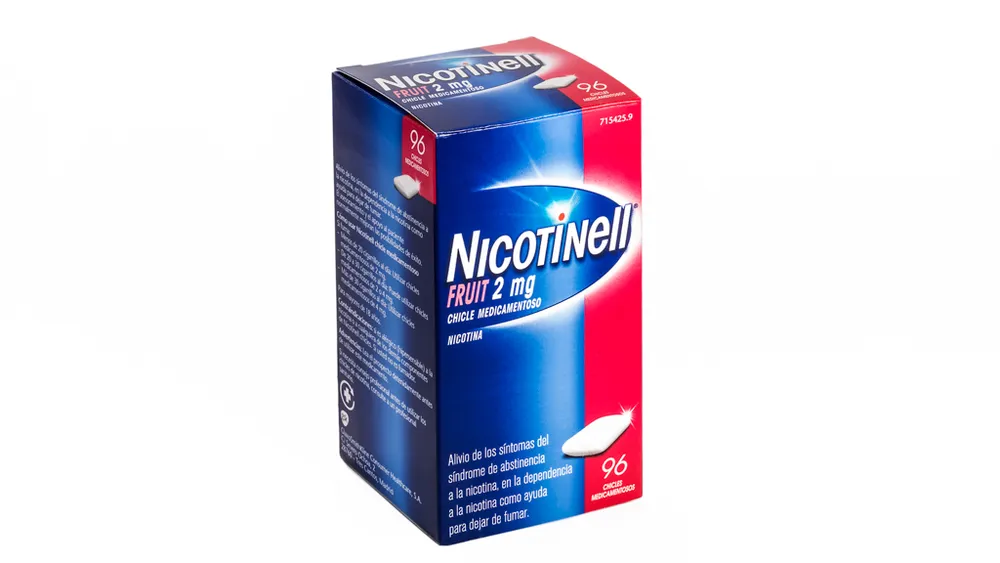
Table of Contents
- Package leaflet: Information for the user
- Introduction
- 1. What Nicotinell Fruit is and what it is used for
- 2. What you need to know before starting to take Nicotinell Fruit
- 3. How to take Nicotinell Fruit
- 4. Possible adverse effects
- 5. Storage of Nicotinell Fruit
- 6. Contents of the pack and other information
Package leaflet: Information for the user
Introduction
Package leaflet: information for the user
Nicotinell Fruit 2 mg medicated chewing gum
Nicotine
Read all of this leaflet carefully before starting to take this medicine, because it contains important information for you.
This medicine is available without a prescription. However, to achieve the best results,
you must use Nicotinell Fruit 2 mg medicated chewing gum correctly.
Follow exactly the instructions for use provided in this
leaflet or as directed by your doctor or pharmacist.
- Keep this leaflet, as you may need to read it again.
- If you need advice or further information, consult your pharmacist.
- If you experience any adverse effects, consult your doctor or pharmacist, even if they are effects not listed in this leaflet. See section 4.
- You should consult a doctor if you still need to use Nicotinell after 6 months.
Contents of the leaflet:
- What Nicotinell Fruit is and what it is used for
- What you need to know before taking Nicotinell Fruit
- How to take Nicotinell Fruit
- Possible adverse effects
- How to store Nicotinell Fruit
- Contents of the pack and other information
1. What Nicotinell Fruit is and what it is used for
Nicotinell belongs to a group of medicines used as an aid to stop smoking.
Nicotinell contains the active substance nicotine.
As the chewing gum is chewed, the nicotine is slowly released and absorbed through the oral mucosa.
It is indicated to relieve symptoms of nicotine withdrawal in nicotine dependence, as an aid to stop smoking.
Counselling and patient support normally improve the chances of success.
2. What you need to know before starting to take Nicotinell Fruit
Do not take Nicotinell Fruit
- If you are allergic to nicotine or to any of the other ingredients of this medicine (listed in section 6).
- If you are not a smoker.
Warnings and precautions
Consult your doctor or pharmacist before taking Nicotinell if you have:
- any heart problems. You should consult a healthcare professional before using any nicotine replacement product. If you experience worsening of heart problems while using a nicotine replacement therapy product, you should reduce or stop using the product,
- recently had a heart attack or stroke, or suffer from serious heart rhythm problems or chest pain, you should try to quit smoking without using any nicotine replacement therapy, unless your doctor advises you to use it,
- heart failure, angina, Prinzmetal's angina, or high blood pressure (uncontrolled hypertension),
- circulation problems,
- diabetes. You should monitor your blood sugar levels more frequently when you start using nicotine chewing gum. Your need for insulin or medication may change,
- overactive thyroid gland (hyperthyroidism),
- overactive adrenal glands (pheochromocytoma),
- suffer from renal or hepatic impairment,
- stomach or duodenal ulcers or inflammation of the oesophagus or throat (the passage between mouth and stomach), as nicotine replacement therapy may worsen your symptoms,
- fructose intolerance,
- if you have ever experienced seizures.
Keep all medicines out of the sight and reach of children.
People with jaw joint problems and some people with dentures may have difficulty chewing the gum. If this is your case, it is recommended to use a different pharmaceutical form of nicotine replacement therapy. Consult your doctor or pharmacist.
Children and adolescents
Even small amounts of nicotine can be dangerous in children and may cause severe symptoms or death. If nicotine poisoning in a child is suspected, consult a healthcare professional immediately. For this reason, it is essential to keep Nicotinell out of the sight and reach of children at all times.
Taking Nicotinell Fruit with other medicines
Inform your doctor or pharmacist if you are taking, have recently taken, or might take any other medicines. Stopping smoking may alter the effect of other medicines you may be taking. If you have any questions or concerns about this, consult a healthcare professional.
There is no information available regarding interactions between Nicotinell and other medicines. However, apart from nicotine, other substances in cigarettes may affect certain treatments.
Stopping smoking may alter the effect of medicines such as:
- Theophylline (used in the treatment of bronchial asthma).
- Tacrine (used in the treatment of Alzheimer's disease).
- Olanzapine and Clozapine (for the treatment of schizophrenia).
- Insulin (used in the treatment of diabetes), whose dose may need to be adjusted.
Taking Nicotinell Fruit with food and drinks
Consumption of coffee, acidic drinks (e.g. fruit juices) or soft drinks may reduce the absorption of nicotine and should therefore be avoided during the 15 minutes before chewing Nicotinell, as they may affect nicotine absorption.
Pregnancy and breastfeeding
Pregnancy
If you are pregnant, you should stop smoking without using nicotine replacement therapy. However, if you have tried and failed, nicotine replacement therapy should only be used to help you quit smoking after recommendation by a healthcare professional.
Breastfeeding
If you are breastfeeding, nicotine replacement therapy should only be used after advice from a healthcare professional, as nicotine may pass into breast milk.
Fertility
Smoking increases the risk of infertility in both women and men.
Driving and use of machines
Although no effects on the ability to drive or operate machinery are known at the recommended doses, it should be noted that quitting smoking may cause changes in behaviour.
Nicotinell Fruit contains sorbitol, butylated hydroxytoluene and sodium
This medicine contains sorbitol, which is a source of fructose. If your doctor has informed you that you have an intolerance to certain sugars, or if you have been diagnosed with hereditary fructose intolerance (HFI), a rare genetic disorder in which the person cannot break down fructose, consult your doctor before taking this medicine. If you do not tolerate sorbitol, do not use this product.
This medicine may cause local skin reactions (such as contact dermatitis) or irritation of the eyes and mucous membranes because it contains butylated hydroxytoluene.
Each Nicotinell Fruit 2 mg chewing gum contains 0.2 g of sorbitol, as a sweetener, which is a source of 0.04 g of fructose. The energy value is 1.0 kcal per chewing gum.
This medicine contains less than 23 mg of sodium (1 mmol) per medicated chewing gum; this is essentially "sodium-free".
3. How to take Nicotinell Fruit
Follow exactly the instructions for use provided in this leaflet or those given by your doctor or pharmacist. If in doubt, ask your doctor or pharmacist.
To maximize your chances of successfully quitting smoking, you must not smoke at all when starting Nicotinell or during the entire course of treatment.
Nicotinell is available in two dosage strengths: 2 mg and 4 mg. The appropriate dose depends on your previous smoking habits. You should use Nicotinell 4 mg if:
- You are a smoker with high or very high nicotine dependence.
- You have previously failed to quit smoking using Nicotinell 2 mg.
- Your withdrawal symptoms are so intense that you are likely to relapse and start smoking again.
In all other cases, you should use Nicotinell 2 mg.
Select the appropriate dosage for you from the following table:
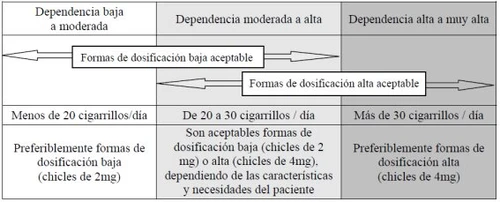
If any adverse events occur when starting treatment with the higher dosage form (Nicotinell 4 mg), it should be replaced with the lower dosage form (Nicotinell 2 mg).
Instructions for use:
Begin using this product on the day you stop smoking. To successfully quit smoking with this treatment, you must stop smoking completely.
Chew one piece of gum when you feel the urge to smoke. Do not use more than one piece of gum at a time. Do not use more than one piece of gum per hour.
- Chew the gum slowly until the taste becomes strong. Do not eat or drink while the gum is in your mouth.
- Place the gum between your cheek and gum.
- When the taste fades, start chewing the gum again.
- Repeat this process for about 30 minutes to allow the nicotine to be released gradually.
Do not swallow the medicated gum.
Recommended dose for adults over 18 years of age and elderly patients:
Chew one piece of gum when you start feeling the need to smoke. Generally, one piece should be chewed every 1–2 hours. In most cases, 8–12 pieces per day are sufficient. If you still feel the urge to smoke, you may chew an extra piece. Do not exceed 24 pieces of Nicotinell 2 mg gum per day.
The duration of treatment is individual. Normally, treatment should continue for 3 months. After 3 months, gradually reduce the number of daily gum pieces. Treatment should be discontinued when consumption has been reduced to 1 or 2 pieces per day.
It is not recommended to use Nicotinell for longer than 6 months. However, some former smokers may require longer treatment with medicated gum to prevent relapse.
If you are still using Nicotinell after 6 months, you should consult your doctor or pharmacist.
Counselling and patient support generally improve the chances of success.
Use in children and adolescents
Nicotinell must not be used in individuals under 18 years of age without medical advice.
If you take more Nicotinell Fruit than you should
Chewing too many Nicotinell gums may cause symptoms similar to those experienced when smoking large amounts of tobacco. If you use too many nicotine gums, you may begin to feel unwell, dizzy, and generally sick. Stop using the gum and consult a healthcare professional immediately. General symptoms of nicotine overdose include: weakness, pale skin, increased sweating, involuntary muscle contractions, increased salivation, dizziness, throat irritation, nausea, vomiting, diarrhea, abdominal pain, visual and auditory disturbances, headache, changes in heart rhythm (tachycardia), shortness of breath, confusion, prostration, circulatory problems, coma, and terminal convulsions.
With very high overdoses, exhaustion, convulsions, low blood pressure leading to circulatory collapse, or respiratory failure may occur.
Consult your doctor or pharmacist if you experience any problems.
If nicotine poisoning is suspected in a child, seek medical advice immediately. Even small amounts of nicotine are dangerous and potentially fatal for children and may cause severe symptoms or death.
If you have any further questions about the use of this medicine, ask your doctor or pharmacist.
If you forget to use Nicotinell
Do not take a double dose to make up for a missed dose.
If you stop using Nicotinell
If you have further questions about using this medicine, consult your doctor or pharmacist.
4. Possible adverse effects
Like all medicines, this medicine can have adverse effects, although not everyone will experience them.
Some of the effects you may notice during the first few days are dizziness, headache, and sleep disturbances, which may be attributed to the symptoms associated with quitting smoking itself, and sometimes may be due to insufficient nicotine administration.
They are grouped according to how likely they are to occur:
Very common (may affect more than 1 in 10 people):
- Feeling unwell (nausea).
Common (may affect between 1 and 10 in 100 people):
-
Chewing gum may cause pain or mild irritation in the mouth or tongue
-
Sore throat or swelling
-
Feeling sick
-
Stomach discomfort
-
Diarrhea
-
Indigestion/heartburn
-
Flatulence
-
Hiccups
-
Excessive salivation
-
Constipation
-
Difficulty swallowing
-
Dizziness and headache
-
Vomiting
-
Insomnia
-
Cough
-
Dry mouth
-
Jaw muscle pain, especially as a result of chewing the gum too intensively. These problems can be avoided by chewing the gum more slowly.
Uncommon (may affect up to 1 in 100 people):
- Awareness of heartbeat (palpitations)
- Itchy skin rash (urticaria)
Rare (may affect up to 1 in 1,000 people):
-
Rapid and irregular heartbeats (atrial fibrillation)
-
Difficulty breathing
-
Symptoms of severe allergic reaction including sudden wheezing or tightness in the chest, skin rash, and feeling faint
-
Changes in heart rhythm (faster heartbeat) and allergic reactions. Allergic reactions may very rarely be severe and include the following symptoms:
-
Skin swelling
-
Swelling of the face and mouth
-
Dizziness, lightheadedness, and fainting (symptoms of low blood pressure)
-
Difficulty breathing
Mouth ulcers may occur, which may be related to stopping smoking rather than the treatment.
In rare cases, Nicotinell may adhere to and damage dentures or other dental prostheses.
Reporting of adverse effects
If you experience any type of adverse effect, consult your doctor or pharmacist, even if it is a possible adverse effect not listed in this leaflet. You can also report them directly via the Spanish Pharmacovigilance System for Human Medicines: Website: www.notificaRAM.es. By reporting adverse effects, you can help provide more information on the safety of this medicine.
5. Storage of Nicotinell Fruit
Keep this medicine out of the sight and reach of children.
Do not use Nicotinell after the expiry date stated on the packaging after EXP. The expiry date is the last day of the month indicated.
Do not store above 25°C.
Do not dispose of medicines via wastewater drains or household waste. Dispose of packaging and unused medicines at the SIGRE Point at your pharmacy. If in doubt, ask your pharmacist how to dispose of packaging and medicines you no longer need. This will help protect the environment.
6. Contents of the pack and other information
Composition of Nicotinell Fruit
- The active substance is nicotine. Each medicated chewing gum contains 2 mg (corresponding to 10 mg of nicotine polacrilex).
- The other components are: gum base (contains butylated hydroxytoluene (E321)), calcium carbonate, sorbitol (E420), anhydrous sodium carbonate, sodium hydrogen carbonate, polacrilex, glycerol (E422), purified water, levomenthol, tutti frutti flavouring, saccharin, sodium saccharin, acesulfame potassium, xylitol (E967), mannitol (E421), gelatin, titanium dioxide (E171), carnauba wax and talc. See section 2 “Nicotinell Fruit contains sorbitol, butylated hydroxytoluene and sodium”.
Appearance of the product and contents of the pack
Nicotinell medicated chewing gum is available in two strengths (2 and 4 mg) and three flavours (Nicotine, Fruit and Cool Mint). This leaflet refers to Nicotinell Fruit 2 mg medicated chewing gum.
Nicotinell 2 mg is presented as a matte white, rectangular medicated chewing gum.
Nicotinell 2 mg is available in packs of 2, 12, 24, 36, 48, 60, 72, 96, 120 or 204 medicated chewing gums in blister packs. Only certain pack sizes may be marketed.
Marketing Authorization Holder
Haleon Spain, S.A.
Parque Tecnológico de Madrid, Calle de Severo Ochoa, 2
28760 Tres Cantos, Madrid - Spain
Manufacturer
FAMAR S.A.
48th km National Road Athens-Lamia,
19011, Avlonas, Attiki – Greece
This medicinal product is authorized in the Member States of the European Economic Area under the following names:
Belgium Nicotinell Fruit, 2 mg, kauwgom
Denmark Nicotinell Fruit, medicinsk tyggegummi
Spain Nicotinell Fruit 2 mg medicated chewing gum
Estonia Nicotinell Fruit
Finland Nicotinell Fruit 2 mg lääkepurukumi
France NICOTINELL FRUIT 2 mg SANS SUCRE, gomme à mâcher médicamenteuse
Greece Nicotinell Fruit
Hungary Nicotinell Fruit 2 mg gyógyszeres rágógumi
Ireland Nicotinell Fruit 2mg Medicated Chewing Gum
Latvia Nicotinell Fruit 2 mg arstnieciska košļājamā gumija
Lithuania Nicotinell Fruit 2 mg vaistinė kramtomoji guma
Luxembourg Nicotinell Fruit, 2 mg, gomme à mâcher médicamenteuse
Netherlands Nicotinell Fruit, 2 mg, kauwgom
Norway Nicotinell medisinsk tyggegummi med fruktsmak
Portugal Nicotinell Fruit 2 mg
United Kingdom Nicotinell Fruit 2mg Medicated Chewing Gum
Sweden Nicotinell Fruit 2 mg medicinskt tuggummi
This leaflet has been reviewed in November 2025
Detailed and up-to-date information on this medicinal product is available on the website of the Spanish Agency for Medicines and Health Products (AEMPS): http://www.aemps.gob.es/