Nicotinell 21 mg/24 hours transdermal patch
Spain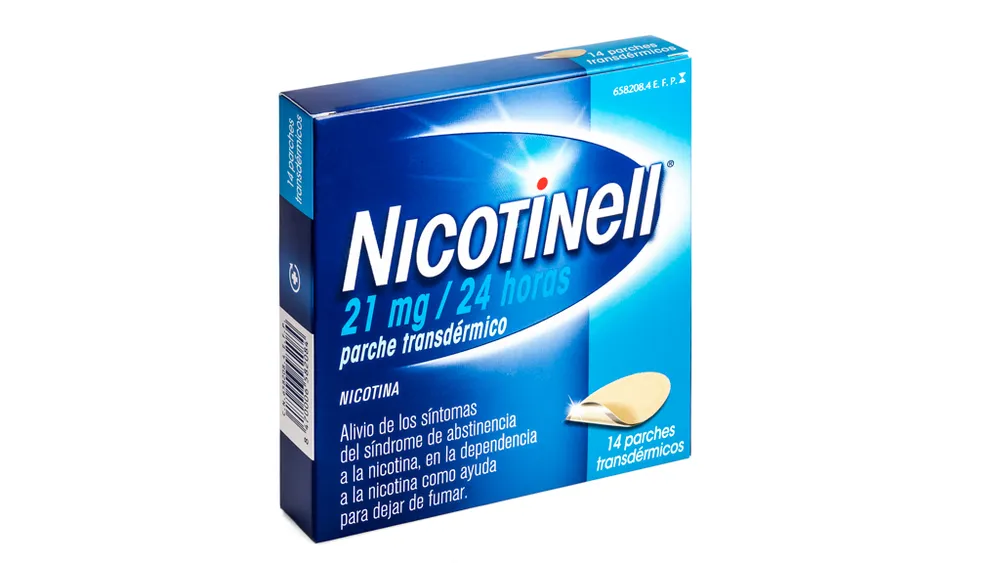
Table of Contents
- Package leaflet: Information for the user
- Introduction
- 1. What NICOTINELL TRANSDERMAL PATCH is and what it is used for
- 2. BEFORE USING NICOTINELL TRANSDERMAL PATCH
- 3. HOW TO USE NICOTINELL TRANSDERMAL PATCH
- 4. Possible adverse effects
- 5. STORAGE OF NICOTINELL TRANSDERMAL PATCH
- 6. ADDITIONAL INFORMATION
Package leaflet: Information for the user
Introduction
Package leaflet: information for the user
Nicotinell 21 mg/24 hours transdermal patch
Nicotine
Read all of this leaflet carefully because it contains important information for you.
This medicine is available without prescription. However, to obtain the best results, it must be used carefully.
-
Keep this leaflet as you may need to read it again.
-
If you need advice or more information, consult your pharmacist.
-
If symptoms worsen or persist after 6 months, you should consult your doctor.
-
If you consider any of the adverse effects to be serious or if you notice any adverse effects not mentioned in this leaflet, inform your doctor or pharmacist. See section 4.
Contents of this leaflet:
- What Nicotinell transdermal patch is and what it is used for
- Before you use Nicotinell transdermal patch
- How to use Nicotinell transdermal patch
- Possible adverse effects
- How to store Nicotinell transdermal patch
- Further information
1. What NICOTINELL TRANSDERMAL PATCH is and what it is used for
Nicotinell belongs to a group of medicines used to help you stop smoking.
Nicotinell is a transdermal patch and is similar to a plaster, containing the medicine in the part that adheres to the skin.
This medicine is indicated for the relief of nicotine withdrawal symptoms in nicotine dependence as an aid to smoking cessation.
2. BEFORE USING NICOTINELL TRANSDERMAL PATCH
Do not use Nicotinell transdermal patch
- if you smoke occasionally or are a non-smoker.
- if you are allergic (hypersensitive) to nicotine or to any of the other components of this medicine.
If you are unsure whether you should use Nicotinell, consult your doctor or pharmacist.
Take special care with Nicotinell transdermal patch
If you are in the immediate recovery period after a heart attack, stroke, or have severe cardiac arrhythmias or uncontrolled hypertension, consult your doctor before starting treatment with Nicotinell.
You should consult your doctor or a healthcare professional before using Nicotinell:
- if you have stable cardiovascular disorders, severe hypertension, or heart failure,
- if you have had cerebrovascular or arterial occlusive disorders,
- if you have diabetes, you should monitor your blood sugar levels more frequently than usual when starting to use the nicotine patch. You may need to adjust your insulin or other antidiabetic treatment.
- if you have stomach or duodenal ulcers, or inflammation of the esophagus or throat (the passage between the mouth and stomach), as nicotine replacement therapy may worsen your symptoms.
- if you have severe hepatic and/or renal impairment,
- if you have any skin disease.
- if you have ever experienced seizures (fits).
Stop using the patch and consult a healthcare professional
- if you develop redness, swelling, or a rash on the skin. If you have a history of dermatitis, you may be more likely to experience these reactions.
Used nicotine patches contain enough residual nicotine to be harmful to children. Keep all medicines out of the reach and sight of children.
After use, fold the patch in half before carefully disposing of it, and keep it out of the reach and sight of children.
Using Nicotinell patches with other medicines
Stopping smoking may alter the effects of other medicines you may be taking. If you have any questions or concerns about this, consult a healthcare professional.
Pregnancy
If you are pregnant, you should stop smoking without using nicotine replacement therapy. Quitting completely is by far the best option. However, if you have tried and failed, nicotine replacement therapy should only be used to help you stop smoking after the recommendation of a healthcare professional.
Breast-feeding
If you are breast-feeding, you should first try to stop smoking without using nicotine replacement therapy. However, if you have tried and failed, nicotine replacement therapy should only be used after the recommendation of a healthcare professional, as nicotine can pass into breast milk.
Driving and using machines
Although no effects on the ability to drive or use machines are known at the recommended doses, it should be taken into account that quitting smoking may cause changes in behavior.
Important information about some components of Nicotinell transdermal patch
Nicotinell transdermal patch contains aluminum: you should not wear the Nicotinell patch during Magnetic Resonance Imaging (MRI) scans.
3. HOW TO USE NICOTINELL TRANSDERMAL PATCH
You must completely stop smoking while undergoing this treatment in order to successfully quit the smoking habit. You should not use Nicotinell simultaneously with another nicotine-containing product such as chewing gum or lozenges, unless under strict medical supervision.
Smokers under 18 years of age should not use Nicotinell without the explicit recommendation of a healthcare professional.
Three dosage strengths of this medicine are available: Nicotinell 7 mg/24 h, Nicotinell 14 mg/24 h, and Nicotinell 21 mg/24 h.
The appropriate dose for each individual is determined based on the number of cigarettes smoked per day or on the results of the Fagerström test. This test measures the degree of nicotine dependence and helps select the most suitable patch dose for each person.
Use the Fagerström test to assess the level of nicotine dependence.
FAGERSTRÖM TEST
How long after waking up do you smoke your first cigarette?
| Score |
Is it difficult for you not to smoke in places where smoking is forbidden?
| |
Which cigarette of the day is hardest for you to give up?
| |
How many cigarettes do you smoke per day?
| |
Do you smoke more in the morning than during the rest of the day?
| |
Do you smoke even when you are so ill that you must stay in bed most of the day?
| |
TOTAL SCORE |
- Score of 0 to 2: not dependent on nicotine.
You can stop smoking without the need for nicotine replacement therapy.
However, if you are concerned about quitting smoking or are unsure which patch dose to use, consult your doctor or pharmacist.
-
Score of 3 to 4: low dependence on nicotine.
-
Score of 5 to 6: moderate dependence on nicotine.
Using nicotine replacement therapy will increase your chances of success.
Consult your doctor or pharmacist to help you choose the most appropriate treatment for you.
- Score of 7 to 10: high or very high dependence on nicotine.
The use of nicotine replacement therapy is recommended to assist with your dependence. The treatment should be used at a sufficient and appropriate dose.
Consult your doctor or pharmacist, preferably within a specialized smoking cessation support program.
The dose of Nicotinell transdermal patch may need to be adjusted during treatment, as nicotine dependence can vary. Sometimes the nicotine dose from the Nicotinell patch may be too low, and sometimes too high.
You should increase the dose if you experience withdrawal symptoms such as:
- a strong urge to smoke
- irritability
- difficulty sleeping
- nervousness or impatience
- difficulty concentrating
Consult your doctor or pharmacist; the dose may need to be adjusted.
You should reduce the dose if you experience signs of overdose, such as:
- nausea (feeling sick), vomiting, stomach pain, diarrhea
- excessive salivation
- sweating
- headache, dizziness, hearing loss, visual disturbances
- general weakness (lack of energy)
It is essential to adjust the treatment with the help of your doctor or pharmacist.
The standard treatment consists of 3 phases:
Initial phase: this will help you stop smoking.
Maintenance phase: this phase consolidates smoking cessation and begins nicotine withdrawal.
Weaning phase: this phase helps you complete the treatment.
Normally, the treatment should be followed for 3 months, although the duration may vary depending on the individual.
Do not use Nicotinell for longer than 6 months.
Initial Phase 3 to 4 weeks | Follow-up Treatment 3 to 4 weeks | Tapering Treatment 3 to 4 weeks | |
Fagerström Test Score greater than or equal to 5 or smokers of 20 or more cigarettes/day | Nicotinell 21 mg/24 h | Nicotinell 14 mg/24 h or Nicotinell 21 mg/24 h* | Nicotinell 7 mg/24 h or Nicotinell 14 mg/24 h followed by Nicotinell 7 mg/24 h* |
Fagerström Test Score less than 5 or smokers of fewer than 20 cigarettes/day | Nicotinell 14 mg/24 h or increase to Nicotinell 21 mg/24 h* | Nicotinell 7 mg/24 h** or Nicotinell 14 mg/24 h | Discontinuation of treatment ** or Nicotinell 7 mg/24 h |
- depending on the results obtained regarding withdrawal symptoms.
** if results are satisfactory.
Method and route of administration
Transdermal route (through the skin).
Open the pouch using scissors and remove the Nicotinell transdermal patch. Do not cut the Nicotinell transdermal patch.
Remove the pre-cut disposable protective liner from the side of the transdermal patch. This is the medicated side, which must be in contact with the skin.
Immediately after removing the protective liner, apply the Nicotinell transdermal patch to a clean, dry, intact skin area (without cuts, scratches or bruises) with minimal hair, such as the shoulder, torso, or upper outer arm. Avoid areas of the body subject to movement or friction with clothing. Apply the entire, uncut patch directly to the skin.
To ensure proper adhesion, press firmly with the palm of your hand over the entire outer surface of the patch for at least 10–20 seconds.
Keep the patch in place for 24 hours. If you experience difficulty sleeping, consult your doctor or pharmacist.
Replace the Nicotinell transdermal patch every 24 hours. Use a different skin area for each new patch, allowing several days to pass before reapplying to the same site.
When removing the patch from your skin, fold it in half with the medicated side inward before disposing of it safely, keeping it out of sight and reach of children.
During handling, avoid contact with the eyes and nose, and wash your hands after application.
If taking prolonged baths in the sea or swimming pool, you have two options:
- before bathing, remove the transdermal patch and immediately place it back into its container. You may reapply it later to dry skin.
- cover the transdermal patch with a waterproof adhesive dressing (e.g., adhesive plaster) throughout the bath.
During showering, the transdermal patch may remain in place, provided you avoid directing the water stream directly onto it.
Frequency of administration
Use one patch every 24 hours.
Duration of treatment
The duration of treatment is restricted to 6 months. |
Consult your doctor if withdrawal symptoms worsen or do not improve, anxiety persists, or you have difficulty discontinuing treatment.
If you use more Nicotinell transdermal patch than you should:
In case of accidental overdose or if a child chews or applies a transdermal patch to the skin, remove the patch immediately, wash the skin with water only (do not use soap), consult a doctor or go to a hospital emergency department, or call the Toxicology Information Service (telephone 91 562 04 20), indicating the name and amount used.
In children, even small amounts of nicotine are dangerous and may be fatal. If nicotine poisoning is suspected in a child, consult a healthcare professional immediately.
In addition to signs of overdose that only require dose reduction (see the list before the dosage table), serious poisoning may occur with the following symptoms:
- Pale skin
- Increased sweating
- Involuntary muscle contractions
- Sensory disturbances
- And confusion may occur
With high overdose:
- Exhaustion
- Seizures
- Low blood pressure that may lead to circulatory collapse or respiratory failure
If you forget to use Nicotinell transdermal patch:
Apply the patch as soon as you remember, and then continue your treatment as before. Do not use 2 patches at the same time.
If you have further questions about the use of this medicine, consult a healthcare professional.
4. Possible adverse effects
Like all medicines, Nicotinell can have adverse effects, although not everyone will experience them.
Some adverse effects may be serious
Allergic reactions such as skin rash, swelling of the face and mouth, low blood pressure, and difficulty breathing.
If you experience any of these, remove the patch and contact your doctor immediately.
Some adverse effects are very common (affecting more than 1 in 10 patients):
Reactions at the application site such as itching, redness, edema (swelling), and burning sensation (on the area of skin where the Nicotinell transdermal patch has been applied). If you develop a severe skin reaction that does not go away, you should stop treatment and consult your doctor or pharmacist to find an alternative nicotine replacement therapy to help you quit smoking.
These reactions are often caused by not changing the patch application site daily. Changing the application site will allow skin irritation to resolve naturally, causing only mild discomfort.
Sleep disturbances including insomnia and abnormal dreams. Headache, nausea, dizziness, malaise, vomiting.
Some adverse effects are common (affecting 1 to 10 in 100 patients):
Palpitations (awareness of heartbeat), breathing difficulties, nervousness, tremors, malaise, stomach pain, diarrhea, throat pain or inflammation, cough, dry mouth, fatigue or weakness, constipation, joint and muscle pain.
These effects are often mild and will usually resolve naturally and quickly once the patch is removed.
Some adverse effects are uncommon (affecting 1 to 10 in 1,000 patients):
Fast heartbeat, general malaise.
Some adverse effects are rare (affecting 1 to 10 in 10,000 patients):
Irregular heartbeat.
Some adverse effects are very rare (affecting less than 1 in 10,000 patients):
Tremors, increased skin sensitivity to sunlight.
Reporting of adverse effects
If you experience any adverse effect, consult your doctor or pharmacist, even if it is a possible adverse effect not listed in this leaflet. You may also report them directly via the Spanish Pharmacovigilance System for Human Medicines: www.notificaRAM.es. By reporting adverse effects, you can help provide more information on the safety of this medicine.
5. STORAGE OF NICOTINELL TRANSDERMAL PATCH
Keep out of the reach and sight of children.
Do not use after the expiry date stated on the pouch and on the packaging following "EXP". The expiry date refers to the last day of the month indicated.
- Do not store above 25ºC
Medicines should not be disposed of via wastewater drains or household waste. Dispose of unused containers and medicines at the SIGRE collection point at your pharmacy. If in doubt, ask your pharmacist how to properly dispose of unused containers and medicines. This will help protect the environment.
6. ADDITIONAL INFORMATION
Composition of Nicotinell transdermal patch:
- The active substance is nicotine. Each transdermal patch contains 52.5 mg of nicotine in a 30 cm² patch, which releases a nominal amount of 21 mg of nicotine every 24 hours.
- The other components (excipients) are: Butyl methacrylate basic copolymer (Eudragit E100), aluminum-coated polyester film, acrylate-vinyl acetate copolymer (Duro Tak 387-2516), medium-chain triglycerides (Miglyol 812), 26 g/m² paper, siliconized aluminized polyester film, brown ink.
Appearance of Nicotinell transdermal patch and contents of the pack:
Nicotinell 21 mg/24 h: yellowish-brown round transdermal patch (30 cm² in size, marked EME), sealed in a protective sachet.
Nicotinell 21 mg/24 h is available in packs of: 7, 14, 21 and 28 patches. Some pack sizes may not be marketed.
Marketing Authorization Holder:
Dr. Reddy’s Netherlands B.V.
Claude Debussylaan 10
1082 MD Amsterdam
The Netherlands
Manufacturer:
LTS Lohmann Therapie-Systeme AG
Lohmannstrasse 2
56626 Andernach
Germany
or
Haleon - Gebro Consumer Health GmbH
Bahnhofbichl 13
6391 Fieberbrunn
Austria
For further information about this medicinal product, please contact the local representative of the Marketing Authorization Holder:
Vemedia Pharma Hispania, S.A.
C/ Aragón, 182, 5th floor
08011 - Barcelona (Spain)
This medicinal product is authorized in the Member States of the European Economic Area under the following names:
Austria: Nicotinell TTS Depot-Pflaster 30 (21 mg/24 h)
Belgium: Nicotinell 21 mg/24 u, pleister voor transdermaal gebruik
Spain: Nicotinell Patches 21 mg / 24 hours transdermal patches
Greece: Nicotinell TTS® NCH
Luxembourg: Nicotinell 21 mg/24 h, dispositif transdermique
Netherlands: Nicotinell 21 mg/24 u, pleister voor transdermaal gebruik
Portugal: Nicotinell 21 mg/24 hours
This leaflet was approved in May 2022
Detailed and updated information on this medicinal product is available on the website of the Spanish Agency of Medicines and Health Products (AEMPS): http://www.aemps.es