Nevanac 1 mg/ml eye drops suspension
Spain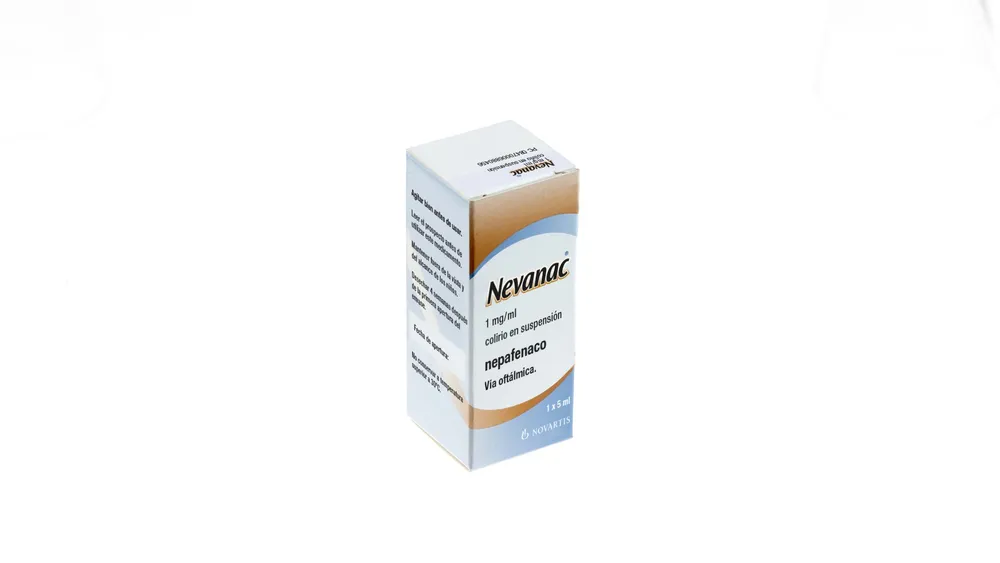
Table of Contents
Package leaflet: Information for the user
Introduction
Package leaflet: information for the user
NEVANAC 1 mg/ml eye drops, suspension
nepafenac
Read the entire leaflet carefully before you start using this medicine, because it contains important information for you.
- Keep this leaflet, as you may need to read it again.
- If you have any questions, ask your doctor, pharmacist or nurse.
- This medicine has been prescribed for you only, and you should not give it to other people, even if they have the same symptoms as you, because it could harm them.
- If you experience any adverse effects, consult your doctor, pharmacist or nurse, even if they are adverse effects not listed in this leaflet. See section 4.
Contents of the leaflet
- What NEVANAC is and what it is used for
- What you need to know before using NEVANAC
- How to use NEVANAC
- Possible side effects
- How to store NEVANAC
- Contents of the pack and other information
1. What NEVANAC is and what it is used for
NEVANAC contains the active substance nepafenac, which belongs to a group of medicines called non-steroidal anti-inflammatory drugs (NSAIDs).
NEVANAC is used in adults:
- To prevent and relieve ocular pain and inflammation following cataract surgery in the eye.
- To reduce the risk of macular edema (swelling at the back of the eye) following cataract surgery in the eye in diabetic patients.
2. What you need to know before using NEVANAC
Do not use NEVANAC
- if you are allergic to nepafenac or to any of the other ingredients of this medicine (listed in section 6),
- if you are allergic to other non-steroidal anti-inflammatory drugs (NSAIDs),
- if you have previously experienced asthma, skin allergy, or severe inflammation of the nose when taking other NSAIDs. Examples of NSAIDs include: acetylsalicylic acid, ibuprofen, ketoprofen, piroxicam, and diclofenac.
Warnings and precautions
Talk to your doctor, pharmacist, or nurse before starting to use NEVANAC:
- if you bruise easily or have a bleeding disorder or have had one in the past,
- if you have any other eye disorders (e.g. an eye infection) or if you are using other eye medications (especially ophthalmic steroids),
- if you have diabetes,
- if you have rheumatoid arthritis,
- if you have undergone repeated eye surgeries in a short period of time.
Avoid exposure to sunlight during treatment with NEVANAC.
The use of contact lenses after cataract surgery is not recommended. Your doctor will advise you when you can resume using contact lenses (see also “NEVANAC contains benzalkonium chloride”).
Children and adolescents
Do not use this medicine in children and adolescents under 18 years of age, as safety and efficacy have not been established in this population.
Other medicines and NEVANAC
Inform your doctor or pharmacist if you are currently using, have recently used, or might need to use any other medicines.
NEVANAC may affect or be affected by other medicines you are using, including other eye drops used to treat glaucoma.
Also inform your doctor if you are taking medicines that reduce blood clotting (e.g. warfarin) or other NSAIDs. These medicines may increase the risk of bleeding.
Pregnancy and breastfeeding
If you are pregnant or may become pregnant, consult your doctor before using NEVANAC. Women who may become pregnant are advised to use effective contraception during treatment with NEVANAC. The use of NEVANAC during pregnancy is not recommended. Do not use NEVANAC unless clearly indicated by your doctor.
If you are breastfeeding, NEVANAC may pass into breast milk. However, effects on the breastfed infant are not expected. NEVANAC may be used during breastfeeding.
If you are pregnant or breastfeeding, think you may be pregnant, or plan to become pregnant, consult your doctor or pharmacist before using this medicine.
Driving and using machines
Do not drive or operate machinery until your vision is clear. Immediately after applying NEVANAC, you may experience blurred vision.
NEVANAC contains benzalkonium chloride
This medicine contains 0.25 mg of benzalkonium chloride in each 5 ml, equivalent to 0.05 mg/ml.
NEVANAC contains a preservative, benzalkonium chloride, which can be absorbed by soft contact lenses and may alter their color. Remove contact lenses before using this medicine and wait 15 minutes before reinserting them. Benzalkonium chloride may cause eye irritation, particularly if you have dry eye or other corneal diseases (the transparent layer at the front of the eye). Consult your doctor if you experience a foreign body sensation, stinging, or eye pain after using this medicine.
3. How to use NEVANAC
Follow exactly the instructions given by your doctor or pharmacist for administering this medicine. If in doubt, consult your doctor or pharmacist again.
Use NEVANAC only in your eyes. Do not swallow or inject.
Recommended dose
One drop into the affected eye(s), three times a day—morning, midday, and night. Use it at the same time each day.
When to use and for how long
Begin 1 day before cataract surgery. Continue on the day of surgery. Then use it for the period of time indicated by your doctor, which may be up to 3 weeks (to prevent and relieve ocular pain and inflammation) or 60 days (to prevent the occurrence of macular edema) after your surgery.
How to use
Wash your hands before starting.
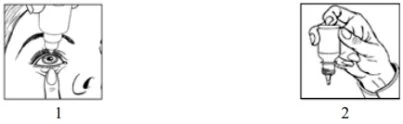
- Shake well before use.
- Unscrew the cap of the bottle.
- After removing the cap, remove the security seal ring before using this medicine.
- Hold the bottle upside down between your fingers.
- Tilt your head backward.
- Gently pull down the lower eyelid of your eye with one finger, creating a pouch where the drop should fall (Figure 1).
- Bring the tip of the bottle close to your eye. You may use a mirror to assist.
- Do not touch the eye, eyelid, surrounding areas, or any other surface with the dropper tip, as the drops could become contaminated.
- Gently press the base of the bottle to release one drop of NEVANAC at a time.
- Do not squeeze the bottle: it is designed so that gentle pressure on the base is sufficient (Figure 2).
If applying drops to both eyes, repeat the above steps for the other eye. Immediately after use, tightly screw the cap back onto the bottle.
If a drop misses the eye, try again.
If you are using other eye drops, wait at least 5 minutes between applying NEVANAC and the other drops.
If you use more NEVANAC than you should
Contact your doctor for detailed instructions. Do not apply additional drops until it is time for your next dose.
If you forget to use NEVANAC
Apply a single dose as soon as you remember. If it is almost time for your next dose, do not take the missed dose; instead, continue with your next scheduled dose. Do not use a double dose to make up for missed doses. Do not apply more than one drop three times a day in the affected eye(s).
If you stop using NEVANAC
Do not stop treatment with NEVANAC without consulting your doctor. Generally, you may continue using the eye drops unless side effects are severe. If you are concerned about any side effects, consult your doctor or pharmacist.
If you have any further questions about the use of this medicine, ask your doctor, pharmacist, or nurse.
4. Possible adverse effects
Like all medicines, this medicine can cause adverse effects, although not everyone gets them.
You may have a higher risk of corneal adverse effects (problems on the surface of the eye) if you have:
- a complicated eye surgery
- multiple eye surgeries in a short time
- certain disorders of the eye surface, such as inflammation or dry eye
- certain diseases such as diabetes or rheumatoid arthritis
Contact your doctor immediately if your eyes become red or if pain increases while you are using the drops. This may be due to inflammation of the eye surface with or without loss or damage of cells, or inflammation of the colored part of the eye (iritis). These adverse effects have been observed in up to 1 in 100 people.
The following adverse effects have also been observed with NEVANAC 1 mg/ml eye drops suspension, NEVANAC 3 mg/ml eye drops suspension, or both:
Uncommon (may affect up to 1 in 100 people)
- Eye effects: inflammation of the eye surface with or without cell damage or loss, sensation of foreign body in the eyes, crusting or drooping of the eyelid.
Rare (may affect up to 1 in 1,000 people)
-
Eye effects: inflammation of the iris, eye pain, eye discomfort, dry eye, eyelid swelling, eye irritation, eye itching, eye discharge, allergic conjunctivitis (eye allergy), increased tearing, deposits on the eye surface, fluid accumulation or swelling at the back of the eye, eye redness.
-
General adverse effects: dizziness, headache, allergic symptoms (allergic swelling of the eyelids), nausea, itching, redness and inflammation of the skin.
Frequency not known (frequency cannot be estimated from available data)
-
Eye effects: damage to the eye surface such as thinning or perforation, delayed healing of the eye, scarring of the eye surface, blurred vision sensation, reduced vision, eye swelling, blurred vision.
-
General adverse effects: vomiting, increased blood pressure
Reporting of adverse effects
If you experience any adverse effect, consult your doctor or pharmacist, even if it is a possible adverse effect not listed in this leaflet. You may also report them directly through the national reporting system listed in Appendix V. By reporting adverse effects, you can help provide more information on the safety of this medicine.
5. Storage of NEVANAC
Keep this medicine out of the sight and reach of children.
Do not use this medicine after the expiry date stated on the bottle and carton after EXP. The expiry date refers to the last day of the month indicated.
Do not store above 30°C.
To prevent infection, discard the bottle 4 weeks after first opening. Write the date of opening in the space provided on the label of the bottle and on the carton.
Medicines should not be disposed of via wastewater or household waste. Ask your pharmacist how to dispose of medicines and packaging you no longer need. This will help protect the environment.
6. Contents of the pack and other information
Composition of NEVANAC
- The active substance is nepafenac. One ml of suspension contains 1 mg of nepafenac.
- The other components are benzalkonium chloride (see section 2), carbomer, disodium edetate, mannitol, purified water, sodium chloride and tiloxapol.
Very small amounts of sodium hydroxide and/or hydrochloric acid are added to maintain normal acidity levels (pH levels).
Appearance of the product and contents of the container
NEVANAC is a liquid (a pale yellow to light orange suspension) supplied in a carton containing a 5 ml plastic bottle with a screw cap.
Marketing Authorization Holder
Novartis Europharm Limited
Vista Building
Elm Park, Merrion Road
Dublin 4
Ireland
Manufacturer
Novartis Manufacturing NV
Rijksweg 14
2870 Puurs-Sint-Amands
Belgium
Novartis Pharma GmbH
Sophie-Germain-Strasse 10
90443 Nuremberg
Germany
Further information on this medicinal product is available upon request by contacting the local representative of the Marketing Authorization Holder.
Belgium/Belgium/Belgium Novartis Pharma N.V. Tel/Tel: +32 2 246 16 11 | Lithuania SIA Novartis Baltics Lithuania branch Tel: +370 5 269 16 50 |
Novartis Bulgaria EOOD Tel: +359 2 489 98 28 | Luxembourg/Luxembourg Novartis Pharma N.V. Tel/Tel: +32 2 246 16 11 |
Czech Republic Novartis s.r.o. Tel: +420 225 775 111 | Hungary Novartis Hungária Kft. Tel.: +36 1 457 65 00 |
Denmark Novartis Healthcare A/S Tlf: +45 39 16 84 00 | Malta Novartis Pharma Services Inc. Tel: +356 2122 2872 |
Germany Cranach Pharma GmbH Tel: +49 40 3803837-10 | Netherlands Novartis Pharma B.V. Tel: +31 88 04 52 111 |
Estonia SIA Novartis Baltics Estonia branch Tel: +372 66 30 810 | Norway Novartis Norge AS Tlf: +47 23 05 20 00 |
Greece Novartis (Hellas) A.E.B.E. Tel: +30 210 281 17 12 | Austria Novartis Pharma GmbH Tel: +43 1 86 6570 |
Spain Novartis Farmacéutica, S.A. Tel: +34 93 306 42 00 | Poland Novartis Poland Sp. z o.o. Tel.: +48 22 375 4888 |
France Novartis Pharma S.A.S. Tel: +33 1 55 47 66 00 | Portugal Novartis Farma - Produtos Farmacêuticos, S.A. Tel: +351 21 000 8600 |
Croatia Novartis Hrvatska d.o.o. Tel. +385 1 6274 220 | Romania Novartis Pharma Services Romania SRL Tel: +40 21 31299 01 |
Ireland Novartis Ireland Limited Tel: +353 1 260 12 55 | Slovenia Novartis Pharma Services Inc. Tel: +386 1 300 75 50 |
Iceland Vistor hf. Tel: +354 535 7000 | Slovakia Novartis Slovakia s.r.o. Tel: + 421 2 5542 5439 |
Italy Novartis Farma S.p.A. Tel: +39 02 96 54 1 | Finland Novartis Finland Oy Puh/Tel: +358 (0)10 6133 200 |
Cyprus Novartis Pharma Services Inc. Tel: +357 22 690 690 | Sweden Novartis Sverige AB Tel: +46 8 732 32 00 |
Latvia SIA “Novartis Baltics” Tel: +371 67 887 070 |
Date of the most recent review of this leaflet:
Other sources of information
Detailed information on this medicine is available on the website of the European Medicines Agency: http://www.ema.europa.eu