Netdex 3 mg/ml + 1 mg/ml ophthalmic gel in single-dose container
SpainTable of Contents
Package leaflet: Information for the user
Introduction
Package leaflet: information for the user
NETDEX 3 mg/ml + 1 mg/ml ophthalmic gel in single-dose container
netilmicin/dexamethasone
Read all of this leaflet carefully before you start using this medicine because it contains important information for you.
- Keep this leaflet as you may need to read it again.
- If you have any questions, ask your doctor or pharmacist.
- This medicine has been prescribed for you only and must not be given to other people, even if they have the same symptoms as you, because it could harm them.
- If you experience any adverse effects, consult your doctor or pharmacist, even if they are effects not listed in this leaflet. See section 4.
Leaflet contents
- What NETDEX is and what it is used for
- What you need to know before using NETDEX
- How to use NETDEX
- Possible adverse effects
- How to store NETDEX
- Contents of the pack and other information
1. What NETDEX is and what it is used for
This medicine contains two active substances: netilmicin and dexamethasone.
Netilmicin is an antibiotic that kills bacteria causing infections.
Dexamethasone is a corticosteroid that reduces inflammation and redness.
Antibiotics are used to treat bacterial infections and are not effective against viral infections.
It is important that you follow your doctor's instructions regarding dosage, dosing interval, and duration of treatment.
Do not store or reuse this medicine. If any antibiotic remains after completing the treatment, return it to the pharmacy for proper disposal. Medicines must not be disposed of via wastewater or household waste.
This medicine is used in adults to reduce inflammation and to eliminate bacteria in the eyes in cases of infection, or when bacterial infection of the eye is possible, including after surgery.
You should consult a doctor if your condition worsens or does not improve by the end of treatment.
2. What you need to know before using NETDEX
Do not use NETDEX
- if you are allergic to netilmicin, dexamethasone, aminoglycoside antibiotics, or any of the other components of this medicine (listed in section 6);
- if your doctor has warned you that your eye pressure is too high;
- if you think you may have a viral or fungal infection in or around your eye;
- if you currently have or have previously had a viral eye infection caused by herpes simplex virus (HSV);
- if your doctor has warned you that you have an eye infection caused by bacteria known as mycobacteria;
- if you have an eye infection caused by tuberculosis;
- if you have conjunctivitis with inflammation and corneal ulcers (the transparent layer at the front of the eye), even in the early stage;
- in children under 3 years of age;
- if you are breastfeeding.
Warnings and precautions
Talk to your doctor or pharmacist before starting to use this medicine.
Consult your doctor if you experience swelling and weight gain around the trunk and face, as these are usually the first signs of a condition called Cushing's syndrome. Suppression of adrenal gland function may occur after discontinuing intensive or long-term treatment with this medicine. Consult your doctor before stopping treatment on your own. These risks are particularly important in children and in patients treated with a medicine called ritonavir or cobicistat.
Use with caution in patients whose cornea (the transparent layer at the front of the eye) may be compromised, and in cases where the patient is using other ophthalmic medicines containing phosphates (see section 4).
Patients without pre-existing corneal damage do not appear to be at risk.
Contact your doctor if you experience blurred vision or other visual disturbances.
Children and adolescents
This medicine is contraindicated in children under three years of age.
This medicine is not recommended for use in children or adolescents (aged 3 to 18 years). If in doubt, consult your doctor or pharmacist about using this medicine.
For external use only
Use this medicine only on the surface of the eye. This medicine must not be injected or swallowed.
If you use NETDEX for a prolonged period:
- eye pressure may increase and cause damage to the eye nerves, leading to vision problems. If you use this medicine for prolonged periods, your doctor should regularly check your eye pressure;
- you may develop cataracts;
- wounds may take longer to heal;
- due to reduced immune response, your body may be less able to fight other types of eye infections than normal, such as fungal or viral infections;
- eye infections producing a lot of pus may worsen with corticosteroid use, or it may become more difficult to identify the type of bacteria causing the infection;
- corticosteroid use may cause perforation of the cornea or the white part of the eye (the sclera) in diseases that cause thinning of the eye surface;
- you may become allergic to the antibiotic contained in the eye drops.
Before using NETDEX, inform your doctor if:
- you have glaucoma or a family history of glau游戏副本
3. How to use NETDEX
Follow exactly the administration instructions for this medicine as given by your doctor. If in doubt, consult your doctor or pharmacist again.
The recommended dose is one drop into the affected eye twice daily, or as prescribed.
Use in children and adolescents
This medicine is contraindicated in children under 3 years of age.
This medicine is not recommended for use in children or adolescents (aged 3 to 18 years).
Instructions for use
- Wash/disinfect your hands.
- Open the aluminum pouch containing the single-dose units.
- Detach one single-dose unit from the strip and return any unused units to the aluminum pouch.
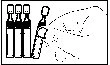
- Make sure the single-dose unit is intact before use.
- Hold the single-dose unit upside down and gently shake it from side to side.
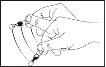
- Open by twisting off the top and pulling it away. After opening, do not touch the tip.
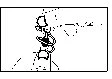
- Squeeze gently until one drop falls into the space between your eyeball and lower eyelid. To avoid contamination, take care that the tip of the container does not touch your eye, eyelid, or any other surface.

- Discard the single-dose unit after use.
If this gel is used incorrectly, it may become contaminated with bacteria, which could lead to eye infections. Using contaminated gel may cause serious eye damage and subsequent loss of vision. Since sterility cannot be maintained once the single-dose unit has been opened, any remaining content must be discarded after administration.
If you use more NETDEX than you should
Cases of overdose have never been reported with the use of this medicine.
If you use more ophthalmic gel than you should, it is unlikely that you will experience any problems. Apply the next dose as usual.
If you accidentally ingest the product or use it for prolonged periods at excessive doses, toxic adverse effects may occur.
In case of overdose or accidental ingestion, contact your doctor, pharmacist, or call the Toxicology Information Service at telephone number 91 562 04 20, indicating the medicine and amount taken.
If you forget to use NETDEX
Do not use a double dose to make up for forgotten doses. Apply the next dose as usual.
If you stop using NETDEX
Always inform your doctor if you plan to discontinue treatment. If you have any further questions about the use of this medicine, ask your doctor or pharmacist.
If you use NETDEX with other ophthalmic medicines
If you are using any other ophthalmic medicine, you should wait 5 minutes between using each medicine.
Ophthalmic ointments should be used last.
4. Possible adverse effects
Like all medicines, this medicine may cause adverse effects, although not everyone will experience them.
Possible adverse effects due to the use of dexamethasone:
- increased intraocular pressure;
- cataract formation (posterior subcapsular);
- development or worsening of a viral eye infection caused by herpes simplex virus (HSV) or a fungal infection;
- delayed wound healing;
- eye redness (conjunctival hyperemia);
- hormonal disorders: excessive body hair growth (particularly in women), muscle weakness and wasting, purple stretch marks on the skin, increased blood pressure, irregular or absent menstruation, changes in body protein and calcium levels, growth retardation in children and adolescents, and swelling with weight gain in the body and face (known as ‘Cushing's syndrome') (see section “Warnings and precautions”).
Possible adverse effects due to the use of netilmicin:
The most frequent adverse effect of topical netilmicin use is hypersensitivity reactions, such as conjunctival redness, burning, and itching.
The frequency of each listed effect cannot be estimated from the available data.
Very rarely (up to 1 in 10,000 people), some patients with severe damage to the eye's transparent front layer (the cornea) have developed cloudy spots in the cornea due to calcium accumulation during treatment.
Frequency unknown (cannot be estimated from the available data):
Blurred vision.
Reporting of adverse effects
If you experience any type of adverse effect, consult your doctor or pharmacist, even if it is a possible adverse effect not listed in this leaflet. You may also report them directly via the Spanish Pharmacovigilance System for Human Medicines: https://www.notificaram.es. By reporting adverse effects, you can help provide more information on the safety of this medicine.
5. Storage of NETDEX
Keep this medicine out of the sight and reach of children.
Do not use this medicine after the expiry date stated on the packaging after "EXP". The expiry date refers to the last day of the month indicated on the product when unopened and properly stored.
Store below 25 °C. Keep in the original packaging.
Keep the single-dose containers in the original aluminium bag to protect them from light.
This medicine does not contain preservatives. NETDEX must be used immediately after opening; any remaining content must be discarded. After opening the aluminium bag, the containers must be used within 28 days; unused containers must be discarded after this period.
Medicines must not be disposed of via wastewater or household waste. Dispose of unused containers and medicines at a SIGRE collection point at your pharmacy. If you have any doubts, ask your pharmacist how to dispose of unused containers and medicines. This will help protect the environment.
6. Contents of the pack and other information
Composition of NETDEX
- The active substances are netilmicin and dexamethasone. Each ml of gel contains 3 mg of netilmicin (as netilmicin sulfate) and 1 mg of dexamethasone (as dexamethasone disodium phosphate).
- The other components are: sodium citrate, sodium dihydrogen phosphate monohydrate, disodium hydrogen phosphate dodecahydrate, xanthan gum, purified water.
Appearance of the product and contents of the pack
NETDEX is an ophthalmic gel with a homogeneous semisolid mass, supplied in strips of 5 single-dose units within an aluminum sachet, placed inside a cardboard box.
Each cardboard box contains 10, 15 or 20 single-dose units.
Only certain pack sizes may be marketed.
Marketing Authorization Holder and Manufacturer
SIFI S.p.A.
Via Ercole Patti, 36
95025 Aci Sant’Antonio (CT)
Italy
Local representative:
Faes Farma, S.A.
Autonomia Etorbidea, 10
48940 Leioa (Bizkaia)
Spain
Date of the most recent review of this leaflet: March 2023
Detailed and up-to-date information on this medicinal product is available on the website of the Spanish Agency for Medicines and Health Products (AEMPS) http://www.aemps.es/.