Netdex 3 mg/ml + 1 mg/ml eye drops solution in single-dose container
SpainTable of Contents
Package leaflet: Information for the user
Introduction
Package leaflet: information for the patient
NETDEX 3mg/ml + 1mg/ml eye drops solution in single-dose container
netilmicin/dexamethasone
Read all of this leaflet carefully before you start using this medicine, because it contains important information for you.
- Keep this leaflet, as you may need to read it again.
- If you have any questions, ask your doctor or pharmacist.
- This medicine has been prescribed for you only, and you should not give it to other people, even if they have the same symptoms as you, because it may harm them.
- If you experience any adverse effects, consult your doctor or pharmacist, even if they are adverse effects not listed in this leaflet. See section 4.
Contents of the leaflet
- What NETDEX is and what it is used for
- What you need to know before using NETDEX
- How to use NETDEX
- Possible side effects
- How to store NETDEX
- Contents of the pack and other information
1. What NETDEX is and what it is used for
NETDEX contains two medications: netilmicin and dexamethasone.
- Netilmicin is an antibiotic that kills bacteria.
- Dexamethasone is a corticosteroid that reduces inflammation.
Antibiotics are used to treat bacterial infections and are not effective against viral infections. It is important to follow your doctor's instructions regarding dosage, administration interval, and duration of treatment. Do not store or reuse this medicine. If you have any antibiotic left after completing the treatment, return it to the pharmacy for proper disposal. Medicines must not be disposed of via the sink or in household waste. |
NETDEX is used in adults to reduce inflammation and to eliminate bacteria in the eyes that are swollen, irritated, and at risk of bacterial infection.
You should consult a doctor if symptoms worsen or do not improve at the end of treatment.
2. What you need to know before using NETDEX
Netilmicin/dexamethasone can be used in adults, including elderly people.
It is not recommended for individuals under 18 years of age.
Do not use NETDEX:
- If you are allergic to netilmicin, dexamethasone, or to antibiotics known as aminoglycoside antibiotics (such as: tobramycin, kanamycin, amikacin, gentamicin, etc.) or to any of the other ingredients of this medicine (listed in section 6).
- If your doctor has told you that your eye pressure is too high.
- If you think you may have a viral or fungal infection in or around the eye.
- If you currently have or have previously had a viral eye infection caused by the herpes simplex virus (HSV).
- If your doctor has warned you that you have an eye infection caused by bacteria known as mycobacteria.
Warnings and precautions
Consult your doctor or pharmacist before starting to use NETDEX.
Contact your doctor if you experience swelling and weight gain around the trunk and face, as these are usually the first signs of a condition called Cushing's syndrome. Suppression of adrenal gland function may occur after stopping intensive or long-term treatment with netilmicin/dexamethasone. Consult your doctor before stopping treatment on your own. These risks are particularly important in children and patients taking a medicine called ritonavir or cobicistat.
Contact your doctor if you experience blurred vision or other visual disturbances.
If you use NETDEX for a prolonged period
- Eye pressure may increase, leading to damage of the eye nerves and causing vision problems. If you use netilmicin/dexamethasone for more than 15 days, your doctor should regularly check your eye pressure.
- You may develop cataracts.
- Wounds may take longer to heal.
- Your body may become less able to defend against other types of eye infections than normal, such as fungal or viral infections.
- Eye infections that produce a lot of pus may worsen with corticosteroid use, or it may become more difficult to identify the type of bacteria causing the infection.
- The corticosteroid in netilmicin/dexamethasone may cause thinning of the eye surfaces and even perforations.
- You may become allergic to the antibiotic contained in the eye drops.
Before using NETDEX, inform your doctor if:
- You have glaucoma or a family history of glaucoma.
- You have corneal problems.
- You are taking other medicines containing phosphates. Your doctor will monitor your cornea at regular intervals.
Children and adolescents
NETDEX is not recommended for use in children or adolescents (from birth up to 18 years of age).
For external use only
Use NETDEX only on the surface of the eye. This medicine must not be injected or swallowed.
Use of NETDEX with other medicines
NETDEX may interact with other medicines. Inform your doctor or pharmacist if you are using, have recently used, or might need to use any other ophthalmic products or other medicines, including those obtained without a prescription. You may still use netilmicin/dexamethasone with other ophthalmic products, but you must follow the instructions in section 3.
In particular, inform your doctor or pharmacist if you are taking:
- Any other antibiotics, especially polymyxin B, colistin, viomycin, streptomycin, vancomycin, or cephaloridine. Concurrent use of netilmicin/dexamethasone with other antibiotics may increase the risk of kidney problems, ear problems, or may affect the effectiveness of the other antibiotics.
- Cisplatin (an anticancer medicine).
- Diuretics (medicines that reduce fluid retention), such as ethacrynic acid and furosemide.
- Anticholinergic medicines (medicines that stop gland secretion), such as atropine.
- Ritonavir or cobicistat, as these may increase the amount of dexamethasone in the blood.
- Other medicines containing phosphates. Your doctor will monitor your cornea at regular intervals.
Pregnancy and breastfeeding
If you are pregnant or breastfeeding, think you may be pregnant, or plan to become pregnant, consult your doctor or pharmacist before using this medicine.
Use during pregnancy
It is preferable not to use NETDEX during pregnancy unless your doctor considers it necessary.
Use during breastfeeding
NETDEX should not be used if you are breastfeeding.
Driving and use of machines
When using NETDEX, your vision may become blurred for a short period of time. If this occurs, do not drive or operate machinery until your vision clears.
NETDEX contains phosphates
This medicine contains 0.18 mg of phosphates per drop, equivalent to 3.66 mg/ml. If you have severe corneal damage (the transparent layer at the front of the eye), treatment with phosphates may, in very rare cases, cause blurred vision due to calcium accumulation.
3. How to use NETDEX
Follow exactly the administration instructions for this medicine given by your doctor or pharmacist. If in doubt, consult your doctor or pharmacist again.
The recommended dose is one drop in the affected eye four times a day, or as prescribed. The usual duration of treatment may range from 5 to 14 days.
Do not change the dose of the eye drops without consulting your doctor.
Use in children and adolescents
NETDEX is not recommended for use in children or adolescents (from birth up to 18 years of age).
Contact lens wearers
NETDEX in single-dose containers can be used while wearing contact lenses, as it contains no preservatives. However, it is strongly recommended to avoid wearing contact lenses during an ocular infection or inflammation. Contact lenses should not be worn during treatment with corticosteroid eye drops due to the increased risk of infection.
If you use NETDEX with other eye drops
Wait at least 10 minutes between using NETDEX and other eye drops or ointments. Ophthalmic ointments should be used last.
Instructions for use
Ensure the single-dose container is intact.
- Wash your hands and sit or position yourself comfortably.
- Open the aluminum pouch containing the single-dose containers.
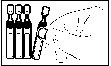
- Detach one single-dose container from the strip (Picture 1) and return the unopened containers to the pouch.
- Open by twisting the top without pulling. Do not touch the tip after opening the container.
- Tilt your head backward.
- With your finger, gently pull down the lower eyelid of the affected eye.
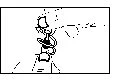
- Invert the single-dose container and place the tip near the eye, but without touching it. Do not touch the eye or eyelid with the tip of the container (Picture 2).
- Squeeze the single-dose container to release only one drop, then release the lower eyelid.
- Close the eye and press with a finger on the corner of the affected eye next to the nose. Hold for 2 minutes.
- Repeat in the other eye if instructed by your doctor.
- Discard the single-dose container after use.
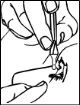
If you use the eye drops incorrectly, contamination by bacteria may occur, which could lead to ocular infections. Using contaminated eye drops may cause serious eye damage and subsequent vision loss.
If you use more NETDEX than you should
If you use too much eye drops, it is unlikely that you will experience problems.
Apply the next dose as usual.
In case of overdose or accidental ingestion, contact your doctor, pharmacist, or call the Toxicology Information Service immediately at 91 562 04 20, indicating the medicine and the amount taken.
If you forget to use NETDEX
Do not use a double dose to make up for missed doses.
Apply the next dose as usual.
If you stop treatment with NETDEX
If you have any further questions about the use of this medicine, ask your doctor or pharmacist.
4. Possible adverse effects
Like all medicines, this medicine can cause adverse effects, although not everyone experiences them.
The frequency of the effect in each individual cannot be estimated from the available data.
Eye disorders
Increased ocular pressure, cataract formation following prolonged treatment, blurred vision, development or worsening of a viral eye infection caused by herpes simplex virus (HSV) or a fungal infection, delayed wound healing.
In very rare cases (less than 1 in 10,000 people), some patients with severe damage to the transparent layer at the front of the eye (the cornea) have developed opaque spots in the cornea due to calcium accumulation during treatment.
Immune system disorders
Local allergic reaction: conjunctival redness, burning, itching.
Endocrine disorders
Excessive body hair growth (particularly in women), muscle weakness and wasting, purple stretch marks on the skin, increased blood pressure, irregular or absent menstruation, changes in body protein and calcium levels, growth retardation in children and adolescents, and fluid retention with weight gain affecting the body and face (known as ‘Cushing’s syndrome’) (see section 2 “Warnings and precautions”).
In all the cases mentioned above, treatment interruption is recommended.
Reporting of adverse effects
If you experience any type of adverse effect, consult your doctor or pharmacist, even if it is a possible adverse effect not listed in this leaflet. You may also report them directly via the Spanish Pharmacovigilance System for Human Medicinal Products: https://www.notificaram.es. By reporting adverse effects, you can help provide more information on the safety of this medicine.
5. Storage of NETDEX
Keep this medicine out of the sight and reach of children.
Do not use this medicine after the expiry date which is stated on the carton, sachet, and container after "EXP". The expiry date refers to the last day of the month indicated.
Store below 30°C.
Keep the unit-dose containers in the sachet to protect them from light and moisture.
This medicine does not contain preservatives.
After first opening a unit-dose container, use it immediately and discard the entire unit-dose container with any remaining content after use.
Medicines must not be disposed of via wastewater or household waste. Dispose of containers and unused medicines at the SIGRE collection point at your pharmacy. If you are unsure, please ask your pharmacist how to dispose of containers and medicines you no longer need. This will help protect the environment.
6. Contents of the container and other information
Composition of NETDEX
The active substances are dexamethasone 1 mg/mL (as dexamethasone sodium phosphate) and netilmicin 3 mg/mL (as netilmicin sulfate). Each single-dose container contains 0.9 mg of netilmicin and 0.3 mg of dexamethasone.
The other components are:
sodium citrate,
monobasic sodium phosphate monohydrate,
dibasic sodium phosphate dodecahydrate,
purified water.
Appearance of the medicinal product and content of the container
NETDEX is a transparent, colourless or slightly yellowish solution.
NETDEX eye drops in single-dose containers:
Five single-dose containers, each containing 0.3 ml of NETDEX eye drop solution, packed in an aluminium foil pouch.
Each pack contains 15 or 20 single-dose containers.
Only certain pack sizes may be marketed.
Marketing Authorization Holder and Manufacturer Responsible
SIFI S.p.A.
Via Ercole Patti 36
95025 Aci Sant'Antonio (CT)
Italy
Local Representative:
Faes Farma, S.A.
Autonomia Etorbidea, 10
48940 Leioa (Bizkaia)
Spain
Date of most recent review of this leaflet: January 2020
Detailed information on this medicine is available on the website of the Spanish Agency of Medicines and Medical Devices (AEMPS) http://www.aemps.es.