Nervinex 125 mg tablets
Spain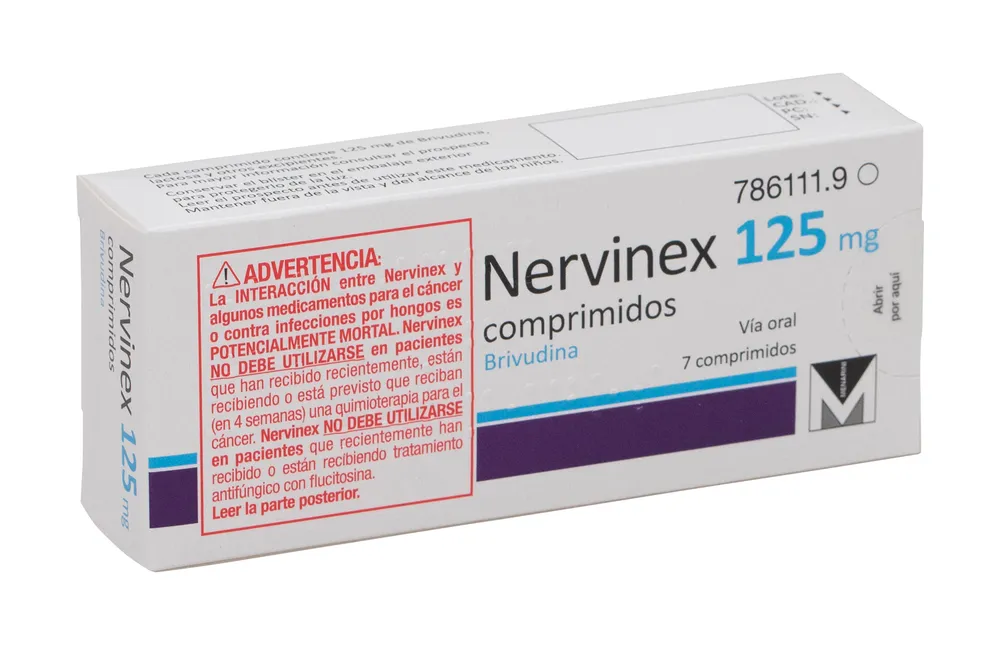
Table of Contents
- Package leaflet: Information for the user
- Introduction
- **Package leaflet contents:**
- 1. What Nervinex is and what it is used for
- 2. What you need to know before starting to take Nervinex
- **Do NOT take Nervinex:**
- **Children and adolescents**
- **Use of Nervinex with other medicines**
- **WARNING:**
- **Taking Nervinex with food and drinks**
- **Pregnancy and breastfeeding**
- **Driving and operating machinery**
- **Nervinex contains lactose**
- 3. How to take Nervinex
- **Duration of treatment**
- **Use in children and adolescents**
- **If you take more Nervinex tablets than you should**
- **If you forget to take Nervinex**
- **If you interrupt treatment with Nervinex**
- 4. Possible adverse effects
- **The following adverse reactions were observed frequently (may affect up to 1 in 10 people):**
- **The following adverse effects were observed with low frequency (may affect up to 1 in 100 people):**
- **The following adverse reactions were observed rarely (may affect up to 1 in 1,000 people):**
- **The following adverse reactions have also been reported, although their frequency is unknown (frequency cannot be estimated from the available data):**
- 5. Storage of Nervinex
- 6. Contents of the pack and other information
- **Composition of Nervinex**
- **Appearance of the product and contents of the pack**
- **Marketing Authorization Holder**
- **Local representative**
- **This medicinal product has been authorized in the European Economic Area member states under the following names:**
Package leaflet: Information for the user
Introduction
Package leaflet: information for the patient
Nervinex 125 mg tablets
Brivudine
DO NOT TAKE Nervinex (BRIVUDINE) IF you have recently received, are currently receiving, or are scheduled to receive (within 4 weeks) chemotherapy or antineoplastic treatment for cancer. DO NOT TAKE Nervinex IF YOU HAVE A FUNGAL INFECTION and if you have recently received or are currently receiving antifungal treatment with flucytosine (see section 2, including the red box). THE INTERACTION between Nervinex (brivudine) and certain cancer treatments or flucytosine is POTENTIALLY FATAL.
Read the entire leaflet carefully before starting to take this medicine, as it contains important information for you.
- Keep this leaflet, as you may need to read it again.
- If you have any questions, consult your doctor, pharmacist, or nurse.
- This medicine has been prescribed for you only and must not be given to other people, even if they have the same symptoms as you, as it may harm them.
- If you experience adverse effects, consult your doctor, pharmacist, or nurse, even if they are adverse effects not listed in this leaflet. See section 4.
Package leaflet contents:
- What Nervinex is and what it is used for
- What you need to know before taking Nervinex
- How to take Nervinex
- Possible side effects
- Storage of Nervinex
- Contents of the pack and other information
1. What Nervinex is and what it is used for
Nervinex contains the active substance brivudine. Nervinex has an antiviral effect and stops the replication of the virus that causes herpes (varicella-zoster virus).
Nervinex is used for the early treatment of herpes infection (herpes zoster) in adults with normal immune systems (normal body defenses).
2. What you need to know before starting to take Nervinex
Do NOT take Nervinex:
- if you have recently received, are currently receiving, or are scheduled to receive (within 4 weeks) antineoplastic chemotherapy (e.g., capecitabine, 5-fluorouracil (5-FU), tegafur, etc.) (see the red box and section «Other medicines and Nervinex»)
- if you have a fungal infection and have recently received or are currently receiving antifungal treatment with flucytosine (see the red box and section «Other medicines and Nervinex»)
- if you are allergic (hypersensitive) to the active substance brivudine
- if you are allergic (hypersensitive) to any of the other components of Nervinex (see section 6)
- if you are pregnant or breastfeeding
- if you are under 18 years of age
DO NOT take Nervinex: ? if you have recently received, are currently receiving, or are scheduled to receive (within 4 weeks) antineoplastic chemotherapy (especially capecitabine, 5-fluorouracil (5-FU), or other fluoropyrimidines taken orally, by injection, or applied locally as creams, ointments, eye drops, or any other type of externally applied medication) ? if you have a fungal infection and have recently received or are currently receiving antifungal treatment with flucytosine ? if you have recently used, are currently using, or are scheduled to use (within 4 weeks) a medication for warts or for the treatment of actinic keratosis or Bowen's disease containing fluoropyrimidines (5-fluorouracil or others) ? if your immune system (i.e., your body's defenses against infections) is severely impaired; for example, if you have recently received or are currently receiving:
|

Warnings and precautions
Do not take Nervinex and consult your doctor or pharmacist:
- if you have recently received, are currently receiving, or are scheduled to receive (within 4 weeks) antineoplastic chemotherapy (oral, by injections, or locally in the form of creams, ointments, eye drops, or any other externally applied medication)
- if you have a fungal infection and have recently received or are currently receiving antifungal treatment with flucytosine (see sections « DO NOT take Nervinex**»** in the red box, and « Use of Nervinex with other medicines**»**).
Do not take Nervinex if your skin rash is in an advanced stage (beginning of crusting). If in doubt, consult your doctor.
Consult your doctor before taking Nervinex if you have any chronic liver disease (such as chronic hepatitis).
You should not take Nervinex for longer than 7 days, as extending treatment beyond the recommended duration of 7 days increases the risk of developing hepatitis (see also section 4).
Children and adolescents
Do not administer Nervinex to children and adolescents between 0 and 18 years of age, as safety and efficacy have not been studied in this age group.
Use of Nervinex with other medicines
Before starting treatment with Nervinex, inform your doctor or pharmacist if you are using, have recently used, or might need to use any other medicines, including those obtained without a prescription. This is extremely important because Nervinex may enhance the toxic effect of other medicines.
WARNING:
Special warning for patients undergoing antineoplastic chemotherapy or fungal infections (see also the red box above):
Nervinex must not be used in patients who have recently received, are currently receiving, or are scheduled to receive (within 4 weeks) certain anticancer or antineoplastic chemotherapy. The harmful effects of these drugs (fluoropyrimidines) could greatly increase, possibly being fatal.
- 5-fluorouracil (5-FU), including topical forms
- capecitabine
- tegafur
- other 5-fluoropyrimidines
- combinations of some of the substances mentioned with other active ingredients
Nervinex must not be used simultaneously with medications containing the active substance flucytosine used to treat fungal infections.
Do not take Nervinex and consult your doctor immediately:
- if you have recently received, are currently receiving, or are scheduled to receive (within 4 weeks) any of the medicines mentioned above
- if you have recently received or are currently undergoing antifungal treatment with flucytosine
If you have accidentally taken Nervinex and one of the medicines mentioned above:
- discontinue taking both medicines
- consult a doctor immediately
- go to a hospital for immediate treatment (To protect you from systemic infections and dehydration).
Symptoms and signs of toxicity due to 5-fluorouracil (and other fluoropyrimidines), resulting from the interactions mentioned above, include:
- dizziness; diarrhea; inflammation of the mouth and/or oral mucosa; fatigue, increased susceptibility to infections, tiredness (decreased white blood cell count and reduced bone marrow function); red rash all over the body, with skin sensitive to touch, progressing to large blisters that develop into extensive areas of skin peeling (toxic epidermal necrolysis) (see also section 4).
Post-marketing experience indicates a possible interaction between brivudine and dopaminergic medications used to treat Parkinson's disease, which may facilitate the development of chorea (abnormal, involuntary movements resembling dancing, especially in the arms, legs, and face).
Taking Nervinex with food and drinks
You can take Nervinex with or without food.
Pregnancy and breastfeeding
Consult your doctor or pharmacist before taking any medication.
You should not take Nervinex during pregnancy.
You should not take Nervinex while breastfeeding. The active ingredient in Nervinex may pass into breast milk and reach the baby.
Driving and operating machinery
Although infrequently, some patients taking Nervinex have experienced dizziness and drowsiness. If you experience these side effects, refrain from driving, operating machinery, or working in an unsafe position. Consult your doctor for advice.
Nervinex contains lactose
This medicine contains lactose. If your doctor has informed you of an intolerance to certain sugars, consult with your doctor before taking this medicine.
3. How to take Nervinex
Follow exactly the instructions given by your doctor for administering this medicine. If you are unsure, consult your doctor or pharmacist again.
The recommended dose is:
1 tablet of 125 mg Nervinex once daily for 7 days.
Take the Nervinex tablet at approximately the same time each day.
You may take Nervinex with or without food.
Swallow the tablet whole with sufficient liquid, for example, a glass of water.
You should start treatment as soon as possible. This means that, if possible, you should begin taking Nervinex:
- within 3 days of the appearance of the first skin manifestations of herpes (skin rash), or
- within 2 days of the appearance of the first blisters.
Complete the full 7-day course of treatment, even if you feel improvement earlier.
If your symptoms persist or worsen during the week of treatment, you should consult your doctor.
Taking the normal dose of Nervinex reduces the risk of developing postherpetic neuralgia in patients over 50 years of age. Postherpetic neuralgia is persistent pain that occurs in the area affected by herpes after the skin rash has improved.
Duration of treatment
This medicine is for short-term use. It should be administered for only 7 days. Do not take a second course of treatment.
Use in children and adolescents
Do not take Nervinex if you are under 18 years of age.
If you take more Nervinex tablets than you should
Inform a doctor if you take more tablets than you should. The doctor will decide whether additional measures are necessary.
If you forget to take Nervinex
If you forget to take a tablet at your usual time, take it as soon as you remember. The following day, take the next tablet at approximately the same time as the previous day. Maintain this new dosing schedule until completing the 7-day treatment cycle.
Do not take a double dose to make up for forgotten doses.
Inform your doctor if you repeatedly forget to take your daily dose of the medicine.
If you interrupt treatment with Nervinex
Do not stop treatment with Nervinex without first consulting your doctor. To achieve the maximum benefit from this treatment, you must take it for 7 days.
If you have any further questions about the use of this medicine, ask your doctor or pharmacist.
4. Possible adverse effects
Like all medicines, this medicine may produce adverse effects, although not everyone will experience them.
Stop taking Nervinex and inform your doctor immediately if you have an allergic reaction with signs and symptoms including itching or redness of the skin (rash), increased sweating, swelling (of hands, feet, tongue, lips, eyelids or larynx), difficulty breathing (see also section 4). These symptoms could be serious and require urgent medical attention.
The following adverse reactions were observed frequently (may affect up to 1 in 10 people):
- nausea (feeling sick)
The following adverse effects were observed with low frequency (may affect up to 1 in 100 people):
-
a decrease in the number of a type of white blood cells (granulocytes)
-
an increase in the number of certain types of white blood cells (eosinophils, lymphocytes, monocytes)
-
a decrease in the number of red blood cells (anemia)
-
allergic reactions including:
-
skin itching (pruritus)
-
redness of the skin (erythematous rash)
-
increased sweating
-
swelling of hands, feet, face, tongue, lips, eyelids, larynx (laryngeal edema)
-
cough, difficulty breathing and/or shortness of breath
-
loss of appetite
-
anxiety
-
insomnia, drowsiness
-
headache
-
dizziness
-
vertigo (spinning sensation)
-
abnormal sensations, e.g., burning, pricking, tingling, pins and needles sensation, mainly in arms and legs (paresthesia)
-
high blood pressure
-
indigestion (dyspepsia), vomiting, stomach pain
-
diarrhea
-
excess gas in the stomach or intestine (flatulence)
-
constipation
-
chronic liver disease with fat accumulation (fatty liver)
-
an increase in blood levels of certain substances produced by the liver (increased liver enzymes)
-
weakness, tiredness (fatigue)
-
flu-like symptoms (malaise, fever, general aches and chills)
The following adverse reactions were observed rarely (may affect up to 1 in 1,000 people):
- low blood pressure
- decrease in the number of platelets in the blood
- hallucinations, delirium
- confusion
- tremor
- disturbance of taste sensation
- ear pain
- liver inflammation (hepatitis), increase in blood bilirubin
- bone pain
The following adverse reactions have also been reported, although their frequency is unknown (frequency cannot be estimated from the available data):
- disturbance in balance
- inflammation of blood vessels (vasculitis)
- sudden onset liver failure
- localized skin inflammation that reappears in the same spot after some time (fixed eruption), skin inflammation with peeling (exfoliative dermatitis), severe widespread skin rash and inside the mouth due to an allergic reaction (erythema multiforme), ulceration of the skin, mouth, eyes, and genital areas (Stevens-Johnson syndrome)
- restlessness
- mood change
- depressive mood
- feelings of aggression, agitation, anxiety
- fainting
Reporting of adverse reactions
If you experience any type of adverse reaction, talk to your doctor or pharmacist, even if it is a possible adverse reaction not listed in this leaflet. You may also report them via the Spanish Pharmacovigilance System for Human Medicinal Products: www.notificaRAM.es. By reporting adverse reactions, you can help provide more information on the safety of this medicine.
5. Storage of Nervinex
Keep this medicine out of the sight and reach of children.
Do not use this medicine after the expiry date stated on the carton and blister pack. The expiry date refers to the last day of the month indicated.
Store the blister pack in the outer packaging to protect it from light.
Medicines must not be disposed of via wastewater or household waste. Dispose of unused medicines and their containers at the SIGRE collection point at your pharmacy. If in doubt, ask your pharmacist how to properly dispose of unused medicines and their packaging. This will help protect the environment.
6. Contents of the pack and other information
Composition of Nervinex
The active substance is brivudine.
Each Nervinex tablet contains 125 mg of brivudine.
The other components are:
Microcrystalline cellulose, monohydrate lactose, povidone K 24-27, magnesium stearate.
Appearance of the product and contents of the pack
Nervinex 125 mg tablets are round, flat, white or almost white, with bevelled (angled) edges.
They are presented in a blister pack within a box.
Nervinex is available in boxes containing 1 to 7 tablets and in packs containing 5 boxes, each box containing 7 tablets.
Not all pack sizes may be marketed.
Marketing Authorization Holder
Laboratori Guidotti, S.p.A.
Via Livornese 897, Loc. “La Vettola” (San Piero a Grado, PISA) Italy.
Local representative
GUIDOTTI FARMA, S.L.
Alfons XII, 587 – 08918 Badalona (Barcelona) Spain
Manufacturing responsible
BERLIN-CHEMIE AG, Glienicker Weg 125, D-12489 Berlin, Germany
This medicinal product has been authorized in the European Economic Area member states under the following names:
Germany | Premovir |
Austria | Mevir |
Belgium | Zerpex |
Greece | Brivir |
Italy | Brivirac |
Luxembourg | Zerpex |
Portugal | Bridic |
Spain | Nervinex |
Date of the most recent review of this leaflet: February 2021
Detailed and up-to-date information on this medicinal product is available on the website of the Spanish Agency for Medicinal Products and Medical Devices (AEMPS) http://www.aemps.gob.es/