Neophyr 450 ppm mol/mol medicinal compressed gas
Spain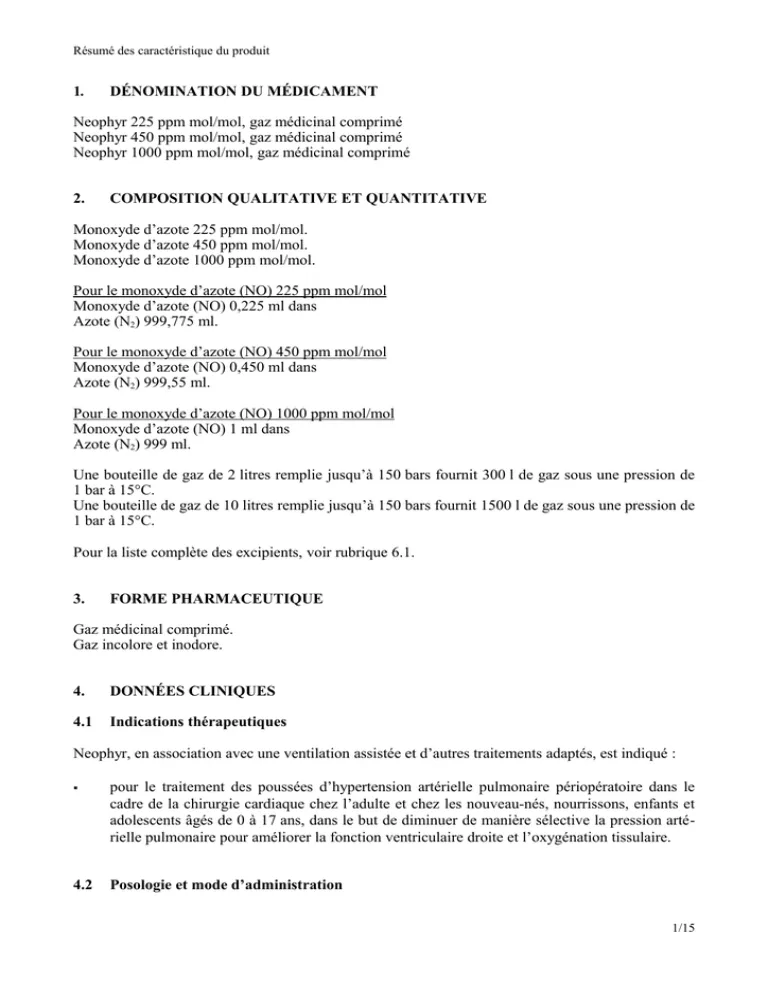
Table of Contents
Package leaflet: Information for the user
Introduction
Package leaflet: information for the user
Neophyr 225 ppm mol/mol, medicinal compressed gas
Neophyr 450 ppm mol/mol, medicinal compressed gas
Neophyr 1000 ppm mol/mol, medicinal compressed gas
Nitric oxide
Read all of this leaflet carefully before you start using this medicine because it contains important information for you.
- Keep this leaflet. You may need to read it again.
- If you have any questions, ask your doctor.
- This medicine has been prescribed for you only, and you should not give it to others, even if they have the same symptoms as you. It may harm them.
- If you experience any adverse effects, consult your doctor, even if they are effects not listed in this leaflet. See section 4.
Contents of the leaflet
- What Neophyr is and what it is used for
- What you need to know before using Neophyr
- How to use Neophyr
- Possible side effects
- How to store Neophyr
- Contents of the pack and other information
1. What Neophyr is and what it is used for
Neophyr is a gas mixture for inhalation use.
Neophyr is a medicinal compressed gas composed of a gas mixture containing 225 ppm, 450 ppm or 1000 ppm mol/mol of nitric oxide.
What is it used for?
Neophyr must be administered exclusively by healthcare professionals and is intended for strict hospital use.
Neophyr is indicated in the following cases:
-
Newborn infants with respiratory failure associated with high blood pressure in the lungs, a medical condition known as hypoxic respiratory failure. When inhaled, the gas mixture may improve blood flow within the lungs, thereby helping to increase the amount of oxygen delivered to the baby's blood.
-
Newborn infants, infants, children and adolescents aged 0–17 years, and adults with high blood pressure in the lungs related to cardiac surgery. This gas mixture may improve cardiac function and increase blood flow within the lungs.
2. What you need to know before using Neophyr
Do not use Neophyr:
- If you are allergic to nitric oxide or to any of the other components of this medicine (listed in section 6).
- If you (as a patient) or your child (as a patient) have been diagnosed with abnormal blood circulation in the heart.
- If you (as a patient) or your child (as a patient) have congenital or acquired deficiency of methemoglobin reductase (MetHb reductase) or glucose-6-phosphate dehydrogenase (G6PD).
Warnings and precautions
Consult your doctor before starting to use Neophyr.
Inhaled nitric oxide may not be effective in all cases, so other therapies may need to be considered for you or your child.
Inhaled nitric oxide may affect the blood's ability to carry oxygen. This will be monitored through blood sampling, and if necessary, the dose of inhaled nitric oxide will be reduced.
Inhaled nitric oxide may react with oxygen to form nitrogen dioxide, which can cause respiratory tract irritation. The doctor monitoring you or your child will track nitrogen dioxide levels and, if elevated levels are detected, will adjust or reduce Neophyr therapy as needed.
Inhaled nitric oxide may have a mild effect on platelets (components involved in blood clotting) in your body or your child’s, so any signs of bleeding and/or bruising should be closely monitored. If you notice any signs or symptoms that may be associated with bleeding, inform your doctor immediately.
Effects of inhaled nitric oxide in newborn infants with a congenital malformation involving incomplete development of the diaphragm (also known as "congenital diaphragmatic hernia") have not been documented.
In newborn infants with specific heart malformations, known by doctors as "congenital heart disease," inhaled nitric oxide may worsen circulation.
Cases of pulmonary edema (fluid retention in the lungs) have been reported with the use of nitric oxide in patients with lung disease due to a blocked or narrowed pulmonary vein. If you (as a patient) or your child (as a patient) develop dyspnea or difficulty breathing, contact your doctor immediately.
Children
Neophyr must not be used in premature infants with a gestational age of less than 34 weeks.
Use of Neophyr with other medicines
Your doctor will decide when to treat you or your child with Neophyr in combination with other medicines and will carefully monitor the treatment.
Inform your doctor if you (as a patient) or your child (as a patient) are taking, have recently taken, or might need to take any other medicines.
Some medicines may affect the blood's ability to carry oxygen. These include prilocaine (a local anesthetic used to relieve pain during minor painful procedures such as suturing and minor surgical or diagnostic procedures) or glyceryl trinitrate (used to treat chest pain). Your doctor will ensure that the blood is able to carry sufficient oxygen while you are using these medicines.
Pregnancy, breastfeeding, and fertility
Neophyr must not be used during pregnancy unless clearly necessary, such as in situations where life-support equipment is required.
Exposure to nitric oxide should be avoided in humans during breastfeeding.
If you are pregnant or breastfeeding, think you may be pregnant, or are planning to become pregnant, consult your doctor before using this medicine.
3. How to use Neophyr
Your doctor will determine the correct dose of Neophyr and will administer Neophyr to you or your child into the lungs using a system designed for the delivery of this gas. This system will ensure the correct amount of nitric oxide is delivered by diluting Neophyr with an oxygen/air mixture immediately before administration to the patient.
For your safety (or that of your child), systems designed for the administration of Neophyr are equipped with devices that continuously measure the levels of nitric oxide, oxygen, and nitrogen dioxide (a chemical formed when nitric oxide is mixed with oxygen) delivered to the lungs.
Your doctor will decide how long the treatment with Neophyr should last for you or your child.
The recommended dose of Neophyr is 10 to 20 ppm (parts per million) of the gas you or your child inhales, with a maximum dose of 20 ppm for children and 40 ppm for adults. The lowest effective dose will be used whenever possible.
In newborn babies with lung failure associated with high blood pressure in the lungs, treatment with Neophyr is typically required for about 4 days. In children and adults with high pulmonary blood pressure following heart surgery, Neophyr is usually administered for 24–48 hours. However, Neophyr therapy may last longer if needed.
If you use more Neophyr than you should
Excessive inhalation of nitric oxide may affect the blood's ability to carry oxygen. This will be monitored by blood sampling, and if necessary, the dose of Neophyr will be reduced and medications such as vitamin C, methylene blue, or, if appropriate, a blood transfusion may be considered to improve the oxygen-carrying capacity of the blood.
If you stop treatment with Neophyr
Treatment with Neophyr must not be stopped suddenly. A sudden drop in blood pressure or a rebound effect with increased pressure in the lungs has been observed when Neophyr treatment is stopped abruptly without first reducing the dose.
At the end of treatment, your doctor will gradually reduce the amount of Neophyr prescribed for you or your child, allowing the circulation in the lungs to adjust to breathing oxygen/air without Neophyr. This process may take one or two days before you or your child completely stop Neophyr treatment.
Always follow exactly the instructions for administration of this medicine as given by your doctor. If you are unsure, ask your doctor, pharmacist, or nurse.
4. Possible adverse effects
Like all medicines, this medicine can cause adverse effects, although not everyone will experience them.
Your doctor will closely monitor and observe any type of adverse effect. It is unlikely that you will experience these adverse effects.
The adverse effects observed very commonly (affecting more than 1 in 10 patients) associated with Neophyr therapy include:
- Low platelet count, abnormally low blood potassium levels (hypokalemia), low blood pressure, shortness of breath or lung collapse, abnormally high levels of bile pigment (bilirubin) in the blood.
Adverse effects that may occur, but whose frequency is unknown (cannot be estimated from available data), are:
- Rebound pulmonary high blood pressure (increase in pulmonary arterial pressure) and too low levels of oxygen in the blood (oxygen desaturation/hypoxemia) due to sudden withdrawal of treatment; increased methemoglobin, and therefore reduced oxygen-carrying capacity.
- Accidental exposure of nitric oxide to ambient air, e.g. due to equipment or cylinder leakage, may cause headache.
You should inform the medical staff immediately if you experience headache while you are near your child receiving Neophyr.
If any of these adverse effects become severe, or if you notice any adverse effects not listed in this leaflet, inform your doctor.
If you have any further questions about the use of this product, ask your doctor or other healthcare professionals.
Reporting of adverse effects
If you experience any type of adverse effect, consult your doctor, even if it is a possible adverse effect not listed in this leaflet. You may also report them directly via the Spanish Pharmacovigilance System for Human Medicinal Products: www.notificaRAM.es.
By reporting adverse effects, you can help provide more information on the safety of this medicine.
5. Storage of Neophyr
Keep this medicine out of the sight and reach of children.
Neophyr therapy must only be used and handled by hospital personnel.
-
Neophyr cylinders must be stored securely to prevent them from falling or causing potential harm.
-
Neophyr must be used and administered exclusively by personnel specifically trained in the use and handling of this product.
All regulations regarding the handling of pressurized gas cylinders must be strictly observed.
Storage will be supervised by specialists in the hospital. Gas cylinders must be stored in well-ventilated rooms or ventilated buildings, protected from rain and direct sunlight.
Cylinders must be stored at a temperature between -10 and +50 °C.
Protect cylinders from impact, falls, oxidizing or flammable materials, moisture, and sources of heat or ignition.
Storage in the pharmacy department
Gas cylinders must be kept in a designated, well-ventilated, clean, and locked area reserved exclusively for the storage of medicinal gases. This area must have a separate, dedicated installation for the storage of nitric oxide gas cylinders.
Storage in medical departments
The gas cylinder must be placed in an area equipped with appropriate devices to ensure that the cylinder remains in an upright position.
When the cylinder is empty, it must not be disposed of with other waste: the supplier will collect empty cylinders.
Do not use this medicine after the expiry date stated on the gas cylinder label, after EXP. The expiry date refers to the last day of the month indicated.
6. Contents of the packaging and additional information
Composition of Neophyr
- The active substance is nitric oxide 225 ppm mol/mol, 450 ppm mol/mol or 1000 ppm mol/mol.
- The other component is nitrogen.
Appearance of the product and contents of the container
Gas cylinders with a capacity of 2 l (Neophyr 1000 ppm mol/mol).
A 2-litre gas cylinder filled to 150 bar contains approximately 0.35 kg of gas.
or
Gas cylinders with a capacity of 10 l (Neophyr 225 ppm mol/mol, Neophyr 450 ppm mol/mol, Neophyr 1000 ppm mol/mol).
A 10-litre gas cylinder filled to 150 bar contains approximately 1.77 kg of gas.
Cylinders made from an aluminium alloy have a white-painted body and a turquoise-painted cap.
They are equipped with a stainless steel residual pressure valve with a specific outlet connector of type ISO 5145 (2004).
Marketing Authorization Holder and Manufacturer
Marketing Authorization Holder
SOL FRANCE SUCURSAL EN ESPAÑA
Calle Yeso, num. 2
28500 Arganda del Rey - (Madrid), Spain
Manufacturer
SOL S.p.A.
Via Libertà 247
20900 Monza
Italy
This medicinal product is authorized in the European Economic Area member states under the following names:
Germany: Neophyr
Austria: Neophyr
Belgium: Neophyr
Bulgaria: Neophyr
Cyprus: Neophyr
Croatia: Neophyr
Slovenia: Neophyr
Spain: Neophyr
Greece: Neophyr
Ireland: Neophyr
Italy: Neophyr
Luxembourg: Neophyr
Netherlands: Neophyr
Romania: Neophyr
United Kingdom: Neophyr
Czech Republic: Iasophyr
Hungary: Noxphyr
Slovakia: Neophyr
Date of the latest review of this summary: May 2025
Detailed information on this medicinal product is available on the website of the Spanish Agency of Medicines and Health Products (AEMPS): http://www.aemps.gob.es//
The following information is intended for healthcare professionals only.
[The complete product characteristics summary will follow below.]