Nebivolol Stada 5 mg tablets EFG
Spain
Table of Contents
Package leaflet: Information for the user
Introduction
 Package leaflet: information for the patient
Nebivolol Stada 5 mg tablets EFG
Read the entire leaflet carefully before you start taking this medicine, because it contains important information for you.
-
Keep this leaflet, as you may need to read it again.
-
If you have any questions, ask your doctor or pharmacist.
-
This medicine has been prescribed for you only, and you should not give it to other people, even if they have the same symptoms as you, because it could harm them.
-
If you experience any adverse effects, consult your doctor or pharmacist, even if they are effects not listed in this leaflet. See section 4.
Leaflet contents
-
What Nebivolol Stada is and what it is used for
-
What you need to know before taking Nebivolol Stada
-
How to take Nebivolol Stada
-
Possible side effects
-
How to store Nebivolol Stada
-
Contents of the pack and other information
1. What Nebivolol Stada is and what it is used for
Nebivolol Stada contains nebivolol hydrochloride, a medicine with cardiovascular action, belonging to the group of selective beta-blocking agents (with selective activity in the cardiovascular system). It prevents the increase in heart rate and controls the heart's pumping force. It also exerts a blood vessel-dilating effect, which further contributes to lowering blood pressure.
It is used for the treatment of high blood pressure (hypertension).
Nebivolol Stada is also used for the treatment of mild to moderate stable chronic heart failure in patients aged 70 years or older, administered in combination with other medicines.
2. What you need to know before taking Nebivolol Stada
Do not take Nebivolol Stada:
-
If you are allergic to the active substance or to any of the other ingredients of this medicine (listed in section 6).
-
If you have one or more of the following conditions:
- low blood pressure.
- serious circulation problems in arms or legs.
-
very slow heart rate (less than 60 beats per minute) or irregular heartbeat (sick sinus syndrome).
-
other serious heart rhythm disorders (e.g. second- or third-degree atrioventricular block, sinoatrial block).
-
recent heart failure or worsening heart failure, cardiogenic shock (shock caused by worsening heart failure), or if you are receiving intravenous treatment to support heart function following circulatory collapse due to acute heart failure.
-
 asthma, wheezing, or any breathing disorder (currently or in the past).
 -
phaeochromocytoma, a tumor located in the upper part of the kidneys (adrenal glands), which is not being treated.
-
liver function disorders.
-
metabolic disorders (characterized by metabolic acidosis), for example, diabetic ketoacidosis.
Warnings and precautions
Talk to your doctor or pharmacist before starting Nebivolol Stada. Especially if you have:
-
abnormally slow heart rate.
-
a type of chest pain caused by spontaneous spasm of the heart arteries, called Prinzmetal's angina.
-
untreated chronic heart failure and ischemic heart disease (reduced blood flow to the heart).
-
first-degree heart block (a mild type of cardiac conduction disorder affecting heart rhythm).
-
poor circulation in arms or legs, for example Raynaud's disease or syndrome, or leg pain when walking similar to cramps.
-
diabetes: this medicine does not affect blood sugar levels, but it may mask warning signs of low blood sugar (e.g. palpitations, rapid heartbeat) and could increase the risk of severe hypoglycemia when used with certain types of antidiabetic medicines called sulfonylureas (e.g., gliquidone, gliclazide, glibenclamide, glipizide, glimepiride or tolbutamide).
-
overactivity of the thyroid gland: this medicine may mask symptoms of this condition, such as abnormally high heart rate.
-
allergies: this medicine may intensify your reaction to pollen or other substances you are allergic to.
-
respiratory problems associated with cough (if you have chronic obstructive pulmonary disease [COPD]).
-
if you have or have had psoriasis (a skin disease characterized by scaly pink patches).
-
if you are scheduled for surgery, always inform the anaesthetist that you are taking Nebivolol Stada.
If you have severe kidney problems, do not take Nebivolol Stada for the treatment of heart failure and consult your doctor.
At the start of treatment for chronic heart failure, you will be monitored regularly by a doctor (see section 3).
This treatment must not be stopped abruptly, unless clearly indicated and evaluated by your doctor (see section 3).
Children and adolescents
Nebivolol Stada is not recommended for use in children and adolescents under 18 years of age due to lack of data on its use in the paediatric population.
Other medicines and Nebivolol Stada
Tell your doctor or pharmacist if you are taking, have recently taken, or might need to take any other medicines.
Some medicines should not be taken at the same time, while others may require specific adjustments (e.g. dosage changes).
 Always inform your doctor if, in addition to Nebivolol Stada, you are taking any of the following medicines:
-
medicines to control blood pressure or heart problems (such as amiodarone, amlodipine, cibenzoline, clonidine, digoxin, diltiazem, disopyramide, felodipine, flecainide, guanfacine, hydroquinidine, lacidipine, lidocaine, methyldopa, mexiletine, moxonidine, nicardipine, nifedipine, nimodipine, nitrendipine, propafenone, quinidine, rilmenidine, verapamil)
-
sedatives and medicines for psychosis (mental illness), such as barbiturates (also used for epilepsy), phenothiazines (also used for nausea and vomiting) and thioridazine
-
medicines for depression, for example amitriptyline, paroxetine and fluoxetine
-
baclofen (a muscle relaxant), amifostine (a medicine used in cancer treatment)
-
medicines used for anaesthesia during surgery
-
medicines for asthma, nasal decongestants, and some medicines used to treat eye disorders such as glaucoma (increased eye pressure) or pupil dilation (enlargement)
All of these medicines, like nebivolol, may affect blood pressure and/or heart function.
-
medicines for stomach acidity or ulcers (antacids), such as cimetidine: Nebivolol Stada should be taken with food and the antacid taken between meals.
-
medicines for diabetes, such as insulin or oral antidiabetics. Although nebivolol does not affect glucose levels, concomitant use may mask some symptoms of hypoglycemia (e.g. rapid heartbeat).
Taking Nebivolol Stada with food and drink
Nebivolol Stada can be taken with or without food, but the tablet should be taken with water.
Pregnancy and breastfeeding
If you are pregnant or breastfeeding, think you may be pregnant, or plan to become pregnant, consult your doctor or pharmacist before using this medicine.
Nebivolol Stada must not be used during pregnancy, unless absolutely necessary.
Use of Nebivolol Stada during breastfeeding is not recommended.
Driving and using machines
This medicine may cause dizziness or fatigue. If this occurs, refrain from driving or operating machinery.
This medicine contains lactose and sodium
If your doctor has informed you that you have an intolerance to certain sugars, consult him before taking this medicine.
This medicine contains less than 23 mg of sodium (1 mmol) per tablet; essentially “sodium-free”.
3. How to take Nebivolol Stada
Follow exactly the instructions for use of this medicine as given by your doctor. If in doubt, consult your doctor or pharmacist again.
 Nebivolol Stada may be taken before, during, or after meals, or it may also be taken without food. It is preferable to take the tablet with some water (e.g. a glass of water).
Treatment of high blood pressure (hypertension)
-
The recommended dose is 1 tablet daily. It is preferable to take the dose at the same time each day.
-
Patients over 65 years of age and patients with renal impairment usually start treatment with ½ (half) a tablet daily. If necessary, the daily dose may be increased to 1 tablet.
-
The therapeutic effect on blood pressure is achieved after 1–2 weeks of treatment. Occasionally, the optimal effect may take up to 4 weeks.
Treatment of chronic heart failure
-
Your treatment will be initiated and supervised by a doctor.
-
Your doctor will start your treatment with ¼ (one-quarter) of a tablet daily. The dose will be increased after 1–2 weeks to ½ (half) a tablet daily, then to 1 tablet daily, and subsequently to 2 tablets daily until the optimal dose for you is reached. Your doctor will prescribe the correct dose for you at each stage, and you must follow their instructions exactly.
-
The maximum recommended dose is 2 tablets (10 mg) daily.
-
Initiation of treatment and each dose increase must be carried out under medical supervision for at least a 2-hour period.
-
Your doctor may reduce your dose if necessary.
-
Do not stop treatment abruptly, as this could worsen your heart failure.
-
Take the medicine once daily, preferably at the same time each day.
Patients with severe kidney problems must not take Nebivolol Stada, as there is no clinical experience in such patients.
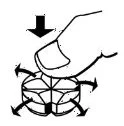
If your doctor has instructed you to take ¼ (one-quarter) or ½ (half) a tablet daily, you will need to split the tablet along the score lines before taking it. The tablet can be divided into equal doses. Follow the instructions below to split Nebivolol Stada tablets.
- Place the tablet on a hard surface with the score line facing upwards.
- Apply pressure with your thumb on the top part, and the tablet will split into four equal parts.
Your doctor will decide whether Nebivolol Stada should be combined with other medicines to treat your condition.
Use in children and adolescents
Do not use Nebivolol Stada in children and adolescents under 18 years of age.
If you take more Nebivolol Stada than you should
 In case of overdose or accidental ingestion, contact your doctor or pharmacist immediately or call the Toxicology Information Service at telephone number: 91 562 04 20, stating the name of the medicine and the amount ingested.
It is recommended to bring the medicine packaging and leaflet to the healthcare professional.
The most common symptoms and signs of Nebivolol Stada overdose are very slow heartbeat (bradycardia), low blood pressure possibly leading to fainting (hypotension), breathing difficulties similar to asthma (bronchospasm), and acute heart failure.
If you forget to take Nebivolol Stada
If you forget to take a dose of Nebivolol Stada but remember shortly afterwards, take your daily dose as usual. However, if a long time has passed (several hours), so that it is close to the time of your next dose, skip the missed dose and take the next scheduled dose at the usual time. Do not take a double dose to make up for a missed dose. Try to avoid repeated missed doses.
If you stop taking Nebivolol Stada
Always consult your doctor before stopping treatment with Nebivolol Stada, whether you are taking it for high blood pressure or for chronic heart failure.
Do not stop treatment abruptly, as this could temporarily worsen your heart failure. If it becomes necessary to discontinue treatment with Nebivolol Stada for chronic heart failure, the daily dose should be gradually reduced by halving the dose at weekly intervals.
If you have any further questions about the use of this medicine, ask your doctor or pharmacist.
4. Possible adverse effects
Like all medicines, Nebivolol Stada can cause adverse effects, although not everyone experiences them.
When Nebivolol Stada is used for the treatment of high blood pressure, possible adverse effects are:
Frequent adverse effects (may affect up to 1 in 10 people)
- headache
- dizziness
- fatigue
- unusual itching or tingling sensation (paresthesia)
- diarrhea
- constipation
- nausea
- difficulty breathing
- fluid accumulation in the body causing swelling, especially in the legs and ankles (edema)
Uncommon adverse effects (may affect up to 1 in 100 people)
- slow heartbeat or other heart disturbances
- low blood pressure
- leg pain while walking resembling cramps (intermittent claudication)
- abnormal vision
- impotence
- feeling of depression
 digestive disorders (dyspepsia), stomach or intestinal gas, vomiting
- skin rash, itching
- breathing difficulty resembling asthma due to sudden contraction of muscles around the airways (bronchospasm)
- nightmares
Rare adverse effects (may affect up to 1 in 10,000 people)
- fainting
- worsening of psoriasis (a skin disease characterized by scaly pink patches)
Adverse effects with unknown frequency (frequency cannot be estimated from current data)
- swelling of lips, eyes, or tongue (angioedema), possibly with sudden breathing difficulty
- allergic reactions
- urticaria
Other adverse effects observed with medicines similar to Nebivolol include: hallucinations, mental disorders and confusion, cold fingers and toes which may sometimes appear pale or blue, dry eyes, and a serious condition affecting the eyes and mouth.
In a clinical trial for chronic heart failure, the following adverse effects were observed:
Very common adverse effects (may affect more than 1 in 10 people)
- slow heartbeat
- dizziness
Frequent adverse effects (may affect up to 1 in 10 people)
- worsening of heart failure
- low blood pressure (such as dizziness upon standing quickly)
- intolerance to this medicine
- mild disturbance in heart conduction affecting heart rhythm (first-degree atrioventricular block)
- swelling of the lower limbs (swollen ankles)
Reporting of adverse effects:
If you experience any type of adverse effect, consult your doctor or pharmacist, even if they are adverse effects not listed in this leaflet. You may also report them directly via the Spanish Pharmacovigilance System for Human Medicines: https://www.notificaram.es. By reporting adverse effects, you can help provide more information on the safety of this medicine.
5. Storage of Nebivolol Stada
Keep this medicine out of the sight and reach of children.
Do not use this medicine after the expiry date which is stated on the carton and on the blister after “EXP.:”. The expiry date refers to the last day of the month indicated.
Do not store above 30 °C.
 Medicines should not be disposed of via wastewater drains or household waste. Dispose of unused medicines and their packaging at the SIGRE Point at your pharmacy. If you are in doubt, ask your pharmacist how to properly dispose of unused medicines and their packaging. This will help protect the environment.
6. Contents of the pack and other information
Composition of Nebivolol Stada
- The active substance is nebivolol. Each tablet contains nebivolol hydrochloride equivalent to 5 mg of nebivolol.
- The other components are povidone K30; monohydrate lactose; pregelatinized corn starch; sodium croscarmellose; colloidal anhydrous silica; magnesium stearate; and crospovidone.
Appearance of the product and pack contents
There is only one strength of Nebivolol Stada available. The tablets are white, round, cross-scored, and supplied in blisters containing 28 or 30 tablets.
Only certain pack sizes may be marketed.
Marketing Authorization Holder
Laboratorio STADA, S.L.
Frederic Mompou, 5
08960 Sant Just Desvern (Barcelona), Spain
Manufacturer
STADA Arzneimittel AG
Stadastrasse 2-18,
D-61118 Bad Vilbel, Germany
This medicinal product is authorized in the Member States of the European Economic Area under the following names:
Bulgaria: Cardiostad 5 mg tablets
Netherlands: Nebivolol STADA 5 mg tabletten
Spain: Nebivolol STADA 5 mg comprimidos EFG
Date of the most recent revision of this leaflet: April 2025
Detailed and up-to-date information on this medicinal product is available on the website of the Spanish Agency for Medicines and Health Products (AEMPS) http://www.aemps.gob.es/