Natulan 50 mg hard capsules
Spain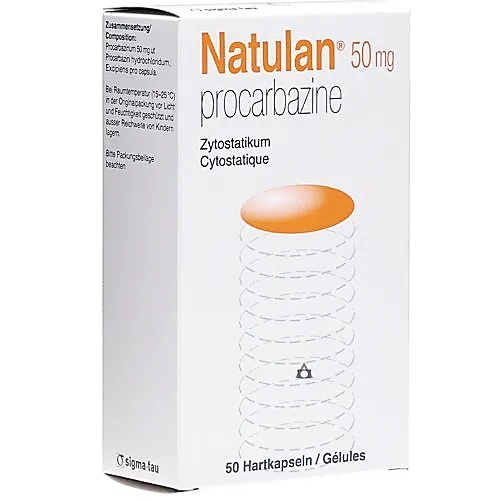
Table of Contents
Package leaflet: Information for the user
Introduction
Package leaflet: information for the patient
Natulan 50 mg hard capsules
procarbazine
Read the entire leaflet carefully before you start taking this medicine, because it contains important information for you.
- Keep this leaflet, as you may need to read it again.
- If you have any questions, ask your doctor or pharmacist.
- This medicine has been prescribed for you only, and you should not give it to others, even if they have the same symptoms as you, because it could harm them.
- If you experience any adverse effects, consult your doctor or pharmacist, even if they are adverse effects not listed in this leaflet. See section 4.
Contents of the leaflet
-
What Natulan is and what it is used for
-
What you need to know before taking Natulan
-
How to take Natulan
-
Possible side effects
-
Storage of Natulan
-
Contents of the pack and other information
1. What Natulan is and what it is used for
Natulan contains the active substance procarbazine. Procarbazine is a cancer treatment drug (systemic cytotoxic agent). It works by killing cancer cells. This is also known as "chemotherapy".
Adults
Natulan is indicated in combination chemotherapy for the treatment of Hodgkin's lymphoma. This medicine is also indicated as part of combination chemotherapy for other advanced lymphomas and brain tumors.
Children and adolescents
Natulan, when combined with other antineoplastic treatments, is indicated for the treatment of Hodgkin's lymphoma in children between 2 and 18 years of age.
2. What you need to know before taking Natulan
Do not take Natulan
- if you are allergic to procarbazine or any of the other ingredients of this medicine (listed in section 6).
- if you have a severe bone marrow disorder (bone marrow suppression) and serious abnormalities in the number of white blood cells and platelets in the blood.
- if kidney and/or liver function is severely impaired.
- during pregnancy or breastfeeding.
Warnings and precautions
Talk to your doctor or pharmacist before starting Natulan.
- Procarbazine may affect your blood and immune system. Blood cells are produced in your bone marrow. There are three types of these cells:
- red cells, which carry oxygen throughout the body,
- white cells, which fight infections, and
- platelets, which allow blood to clot.
- After receiving this medicine, your blood cell counts may decrease. Therefore, your doctor will monitor your blood counts before and throughout treatment.
- Before treatment begins, liver and kidney function will be evaluated and monitored periodically during treatment.
- During treatment with this medicine, fever, bleeding, or superficial skin hemorrhages may occur due to reduced blood cell counts. If this happens, inform your doctor immediately.
- If you experience gastrointestinal discomfort with nausea and vomiting, consult your doctor immediately.
Children and adolescents
Natulan is always administered to children and adolescents at the same dose as adults, in combination with other anticancer medicines. Your doctor will determine the appropriate dose for your child.
Other medicines and Natulan
Tell your doctor or pharmacist if you are taking, have recently taken, or might need to take any other medicines.
Some medicines may alter the effect of Natulan, or Natulan itself may influence the effectiveness of other medicines taken at the same time.
Procarbazine enhances the effect of the following drugs:
- Oral antidiabetic agents (oral diabetes medications) and insulin: since these may lower your blood sugar level more than usual when used together with this medicine, low blood sugar levels may occur.
- Antihistamines (for treatment of allergic symptoms)
- Barbiturates (sleep inducers and sedatives)
- Antihypertensive medicines (medicines to lower blood pressure)
- Narcotics
- Phenothiazines (medicines for treatment of mental disorders, or tranquilizers)
As procarbazine is a weak inhibitor of monoamine oxidase (MAO), interactions are possible with drugs that trigger a reaction in the autonomic nervous system, such as:
- sympathomimetics (to stimulate the autonomic nervous system)
- antiasthmatics (for treatment of asthma)
- anti-inflammatory nasal drops/sprays
- medicines that increase blood pressure
- tricyclic antidepressants (amitriptyline, imipramine)
- serotonin reuptake inhibitors (SSRIs, for treatment of depression, e.g., sertraline)
Allopurinol may prolong the effect of procarbazine.
No interaction studies have been conducted with drugs such as ketoconazole or rifampicin; therefore, caution should be exercised when using them in combination with procarbazine.
Taking Natulan with food, drinks, and alcohol
Concomitant intake of procarbazine and foods high in tyramine may cause hypertensive crises. Therefore, avoid cheese, cream cheese, yogurt, beverages containing methylxanthines (coffee, black tea, cola drinks), alcoholic beverages (beer, wine, vermouth, sherry, port), chocolate, dried sausages (e.g., salami), meat, liver, yeast or yeast extracts, legumes, beans, overripe fruits, avocado, banana, figs, herring, smoked or marinated meat or fish, and meat or fish that is no longer fresh.
Alcohol and alcoholic beverages combined with procarbazine may cause a reaction involving flushing attacks, including skin redness, especially in the face (flushing), increased heart rate, sweating, decreased blood pressure, headache, and difficulty breathing (disulfiram-like reaction). Therefore, alcohol consumption must be completely avoided throughout the entire course of therapy.
Pregnancy, breastfeeding, and fertility
If you are pregnant, breastfeeding, think you may be pregnant, or plan to become pregnant, consult your doctor or pharmacist.
Pregnancy
Procarbazine may cause genetic damage and may harm the fetus. You should not use this medicine during pregnancy unless clearly considered necessary by your doctor. If you receive this treatment, you should ask your doctor to explain the risk of possible adverse effects on your unborn child, and genetic counseling is recommended.
Women must not become pregnant during treatment with procarbazine.
If you become pregnant during treatment, genetic counseling is recommended.
Breastfeeding
This medicine should not be administered during breastfeeding. If you require treatment with procarbazine while breastfeeding, you must stop breastfeeding.
Fertility
Before starting treatment with procarbazine, both male and female patients should be informed about the risk of permanent infertility (sterility).
Men treated with procarbazine should use contraceptive methods during treatment and for at least 3 months after completion of treatment. Due to the possibility of irreversible infertility following procarbazine treatment, sperm preservation should be discussed with the doctor.
Women must not become pregnant during treatment with procarbazine. They should use established contraceptive methods during treatment and for at least 6 months after stopping treatment with this medicine.
Driving and using machines
Procarbazine may indirectly affect your ability to drive and use machines due to nausea and vomiting. If you feel dizzy or drowsy, do not drive or operate machinery until these effects have subsided.
3. How to take Natulan
As a general rule, procarbazine should only be prescribed by physicians with sufficient experience in medical oncology or hematology and according to an appropriate chemotherapy protocol for your condition. This is particularly applicable to its use in children and adolescents.
Always follow exactly the instructions for administration of this medicine as given by your doctor. If in doubt, please consult your doctor or pharmacist again.
Dosage
Procarbazine dosage in combination with other chemotherapeutic agents:
The usual dose in most combination regimens is 100 mg/m²/day for 10 to 14 days of each 4- to 6-week cycle. The dose should be adjusted according to the chemotherapy protocol used.
Procarbazine dosage as monotherapy:
Adults
Start with 50 mg on the first day, then increase by 50 mg each day until reaching a daily dose of 250 to 300 mg.
Continue treatment with a daily dose of 250 or 300 mg until the most complete remission possible is achieved, after which a maintenance dose should be administered. A maintenance dose of 50 to 150 mg per day should be given. Continue treatment until a total cumulative dose of at least 6 g has been administered.
Pediatric population (2 to 18 years of age)
The dose used in most published clinical trials has been similar to that used in adults (100 mg/m²/day for up to 14 days). Available data are limited. Dosing in children should be individually adjusted and closely monitored clinically.
The dose should be adjusted based on:
- The chemotherapy protocol used.
- The functional status of the bone marrow.
- Previous cycles of chemotherapy and radiotherapy.
- The myelosuppressive effect (reduction in blood cells) of other cytostatic agents used.
Treatment should be temporarily interrupted if the white blood cell count falls below 3,000/mm³ and/or platelets drop below 80,000/mm³, and may be resumed once levels have recovered. The patient's hematological status should be monitored at least every 3 to 4 days.
Special populations
Patients with hepatic or renal impairment:
Procarbazine should be used with caution in patients with hepatic or renal impairment and is contraindicated in cases of severe impairment (see section 4.3). Hepatic and renal function should be assessed weekly.
Elderly patients:
Procarbazine should be administered with caution in elderly patients. These patients should be closely monitored for signs of early treatment failure or intolerance.
Method of administration
Procarbazine capsules are for oral use. The capsules must not be opened, crushed, or chewed. They should be swallowed whole with a glass of water, with or without food.
If you take more Natulan than you should
If you, or anyone else, take more than the prescribed dose of this medicine, inform your doctor immediately or go to the nearest hospital emergency department. Please remember to bring this medicine’s packaging or leaflet with you.
Especially in patients with limited bone marrow reserve, procarbazine overdose may cause severe functional impairment or damage to the bone marrow. In such cases, supportive treatment measures such as antibiotic therapy and platelet transfusions may be required in a specialized medical oncology intensive care unit, depending on the severity of symptoms.
The following events have been reported in association with procarbazine overdose: dizziness, nausea, vomiting, diarrhea, hypotension, palpitations, tremors, hallucinations, depression, bone marrow failure, seizures, coma, and muscle cramps.
During recovery and for at least two additional weeks thereafter, both blood counts and liver function should be monitored regularly. Infection prophylaxis should be considered. Furthermore, the decision to continue specific treatment should be based on blood parameters.
In case of overdose or accidental ingestion, contact your doctor or pharmacist immediately or call the Toxicology Information Service at: 91 562 04 20 (indicating the name of the medicine and the amount ingested).
If you forget to take Natulan
Do not take a double dose to make up for missed doses. If you miss a dose of this medicine once, continue taking it as described in the dosing instructions without taking an extra dose.
However, you should speak with your doctor, especially if you have missed several doses. Your doctor will decide how to proceed with your treatment.
If you stop taking Natulan
Procarbazine often causes nausea and vomiting. Do not stop treatment with Natulan, even if you start to feel unwell. If this occurs, you must inform your doctor immediately. Your doctor will take appropriate measures to help manage the unpleasant side effects of therapy.
Inform your doctor if you vomit shortly after taking Natulan. Your doctor will then decide whether you should take an additional dose or wait until your next scheduled dose.
4. Possible adverse effects
Like all medicines, this medicine can cause adverse effects, although not everyone experiences them.
The following list includes all known adverse reactions during treatment with procarbazine. Natulan is a medicine that can kill cancer cells but also attacks normal cells, and therefore may have a number of side effects.
Your doctor will not administer Natulan unless convinced that your cancer poses a greater risk to you than the potential side effects of treatment. Your doctor will monitor you regularly and treat any adverse effects as promptly as possible.
Immediately inform your doctor if you notice any of the following serious adverse effects:
The most frequent serious reactions with procarbazine are hair loss (alopecia), gastrointestinal disturbances such as weight loss (anorexia), nausea and vomiting, and bone marrow suppression (reduction in the number of blood cells).
Due to its effects on different types of white blood cells, many cancer treatments, including procarbazine, cause profound suppression of normal immunity, and patients may be at much higher risk of developing severe and diverse types of infections.
The assessment of side effects is based on the following frequency categories:
Frequent: affects less than 1 in 10 patients treated
- infections;
- decreased blood cell counts (red blood cells, platelets, white blood cells);
- anorexia (loss of appetite);
- nausea;
- vomiting;
- alopecia;
Uncommon: affects more than 1 in 1,000 patients
- hypersensitivity (including anaphylaxis, angioedema);
Frequency not known (cannot be estimated from available data)
- sepsis, herpes zoster, pneumonia, urinary tract infection, nasopharyngitis;
- acute myeloid leukemia, myelodysplastic syndrome, secondary primary neoplasms;
- bone marrow failure, abnormal blood cell counts (decreased or increased) (red cells, white cells, platelets);
- depression, confusion;
- seizures, peripheral neuropathy, paresthesia, headache;
- visual disturbances (including blurred vision and visual deterioration);
- bleeding;
- pulmonary disease, dyspnea, cough;
- stomatitis, constipation, diarrhea, abdominal pain;
- hepatotoxicity, hepatitis, jaundice (increased bilirubin);
- Stevens-Johnson syndrome, toxic epidermal necrolysis, rash, urticaria;
- osteonecrosis, myalgia;
- azoospermia (sometimes permanent), infertility;
- pain, fever, fatigue, malaise, feeling of lack of energy or vitality.
Reporting of adverse effects
If you experience any adverse effects, consult your doctor or pharmacist, even if they are possible adverse effects not listed in this leaflet. You may also report them directly via the Spanish Pharmacovigilance System for Human Medicines (www.notificaRAM.es). By reporting adverse effects, you can help provide more information on the safety of this medicine.
5. Storage of Natulan
Keep this medicine out of the sight and reach of children.
Do not use this medicine after the expiry date stated on the packaging after EXP. The expiry date is the last day of the month indicated.
Do not store above 25°C.
Keep in the original packaging to protect from moisture.
Medicines should not be disposed of via wastewater or household waste. Dispose of unused medicines and their containers at the SIGRE collection point at your pharmacy. Ask your pharmacist how to dispose of medicines and containers you no longer need. This will help protect the environment.
6. Contents of the package and other information
Composition of Natulan
The active substance is: procarbazine.
Each hard capsule contains 58.3 mg of procarbazine hydrochloride (equivalent to 50 mg of procarbazine).
The other components are:
Capsule contents: mannitol (E 421), talc, corn starch, magnesium stearate.
Capsule shell: gelatin, titanium dioxide (E 171), yellow iron oxide (E 172).
Appearance of the medicinal product and contents of the package
Natulan is yellowish-beige hard capsules available in brown glass bottles with HDPE screw cap and desiccant, containing 50 hard capsules.
Marketing Authorization Holder and Manufacturer
Leadiant GmbH
Liebherrstrasse 22
80538 Munich
Germany
Further information on this medicinal product is available from the local representative of the Marketing Authorization Holder:
Medicare Pharma, S.L.,
Ctra. Fuencarral, 22,
28108 Alcobendas,
Madrid
Date of the most recent revision of the leaflet: August 2024
Detailed information on this medicinal product is available on the website of the Spanish Agency of Medicines and Health Products (AEMPS) (http://www.aemps.gob.es/)