Naproxen sodium Normon 550 mg film-coated tablets EFG
Spain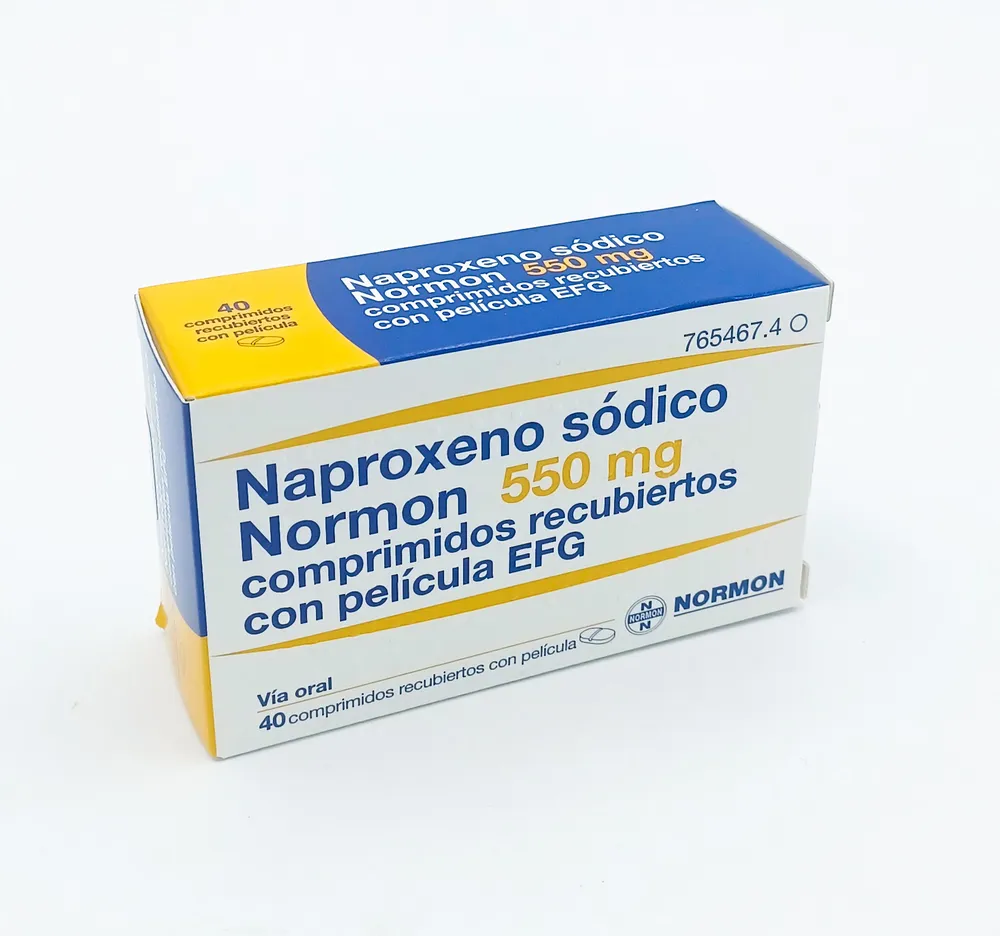
Table of Contents
- Package leaflet: Information for the user
- Introduction
- 1. What Naproxeno Sódico Normon is and what it is used for
- 2. What you need to know before starting to take Naproxen Sodium Normon
- 3. How to take Naproxen Sodium Normon
- 4. Possible adverse effects
- 5. Storage of Naproxen Sodium Normon
- 6. Contents of the pack and other information
Package leaflet: Information for the user
Introduction
Package leaflet: information for the user
Naproxeno sódico Normon 550 mg film-coated tablets EFG
Read all of this leaflet carefully before you start taking this medicine because it contains important information for you.
- Keep this leaflet. You may need to read it again.
- If you have any questions, ask your doctor or pharmacist.
- This medicine has been prescribed for you only. Do not give it to others, even if they have the same symptoms as you, because it could harm them.
- If you experience any adverse effects, talk to your doctor or pharmacist, even if the effects are not listed in this leaflet. See section 4.
Contents of the leaflet
- What Naproxeno sódico Normon is and what it is used for
- What you need to know before taking Naproxeno sódico Normon
- How to take Naproxeno sódico Normon
- Possible side effects
- How to store Naproxeno sódico Normon
- Contents of the pack and other information
1. What Naproxeno Sódico Normon is and what it is used for
Naproxeno Sódico Normon contains the active substance sodium naproxen, a compound belonging to the group of medicines known as non-steroidal anti-inflammatory drugs (NSAIDs).
Naproxen is indicated for the treatment of:
- Mild to moderate pain, and symptoms of rheumatoid arthritis (inflammation of the joints, usually affecting the hands and feet, causing swelling and pain), osteoarthritis (a chronic condition causing damage to the cartilage), acute gout attacks, and ankylosing spondylitis (inflammation affecting the joints of the spine),
- Menstrual pain.
- Relief of pain during acute migraine attacks.
- Pain due to bleeding associated with intrauterine devices (IUDs).
2. What you need to know before starting to take Naproxen Sodium Normon
It is important that you use the lowest dose that relieves/controls your pain and that you do not take Naproxen Sodium Normon for longer than necessary to control your symptoms.
Do not take Naproxen Sodium Normon
- If you are allergic to naproxen or sodium naproxen, or to any of the other ingredients of this medicine (listed in section 6).
- If you know you are allergic to acetylsalicylic acid or other non-steroidal anti-inflammatory drugs (NSAIDs) and/or they cause you severe allergic reactions such as: asthma, rhinitis, or nasal polyps.
- If you are currently taking other medicines of this type (non-steroidal anti-inflammatory drugs).
- If you currently have or have previously had on more than one occasion: a stomach or duodenal ulcer or gastrointestinal bleeding.
- If you have previously experienced gastrointestinal bleeding or perforation while taking a non-steroidal anti-inflammatory drug.
- If you suffer from ulcerative colitis (a bowel disease).
- If you have severe liver (hepatic) or kidney (renal) impairment.
- If you are in the third trimester of pregnancy.
- If you have severe heart failure.
Warnings and precautions
Talk to your doctor or pharmacist before starting to take naproxen:
Serious skin reactions have been reported with the use of non-steroidal anti-inflammatory drugs, appearing as reddish spots, generalized skin redness, ulcers, or widespread rash accompanied by flu-like symptoms including fever (see section 4). The rash may progress to widespread blisters or skin peeling. The highest risk of these serious skin reactions occurs during the first weeks of treatment, but they may begin to develop several months after starting the medicine (see section 4). If you have experienced any serious skin reactions while using Naproxen, you must never restart treatment with this medicine. If you develop a skin rash or these skin symptoms, stop taking Naproxen and contact your doctor or seek immediate medical attention.
Cases of severe skin reactions, including Stevens-Johnson Syndrome (SJS), toxic epidermal necrolysis (Lyell's syndrome), and drug reaction with eosinophilia and systemic symptoms (DRESS), have been reported in association with naproxen. Stop taking this medicine and contact your doctor immediately if you notice any of the symptoms related to severe skin reactions described in section 4.
Kidney inflammation may occur during treatment with naproxen. Signs and symptoms may include reduced urine volume or blood in the urine and/or hypersensitivity reactions such as fever, skin rash, and joint stiffness. You should report these signs to your doctor.
Take caution in the following situations:
- It is important that you use the lowest dose that relieves/controls your pain and that you do not take this medicine for longer than necessary to control your symptoms.
- If you have had or develop a stomach or duodenal ulcer, bleeding, or perforation, which may present as severe or persistent abdominal pain and/or black stools, or even without prior warning symptoms.
- If you have previously experienced gastrointestinal bleeding or perforation while taking a non-steroidal anti-inflammatory drug.
- This risk is higher when high doses and prolonged treatments are used, in patients with a history of peptic ulcer, and in elderly patients. In such cases, your doctor may consider prescribing a stomach-protecting medicine.
- If you have stomach problems, as naproxen may cause stomach irritation, bleeding, or ulcers. Your doctor will recommend the most appropriate dose.
- If you suffer from Crohn's disease or ulcerative colitis, as medicines like naproxen may worsen these conditions.
- If you have asthma or allergic disorders (such as rhinitis or nasal polyps), as naproxen may cause breathing difficulties (bronchospasm).
- If you have severe kidney, liver, or heart problems.
- If you are taking medicines that affect blood clotting or increase the risk of ulcers, such as oral anticoagulants or antiplatelet agents like acetylsalicylic acid. You should also mention the use of other medicines that could increase the risk of such bleeding, such as corticosteroids and selective serotonin reuptake inhibitor (SSRI) antidepressants.
- If you have or suspect you have an infection, as Naproxen may mask the usual signs and symptoms of infectious processes.
- If you experience stomach pain and/or notice black stools while taking naproxen, you should stop treatment with naproxen.
- If you experience vision disturbances during treatment.
- This medicine should be used with caution in patients on a low-salt diet and with a history of gastrointestinal problems.
- If you are planning to become pregnant, as naproxen may affect fertility.
Cardiovascular precautions
Medicines like naproxen may be associated with a moderate increase in the risk of heart attacks ("myocardial infarction") or strokes. This risk is more likely when high doses and prolonged treatments are used. Do not exceed the recommended dose or duration of treatment.
If you have heart problems, a history of stroke, or think you may be at risk for these conditions (for example, you have high blood pressure, diabetes, high cholesterol, or are a smoker), you should discuss this treatment with your doctor or pharmacist.
Also, this type of medicine may cause fluid retention, especially in patients with heart failure and/or high blood pressure (hypertension).
Other medicines and Naproxen Sodium Normon
Tell your doctor or pharmacist if you are taking, have recently taken, or might need to take any other medicines.
This is very important because naproxen may alter how other medicines work. It is important that you inform your doctor if you are taking any of the following drugs:
- Antacids or cholestyramine, as they may delay the action of Naproxen, but do not affect its overall effect.
- Acetylsalicylic acid used to prevent blood clots.
- Hydantoins (drugs primarily used for epilepsy).
- Sulfonylureas (medicines for diabetes).
- Sulfonamides (a type of diuretic medicine).
- Methotrexate (an immunosuppressive medicine).
- Beta-blockers (anti-hypertensive medicine).
- Furosemide (a medicine with natriuretic effect).
- Lithium. Naproxen may increase lithium plasma concentration.
- Steroids; naproxen may interfere with adrenal function tests.
- ACE inhibitors (Angiotensin-Converting Enzyme Inhibitors, anti-hypertensive medicines).
- Angiotensin receptor antagonists or blockers (anti-hypertensive medicines).
Your doctor may need to adjust the dose of one of the two medicines. Consult your doctor if you have any doubts about these points.
Taking Naproxen Sodium Normon with food and drinks
It is recommended to take the tablets during meals or immediately after eating, to reduce the possibility of stomach discomfort.
Pregnancy, breastfeeding, and fertility
If you are pregnant or breastfeeding, think you may be pregnant, or are planning to become pregnant, consult your doctor or pharmacist before using this medicine.
Naproxen Sodium Normon must not be administered during pregnancy, childbirth, or breastfeeding.
Do not take Naproxen if you are in the last 3 months of pregnancy, as it could harm the fetus or cause problems during delivery. It may cause kidney and heart problems in your fetus. It may affect your own and your baby's tendency to bleed and may delay or prolong labor beyond the expected duration.
Because the use of medicines like naproxen has been associated with an increased risk of congenital abnormalities or miscarriage, you should not take naproxen during the first and second trimesters of pregnancy unless strictly necessary and specifically prescribed by your doctor. If treatment is needed during this period or while trying to become pregnant, you should take the lowest possible dose for the shortest possible time. From week 20 of pregnancy, naproxen may cause kidney problems in your fetus if taken for more than a few days, which could lead to low levels of amniotic fluid surrounding the baby. If you require treatment for longer than a few days, your doctor may recommend additional monitoring.
For women of childbearing age, it should be noted that medicines like naproxen have been associated with a reduced ability to conceive.
Driving and using machines
Naproxen Sodium Normon should be used with caution in patients whose activities require alertness and who have experienced dizziness or visual disturbances during treatment with this medicine.
Naproxen Sodium Normon contains sodium
This medicine contains 51.87 mg of sodium (main component of table/cooking salt) in each tablet. This corresponds to 2.59% of the maximum daily sodium intake recommended for an adult.
3. How to take Naproxen Sodium Normon
Follow exactly the instructions for use of this medicine given by your doctor or pharmacist. If in doubt, consult your doctor or pharmacist again.
Your doctor will determine the duration of your treatment with naproxen.
The recommended dose is:
Adults
The daily dose is usually 1 or 2 tablets (550 mg or 1,100 mg of naproxen sodium). As an initial dose, it is recommended to take 1 tablet (550 mg of naproxen sodium), followed by half a tablet (275 mg of naproxen sodium) every 6 or 8 hours, depending on the severity of the condition. These doses may be adjusted at your doctor's discretion.
For the treatment of rheumatoid arthritis, osteoarthritis, and ankylosing spondylitis: the usual initial dose is 1 tablet (550 mg of naproxen sodium) taken twice daily (in the morning and at night) or 2 tablets (1,100 mg of naproxen sodium) taken once daily.
For the treatment of acute gout attacks: the usual initial dose is one and a half tablets (825 mg of naproxen sodium), followed by half a tablet (275 mg of naproxen sodium) every 8 hours until pain subsides. Consult your doctor regarding the duration of treatment.
For the treatment of dysmenorrhea (menstrual pain): the usual initial dose is 1 tablet (550 mg of naproxen sodium), followed by half a tablet (275 mg of naproxen sodium) every 6 or 8 hours.
For the treatment of migraine attacks: the initial dose is one and a half tablets (825 mg of naproxen sodium) at the onset of symptoms, followed by half a tablet (275 mg of naproxen sodium) 30 minutes after the initial dose.
For the treatment of menorrhagia (pain associated with excessive menstrual bleeding): the initial dose on the first day of menstruation is between one and a half and two and a half tablets (825 mg and 1,375 mg of naproxen sodium), divided into two daily doses. Continue with a dose of 1 or 2 tablets daily (550 mg or 1,100 mg of naproxen sodium), divided into two daily doses, for up to the following 4 days.
Use in patients over 65 years of age or in patients with kidney and/or liver disease
In patients over 65 years of age or in those with kidney or liver disease, it is recommended to reduce the dose and use the lowest effective dose for the shortest possible duration. Consult your doctor.
Use in children and adolescents
This medicine is not recommended for use in children under 16 years of age.
Method of administration:
This medicine is taken orally.
The tablet may be divided into equal doses.
Swallow the tablets with a sufficient amount of liquid, such as a glass of water or another drink, preferably during or after meals.
Always take the lowest effective dose.
If you take more Naproxen Sodium Normon than you should
If you have taken more naproxen than you should, contact your doctor or pharmacist immediately.
Symptoms of overdose include drowsiness, stomach burning, indigestion, nausea, vomiting, and in some cases, seizures.
In the event of accidental or intentional overdose, gastric lavage should be performed and symptomatic treatment initiated. Rapid administration of 50–100 g of activated charcoal as an aqueous suspension reduces drug absorption.
In case of overdose or accidental ingestion, contact your doctor or pharmacist immediately or call the Toxicology Information Service at telephone number 91 562 04 20, indicating the medicine and the amount ingested. Do not go to the hospital alone; ask someone to accompany you. Bring this leaflet and any remaining tablets with you to show to the doctor.
If you forget to take Naproxen Sodium Normon
Do not take a double dose to make up for missed doses. Take the dose as soon as you remember, and then continue with your next scheduled dose.
4. Possible adverse effects
Like all medicines, this medicine can cause adverse effects, although not everyone will experience them.
Adverse effects that may occur during treatment with this medicine, which have been observed very rarely (in less than 1 in 10,000 patients), are:
Gastrointestinal disorders: The most frequent adverse effects observed with naproxen are of a gastrointestinal nature (affecting the stomach and intestine).
Inflammation, bleeding (in some cases fatal, especially in the elderly), peptic ulcers, perforation, and obstruction of the upper or lower gastrointestinal tract may occur. Cases of esophagitis (inflammation of the esophagus), gastritis (inflammation of the stomach lining), pancreatitis (inflammation of the pancreas), stomatitis (inflammation of the oral mucosa), and worsening of ulcerative colitis and Crohn's disease have been observed. Other effects include stomach acidity, dyspepsia (digestive disturbances), abdominal discomfort, nausea, vomiting, diarrhea, constipation, flatulence (gas), hematemesis (vomiting blood), and melena (black, tarry stools).
Blood and lymphatic system disorders: agranulocytosis (increase/decrease in certain white blood cells), aplastic and hemolytic anemia (reduction in red blood cells, white blood cells, and platelets in blood), eosinophilia (increase in certain white blood cells in blood), leukopenia (decrease in the number of leukocytes in blood), thrombocytopenia (decrease in the number of platelets).
Immune system disorders: anaphylactoid reactions (acute allergic reaction), angioneurotic edema (inflammation of the skin, mucosa, and viscera).
Metabolism and nutrition disorders: hypercalcemia (increased concentration of calcium in blood).
Psychiatric disorders: difficulty concentrating, depression, sleep disturbances.
Nervous system disorders: dizziness, somnolence, headache, sensation of dizziness, vertigo, cognitive dysfunction, aseptic meningitis (inflammation of the meninges), seizures, insomnia.
Eye disorders: visual disturbances, corneal opacity, papillitis (inflammation of the optic disc), retrobulbar optic neuritis (inflammation of the optic nerve), and papilledema.
Ear and labyrinth disorders: hearing disturbances, tinnitus (ringing in the ears), hypoacusis (reduced hearing).
Cardiac disorders: palpitations, congestive heart failure (inability of the heart to perform its pumping function), hypertension (high blood pressure). Medicines such as naproxen may be associated with a moderate increase in the risk of heart attack ("myocardial infarction") or stroke.
Vascular disorders: vasculitis (inflammation of blood vessels), edema.
Respiratory, thoracic, and mediastinal disorders: asthma, eosinophilic pneumonitis, dyspnea (shortness of breath), pulmonary edema.
Infections and infestations: aseptic meningitis.
Hepatobiliary disorders: hepatitis (inflammation of the liver), jaundice (yellowing of the skin). Medicines such as naproxen may rarely be associated with liver damage.
Skin and subcutaneous tissue disorders: skin hemorrhage, itching, capillary bleeding, skin rashes, sweating, alopecia, skin desquamation, lichen planus (a skin disease characterized by small flat nodules), pustular reactions, skin redness, systemic lupus erythematosus (an autoimmune disease with typical skin signs, rash, and skin redness), and very severe blistering reactions such as Stevens-Johnson syndrome (a map-like skin rash) and toxic epidermal necrolysis, allergy, photosensitivity reactions including rare cases where the skin takes on the appearance of porphyria cutanea tarda, pseudoporphyria (defect in liver enzymes), or epidermolysis bullosa. If skin fragility, blister formation, or other symptoms suggestive of pseudoporphyria occur, treatment must be discontinued and the patient closely monitored.
Generalized skin rash, elevated body temperature, high levels of liver enzymes, blood abnormalities (eosinophilia), lymphadenopathy (enlarged lymph nodes), and involvement of other organs (Drug Reaction with Eosinophilia and Systemic Symptoms, also known as DRESS). See also section 2.
A characteristic skin allergic reaction known as fixed drug eruption, which usually reappears at the same site upon re-exposure to the drug and may present as round or oval red patches, skin swelling, blisters (urticaria), and itching. (frequency not known)
Musculoskeletal, connective tissue, and bone disorders: muscle pain, muscular asthenia.
Renal and urinary disorders: blood in urine, interstitial nephritis (kidney inflammation with yellowish-brown discoloration), nephrotic syndrome, nephropathy (kidney disease), renal failure, renal papillary necrosis (death of cells forming the renal papillae due to metabolic disturbance).
Reproductive system and breast disorders: infertility.
General disorders and administration site conditions: general malaise, pyrexia (chills and fever), thirst, sore throat.
Investigations: abnormal liver function test results, elevated serum creatinine, hyperkalemia.
If you experience any adverse effects, consult your doctor or pharmacist, even if they are effects not listed in this leaflet.
Reporting of adverse effects
If you experience any type of adverse effect, consult your doctor or pharmacist, even if they are possible adverse effects not listed in this leaflet. You may also report them directly via the Spanish Pharmacovigilance System for Human Medicines: https://www.notificaram.es. By reporting adverse effects, you can help provide more information on the safety of this medicine.
5. Storage of Naproxen Sodium Normon
Keep this medicine out of the sight and reach of children.
Do not use this medicine after the expiry date stated on the blister pack and outer packaging following EXP. The expiry date refers to the last day of the month indicated.
This medicine does not require any special storage conditions.
Store in the original packaging to protect it from moisture.
Medicines must not be disposed of via wastewater or household waste. Dispose of unused medicines and their containers at the SIGRE collection point at your pharmacy. Ask your pharmacist how to dispose of medicines and containers you no longer need. This way, you will help protect the environment.
6. Contents of the pack and other information
- Composition of Naproxen Sodium Normon
- The active substance is naproxen sodium. Each tablet contains 550 mg of naproxen sodium (equivalent to 500 mg of naproxen).
- The other components (excipients) are:
Tablet core: Microcrystalline cellulose, sodium lauryl sulfate, povidone, talc, sodium carboxymethyl starch (type A) (from potato), magnesium stearate.
Film coating of the tablets: Hypromellose, macrogol, talc, indigo carmine (E132).
Appearance of the medicinal product and contents of the pack
Naproxen Sodium Normon are blue, elliptical, biconvex film-coated tablets with a score line on one side and flat on the other, measuring 19.7 mm x 8.7 mm ± 10%.
The tablet can be divided into two equal doses.
Naproxen Sodium Normon is available in packs containing 10 and 40 tablets in PVDC-PE/AL blisters.
Marketing Authorization Holder and Manufacturer
LABORATORIOS NORMON, S.A.
Ronda de Valdecarrizo, 6 - 28760 Tres Cantos - Madrid (SPAIN)
Date of the most recent revision of this leaflet: July 2024
Detailed information on this medicinal product is available on the website of the Spanish Agency for Medicines and Health Products (AEMPS) http://www.aemps.gob.es/.
You can access detailed information about this medicinal product by scanning with your mobile phone (smartphone) the QR code included in the package leaflet and outer packaging. You may also access this information at the following internet address:
https://cima.aemps.es/cima/dochtml/p/89738/P_89738.html