Naproxen Normon 500 mg tablets EFG
Spain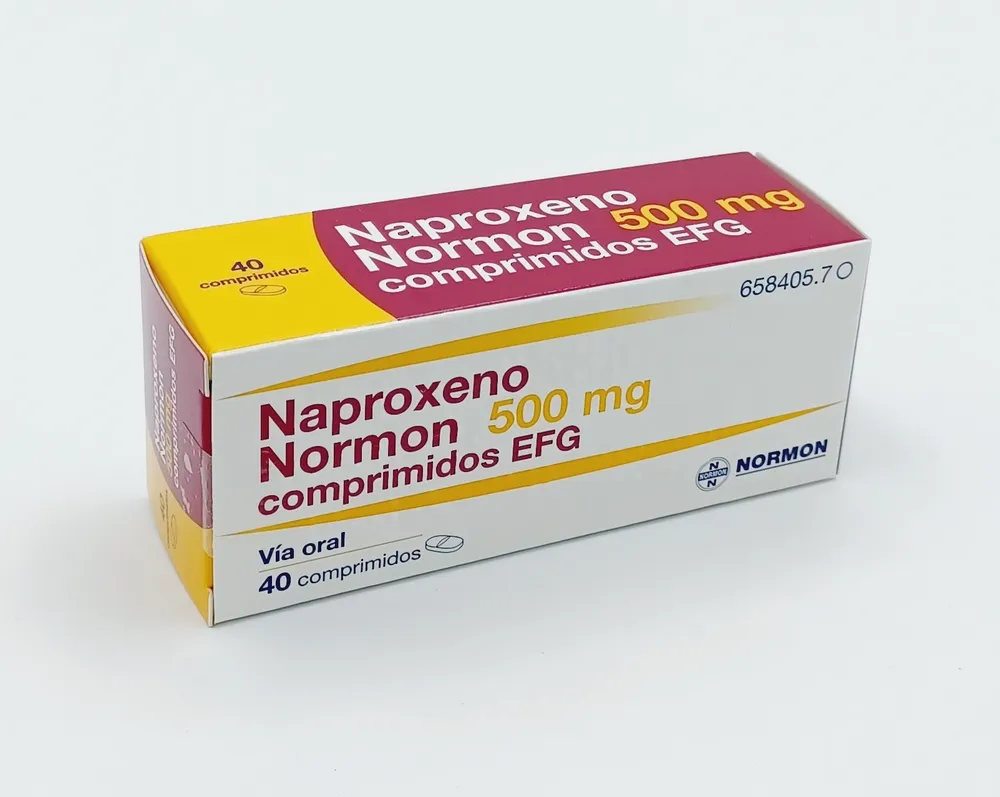
Table of Contents
Package leaflet: Information for the user
Introduction
Package leaflet: information for the user
Naproxen Normon 500 mg tablets EFG
Read the entire leaflet carefully before you start taking this medicine.
- Keep this leaflet as you may need to read it again.
- If you have any questions, ask your doctor or pharmacist.
- This medicine has been prescribed for you only and must not be given to other people, even if they have the same symptoms as you, because it could harm them.
- If you experience any adverse effects, consult your doctor or pharmacist, even if they are effects not listed in this leaflet. See section 4.
Leaflet contents:
- What Naproxen Normon is and what it is used for
- Before taking Naproxen Normon
- How to take Naproxen Normon
- Possible side effects
- How to store Naproxen Normon
- Further information
1. What Naproxeno Normon is and what it is used for
Naproxen belongs to a group of medicines known as non-steroidal anti-inflammatory drugs, with anti-inflammatory (against inflammation), analgesic (against pain), and antipyretic/antithermic (reduction of fever) properties.
Naproxeno Normon is indicated for the treatment of inflammatory and painful conditions affecting the joints, muscles, tendons, and ligaments, such as rheumatoid arthritis, osteoarthritis, and ankylosing spondylitis. Naproxeno Normon is also indicated for the treatment of acute gout attacks, rheumatoid syndromes, and menstrual pain.
2. Before taking Naproxen Normon
It is important that you use the lowest dose that relieves/controls your pain and that you do not take this medicine longer than necessary to control your symptoms.
Do not take Naproxen Normon:
- If you are allergic (hypersensitive) to naproxen, sodium naproxen, or to any of the other components of Naproxen Normon.
- If you are allergic to acetylsalicylic acid or to other non-steroidal anti-inflammatory drugs (NSAIDs) and/or they cause you serious allergic reactions.
- If you have previously experienced stomach or duodenal bleeding or have suffered a perforation of the gastrointestinal tract while taking a non-steroidal anti-inflammatory drug.
- If you suffer from any bowel disease.
- If you have severe liver or kidney disorders.
- Naproxen Normon must not be administered to children under 2 years of age.
- You have severe heart failure.
- You are in the third trimester of pregnancy.
Take special care with Naproxen Normon:
- If you have had or develop a stomach or duodenal ulcer, bleeding, or perforation, which may present as severe or persistent abdominal pain and/or black stools, or even without prior warning symptoms.
This risk is higher when high doses are used or treatment is prolonged, in patients with a history of peptic ulcer, and in elderly patients. In such cases, your doctor may consider adding a stomach-protective medicine.
- If you suffer from asthma or allergic disorders, since Naproxen Normon may cause breathing difficulties (bronchospasm).
If you have severe kidney, liver, or heart problems, consult your doctor.
- Medicines such as Naproxen Normon may be associated with a moderate increase in the risk of heart attacks ("myocardial infarction") or strokes. This risk is more likely when high doses are used and treatment is prolonged. Do not exceed the recommended dose or duration of treatment.
If you have heart problems, a history of stroke, or think you may be at risk of these conditions (for example, if you have high blood pressure, diabetes, high cholesterol, or are a smoker), discuss this treatment with your doctor or pharmacist.
Furthermore, this type of medicine may cause fluid retention, particularly in patients with heart failure and/or high blood pressure (hypertension).
- If you are taking other anti-inflammatory medicines, consult your doctor.
- If you have or suspect you have an infection, since Naproxen Normon may mask the usual signs and symptoms of infectious processes; consult your doctor.
- If you experience vision disturbances during treatment, consult your doctor or pharmacist.
Inform your doctor:
- If you are taking medicines that affect blood clotting or increase the risk of ulcers, such as oral anticoagulants or antiplatelet agents like acetylsalicylic acid. You should also mention the use of other medicines that could increase the risk of such bleeding, such as corticosteroids and selective serotonin reuptake inhibitor (SSRI) antidepressants.
- If you suffer from Crohn's disease or ulcerative colitis, as medicines like Naproxen Normon may worsen these conditions.
- Serious skin reactions have been reported, including Stevens-Johnson Syndrome (SJS), toxic epidermal necrolysis (Lyell's syndrome), and drug reaction with eosinophilia and systemic symptoms (DRESS), associated with Naproxen Normon. Stop taking Naproxen Normon and consult your doctor immediately if you notice any symptoms related to serious skin reactions described in section 4.
Use with other medicines:
Inform your doctor or pharmacist if you are currently using, have recently used, or might use any other medicines, including those obtained without a prescription.
- Concomitant administration of Naproxen Normon with the following medicines is not recommended:
- Antacids or cholestyramine, as they may delay the action of Naproxen Normon,
- Hydantoins (medicines primarily used for epilepsy),
- Sulfonylureas (medicines for diabetes),
- Sulfonamides (a type of medicine used to increase urine elimination),
- Methotrexate (an immunosuppressive medicine),
- Probenecid (a medicine used in patients with gout),
- Furosemide (a type of medicine used to increase urine elimination),
- Lithium (an antipsychotic used to treat depression),
- Angiotensin-converting enzyme (ACE) inhibitors (used to lower blood pressure),
- β-blockers (used to lower blood pressure).
Taking Naproxen Normon with food and drinks:
Swallow the tablets with a sufficient amount of liquid, such as a glass of water or another drink. It is advisable to take the medicine during meals.
Pregnancy and breastfeeding: Consult your doctor or pharmacist before using any medicine. Naproxen Normon must not be administered during pregnancy, childbirth, or breastfeeding.
Because the use of medicines like Naproxen Normon has been associated with an increased risk of congenital abnormalities or miscarriage, administration during the first and second trimesters of pregnancy is not recommended unless strictly necessary. In such cases, the dose and duration should be limited to the minimum possible.
Administration of Naproxen Normon during the third trimester is contraindicated.
Do not take Naproxen Normon if you are in the last 3 months of pregnancy, as it could harm the fetus or cause problems during childbirth. It may cause kidney and heart problems in your fetus. It may affect your ability and your baby's ability to bleed and may delay or prolong labor beyond expectations. You should not take Naproxen Normon during the first 6 months of pregnancy unless clearly necessary and as directed by your doctor. If treatment is needed during this period or while trying to become pregnant, you should take the lowest effective dose for the shortest possible time. From week 20 of pregnancy, Naproxen Normon may cause low levels of amniotic fluid surrounding the baby (oligohydramnios) or narrowing of a blood vessel (ductus arteriosus) in the baby's heart. If treatment is needed for more than a few days, your doctor may recommend additional monitoring.
For women of childbearing potential, it should be noted that medicines like Naproxen Normon have been associated with reduced fertility.
Driving and using machines: Naproxen Normon should be used with caution in patients whose activities require alertness and who have experienced dizziness or visual disturbances during treatment with this medicine.
3. How to take Naproxeno Normon
Follow exactly the instructions for use of this medicine as given by your doctor. If in doubt, consult your doctor or pharmacist again.
The recommended dose is:
Rheumatoid arthritis, osteoarthritis, and ankylosing spondylitis: The usual initial dose is one to two tablets (500–1000 mg naproxen) twice daily (morning and night). In patients with severe nocturnal pain and/or morning stiffness, patients switching from another anti-rheumatic treatment to Naproxeno Normon, and in osteoarthritis where pain is the predominant symptom, therapy should be initiated with doses of one and a half to two tablets (750–1000 mg) daily for several weeks. As maintenance therapy, a single daily dose of one to two tablets (500–1000 mg) may be administered in the morning or at night.
Acute gout: An initial dose of one and a half tablets (750 mg) is recommended, followed 8 hours later by one tablet (500 mg), then half a tablet (250 mg) every 8 hours until the attack subsides.
Dysmenorrhea: The recommended initial dose is one tablet (500 mg), followed by half a tablet (250 mg) every 6 or 8 hours.
Acute musculoskeletal conditions: The recommended initial dose is one tablet (500 mg), followed by half a tablet (250 mg) every 6 or 8 hours.
In acute flare-ups, and provided there is no history of gastrointestinal disease, the dose may be increased to three tablets (1500 mg), for no more than 2 weeks.
Use in children:
In juvenile rheumatoid arthritis, a dose of 10 mg/kg/day, divided into two doses given 12 hours apart, is recommended.
Special populations:
In patients over 65 years of age or in patients with heart, liver, or kidney disorders, the dose should be reduced.
Method of administration:
This medicine is taken orally. Swallow the tablets with a sufficient amount of liquid—a glass of water or another liquid. It is advisable to take the medicine during meals.
If you take more Naproxeno Normon than you should
Symptoms of overdose include: dizziness, drowsiness, abdominal pain, indigestion, stomach acidity, nausea. Transient liver disorders, blood prothrombin deficiency, renal disorders, excessive blood acidity, temporary cessation of breathing, disorientation, or vomiting.
In case of overdose or accidental ingestion, consult your doctor or pharmacist immediately or call the Toxicology Information Service at telephone number 91 562 04 20, indicating the medicine and the amount ingested. It is recommended to bring the medicine’s packaging and leaflet to the healthcare professional.
If you forget to take Naproxeno Normon
Do not take a double dose to make up for missed doses.
If you have any further questions about the use of this product, ask your doctor or pharmacist.
4. Possible adverse effects
Like all medicines, this medicine can cause adverse effects, although not everyone will experience them.
The adverse effects listed below are all very rare (occurring in fewer than 1 in 10,000 people) and may occur during treatment:
Blood and lymphatic system disorders: agranulocytosis (increase/decrease in certain white blood cells), aplastic and haemolytic anaemia (reduction in the number of red blood cells, white blood cells and platelets in the blood), eosinophilia (increase in certain white blood cells in the blood), leucopenia (reduction in the number of white blood cells in the blood), thrombocytopenia (reduction in the number of platelets).
Immune system disorders: anaphylactoid reactions (acute allergic reaction), angioneurotic oedema (inflammation of the skin, mucosa and internal organs).
Metabolism and nutrition disorders: hypercalcaemia (increased concentration of calcium in the blood).
Psychiatric disorders: difficulty concentrating, depression, sleep disturbances.
Nervous system disorders: dizziness, somnolence, headache, sensation of dizziness, vertigo, cognitive dysfunction (alteration in cognitive function), aseptic meningitis (inflammation of the meninges), convulsions, insomnia, sleep abnormalities.
Eye disorders: visual disturbances, corneal opacity (alteration in the cornea ranging from a faint spot to a whitish-grey spot visible to the naked eye), papillitis (inflammation of the optic disc), retrobulbar optic neuritis (inflammation of the optic nerve), and papilloedema.
Ear disorders: hearing disturbances, tinnitus (ringing in the ears), hypoacusis (reduced hearing).
Cardiovascular disorders: palpitations, vasculitis (inflammation of blood vessels). Medicines such as Naproxeno Normon may be associated with a moderately increased risk of heart attack ("myocardial infarction") or stroke. Oedema (fluid retention), hypertension, and heart failure have also been observed in association with treatment using medicines of the Naproxeno Normon type.
Respiratory disorders: asthma, eosinophilic pneumonitis (lung inflammation), dyspnoea (shortness of breath), pulmonary oedema (fluid retention swelling in the lung).
Gastrointestinal disorders: The most frequent adverse effects associated with medicines such as Naproxeno Normon are gastrointestinal: peptic ulcers, gastrointestinal haemorrhage, perforations (in some cases fatal), especially in the elderly. Nausea, vomiting, diarrhoea, flatulence, constipation, heartburn, abdominal pain, blood in stools, oral ulcers, and worsening of ulcerative colitis and Crohn's disease have also been observed. Less frequently, gastritis has been reported.
Hepatobiliary disorders: hepatitis (inflammation of the liver), jaundice (yellowing of the skin). Medicines such as Naproxeno Normon may rarely be associated with liver damage.
Skin and subcutaneous tissue disorders: oedema, bruising (extravasation of blood into tissues), pruritus (itching), purpura (bleeding under the skin), skin rashes, sweating, alopecia (hair loss), erythema (redness of the skin), exanthema (rash), lichen planus (skin inflammation with red papules mainly on the neck, forearm and abdomen), pustular reactions, skin eruptions, systemic lupus erythematosus, urticaria, photosensitivity reactions (sun allergy). If skin fragility or formation of blisters (vesicles) occurs, consult your doctor immediately. Medicines such as Naproxeno Normon may very rarely be associated with severe blistering reactions such as Stevens-Johnson Syndrome and Toxic Epidermal Necrolysis.
Frequency not known: cannot be estimated from available data
-Generalised skin rash, elevated body temperature, high levels of liver enzymes, blood abnormalities (eosinophilia), lymph node enlargement and involvement of other organs (Drug Reaction with Eosinophilia and Systemic Symptoms, also known as DRESS). See also section 2.
-A characteristic skin allergic reaction known as fixed drug eruption, which usually reappears at the same site upon re-exposure to the medicine and may appear as round or oval red patches, skin swelling, blisters (urticaria), and itching.
Musculoskeletal, connective tissue and bone disorders: myalgia and muscular asthenia (muscle pain and weakness).
Renal and urinary disorders: haematuria (blood in urine), interstitial nephritis (inflammation of the kidney), nephrotic syndrome (characterised by cloudy urine and facial swelling), nephropathy (kidney disease), renal failure, renal papillary necrosis.
Reproductive system and breast disorders: infertility.
General disorders: malaise, pyrexia (chills and fever), thirst, sore throat.
Investigations: abnormal results in liver function tests, elevated serum creatinine, hyperkalaemia.
Reporting of adverse effects
If you experience any type of adverse effect, consult your doctor or pharmacist, even if it is a possible adverse effect not listed in this leaflet. You can also report them directly via the Spanish Pharmacovigilance System for Human Medicines: https://www.notificaram.es. By reporting adverse effects, you can help provide more information on the safety of this medicine.
5. Storage of Naproxeno Normon
Keep Naproxeno Normon out of the sight and reach of children.
Store in the original packaging to protect from light.
Do not use Naproxeno Normon after the expiry date stated on the packaging following EXP.
Medicines must not be disposed of via wastewater or household waste. Dispose of unused medicines and their containers at the SIGRE collection point at your pharmacy. If you are unsure, ask your pharmacist how to dispose of medicines and containers you no longer need. This will help protect the environment.
6. ADDITIONAL INFORMATION
Composition of Naproxeno Normon:
The active substance is naproxen. Each tablet contains 500 mg of naproxen.
The other components are: croscarmellose sodium, povidone, magnesium stearate and iron oxide (E-172).
Appearance of the medicinal product and pack size:
This medicine is presented as pinkish, elongated, biconvex, scored tablets with printing. The tablet can be divided into equal doses. Each pack contains 40 tablets.
Marketing Authorization Holder and Manufacturer:
LABORATORIOS NORMON, S.A.
Ronda de Valdecarrizo, 6 – 28760 Tres Cantos – Madrid (SPAIN)
Date of latest revision of this leaflet: July 2024
Detailed information on this medicinal product is available on the website of the Spanish Agency for Medicines and Health Products (Agencia Española de Medicamentos y Productos Sanitarios - AEMPS) (http://www.aemps.gob.es/).
You can access detailed information about this medicine by scanning with your mobile phone (smartphone) the QR code included in the package leaflet and outer packaging. You may also access this information at the following internet address:
https://cima.aemps.es/cima/dochtml/p/68435/P68435.html