Naproxen/esomeprazole Sandoz 500 mg/20 mg modified-release tablets EFG
Spain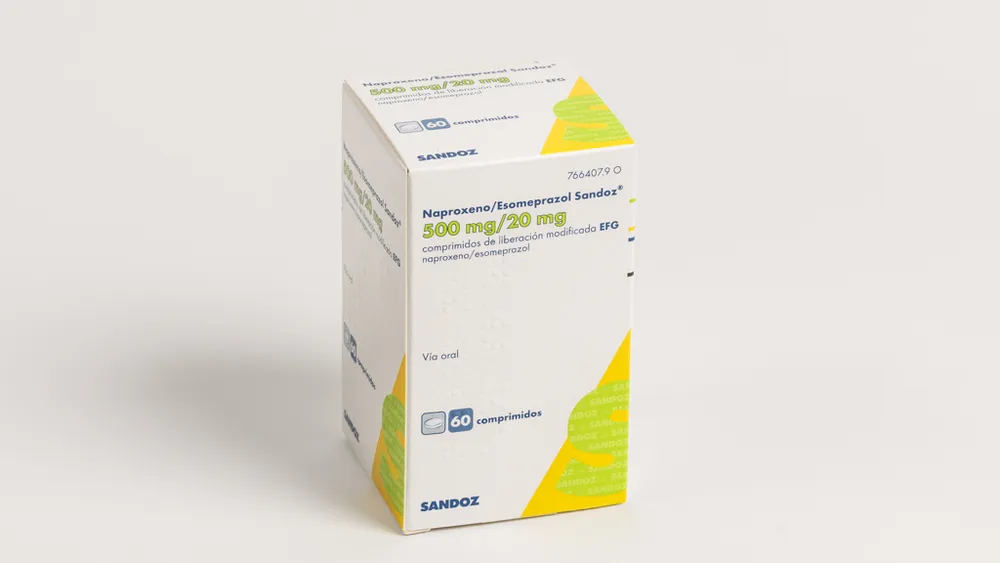
Table of Contents
- Package leaflet: Information for the user
- Introduction
- 1. What Naproxen/Esomeprazole Sandoz is and what it is used for
- 2. What you need to know before taking Naproxen/Esomeprazole Sandoz
- 3. How to take Naproxen/Esomeprazole Sandoz
- 4. Possible adverse effects
- 5. Storage of Naproxen/Esomeprazole Sandoz
- 6. Contents of the pack and other information
Package leaflet: Information for the user
Introduction
Package leaflet: information for the user
Naproxen/Esomeprazole Sandoz 500 mg/20 mg modified-release tablets EFG
naproxen/esomeprazole
Read the entire leaflet carefully before you start taking this medicine, as it contains important information for you.
- Keep this leaflet, as you may need to read it again.
- If you have any questions, ask your doctor or pharmacist.
- This medicine has been prescribed for you only, and you should not give it to other people, even if they have the same symptoms as you, because it could harm them.
- If you experience any adverse effects, consult your doctor or pharmacist, even if they are adverse effects not listed in this leaflet. See section 4.
Leaflet contents
- What Naproxen/Esomeprazole Sandoz is and what it is used for
- What you need to know before taking Naproxen/Esomeprazole Sandoz
- How to take Naproxen/Esomeprazole Sandoz
- Possible adverse effects
- How to store Naproxen/Esomeprazole Sandoz
- Contents of the pack and other information
1. What Naproxen/Esomeprazole Sandoz is and what it is used for
What Naproxen/Esomeprazole Sandoz is
Naproxen/Esomeprazole Sandoz contains two different medicines called naproxen and esomeprazole. Each of these medicines works in a different way.
- naproxen belongs to a group of medicines called "non-steroidal anti-inflammatory drugs" (NSAIDs). It reduces pain and inflammation,
- esomeprazole belongs to a group of medicines called "proton pump inhibitors". It reduces the amount of acid in your stomach.
Esomeprazole helps reduce the risk of ulcers and stomach problems that can occur in patients who need to take NSAIDs.
What Naproxen/Esomeprazole Sandoz is used for
Naproxen/esomeprazole is used in adults for relief of symptoms of:
- osteoarthritis,
- rheumatoid arthritis,
- ankylosing spondylitis.
Naproxen/esomeprazole helps reduce pain, swelling, redness, and heat (inflammation).
You will be prescribed this medicine if it is considered unlikely that a lower dose of an NSAID would relieve your pain, and you are at risk of developing a stomach ulcer or an ulcer in the first part of the small intestine (duodenum) while taking an NSAID.
2. What you need to know before taking Naproxen/Esomeprazole Sandoz
Do not take Naproxen/Esomeprazole Sandoz if:
- you are allergic (hypersensitive) to naproxen,
- you are allergic to esomeprazole or other proton pump inhibitor medicines,
- you are allergic to any of the other ingredients of this medicine (listed in section 6),
- you are taking a medicine called “atazanavir” or “nelfinavir” (used to treat HIV infection),
- acetylsalicylic acid (e.g., aspirin), naproxen, or other NSAIDs such as ibuprofen, diclofenac, or COX-2 inhibitors (e.g. celecoxib, etoricoxib) have ever caused you asthma (wheezing) or an allergic reaction such as itching or skin rash (urticaria),
- you are in the last 3 months of pregnancy,
- you have severe liver, kidney, or heart problems,
- you have a stomach or intestinal ulcer,
- you have any serious bleeding disorder or unexplained severe bleeding.
Do not take naproxen/esomeprazole if you are in any of the above situations. If you are unsure, consult your doctor or pharmacist before taking naproxen/esomeprazole.
Warnings and precautions
Talk to your doctor or pharmacist before starting naproxen/esomeprazole.
Do not take naproxen/esomeprazole and consult your doctor immediately if you experience any of the following events before or during treatment with naproxen/esomeprazole, as this medicine may mask symptoms of another illness:
- if you lose weight significantly without reason and have difficulty swallowing,
- if you vomit food or blood,
- if your stools are black (blood-stained).
If you are in any of these situations (or are unsure), consult your doctor or pharmacist before taking this medicine.
Talk to your doctor or pharmacist before taking this medicine if:
- you have inflammation of the intestines (Crohn’s disease or ulcerative colitis),
- you have other liver or kidney problems or are elderly,
- you are taking medicines such as oral corticosteroids, warfarin, clopidogrel, selective serotonin reuptake inhibitors (SSRIs), acetylsalicylic acid (aspirin), or NSAIDs including COX-2 inhibitors (see section “Other medicines and Naproxen/Esomeprazole Sandoz”),
- you have ever had a skin reaction after treatment with a medicine similar to esomeprazole (a component of Naproxen/Esomeprazole Sandoz) used to reduce stomach acid,
- you are scheduled to have a specific blood test (Chromogranin A).
If you are in any of these situations (or are unsure), consult your doctor or pharmacist before taking this medicine.
If you have previously had a stomach ulcer or gastrointestinal bleeding, inform your doctor. You will be asked to report any unusual stomach symptoms (e.g., pain) to your doctor.
Some medicines such as naproxen/esomeprazole may be associated with a small increased risk of heart attack (myocardial infarction) or stroke. The risk is higher with higher doses and prolonged treatment. Do not exceed the recommended dose or duration of treatment.
Naproxen/esomeprazole contains the NSAID naproxen. Like all NSAIDs, naproxen should be used at the lowest effective dose and for the shortest possible duration to reduce the risk of adverse effects. Your doctor will therefore regularly assess whether naproxen/esomeprazole remains appropriate for you.
Naproxen/esomeprazole is not suitable for rapid relief of acute pain, as it takes several hours for the analgesic naproxen to reach the bloodstream.
Consult your doctor before taking this medicine if you have any heart problems, a history of stroke, or think you are at risk of these conditions. You may be at increased risk if you:
- have high blood pressure,
- have circulation or blood clotting problems,
- are diabetic,
- have high cholesterol levels,
- smoke.
Taking a proton pump inhibitor (one of the components of Naproxen/Esomeprazole Sandoz), especially for more than one year, may slightly increase the risk of fractures of the hip, wrist, or spine. Inform your doctor if you have osteoporosis or are taking corticosteroids (which may increase the risk of osteoporosis).
If you develop a skin rash, especially in areas of skin exposed to sunlight, consult your doctor as soon as possible, as treatment with naproxen/esomeprazole may need to be stopped. Remember to mention any other symptoms you may notice, such as joint pain.
Serious skin rashes have occurred in patients taking esomeprazole (see also section 4). The rash may include mouth, throat, nose, genital ulcers, and conjunctivitis (red, swollen eyes). These serious skin rashes usually appear after flu-like symptoms such as fever, headache, and body aches. The rash may cover large areas of the body with blisters and skin peeling.
If at any time during treatment (even after several weeks) you develop a rash or any of these skin symptoms, stop taking this medicine and contact your doctor immediately.
Cases of serious skin reactions, including Stevens-Johnson Syndrome (SJS), toxic epidermal necrolysis (Lyell’s syndrome), and drug reaction with eosinophilia and systemic symptoms (DRESS), have been reported in association with naproxen/esomeprazole. Stop taking naproxen/esomeprazole and consult your doctor immediately if you notice any symptoms related to the serious skin reactions described in section 4.
Kidney inflammation may occur during treatment with naproxen/esomeprazole. Signs and symptoms may include reduced urine volume or blood in the urine and/or hypersensitivity reactions such as fever, skin rash, and joint stiffness. You should report these signs to your doctor.
Children and adolescents
The use of naproxen/esomeprazole is not recommended in children or adolescents aged 18 years or younger.
Other medicines and Naproxen/Esomeprazole Sandoz
Tell your doctor or pharmacist if you are taking, have recently taken, or might need to take any other medicines, including those obtained without a prescription, such as herbal remedies. This is because naproxen/esomeprazole may affect how other medicines work. Also, some medicines may affect how naproxen/esomeprazole works.
Do not take this medicine and inform your doctor or pharmacist if you are taking:
- a medicine called “atazanavir” or “nelfinavir” (used to treat HIV infection).
Inform your doctor or pharmacist if you are taking any of the following medicines:
- acetylsalicylic acid (aspirin) (used as a painkiller or to prevent blood clots). If you are taking low-dose acetylsalicylic acid (aspirin), you may still be able to take naproxen/esomeprazole,
- other NSAID medicines (including COX-2 inhibitors),
- certain medicines such as ketoconazole, itraconazole, posaconazole, or voriconazole (used to treat fungal infections),
- erlotinib (or another anticancer medicine of the same class),
- colestyramine (used to lower cholesterol),
- clarithromycin (used to treat infections),
- “quinolone antibiotics” (for infections), such as ciprofloxacin or moxifloxacin,
- diazepam (used to treat anxiety, to relax muscles, or in epilepsy),
- hydantoins such as phenytoin (used to treat epilepsy),
- lithium (used to treat certain types of depression),
- methotrexate (used to treat rheumatoid arthritis, psoriasis, and cancer),
- probenecid (used for gout),
- selective serotonin reuptake inhibitors (SSRIs) (used to treat severe depression and anxiety disorders),
- cyclosporine or tacrolimus (medicines used to reduce the body’s immune response),
- digoxin (used to treat heart problems),
- sulfonylureas such as glimepiride (oral medicines used to control blood glucose in diabetes),
- medicines used to treat high blood pressure called diuretics (such as furosemide or hydrochlorothiazide), ACE inhibitors (such as enalapril), angiotensin II receptor antagonists (such as losartan), and beta-blockers (such as propranolol),
- corticosteroid medicines such as hydrocortisone or prednisolone (used as anti-inflammatory medicines),
- medicines to prevent blood clotting, such as warfarin, dicoumarol, heparin, or clopidogrel,
- rifampicin (used to treat tuberculosis),
- St. John’s wort (Hypericum perforatum) (used to treat mild depression),
- cilostazol (used for leg pain due to poor blood flow).
If you are in any of these situations (or are unsure), consult your doctor or pharmacist before taking naproxen/esomeprazole.
Taking Naproxen/Esomeprazole Sandoz with food and drinks
Do not take naproxen/esomeprazole with food, as it may reduce and/or delay the effect of this medicine. Take the tablets at least 30 minutes before meals.
Pregnancy, breastfeeding, and fertility
If you are pregnant or breastfeeding, think you may be pregnant, or plan to become pregnant, consult your doctor or pharmacist before taking this medicine.
Pregnancy
- Do not take naproxen/esomeprazole during the last 3 months of pregnancy, as it may harm the fetus or cause problems during delivery. It may cause kidney and heart problems in the fetus. It may affect your bleeding tendency and that of your baby, and may delay or prolong labor. You should not use naproxen/esomeprazole during the first 6 months of pregnancy unless absolutely necessary and advised by your doctor. If treatment is needed during this period or while trying to conceive, the lowest possible dose should be used for the shortest possible time. If taken for more than a few days starting from week 20 of pregnancy, naproxen/esomeprazole may cause kidney problems in the fetus, leading to low levels of amniotic fluid surrounding the baby (oligohydramnios) or narrowing of a blood vessel (ductus arteriosus) in the baby’s heart. If prolonged treatment is needed, your doctor may recommend additional monitoring.
Breastfeeding
- Do not breastfeed while taking naproxen/esomeprazole, as small amounts may pass into breast milk. If you are considering breastfeeding, you should not take this medicine.
Fertility
- Naproxen/esomeprazole may make it more difficult to become pregnant. Inform your doctor if you are planning a pregnancy or have difficulty conceiving.
Driving and using machines
You may feel dizzy or experience blurred vision during treatment with naproxen/esomeprazole. If this occurs, do not drive or operate tools or machinery.
Naproxen/Esomeprazole Sandoz contains lactose
This medicine contains lactose. If your doctor has informed you of an intolerance to certain sugars, consult with him before taking this medicine.
This medicine contains less than 1 mmol of sodium (23 mg) per modified-release tablet; essentially “sodium-free”.
3. How to take Naproxen/Esomeprazole Sandoz
Follow exactly your doctor's instructions on how to take this medicine. If in doubt, consult your doctor or pharmacist again.
How to take this medicine
- swallow the tablets whole with water. Do not split, chew or crush the tablets. It is important to swallow the tablets whole so that the medicine works properly,
- take the tablets at least 30 minutes before meals. Food may reduce the protective effect of this medicine on your stomach and intestine. Food may also cause a significant delay in pain and inflammation relief,
- if you have been taking this medicine for a long time, your doctor will want to carry out check-ups (especially if you have been taking it for more than one year).
How much to take
- take one tablet twice a day for as long as your doctor tells you,
- naproxen/esomeprazole is only available as 500 mg/20 mg. If your doctor thinks this dose is not suitable for you, they may prescribe a different treatment.
If you take more Naproxen/Esomeprazole Sandoz than you should
If you take more naproxen/esomeprazole than you should, contact your doctor or pharmacist immediately. Symptoms of overdose may include lethargy, dizziness, somnolence, upper abdominal pain and/or discomfort, heartburn, indigestion, nausea, liver problems (seen in blood tests), kidney problems which may be serious, increased levels of acid in your blood, confusion, vomiting, stomach or intestinal bleeding, high blood pressure, breathing difficulties, coma, sudden allergic reactions (which may include shortness of breath, skin rash, swelling of the face and/or throat and/or collapse), and uncontrolled body movements.
In case of overdose or accidental ingestion, contact your doctor or pharmacist immediately or call the Toxicology Information Service at telephone number: 91 562 04 20, indicating the medicine and the amount ingested.
If you forget to take Naproxen/Esomeprazole Sandoz
- if you forget to take a dose, take it as soon as you remember. However, if it is almost time for your next dose, skip the missed dose,
- do not take a double dose (two doses at the same time) to make up for forgotten doses.
If you have any further questions about the use of this medicine, ask your doctor or pharmacist.
4. Possible adverse effects
Like all medicines, this medicine can cause adverse effects, although not everyone will experience them. The following adverse effects may occur with this medicine.
Stop taking naproxen/esomeprazole and seek medical attention immediately if you notice any of the following serious adverse effects – you may need urgent medical treatment:
- sudden wheezing, swelling of the lips, tongue, throat or body, skin rash, fainting or difficulty swallowing (severe allergic reaction),
- sudden appearance of a severe skin rash or reddening of the skin with blistering or peeling, even after several weeks of treatment. Severe blisters and bleeding may also occur in the lips, eyes, mouth, nose and genitals. Skin rashes may progress to severe and widespread skin damage (peeling of the epidermis and superficial mucous membranes), potentially leading to life-threatening consequences. This could be "erythema multiforme", "Stevens-Johnson syndrome", "toxic epidermal necrolysis", or "drug reaction with eosinophilia and systemic symptoms (DRESS)". These effects are very rare and may affect up to 1 in 10,000 people,
- yellowing of the skin or whites of the eyes, dark urine and fatigue, which may be signs of liver problems,
- medicines such as naproxen/esomeprazole may be associated with a small increased risk of heart attack (myocardial infarction) or stroke. Symptoms include chest pain spreading to the neck and shoulders and radiating down the left arm, confusion, or numbness or muscle weakness, possibly affecting only one side of the body,
- dark, tarry stools or bloody diarrhoea,
- vomiting blood or dark particles resembling coffee grounds.
Inform your doctor as soon as possible if you experience any of the following symptoms:
In rare cases, naproxen/esomeprazole may affect white blood cells, potentially leading to immunosuppression.
If you develop an infection with symptoms such as fever accompanied by a severe deterioration in general health, or fever with signs of localized infection such as neck, throat or mouth pain, or difficulty urinating, consult your doctor promptly so that absence of white blood cells (agranulocytosis) can be ruled out via a blood test. It is important to inform your doctor about your medication at this time.
Other adverse effects include:
Common (may affect up to 1 in 10 people)
- headache,
- feeling of fatigue,
- sensation of thirst,
- feeling of depression,
- sensation of breathlessness,
- increased sweating,
- skin itching and rash,
- sensation of spinning (dizziness),
- red or purple spots, bruising or spots on the skin,
- feeling sick (nausea) or being sick (vomiting),
- sensation of heart palpitations,
- sleep disturbance or difficulty sleeping (insomnia),
- hearing problems or ringing in the ears (tinnitus),
- dizziness, drowsiness or lightheadedness,
- swelling of the hands, feet and ankles (oedema),
- inflammation inside the mouth,
- vision problems,
- diarrhoea, stomach pain, heartburn, indigestion, constipation, burping or gas (flatulence),
- stomach ulcers or ulcers in the first part (duodenum) of the small intestine,
- inflammation of the stomach lining (gastritis),
- benign polyps in the stomach.
Uncommon, rare or very rare (may affect up to 1 in 100 people or fewer)
- sores or ulcers in the mouth,
- vision problems such as blurred vision, conjunctivitis or eye pain,
- unusual dreams,
- feeling sleepy,
- increased blood sugar (glucose) levels. Symptoms may include increased thirst and more frequent urination,
- low blood sugar (glucose) levels. Symptoms may include feeling hungry or weak, sweating, and increased heart rate,
- coma,
- inflammation of blood vessels,
- perforation (hole) in the stomach or intestine,
- systemic lupus erythematosus (SLE), a disease in which the immune system attacks the body itself, causing joint pain, skin rashes and fever,
- enlarged lymph nodes,
- fracture of the hip, wrist or spine (if naproxen/esomeprazole is used at high doses and for long periods),
- fever,
- fainting,
- dry mouth,
- aggression,
- hearing loss,
- asthma attacks,
- tremors or seizures,
- menstrual problems,
- weight changes,
- hair loss (alopecia),
- rash with hives,
- joint pain (arthralgia),
- breast enlargement in males,
- pain or swelling of the tongue,
- muscle spasms or tremors,
- appetite problems or altered taste,
- muscle weakness or pain (myalgia),
- blood may take longer to clot,
- difficulty becoming pregnant (in women),
- fever, redness or other signs of infection,
- irregular, slow or very rapid heartbeat,
- tingling sensation,
- difficulty with memory or concentration,
- feeling restless, confused, anxious or nervous,
- general malaise, weakness and lack of energy,
- oedema or pain in certain parts of the body due to fluid retention,
- high or low blood pressure. You may experience dizziness or fainting,
- skin rash or blistering, or increased skin sensitivity to sunlight,
- seeing, feeling or hearing things that are not real (hallucinations),
- changes in blood test results, such as those used to check liver function. Your doctor can explain these better,
- an infection called "candidiasis" affecting the intestine, caused by a fungus,
- presence of blood in the urine or other kidney problems. You may have back pain,
- difficulty breathing, which may worsen gradually. This may indicate the development of pneumonia or lung inflammation,
- low concentration of salt (sodium) in the blood, which may cause weakness, vomiting and cramps,
- symptoms of meningitis such as fever, feeling unwell, neck stiffness, headache, sensitivity to bright light and confusion,
- problems with the pancreas. Signs include severe stomach pain spreading to the back,
- pale-coloured stools, a sign of serious liver problems (hepatitis). Severe liver problems leading to liver failure and brain dysfunction,
- colitis or worsening of inflammatory bowel disease, such as Crohn's disease or ulcerative colitis. Signs include stomach pain, diarrhoea, vomiting and weight loss,
- blood disorders, such as reduced red blood cells (anaemia), white blood cells or platelets, which may cause weakness, bruising, fever, severe chills, sore throat or increased susceptibility to infections,
- increase in a certain type of white blood cells (eosinophilia),
- deficiency of all types of blood cells (pancytopenia),
- problems with how the heart pumps blood throughout the body or damage to blood vessels. Symptoms include fatigue, shortness of breath, weakness, chest pain or generalised pain.
Frequency not known (cannot be estimated from available data)
- if you are taking naproxen/esomeprazole for more than three months, your blood magnesium levels may decrease. Low magnesium levels may present as fatigue, involuntary muscle contractions, disorientation, seizures, dizziness or increased heart rate. If you experience any of these symptoms, inform your doctor immediately. Low magnesium levels may also lead to reduced levels of potassium or calcium in the blood. Your doctor may decide to carry out periodic tests to monitor your magnesium levels,
- skin rash, possibly with joint pain,
- widespread rash, elevated body temperature, high levels of liver enzymes, blood abnormalities (eosinophilia), enlarged lymph nodes and involvement of other organs (Drug Reaction with Eosinophilia and Systemic Symptoms, also known as DRESS). See also section 2,
- a characteristic drug-related skin reaction known as fixed drug eruption, which usually reappears in the same location upon re-exposure to the drug and may appear as round or oval red patches, skin swelling, blisters (urticaria) and itching.
Do not be alarmed by this list of possible adverse effects. You may not experience any of them.
Reporting of adverse effects
If you experience any adverse effect, talk to your doctor or pharmacist, even if it is a possible adverse effect not listed in this leaflet. You can also report them directly via the Spanish System for Human Medicines: https://www.notificaram.es. By reporting adverse effects, you can help provide more information on the safety of this medicine.
5. Storage of Naproxen/Esomeprazole Sandoz
Keep this medicine out of the sight and reach of children.
Do not use this medicine after the expiry date stated on the packaging or bottle after CAD/EXP. The expiry date refers to the last day of the month indicated.
Store below 25 °C.
Keep the medicine in the original packaging to protect it from light.
Keep the bottle tightly closed to protect it from moisture.
After first opening the bottle: Use within 60 days.
Medicines must not be disposed of via wastewater or household waste. Dispose of empty containers and unused medicines at the SIGRE collection point at your pharmacy. If in doubt, ask your pharmacist how to dispose of containers and medicines you no longer need. This helps protect the environment.
6. Contents of the pack and other information
Composition of Naproxen/Esomeprazole Sandoz
- The active substances are naproxen and esomeprazole.
- Each modified-release tablet contains 500 mg of naproxen and 20 mg of esomeprazole (as trihydrate magnesium).
- The other components (excipients) of the tablet core are anhydrous colloidal silica, methacrylic acid-ethyl acrylate copolymer (1:1) 30% dispersion, polysorbate 80, glyceryl monostearate 40-55, triethyl citrate, lactose monohydrate, sodium croscarmellose, stearic fumarate and sodium, microcrystalline cellulose type 112, microcrystalline cellulose type 302, magnesium oxide, povidone K30, calcium stearate, and in the coating layer: hypromellose, macrogol 400, titanium dioxide, and yellow iron oxide.
Nature of the product and contents of the pack
Modified-release tablets, oblong, biconvex (8.9 mm x 19.4 mm), coated with a smooth yellow film, smooth on both sides.
Modified-release tablets are packed in HDPE bottles containing a silica gel desiccant (to keep the tablets dry), sealed with an aluminum induction seal and a screw cap. The desiccant contained in the bottle is not suitable for consumption.
Pack sizes: 30 and 60 modified-release tablets.
Only some pack sizes may be commercially available.
Marketing Authorization Holder and Manufacturer
Marketing Authorization Holder
Sandoz Farmacéutica, S.A.
Parque Norte Business Center
Roble Building
C/ Serrano Galvache, 56
28033 Madrid
Spain
Manufacturer
Salutas Pharma GmbH
Otto-von-Guericke-Allee 1
39179 Barleben
Germany
Flavine Pharma France
3 Voie d’Allemagne,
Vitrolles, 13127
France
Interpharma Services Ltd.
11, Rusalijski prohod Str., fl. 3, ap. 8,
Sofia 1407
Bulgaria
Date of latest revision of the leaflet: 09/2024
Detailed information on this medicine is available on the website of the Spanish Agency of Medicines and Medical Devices (AEMPS): http://www.aemps.gob.es/